

 Antalya
Aspendos Theatre (Aspendos)
About 45 km east of Antalya, Aspendos has the best-preserved Roman theatre in the world, its stage building still at full height. Foreign visitors pay about €15 in 2026, and performances are still staged here.
Tours that visit Aspendos Theatre
Perge, Aspendos & Side Tour from Antalya with Lunch & Manavgat Falls
A guided full day from Antalya through Perge, the Aspendos Theatre, and the seaside town of Side, where the Temple of Apollo stands, finishing at Manavgat Waterfall.
Perge, Aspendos & Side Day Tour from Antalya with Lunch
A 10-hour guided day from Antalya through Perge, Aspendos and Side, ending at the Lower Duden Waterfall, with hotel pick-up, entrance fees and lunch included.
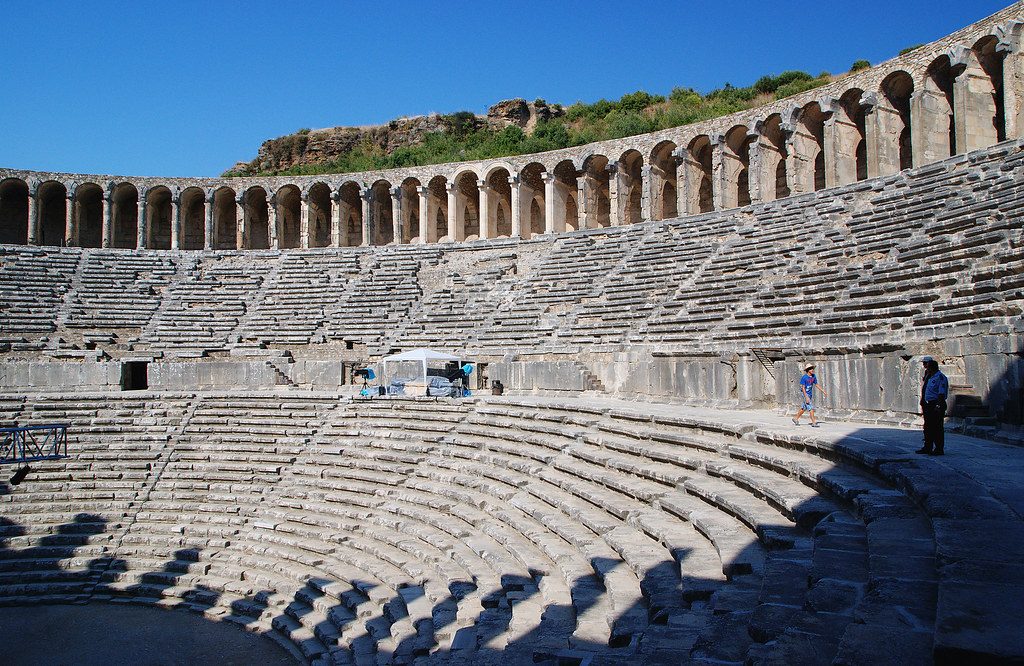
In most Roman theatres you find rows of seats and a broken stage. Aspendos has kept everything: the seats, the arched gallery around the top, and the high stage building behind the orchestra with its windows and niches. No Roman theatre anywhere is better preserved, and it stands just 45 kilometres from Antalya. In 2026 foreign visitors pay about €15 for a ticket.
Key facts
| Item | Details |
|---|---|
| Hours | 08:00-19:00; last tickets sold at 18:30 (muze.gov.tr, October 2026) |
| Closing days | None, it opens daily |
| Foreign visitor ticket | Around €15 (October 2026; some sources say €16, so confirm at the entrance). Museum Pass accepted |
| How long | 45 minutes for the theatre alone; 1.5-2 hours if you add the aqueduct and the upper city |
| Where | Close to Serik, roughly 45 km east of Antalya |
| Bring | Water and a sun hat; shade is almost non-existent |
History in brief
Aspendos grew rich on the Eurymedon river. Greek settlers founded it, and Persians, Alexander the Great and Rome ruled it in turn. A local architect called Zeno built the theatre in the 2nd century AD, under Marcus Aurelius; an inscription records his name. Two rich brothers from the city funded it.
Luck and reuse both explain why it survived. In the 13th century the Seljuk Turks used it as a caravanserai, repaired the stage building and decorated it with red paint, traces of which are still visible. The theatre was restored in the 20th century and returned to use as a stage, and for many years it has hosted an opera and ballet festival.
Highlights
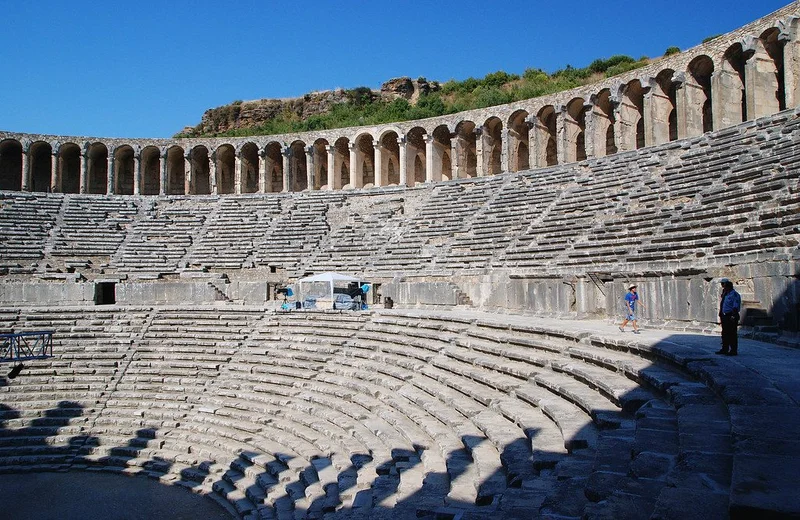
- Seats. Two tiers of stone rows. Capacity estimates run from around 7,000 to more than 12,000.
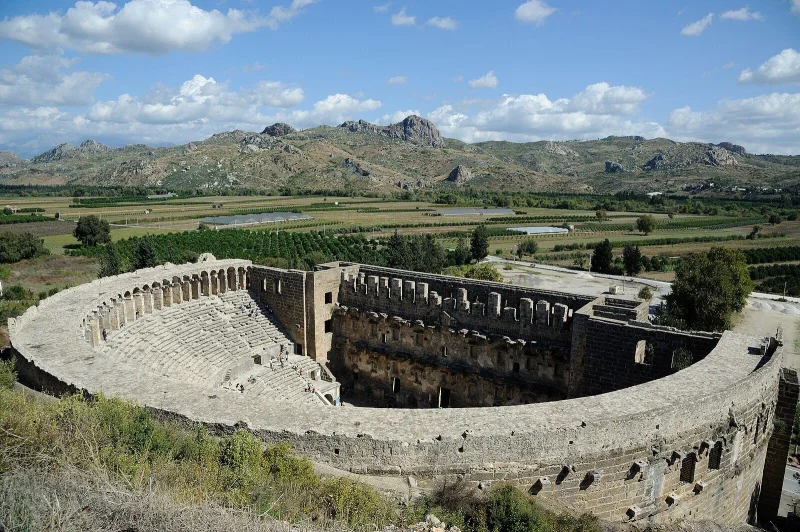
- Stage building. The scaenae frons, the back wall of the stage, rises nearly to its full original height, with two levels of windows and niches where statues once stood.
- Gallery. A roofed arcade circles the top of the seating; few theatres elsewhere still have one.
- Acoustics. Talk at normal volume from the centre of the orchestra and people in the top rows will hear you.
- Aqueduct. North of the theatre, a short walk or drive away, sections of a Roman aqueduct run across the plain, and two pressure towers still stand.
- Upper city. Behind the theatre a path leads up the acropolis hill to the remains of the agora, basilica and nymphaeum.
When to go
Come when the gates open or in the final two hours of the day. At midday in summer the stone seating gets very hot. Coach groups from Antalya and Side tend to arrive from 10:00 to 13:00. For a show, look up the festival programme; sitting in the top rows at night is worth it in itself.
The Antalya Perge, Aspendos & Side Tour puts Aspendos together with Perge, Side and Manavgat Waterfall in one full day from Antalya, from US$90 per person including lunch. If you are starting in Istanbul, the 3-Day Private Antalya Tour covers Perge, Aspendos and the coast.
A legend and a visit
Local legend says a king of Aspendos offered his daughter's hand to the man who built the city's most useful work. Two builders took up the challenge: one made the aqueduct, the other the theatre. The king picked the aqueduct as more useful. Then the theatre's architect whispered on the stage, the king heard every word from the highest row, and he was so impressed that the architect won the daughter. It is a story, not history, but it gives you a reason to try the acoustics.
Mustafa Kemal Ataturk came to the theatre in 1930 and asked for it to be protected and used for performances again, which led to its restoration later on.
How to get there
Driving or by taxi, it takes about 45 minutes from Antalya heading east on the D400 coast road; leave it at the Serik junction and head inland. Public transport options are few: a bus to Serik or Manavgat can let you off at the junction, around 4 kilometres from the site. Most people arrive with a tour or a hire car.
Tips
- For the best view of the stage building and the plain behind it, go up to the highest rows.
- The nearby Seljuk bridge over the river is worth a quick photo stop.
- At the car park, restaurants offer trout and simple lunches.
See more of the region's sights on our Antalya destination page.
Frequently Asked Questions
What does an Aspendos ticket cost in 2026?
Around €15 for foreign visitors as of October 2026. Some sources list €16, so confirm at the entrance. The Museum Pass is accepted.
Why has Aspendos Theatre survived so well?
It never went out of use: first the Seljuks made it a caravanserai, then it served as a stage. Each period repaired it rather than taking its stone.
What is the distance from Antalya to Aspendos?
Around 45 kilometres, which is 45 minutes to an hour by car.
Does Aspendos still host performances?
It does. The theatre holds concerts and an opera and ballet festival; check what is on before you build plans around it.
How much time should I allow at Aspendos?
About 45 minutes for the theatre only, or 1.5 to 2 hours with the aqueduct and the upper city.
More places to see in Antalya
- Duden Waterfalls (Düden)
- Kaleici Old Town
- Kekova Sunken City and Simena (Kaleköy)
- Köprülü Canyon National Park (Oluk Bridge and Selge)
- Myra and St Nicholas Church (Demre)
- Olympos Ancient City and the Chimaera Flames (Yanartaş)
- Perge Ancient City
- Side Ancient City (Temple of Apollo at Side)
- Suluada Island (Adrasan)