

 Bursa
Green Mosque and Green Tomb (Yesil Cami)
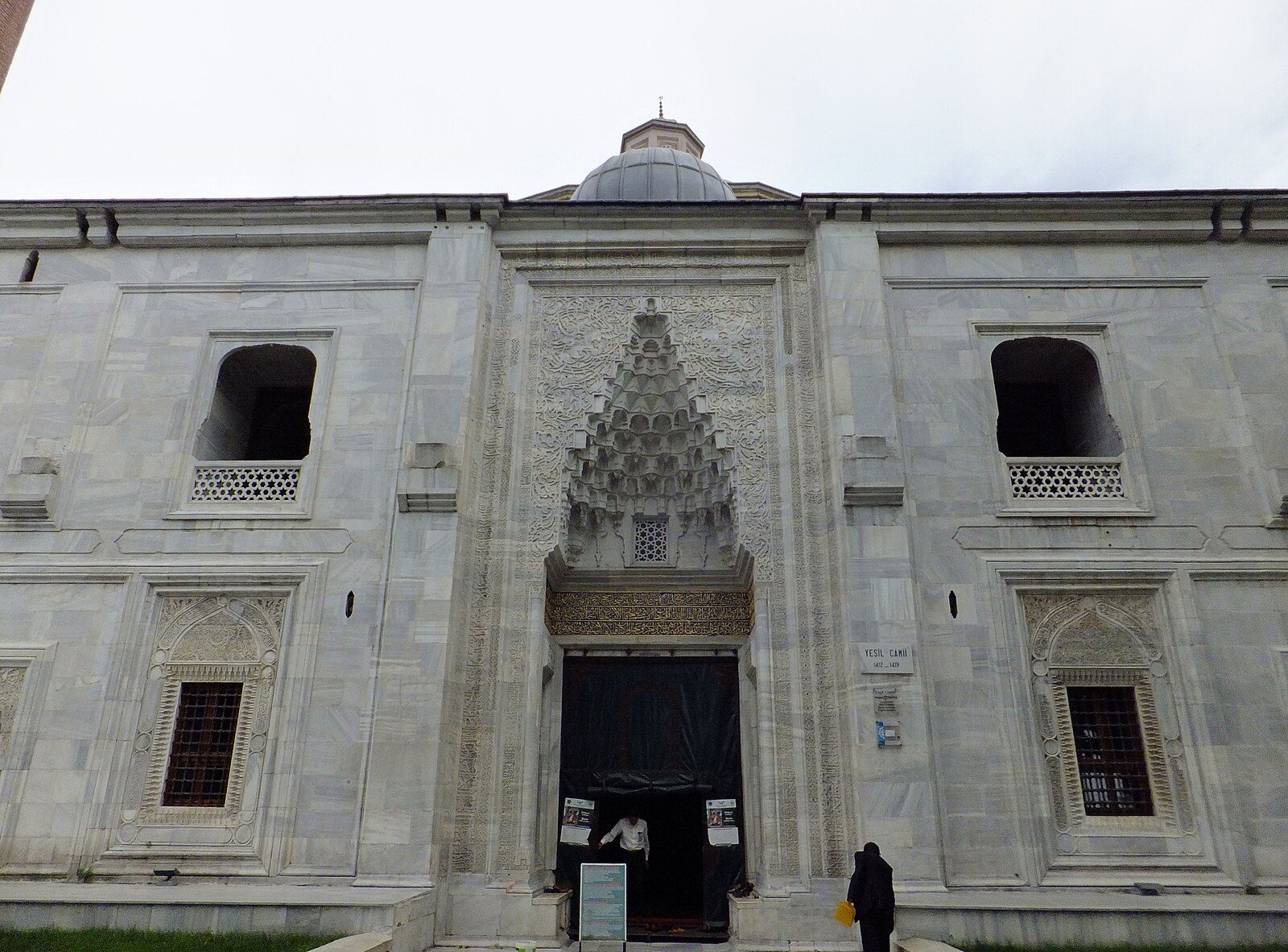
Sultan Mehmed I had Bursa's Green Mosque and Green Tomb built in the early 1420s, and their tiles rank among the best early Ottoman work anywhere. You pay nothing to enter either, and they sit side by side on a hill to the east of the centre.
Tours that visit Green Mosque and Green Tomb
Private Bursa Day Tour from Istanbul: Guide & Private Van
A private 12-hour day trip to Bursa, which was the first capital of the Ottomans, for its mosques, royal tombs, historic bazaar and views from Uludag.
Bursa & Uludag Tour from Istanbul: Ferry, Cable Car & Lunch
Take the ferry over the Sea of Marmara for a day in Bursa, with a cable car ride towards Uludag, visits to Bursa's Green Mosque and Green Tomb, a local lunch and time of your own.
Bursa was the Ottomans' first great capital. Before the empire took Constantinople, it built nothing that shows its young skill better than the Green Mosque and its tomb. Both went up for Sultan Mehmed I from 1419 to 1421 on a slope to the east of the old town. Inside the mosque, the tiles and carved marble are the draw; the tomb, on the other side of a small garden, is clad in turquoise tiles both outside and in. Neither charges entry, and an hour covers both.
Key facts
| Item | Details |
|---|---|
| Hours | Mosque open every day but not for sightseeing at prayer times; tomb open from about morning to early evening (October 2026; confirm on site) |
| Closing times | The mosque during Friday midday prayer |
| Ticket | Both free |
| How long | 1 hour |
| Where | Yesil neighbourhood in Yildirim district, roughly 1.5 km east of the Grand Mosque of Bursa |
| Dress code | Cover shoulders and knees; women cover their hair inside the mosque |
History in brief
After ten years of civil war among the sons of Bayezid I, Mehmed I brought the Ottoman state back together, and he commissioned a complex in Bursa to celebrate his reign: a madrasa, a mosque, a soup kitchen, a bath and a tomb for himself. The architect named for it is his vizier, Haci Ivaz Pasha. The tiles were made by craftsmen from Tabriz, called the masters of Tabriz in the inscriptions, who combined Persian and Timurid patterns with early Ottoman taste.
When Mehmed I died in 1421, work on the mosque stopped before it was complete: the portico planned for the front was never built, and parts of the decoration were not completed. In 1855 an earthquake badly damaged both buildings. In the repairs afterwards, many tiles on the outside of the tomb were replaced with new Kutahya tiles, but a large part of the original interior tile work survived. In 2014 Bursa, together with the nearby village of Cumalikizik, joined the UNESCO World Heritage List as the place where the Ottoman Empire was born.
Inside the Green Mosque
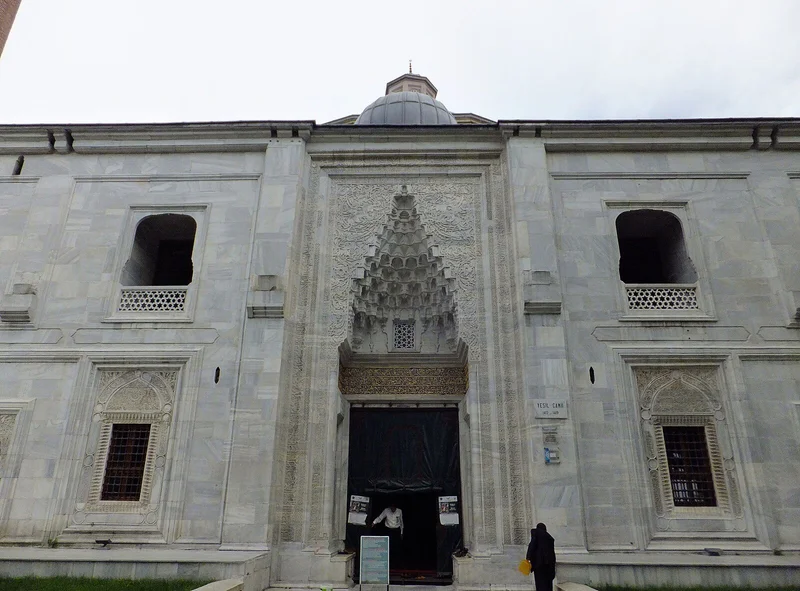
- Marble portal. Above the door, a tall white marble niche carved with stalactite work, among the best in Anatolia.
- Inverted-T layout. Later Ottoman mosques have one large dome; this one centres on a hall with a fountain, with raised rooms on each side and a prayer hall behind, a plan found in early Bursa mosques.
- Mihrab. Clad in glazed green, blue, yellow and white tiles, with an inscription that names the masters of Tabriz.
- Sultan's lodge. A small tiled balcony over the entrance where the sultan prayed, decorated as richly as a jewel box. It is often locked, so ask the caretaker.
- Wall tiles in green and turquoise, many of them simple hexagons, which gave the mosque its name.
Inside the Green Tomb
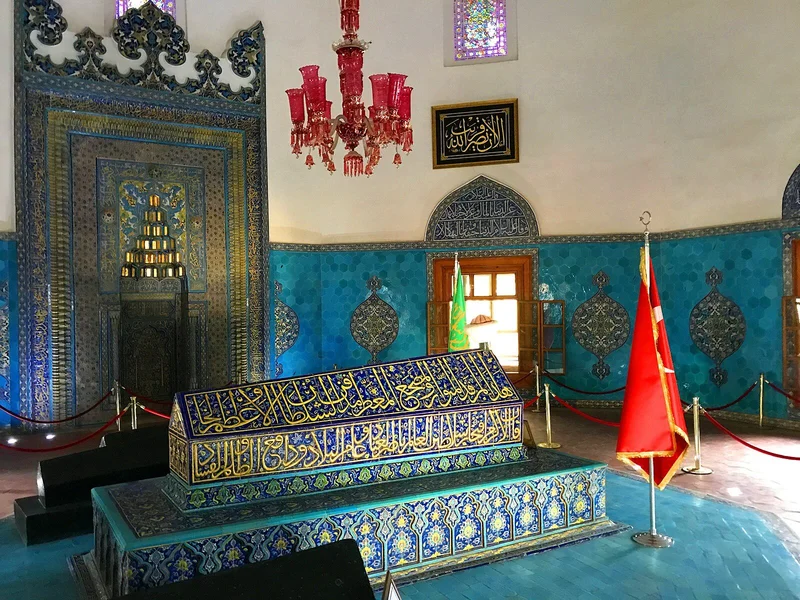
- Outside. An eight-sided tomb on a terrace, clad in turquoise tiles and visible from across Bursa.
- Wooden door, carved with detailed geometric patterns.
- Mehmed I's sarcophagus, tiled and inscribed with verses from the Quran, at the centre of a room lined with panels of blue and turquoise tiles around a tiled mihrab. Family members' smaller sarcophagi surround it.
When to go
Mornings on weekdays are the calmest. Crowds peak at the Friday midday prayer and on Sunday afternoons, when local families come in numbers. From the tomb's front terrace you look across Bursa to Uludag; the view is best in afternoon light.
Our group day tour to Bursa visits both buildings, crosses the Sea of Marmara by ferry and rides the Uludag cable car; it lasts about eight hours and costs from US$75 a person. The private full-day Bursa tour brings a private guide to the city's bazaars, royal tombs and great mosques, from US$100.
Tips
- Koza Han (the silk market), the covered bazaar and the Grand Mosque (Ulu Cami) are all close by in the old centre.
- The tea gardens near the tomb terrace are a nice place for a break.
- Bursa is where Iskender kebab was invented; also try the candied chestnuts sold in the old bazaar.
- Keep your voice low inside the tomb, as many visitors come to pray.
Our Bursa destination page lists more of the city's sights.
Frequently Asked Questions
Does the Green Mosque in Bursa charge entry?
No. You pay nothing at either building. Sightseeing in the mosque stops during prayers.
Where does the name Green Mosque come from?
From its green and turquoise tiles, which still fill the interior and once covered parts of the outside.
Who lies in the Green Tomb?
Sultan Mehmed I, who ended a civil war by reuniting the Ottoman state, rests here with members of his family; he died in 1421.
What is the distance from Istanbul to Bursa?
Around 150 kilometres. Driving takes about 2 to 2.5 hours; taking the fast ferry across to the Bursa coast and continuing by road takes a little longer.
Is a day trip to Bursa from Istanbul possible?
Yes. A day trip usually covers the bazaars, the Grand Mosque, the Green Mosque and Tomb, and often the cable car up Uludag.