Travel Tips5 November 202611 min read
Is Turkey Safe to Travel to Right Now? November 2026 Advice
Turkey is safe for normal trips: US Level 2, and the UK only warns against the 10 km Syrian border strip. Scams, taxis, earthquakes, water, 112 and insurance explained.
In this article
- What the official travel advice says in November 2026
- What the warnings mean in practice
- Istanbul, Cappadocia and the coast: how far from the risk zone
- Everyday risks in Istanbul: scams, taxis and pickpockets
- Solo and female travellers
- Laws visitors get caught out by
- Earthquakes and natural hazards
- Health, water, emergencies and travel insurance
- Tours that cover this
- Frequently Asked Questions
Yes. For a normal trip to Istanbul, Cappadocia, Ephesus, Pamukkale or the Mediterranean coast, Turkey is safe to visit right now. As of 5 November 2026 the US State Department rates Türkiye at Level 2, "Exercise Increased Caution". That level is about general vigilance, not a warning against going. The UK Foreign Office warns against travel to only one area: the strip within 10 km of the Syrian border. Every main tourist region is hundreds of kilometres from that zone. Nearly 53 million foreign visitors came to Turkey in 2025, and January to August 2026 brought another 34.8 million.
Pickpockets, bar scams, regional tension and earthquakes are still real, and this guide covers each one. If you want a licensed guide and a driver to handle the logistics, our 8-day private Turkey tour covers Istanbul, Cappadocia, Ephesus and Pamukkale from $2,250.
What the official travel advice says in November 2026
Here is what the US State Department and the UK Foreign, Commonwealth & Development Office (FCDO) said on 5 November 2026.
| Government | Overall rating | Areas to avoid | Latest update |
|---|---|---|---|
| United States (travel.state.gov) | Level 2 of 4: Exercise Increased Caution, because of terrorism, armed conflict and arbitrary detention | Level 4, Do Not Travel: within 10 km (6 miles) of the borders with Syria and Iraq | Issued 9 June 2026 |
| United Kingdom (gov.uk) | No general warning against travel | All travel within 10 km of the Syrian border, citing fighting and a heightened risk of terrorism | 27 October 2026, regional tensions |
A few points the headlines leave out:
- The US southeast warning has been lifted. After hostilities between the United States and Iran began on 28 February 2026, Washington raised southeast Türkiye to Level 4 in March and pulled non-emergency staff out of its Adana consulate. The 9 June advisory removed that wider area, and only the 10 km border strip remains at Level 4.
- The UK has no "all but essential travel" warning. The only no-go area is the Syrian border strip. Istanbul, Ankara, Cappadocia and the coast carry no restriction.
- "Arbitrary detention" in the US advisory refers to Turkish security forces detaining people, US citizens among them, over alleged links to groups Turkey classes as terrorist. Social media posts have been used as evidence, so think before you post political comments.
What the warnings mean in practice
Terrorism. The FCDO says terrorists are likely to try to carry out attacks in Turkey and that most past attacks hit the southeast, Ankara and Istanbul. Recent examples it lists are a January 2024 attack on a church in Istanbul claimed by Daesh, an October 2024 attack on an aerospace company near Ankara and a September 2025 attack on a police station in İzmir. Bag scanners at the entrances to shopping centres, museums and many hotels are normal here, not a sign of a specific threat.
Regional conflict and flights. The FCDO notes that Iran has said it intends to target locations linked to the US and Israel, and it warns of short-notice flight cancellations and airspace closures in the region. Neither advisory reports any closure of Turkish airspace. In practice the risk is a reroute or a delayed connection, so leave a buffer day before a long-haul flight home.
Protests. Demonstrations happen regularly in Istanbul, mainly around Taksim and outside consulates, and police have used tear gas and water cannon. Walk away from any crowd that is gathering.
COP31 in Antalya, 9 to 20 November 2026. Around 26,000 security staff are deployed for the UN climate summit. The Belek hotel zone is a secure area on 10 to 12 November, and the road from the D-400 to Belek closes on 11 November from 07:30 until about noon. If you land at Antalya that week, allow extra time for transfers.
Istanbul, Cappadocia and the coast: how far from the risk zone
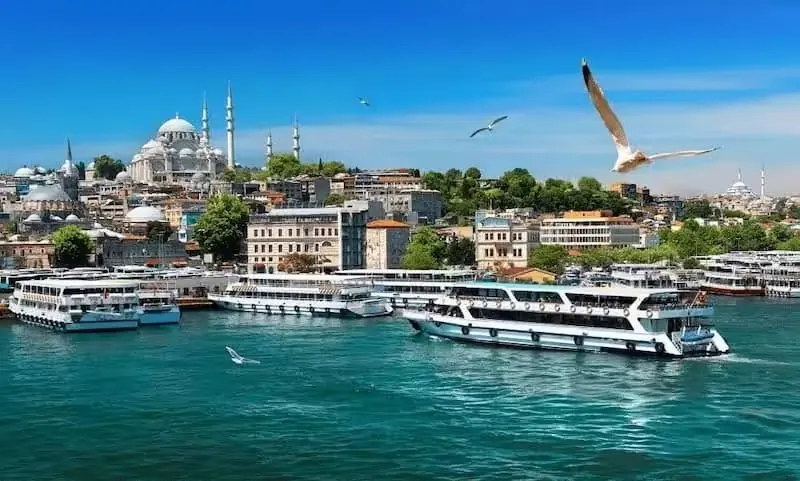
- Istanbul is more than 800 km in a straight line from the Syrian border. The risks are city risks: pickpockets, scams and crowds.
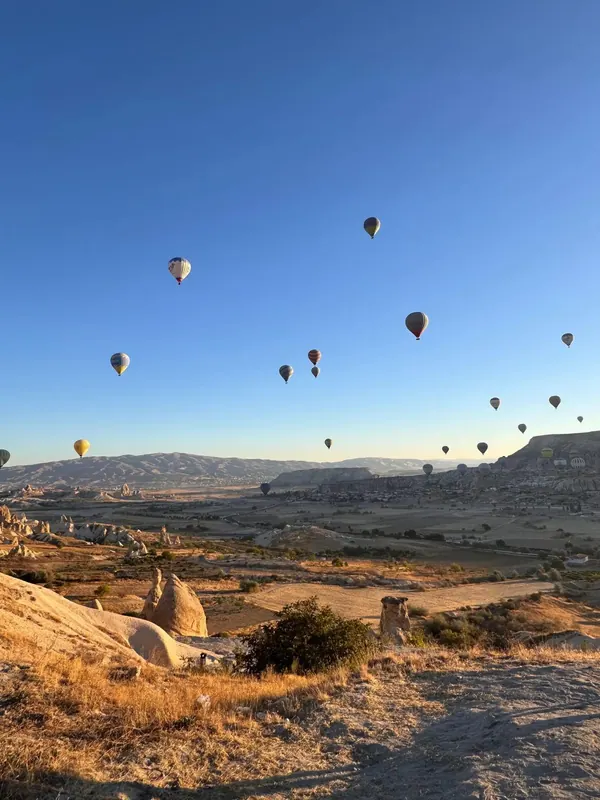
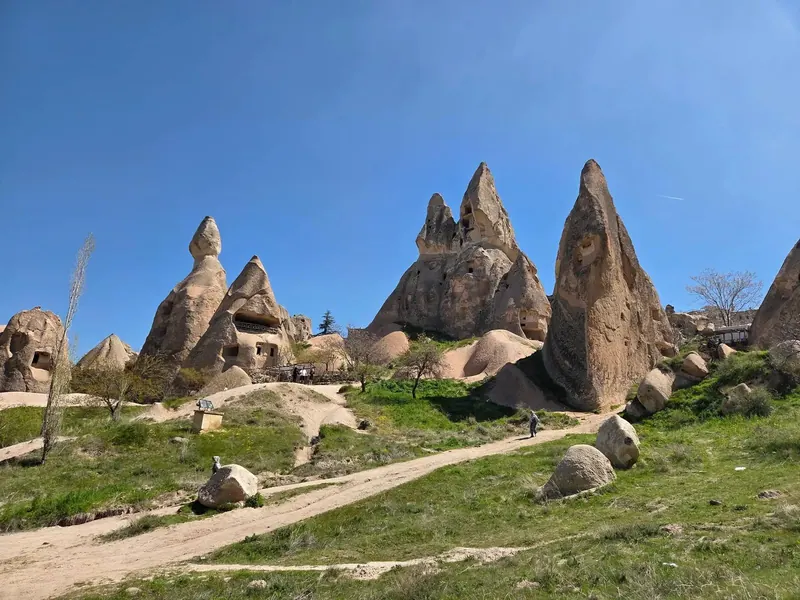
- Cappadocia (Göreme, Ürgüp, Uçhisar) is about 270 km from the nearest point of the border, with no warning on the region. Our Cappadocia tours run every day.
- Ephesus, Pamukkale, Bodrum, Fethiye and Antalya are roughly 500 to 800 km from the border.
- Göbeklitepe and Şanlıurfa are about 55 km from the border, and Mardin about 40 km. Both lie outside the 10 km zone, but check the advisories again just before you go. We run trips such as the Mount Nemrut and Göbeklitepe tour from Istanbul with flights.
Everyday risks in Istanbul: scams, taxis and pickpockets
Most visitors who have a bad experience in Turkey lose money, not their safety. The FCDO says pickpocketing and street robbery are common in Istanbul's main tourist areas. These are the tricks our guides see most often.
- The friendly stranger and the bar bill. A man, often alone and polite, starts a conversation near Taksim or Sultanahmet and suggests a drink at "a place he knows". The bill can run to hundreds of euros, with staff blocking the door. Choose your own bars and decline invitations from people you have just met.
- The dropped shoe-shine brush. A shoe-shiner drops a brush in front of you. When you pick it up, he insists on cleaning your shoes as thanks and then asks for an inflated fee. Hand the brush back and keep walking.
- Card machines set to euros. Some shops and restaurants offer to charge your card in euros or dollars. Always choose Turkish lira on the terminal, because the conversion rate is worse.
- Counterfeit notes. The FCDO warns that banks and exchange offices may refuse $50 and $100 bills because of fakes in circulation. Don't accept change in foreign currency from strangers or street money changers.
- Restaurant extras. Dishes you didn't order appear on the bill. Ask for a priced menu and query any unfamiliar line.
Taxis. Use a registered yellow, turquoise or black taxi, check the meter is running from the base fare, and note the plate number before you get in. The FCDO says that taking lifts from unofficial taxis is highly risky. The BiTaksi and iTaksi apps show the driver and plate in advance. A pre-booked private car with driver solves the problem for airport runs and late nights.
Drinks. The FCDO reports deaths and serious illness from methanol in fake or illegal spirits, including cases in Istanbul and Ankara. Buy branded drinks in reputable bars, keep your glass in sight, and get urgent medical help if anyone in your group has blurred vision or severe sickness after drinking.
Solo and female travellers
Turkey is a common choice for solo travellers, and Istanbul's main districts stay busy until late. Some figures put the risk in proportion. In 2025, British consular staff handled 29 reports of sexual assault, including rape, among 4.27 million British visitors. The FCDO says most happened in coastal resorts during the summer season, often involving someone the victim had met that day, including hotel or spa staff.
Practical habits that work:
- Don't share your hotel name or room number with people you have just met, on social media or in person.
- Use licensed operators for massages, boat trips and quad tours.
- Expect stares and some comments in conservative districts such as Fatih and Eyüp. Covering shoulders and knees draws less attention, and a scarf is required inside mosques.
- If you are harassed or assaulted, call 112, report it to your hotel, and contact your consulate.
For LGBT+ travellers, same-sex relationships are legal but not recognised, and authorities have banned or broken up Pride events in Istanbul since 2015. Discretion in public is advisable outside a few central Istanbul neighbourhoods.
Laws visitors get caught out by
- Carry your passport. Carrying photo ID is a legal requirement, and police run checks in Istanbul and at road checkpoints. A photo on your phone is not enough.
- Insulting the state, the flag, the President or Atatürk is a crime that carries 6 months to 3 years in prison, and it applies to online posts too.
- Antiquities. Buying or exporting antiquities can lead to 5 to 12 years in prison. Keep receipts for anything that looks old, including carpets, and don't pick up stones or tile pieces at ancient sites.
- Drugs carry 4 to 24 years in prison, and this applies to airport transit too.
Earthquakes and natural hazards
The February 2023 earthquakes centred on Kahramanmaraş killed more than 50,000 people in the southeast. In April 2025 a magnitude 6.2 earthquake in the Sea of Marmara was strongly felt in Istanbul, and aftershocks followed for days. No one can predict the next quake, but a few habits lower your risk:
- On arrival, find the stairs and the exit in your hotel, and choose a recently built or retrofitted hotel when you can.
- If the ground shakes, drop, cover and hold on under a sturdy table or next to an interior wall. Don't run for the stairs while the shaking lasts, and keep away from windows.
- Follow AFAD, Turkey's disaster and emergency agency, for official updates after any quake.
Wildfires are common on the coasts in summer, and dropping a cigarette in a risk area can mean a fine or prison. Heavy autumn and winter rain can flood roads and underpasses, so follow local instructions.
Health, water, emergencies and travel insurance
Emergency number: 112. One number covers ambulance, police, gendarmerie and fire anywhere in Turkey. Hotel staff and guides will call for you if language is a problem.
Tap water. İSKİ, Istanbul's water utility, says the mains water meets Turkish Ministry of Health and European standards. It also says old pipes and dirty rooftop tanks in some buildings can spoil it. Most locals drink bottled or filtered water, and visitors should do the same. Bottled water is cheap everywhere.
Medical care. Private hospitals in big cities are modern but charge foreigners in full. Pharmacies (eczane) are everywhere, and each district keeps one open overnight on a rota (nöbetçi eczane), with the address posted in every pharmacy window. Stray dogs are common, and rabies exists in Turkey, so seek treatment the same day after any bite or scratch.
Insurance. Take a policy that covers medical treatment, repatriation and the activities you plan, such as balloon flights, paragliding or quad safaris. The FCDO notes that insurance can be invalidated if you travel against its advice. For Turkey that only applies inside the 10 km Syrian border strip. Check your policy's wording on war and terrorism exclusions, given the regional situation.
Tours that cover this
If you want a local team watching the news and adjusting your plans for you, these trips stay in the regions with no travel warning:
- Istanbul Old City private tour, with Hagia Sophia, Topkapı and the Grand Bazaar, from $200. A licensed guide keeps the touts away.
- Cappadocia 3-day tour from Istanbul with flights, with the Red and Green tours, from $1,050.
- Private Ephesus tour with guide, van and skip-the-line entry, from $300.
- 8-day private Turkey tour covering Istanbul, Cappadocia, Ephesus and Pamukkale, from $2,250.
Or browse our tailor-made Turkey tour and multi-day trips.
Frequently Asked Questions
Is it safe to travel to Istanbul right now?
Yes. Neither the US nor the UK advises against travel to Istanbul, and millions of visitors pass through every month. The main risks are pickpocketing in crowded areas, bar and taxi scams, and occasional protests around Taksim. Use registered taxis or an app, keep valuables zipped away in Sultanahmet and on trams, and walk away from any demonstration.
Is Cappadocia safe to visit in 2026?
Yes. Cappadocia carries no travel warning from the US or UK and lies about 270 km from the Syrian border. The practical risks are on the activity side: book balloon flights only with licensed operators, use reputable companies for ATV and horse rides, and dress for cold dawns in winter. Flights only go ahead when the aviation authority clears the weather.
Which parts of Turkey should tourists avoid?
Avoid the strip within 10 km of the Syrian border, which both the US and UK advise against. The US also includes 10 km along the Iraqi border. Everywhere else is open, including Göbeklitepe, Mardin and Mount Nemrut in the southeast, though it makes sense to check the latest advisory a few days before you travel to those areas.
Is Turkey safe for American tourists?
Yes. Americans are at Level 2, "Exercise Increased Caution", the second of four levels. The State Department highlights terrorism, regional conflict and arbitrary detention. In practice, avoid political posts and arguments, carry your passport, steer clear of protests, and enrol in the STEP programme so the US embassy can contact you if anything changes.
Can you drink the tap water in Turkey?
It's best not to. Istanbul's water utility says the mains water meets health standards, but old pipes and rooftop tanks in many buildings can contaminate it before it reaches the tap. Locals mostly drink bottled or filtered water, and visitors should do the same. Tap water is fine for brushing your teeth, and bottled water is cheap everywhere.
What is the emergency number in Turkey?
Dial 112 for ambulance, police, gendarmerie and fire service anywhere in Turkey. It works from any mobile phone, including foreign SIM cards. If you don't speak Turkish, ask your hotel reception or your guide to call for you, and give the exact address or a pinned location. For lost passports or arrest, contact your consulate as well.
Sources: US Department of State, Türkiye Travel Advisory (travel.state.gov, issued 9 June 2026); UK Foreign, Commonwealth & Development Office, Turkey travel advice (updated 27 October 2026); Republic of Türkiye Ministry of Culture and Tourism arrival statistics via Hürriyet Daily News; Antalya Governorship COP31 notices via Daily Sabah; İSKİ statements via Cumhuriyet; AFAD — checked 5 November 2026. gov.uk/foreign-travel-advice/turkey
Written by the Get Turkey Tours team: licensed local guides and trip planners based in Istanbul.
Leave a Comment
Our private tours
Turkey Tour Package 8 Days: Istanbul, Cappadocia, Ephesus & Pamukkale
Fly between Istanbul, Cappadocia, Ephesus and Pamukkale over eight days, staying in 4 and 5 star hotels with breakfast every morning.
Mount Nemrut & Gobeklitepe Tour from Istanbul: 2 Days with Flights
Two days from Istanbul with round-trip flights: the stone heads of Mount Nemrut, the ancient temple of Gobeklitepe and a night in Sanliurfa, with guide, tickets and lunches.
Related articles
 Travel Tips
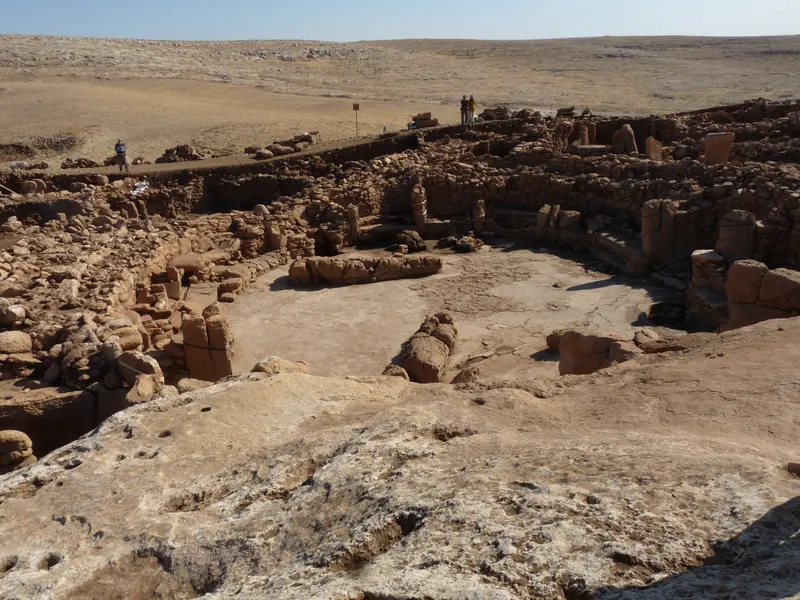
Karahan Tepe and Göbekli Tepe 2027: One-Day Plan, Tickets, Tours
Can you see Karahan Tepe and Göbekli Tepe in one day? Distances, the shared ticket and its 2027 price, Karahan Tepe's current closure, a day plan from Şanlıurfa and which tours include both.
Read More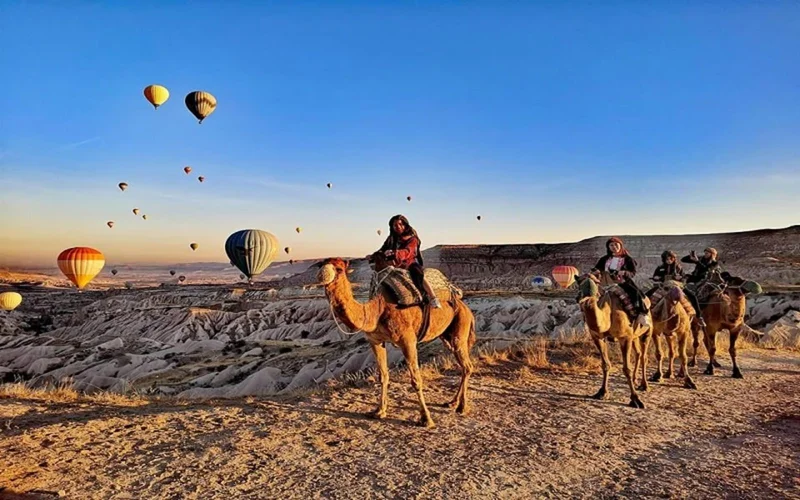 Travel Tips
Cappadocia with Kids: Balloon Age Limit, Family Cave Rooms, 3-Day Plan
The balloon age rule that operators actually publish, which cave rooms sleep a family of four, what children enjoy most and a 3-day family plan with real 2027 prices.
Read More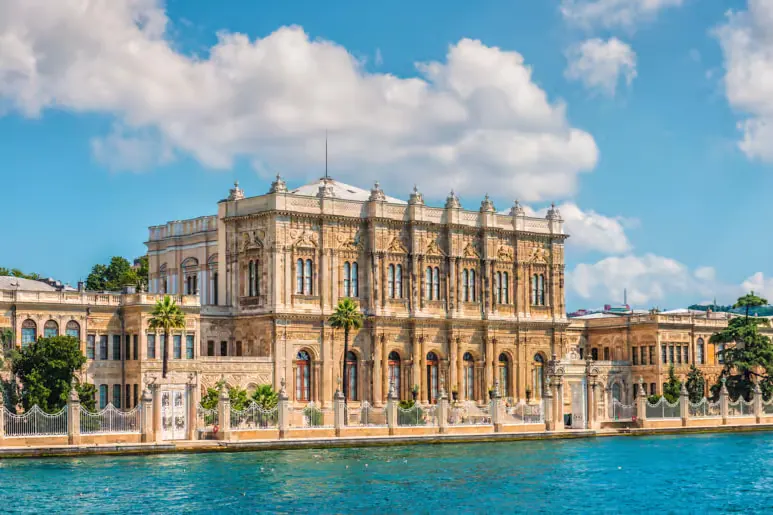 Travel Tips
Dolmabahçe Palace Tickets 2026-2027: Hours, Harem, Photo Rules
Official ticket prices and combined passes, 2027 closing days, what to see in the Selamlık and Harem, the new phone-photo rule, and three ways to pair the palace with a Bosphorus cruise.
Read More