

St Paul Biblical Tour of Turkey: 14 Days Private, Flights & Lunches
Overview
St Paul Biblical Tour of Turkey: 14 Days Private, Flights & Lunches
Over 14 days, this private journey follows the footsteps of St. Paul through the regions where the early Church took shape.
Built Around Church Groups
The programme was planned with church groups and Christian travellers in mind. It follows Paul's routes and links what you read in the Bible with archaeology and long-held tradition.
Antioch to the Aegean Coast
You start in Antioch in the far south, cross central Anatolia and finish on the Aegean shore. Along the way you see how the faith moved through changing landscapes, peoples and empires.
Every site is explained in its biblical and historical setting, and there is time to think about the hardships, endurance and spiritual growth of the first Christian communities.
Tour Info
Itinerary
Day 1 – Arrival in Istanbul
When you land, our representative is waiting at the airport and drives you to your hotel.
You have dinner and spend the night in Istanbul.
Day 2 – Flight to Hatay, Seleucia Pieria and Antakya
In the morning we fly to Hatay. This historic region is where the first Christian community put down roots. From the airport we head to Samandag (Seleucia Pieria). Paul and Barnabas set sail for Cyprus from this ancient port at the start of their first missionary journey.
At Seleucia Pieria we see:
- Titus Tunnel
- The rock-cut tombs
- Besikli Cave
All three show the skill of Roman engineers and the early Christian legacy of the area. In Paul's day the harbour held a strategic position and served as a key launch point for carrying the Gospel beyond Anatolia.
We then drive on to Antakya for dinner and the night.
Day 3 – Antioch: St. Peter's Church and Archaeology Museum
Antioch was one of the leading centres of the early Church, and it was here that the followers of Jesus were first given the name Christians.
Our visits today:
- St. Peter's Church: cut into the hillside, it is regarded as one of the oldest Christian places of worship. The first believers met here in the days of the apostles.
- Necmi Asfuroglu Archaeology Museum: a collection of fine mosaics and objects from ancient Antioch.
- Catholic Church of old Antioch: a place where Christian tradition continues to this day.
Afterwards we travel to Mersin, where we have dinner and stay the night.
Day 4 – Tarsus, Gumusler Monastery and Drive to Cappadocia
St. Paul was born in Tarsus, which in Roman times was a major centre of learning and culture.
In the city we see St. Paul's Well, the Ancient Street and Cleopatra's Gate.
We then set off for Cappadocia, stopping on the way at Gumusler Monastery, an early Christian complex cut into the rock.
Dinner and the night are in Cappadocia.
Day 5 – Cappadocia: Goreme Open Air Museum and Derinkuyu
We spend the whole day among the early Christian settlements cut into Cappadocia's volcanic rock. As the faith spread, this region served as a key refuge and a base for missionaries, which adds another layer to the story of Paul's time.
Our visits today:
- Goreme Open Air Museum: the Dark Church, Apple Church, Snake Church, St. Barbara Church and Tokali Church, all decorated with biblical frescoes.
- Derinkuyu Underground City: where persecuted Christians took shelter.
Dinner and the night are in Cappadocia.
Day 6 – Konya (Iconium) and Lystra
Today we drive to Konya. In ancient times the city was called Iconium, and it was a key stop on St. Paul's missionary routes.
On the first journey Paul and Barnabas preached in Iconium. Paul came back on the second journey with Silas, worked miracles and gave strength to the young church.
We also travel 47 km to Lystra (Klistra), where Paul's ministry reached a turning point. During his first journey an angry crowd stoned him here, yet he lived. On the second journey Timothy joined him in Lystra. Many local people accepted the faith that Paul and Barnabas preached, so Lystra became one of the first Christian communities in Anatolia.
Dinner and the night are in Konya.
Day 7 – Pisidian Antioch, Yalvac Museum and Drive to Antalya
From Konya we travel to Pisidian Antioch, a major Roman colony where Paul and Barnabas came during the First Missionary Journey.
Paul preached his first recorded sermon in this city, with the words "we now turn to the Gentiles". Nearly the entire town came out to listen, and the event marks a milestone in the early spread of Christianity.
Excavations have uncovered only part of the site. Among the remains are the Temple of Augustus, the Roman Baths, the Theater, the Tiberius Square, the Propylon, the Nymphaeum and stretches of the aqueduct.
Next we see the finds from the site at the Yalvac Archaeological Museum, then drive on to Antalya for dinner and the night.
Day 8 – Perge, Aspendos and Antalya (Attalia)
The day opens at Perge, the leading city of Pamphylia. Paul and Barnabas came here twice on their first missionary journey, and this is where Paul taught for the first time in the region. Its wide ruins include the Gymnasium, the Agora, Roman Baths, a street lined with columns, monumental gates and the Necropolis.
Next we drive to Aspendos and its Greco-Roman theatre, one of the ancient world's best-preserved theatres.
Returning to Antalya, we see Hadrian's Gate and the old harbour of Attalia, where Paul and Barnabas later boarded a ship back to Antioch.
Dinner and the night are in Antalya.
Day 9 – Laodicea, Colossae and Hierapolis (Pamukkale)
After breakfast the drive takes us to Laodicea, listed among the Seven Churches of Revelation. The ruins show how significant this Christian centre was: the Basilica, the Stadium, the Ephesian Gate, the Aqueduct and a statue of the Emperor Augustus.
Then we reach Colossae, still not excavated, the city to which Paul wrote his Epistle to the Colossians. It gives a sense of the early community that heard his teaching.
At Pamukkale we explore Hierapolis, the "Sacred City", which turned from a centre of pagan cults into a major Christian site. Tradition says the Apostle Philip lived in Hierapolis and died as a martyr under Domitian. Among the highlights:
- Martyrium of St. Philip
- Domitian Gate
- Arcadian Way
- Temple of Apollo
- Necropolis
- Roman Theatre
Dinner and the night are in Pamukkale.
Day 10 – Ephesus, House of the Virgin Mary and Basilica of St. John
Today belongs to Ephesus. Listed as a UNESCO World Heritage Site, it ranks among the best-preserved Roman cities anywhere.
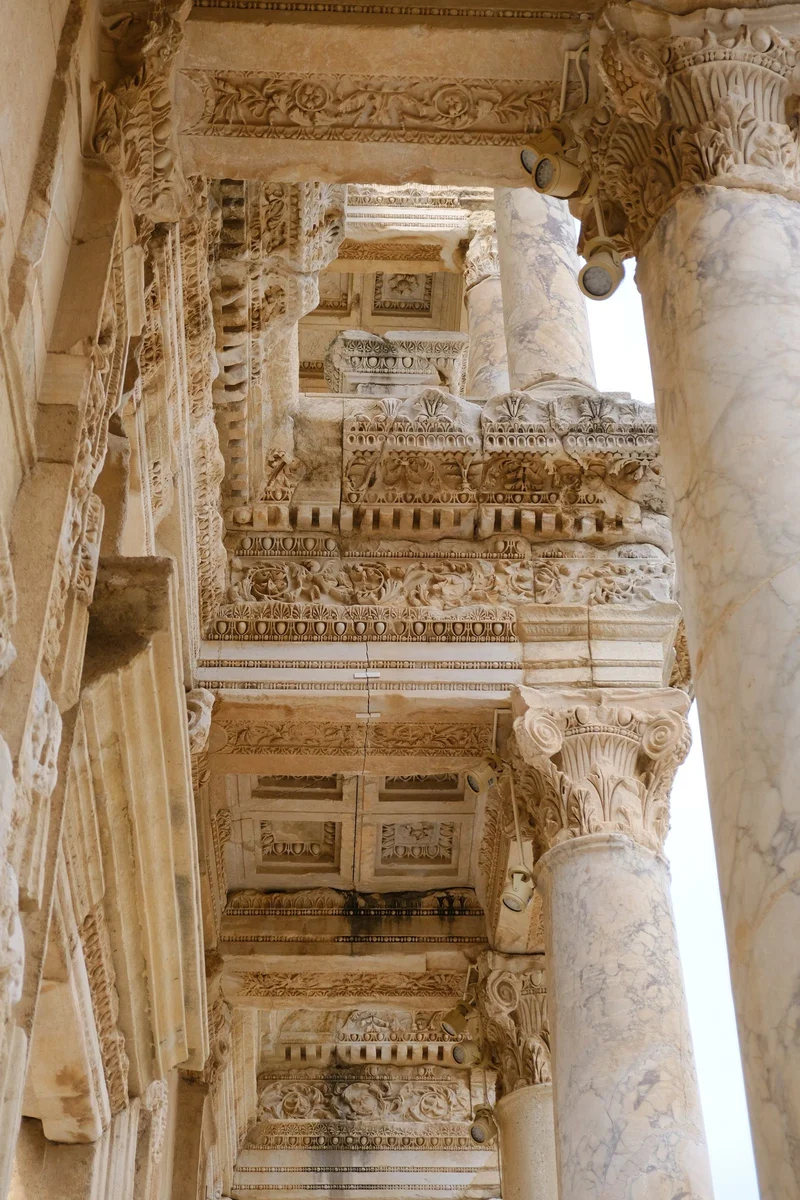
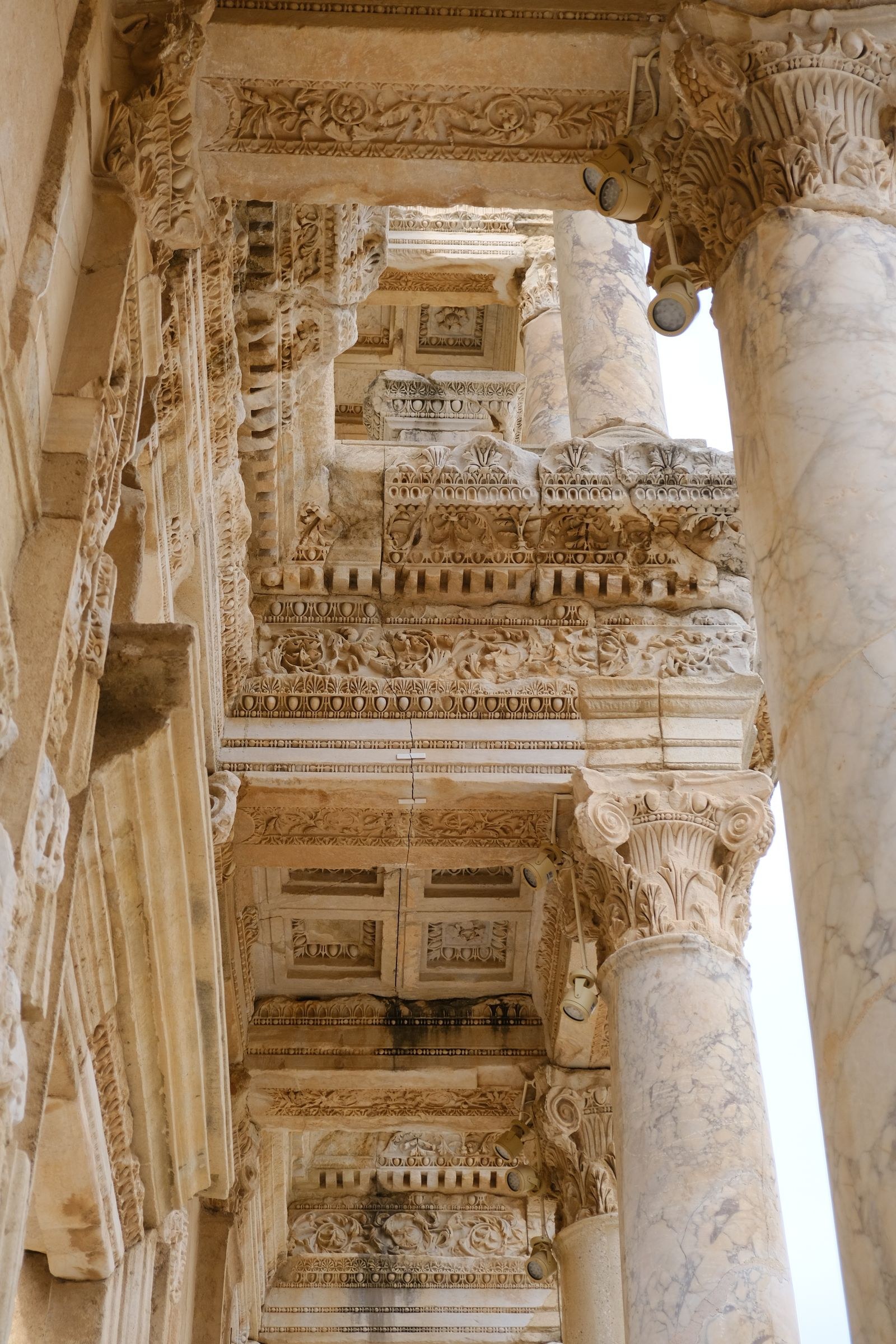
Walking its marble streets, we pass the Baths of Scholastica, the Library of Celsus and the Temple of Hadrian, and stand in the Great Theatre. Paul spent three years living in Ephesus and preached to its people.
Next is the House of the Virgin Mary on Mount Koressos. Tradition holds that Mary spent her last years in this simple stone house, cared for by St. John. Christians from around the world still come here on pilgrimage.
Ephesus also counts among the Seven Churches of Revelation, as the church rebuked for abandoning its first love, and it is said that John wrote his Gospel in the city.
Lunch is at a local restaurant. Afterwards it is on to the Basilica of St. John, where the apostle's tomb sits under the central dome. John, who wrote the Fourth Gospel, lived his final years in Ephesus, and it was on the island of Patmos that he wrote the Book of Revelation.
Dinner and the night are in Kusadasi.
Day 11 – Smyrna, Thyatira, Philadelphia and Sardis
The day starts in ancient Smyrna, counted among the Seven Churches of Revelation and praised for keeping its faith under persecution. Our stops:
- Church of St. Polycarp: the city's oldest church still in use, seen as an emblem of the Seven Churches. You have the chance to attend Mass here.
- The Ancient Agora: among the best-preserved Roman agoras of Asia Minor, it shows everyday life in early Christian times.
- Thyatira: like Smyrna, one of the Seven Churches. In antiquity it was famous for trade guilds and textiles, and it is connected with Lydia, the dealer in purple cloth. Here we see what remains of the ancient road, columns and signs of the early Christian community.
- Philadelphia: the "faithful church". Little has survived apart from the old walls and parts of a Byzantine basilica, yet the city is remembered for how loyal its first believers were.
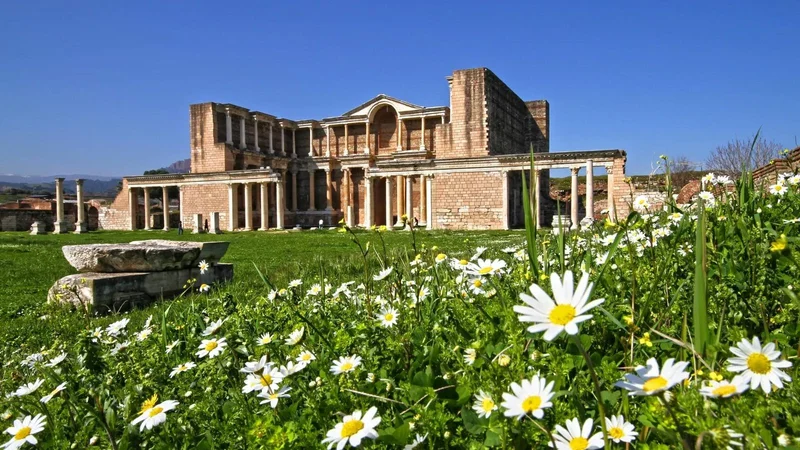
- Sardis: once the capital of Lydia and also among the Seven Churches, the one said to have a reputation for being alive while it was dead. We walk through the Gymnasium, the restored Synagogue, plus the Temple of Artemis and Cybele, which later became a Byzantine church. Together they offer a rare look at Jewish and early Christian heritage side by side.
Dinner and the night are in Sardis.
Day 12 – Pergamon, Assos and Alexandria Troas
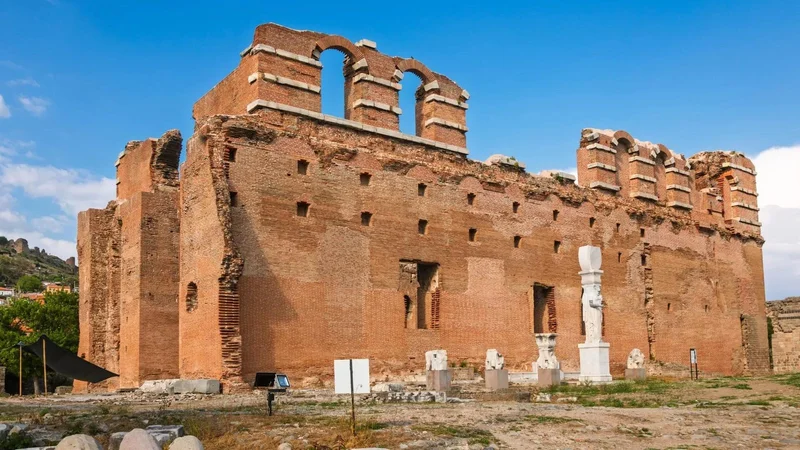
Our first stop is Pergamon, once a strong cultural and political power, known for its great acropolis, its famous library and its temples dedicated to Zeus and other deities.
From there we go to Assos, an ancient city on a hilltop overlooking the Aegean. The Temple of Athena on the acropolis has one of the best views in the area. Assos plays a special part in Paul's story. On his third journey his companions went ahead by sea, while he made the journey on foot from Alexandria Troas to meet them here, and from Assos he sailed for Lesbos on the way to Jerusalem.
We then reach Alexandria Troas. The city dates from 310 BC and ranks among the most significant biblical sites in Asia Minor. The Bible mentions it more than once, and it was central to Paul's ministry. In Troas Paul saw the vision of a man from Macedonia asking him to come to Europe, a moment that changed the course of Christianity's spread. On his third journey Paul brought Eutychus back from the dead here, and Troas is also where St. Luke joined Paul and stayed with him for a large part of his later travels.
We finish the day with the drive to Canakkale for dinner and the night.
Day 13 – Troy Ancient City, Troy Museum and Drive to Istanbul
Today we visit Troy, the legendary city that Homer's Iliad made famous. As we walk through the ruins, layers of history covering thousands of years come into view, along with the familiar wooden Trojan Horse replica.
Next is the Troy Museum, among the most important archaeological museums in Turkey. Its modern galleries bring the history and legends of Troy to life.
We then drive about four hours back to Istanbul, where we have dinner and stay the night.
Day 14 – Departure from Istanbul
The day is yours until it is time for the airport transfer and your flight.
Our services end here. Thank you for choosing to travel with us, and we hope to see you again.
Inclusions & Exclusions
- ✓Tour on a Private Basis
- ✓Professional Tour Guide
- ✓Economy Class Flights within Turkey
- ✓Private Van for All Transport
- ✓Transfers to and from the Airport
- ✓Skip-the-Line Help When Buying Tickets
- ✓Hotel Stays
- ✓Museum Tickets and Entry Fees for Attractions
- ✓Lunch Included
- ✕Lunches on the First and Last Day
- ✕International Flights
- ✕Hot Air Balloon Ride (optional)
- ✕Drinks
- ✕Personal Expenses
Cancellation Policy
Cancel at no charge until 7 days before your tour and you receive a full refund. If you cancel within the final 7 days before the tour, no refund is given. All times shown are local.
Write a review
Been on a trip with us? Tell other travelers how it went.
Travel guides
Following St. Paul on a 14-day private biblical tour: the key facts
Over fourteen days this private pilgrimage follows St. Paul's journeys through Turkey, starting at Antioch in the south, then through central Anatolia to the Aegean coast, the Seven Churches and Troas. It is built with church groups and Christian travellers in mind and combines archaeology, tradition and the Bible. The price covers economy-class flights within Turkey, transfers from and to the airport, a professional guide travelling with you in a private van, your accommodation, lunch, help skipping ticket lines, plus all museum tickets and attraction fees. Since the cost varies with your dates and group size, we quote it on request.
| Quick facts | |
|---|---|
| Length | 14 days |
| Cost | Quoted on request for your group and dates |
| Format | Private, built for church groups |
| Itinerary | From Antioch and Tarsus via central Anatolia and Cappadocia to Perge, then on to the Seven Churches, Ephesus and Troas |
| What you get | Flights within Turkey, transfers, a private van with a professional guide, accommodation, lunch, museum tickets |
| What you pay extra | Flights to and from Turkey, drinks and dinners unless stated, tips |
Where in Turkey did St. Paul travel?
Paul came from Tarsus, in what is now southern Turkey, and a large part of the Acts of the Apostles is set in Anatolia. On his missionary journeys he went from Antioch, where his followers were first called Christians, to Perge, Pisidian Antioch, Iconium (Konya) and Lystra. He then went west to Ephesus, where he lived for years, and north to Troas, from where he sailed to Europe. The tour follows this route in sequence, so the story builds as you go.
What are the main sights?
| Region | Biblical and historical places |
|---|---|
| South | Tarsus, where Paul was born, and Antioch |
| Central Anatolia | Kilistra, linked with Lystra, and Iconium (Konya) |
| Cappadocia | The rock-cut churches at Goreme Open Air Museum |
| Mediterranean | Hadrian's Gate in Antalya and Perge |
| Seven Churches | Ephesus, Smyrna, Pergamon, Thyatira, Sardis, Philadelphia, Laodicea |
| Ephesus | Library of Celsus, the Great Theater, the Virgin Mary's House, St. John's Basilica |
| North Aegean | Troy and Troas |
How does it stack up against our shorter faith tours?
| Faith tour | Days | From |
|---|---|---|
| Biblical Ephesus and Pamukkale, 2 days | 2 days | $720 per person |
| Seven Churches of Revelation, 5 days | 5 days | $1,800 per person |
| Seven Churches plus Istanbul | 7 days | $2,050 per person |
| Istanbul, Cappadocia, Saint Paul and the Seven Churches | 10 days | $2,750 per person |
| This tour | 14 days | On request |
Who is the tour made for?
Pastors, congregations and church groups, Bible study groups and Christian travellers who want an in-depth look at the places of the New Testament. Being private, the tour lets you plan readings and services at meaningful sites, and the pace can suit older travellers.
When should you go?
The route runs through the hot south, the high central plateau and the Aegean coast, so April to June and September to October are ideal. In summer the south and the interior are very hot; in winter the plateau is cold.
What should you pack?
Comfortable walking shoes, layers for the plateau, sun protection, modest clothes for mosques and churches, a Bible, and your passport for the flights within Turkey.
How does booking work?
Send your group size, preferred dates and any services you would like to hold through the form on this page or on WhatsApp. We confirm the price and a detailed itinerary in writing, and payment is due only after confirmation. More ideas are in our Troy tours and Turkey tour packages.
Similar tours
Gallipoli & Troy Tour from Istanbul: 2 Days Private with Guide & Van
Two private days from Istanbul: the First World War battlefields and memorials at Gallipoli, followed by the ruins of legendary Troy.
Troy Private Day Trip from Istanbul: Trojan Horse and Troy Museum
Travel privately from Istanbul to legendary Troy to see the Trojan Horse, the Troy Museum and the layered ruins of the ancient city.