

 Eastern Turkey
Ani Ruins (Kars)
Ani, 44 km east of Kars on the border between Turkey and Armenia, is the ruin of a medieval capital once called the city of 1001 churches. A red-stone cathedral, churches and city walls remain on a deserted plateau. Tickets cost €8 in 2026, and the site opens daily 08:00-17:00.
Tours that visit Ani Ruins
Eastern Turkey & Black Sea Tour Package: 7 Days from Rize to Van
A private 7-day tour of Turkey's Black Sea and eastern regions, from the tea gardens of Rize and the Ayder Plateau to Ani, Kars, Mount Ararat, Ishak Pasha Palace and Akdamar Island.
Black Sea & Eastern Turkey Private Tour: 7 Days from Istanbul
A private 7-day trip through the Black Sea and eastern Turkey, from the tea gardens of Rize to Kars, Mount Ararat, Ishak Pasha Palace and Lake Van.
Picture a capital with walls, palaces, markets and dozens of churches, now standing by itself on a plateau of grass, with no town nearby and a deep river gorge forming a national border. This is Ani. Around the year 1000 it ranked among the great cities of the Caucasus, and travellers knew it as the city of 1001 churches. Today only a few buildings survive, spread over open land where you hear nothing but wind and birds.
Key information
| Item | Details |
|---|---|
| Opening hours | 08:00-17:00; tickets sold until 16:30 (as of October 2026) |
| Closed | Open daily |
| Ticket | €8 for foreign visitors (2026) |
| Time needed | 2.5 to 3 hours |
| Location | Ocakli village, 44 km east of Kars, next to the Armenian border |
| What to bring | Water, a sun hat and a layer against the wind; the plateau has no shade |
History
The city occupies a triangle of ground between two gorges, which made it a natural stronghold. The Bagratid kings of Armenia chose it as their capital in 961, and over the next decades trade made it wealthy and it filled with churches, palaces and walls. The architect Trdat designed the cathedral, finished around 1001; he also helped repair the dome of Hagia Sophia in Constantinople.
Byzantium took over the city in 1045, and in 1064 the Seljuk Turks led by Alp Arslan captured it. Kurdish Shaddadid emirs and Georgian kings ruled it after that, and it prospered again in the 12th and 13th centuries. In the 14th century Mongol raids, changing trade routes and earthquakes brought a slow decline, and the city was empty by the 18th century. UNESCO listed Ani as a World Heritage site in 2016.
Highlights
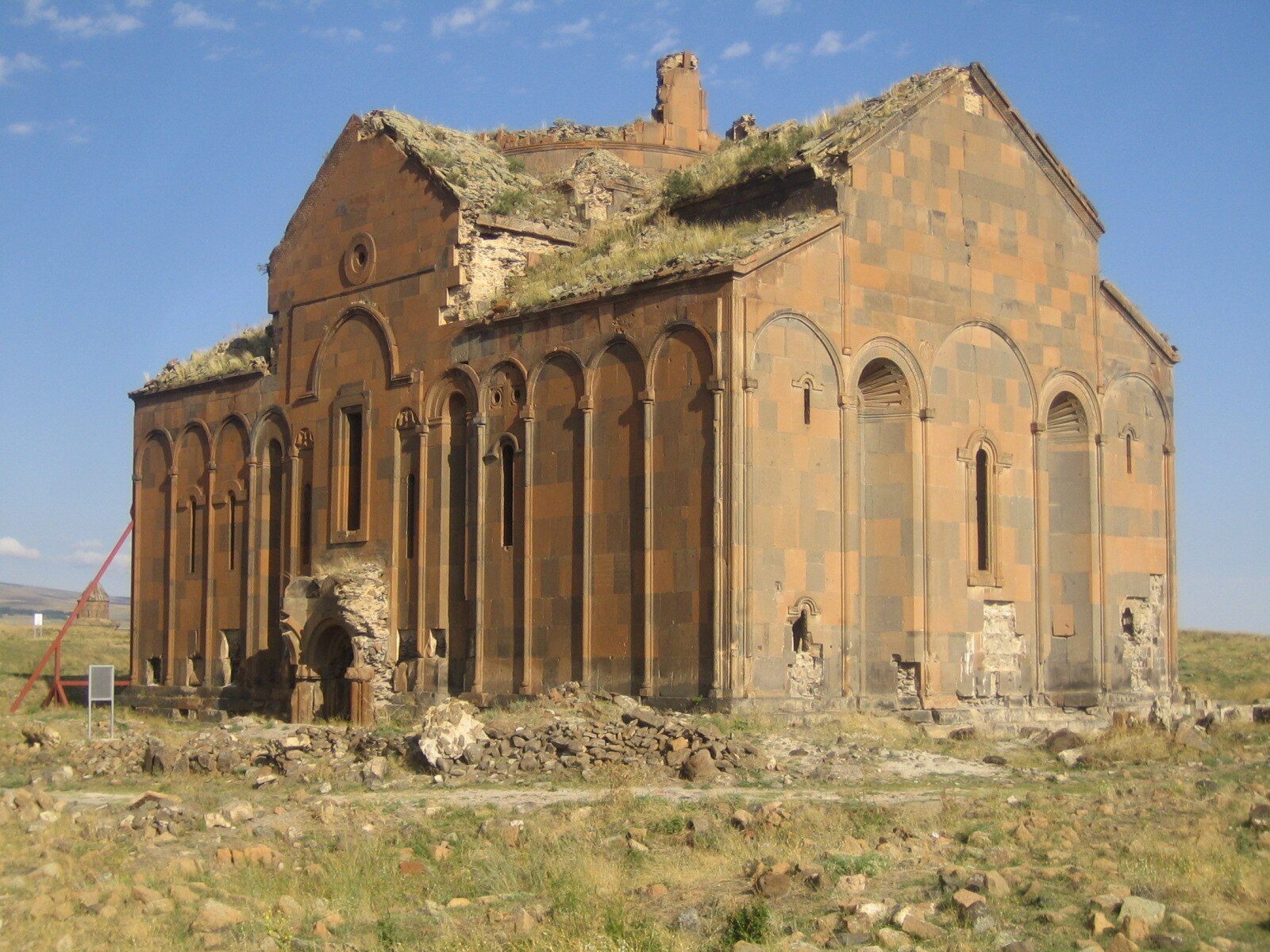
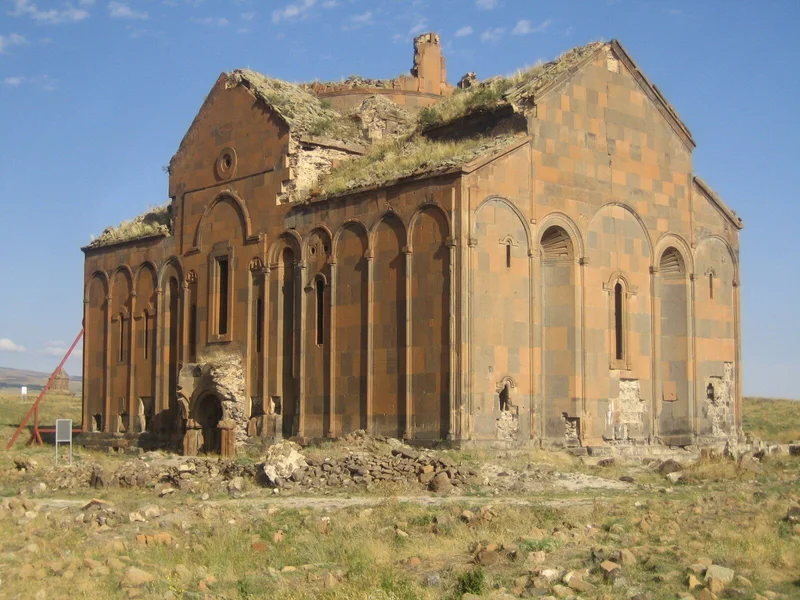
- The cathedral. A big church of red stone, its walls decorated with tall blind arches. An earthquake brought down the dome, so the inside now lies open to the sky.
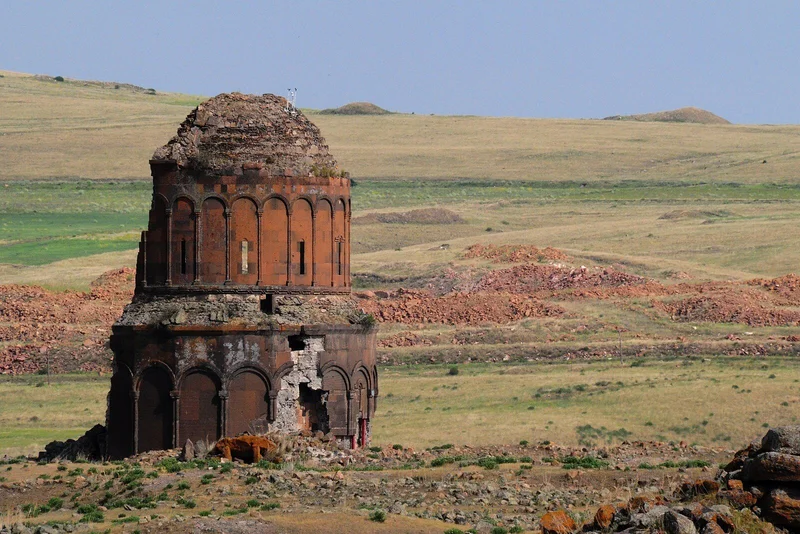
- The Church of the Holy Redeemer. A circular church of the 1030s, built to keep a piece of the True Cross. One half fell in the 20th century, and what remains shows its structure in cross-section.
- The Church of St Gregory of Tigran Honents. Paid for by a rich merchant in 1215, it has Ani's best-preserved frescoes, among them scenes from the life of St Gregory the Illuminator.
- The Manuchihr Mosque. An 11th-century building by the Shaddadid ruler of Ani, with a tall minaret overlooking the gorge. It is often called one of the first Turkish mosques in Anatolia.
- The city walls and Lion Gate. A double line of towered walls guards the open side of the plateau; you enter by the main gate.
- The gorge. At the southern edge the Arpacay river forms the border, and the far bank is Armenia.
On the site
A circuit of the main monuments is roughly four to five kilometres over paths and grass. On the open plateau things look close but take longer to reach than you think. Parts near the border may be off limits; keep to the signs and stay behind barriers. An audio guide can be rented. Apart from a small cafe by the entrance there is very little, so carry water and snacks.
When to go
The best window is late May to early October. At about 1,500 metres the plateau has long, cold, snowy winters, although the site does not close. Summer days are warm, but strong wind is common. In the late afternoon the red stone glows warm and golden.
The private Ani Ruins and Kars tour with hotel pick-up gives you a full visit to Ani followed by Kars, with the Kars Museum, the castle and the Fethiye Mosque, in around seven hours. Ani is also part of the 21-day Highlights of Turkey private tour package, which travels right across the country from Istanbul to Mount Nemrut, Van and Kars. Another major site in the east is covered on our Mount Nemrut page.
Getting there
Kars airport has flights from Istanbul and Ankara, and the city is also the last stop of the Eastern Express from Ankara, a scenic train ride that is popular in winter. From Kars it is about 45 minutes to Ani by taxi, tour or hire car. No regular public bus serves the site.
Tips
- Begin at the cathedral and the churches by the gorge, then make your way back towards the gate.
- Wear solid shoes. The paths are uneven and a few slopes are steep.
- Pack sun cream. At this altitude the sun is strong even on cool days.
- Back in town, try Kars gravyer cheese and kaz (goose) dishes.
Frequently Asked Questions
What is the entry fee for Ani?
Foreign visitors pay €8 in 2026.
What is the distance from Kars to Ani?
Roughly 44 km, about 45 minutes by car. Public transport does not run there regularly.
Where does the name city of 1001 churches come from?
It refers to the many churches built when Ani was the Armenian capital, around the year 1000. Only a few remain standing.
How much time do I need at Ani?
Two and a half to three hours to see the main churches, the mosque and the walls on foot.
Can you visit Ani in winter?
Yes, it opens every day, though the plateau is cold and snow is common. The most comfortable months are late spring to early autumn.