

 Pamukkale
Laodicea on the Lycus (Laodikeia)
Laodicea is the ancient city 12 km south of Pamukkale and one of the Seven Churches of Revelation. It opens daily, 08:00-17:30 in winter, and entry for foreign visitors is €12.
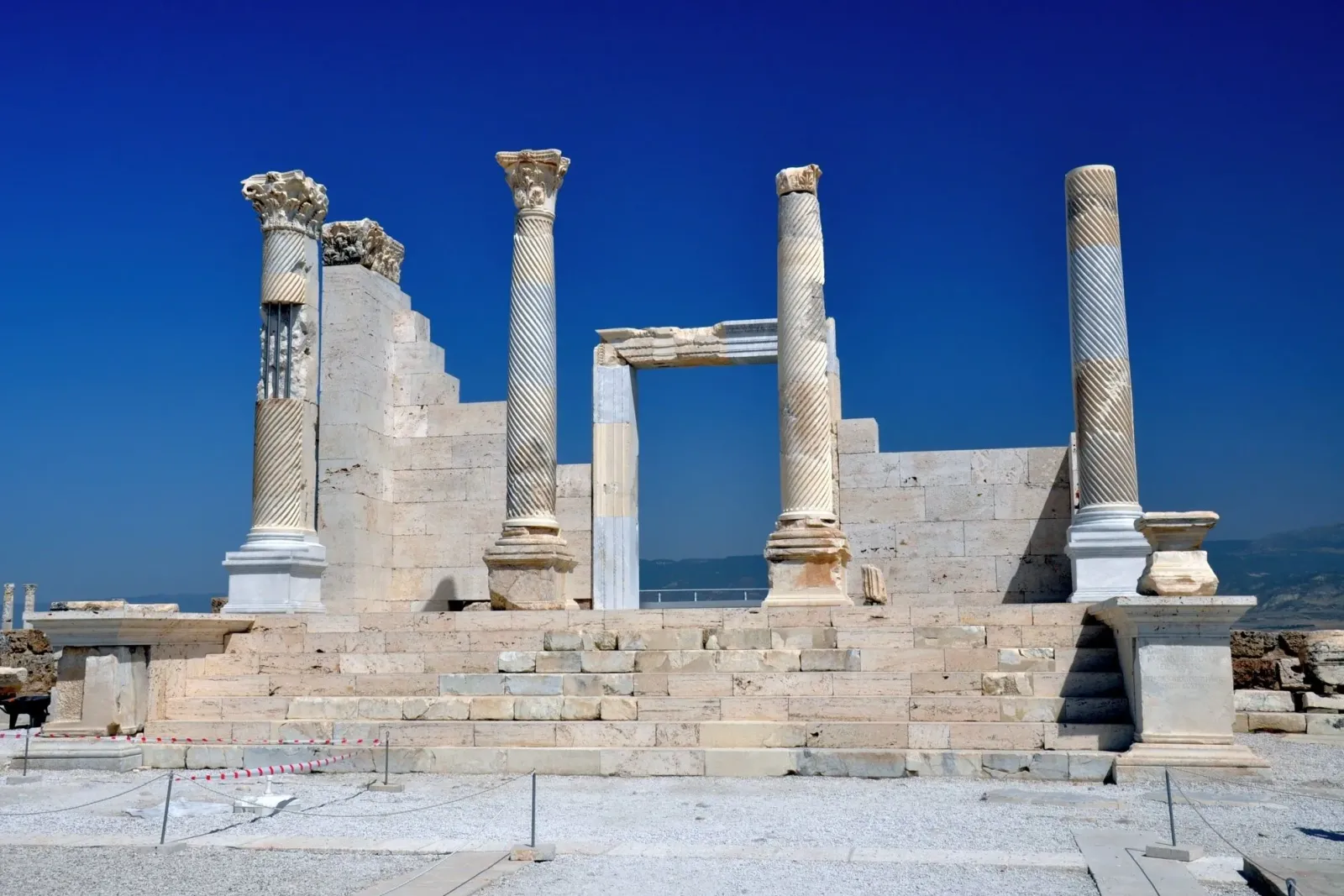
Laodicea, Laodikeia in Turkish, is the ruined Greek and Roman city on the edge of Denizli, about 12 km south of Pamukkale by road, and it is best known as one of the Seven Churches of Revelation. Excavations by Pamukkale University, under way since 2003, have uncovered a restored colonnaded street, two theatres, a temple, a 4th-century church under a protective roof and what the Ministry of Culture and Tourism calls the largest stadium in Anatolia. Entry for foreign visitors is €12, and the site opens every day. Our Laodicea, Kaklık Cave and Honaz Waterfall tour, from $414 per person, starts its day here.
Key details at a glance
| Topic | Information |
|---|---|
| Opening times | 08:00-17:30, last tickets at 17:00 (muze.gov.tr, 6 November 2026). The Ministry's turkishmuseums.com lists 08:00-21:00 from 1 May to 1 October |
| Closing days | None; open every day |
| Ticket | €12 for foreign visitors aged 8 and over. The Museum Pass The Mediterranean is valid |
| How long | 1.5 to 2.5 hours for the main streets, the church and a theatre |
| Where | Goncalı, Denizli: about 12 km by road from Pamukkale village and 9 km from central Denizli |
| Note | The site is large and open, so bring a hat and water. An audio guide is available |
History in brief
People lived here from about 5500 BC, according to the Ministry, but the city itself was founded between 261 and 253 BC by the Seleucid king Antiochus II, who named it after his wife Laodike. Ancient writers called it Laodikeia ad Lykum, Laodicea on the Lycus, to tell it apart from other cities of the same name.
Rome took control of the region in 130-129 BC, and the orator Cicero stayed here in 50 BC to deal with legal disputes in the city. Laodicea grew rich on trade, thanks to its position at a crossroads: textiles above all, but also marble, grain and livestock. Under Emperor Caracalla it put up monumental buildings and minted fine coins. The end came with a massive earthquake in the reign of Phocas (602-610). Its people moved away to the sites of Denizli-Kaleiçi and Hisarköy on the slopes of Mount Babadağ, and in Seljuk and Ottoman times the ruins were known as Ladik.
Laodicea and the Seven Churches
For Christian visitors, Laodicea is the seventh and last of the churches addressed in the Book of Revelation. The letter in Revelation 3:14-22 contains the famous rebuke of a church that is "lukewarm, neither hot nor cold". The city also appears in the letters of Paul: in Colossians 4:13-16 he mentions the believers in Laodicea and Hierapolis, sends greetings to Laodicea and asks that his letter be read in the church of the Laodiceans.
The Ministry notes that Laodicea became a centre of pilgrimage in the 4th century and that its church was built in the reign of Constantine (306-337), after Christianity was legalised in 313. Excavation of the Church of Laodicea is complete and a protective roof now covers it; the conservation work won a special Europa Nostra award in 2016. Laodicea has been on UNESCO's Tentative List for World Heritage since April 2013.
What to see
The city was laid out on a grid and covers a large area. The Ministry lists two theatres, four baths, five agoras, five monumental fountains (nymphaea), two main gates, the council house, temples, a gymnasium, churches and a monumental street, with cemeteries on all four sides. The highlights for a first visit:
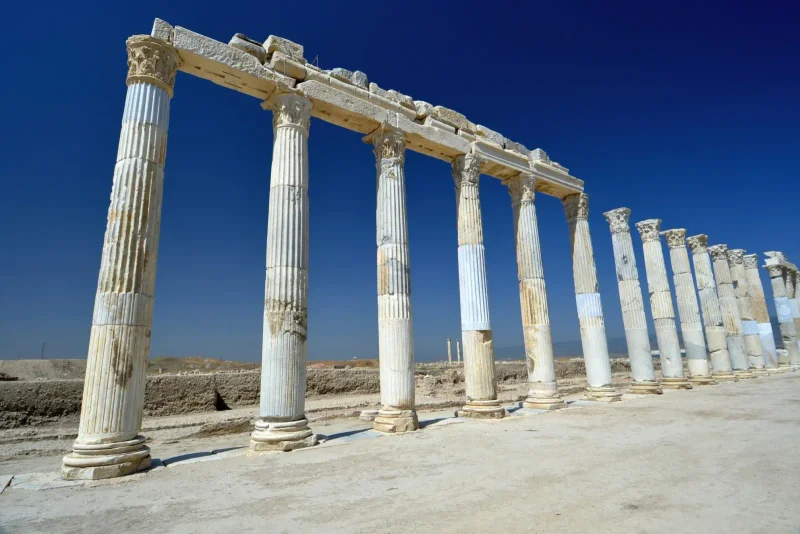
- Syria Street. The colonnaded avenue, excavated and restored, with columns standing again along it.
- The Church of Laodicea. The large early church under its modern roof, a focus for pilgrim groups.
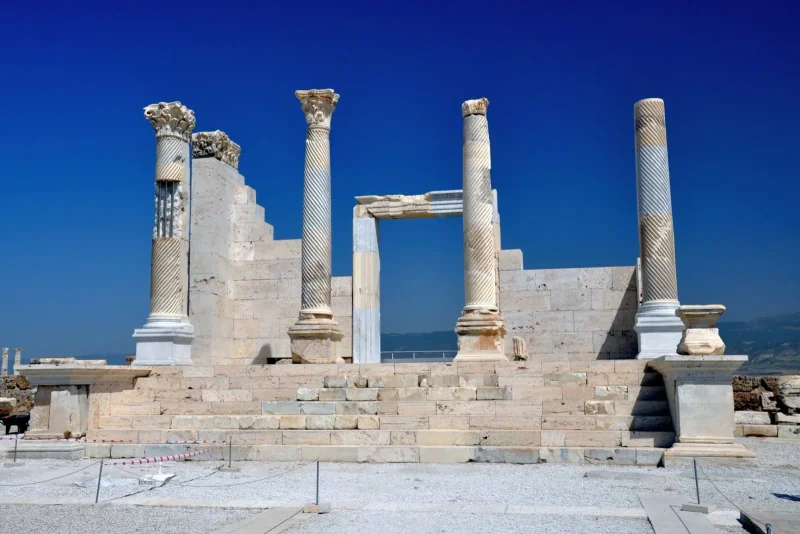
- Temple A. Excavated and restored by the excavation team.
- The theatres. Two of them, the West Theatre and the North Theatre; restoring the West Theatre's stage building is part of the 2026 work programme.
- The stadium. In the words of the Ministry, the largest in Anatolia.
- The fountains. Among them the fountain of Septimius Severus and the Nymphaeum of Trajan.
Excavation continues all year: the Pamukkale University team's 2026 work programme includes the council house (bouleuterion), the South Agora, a round building identified as the prytaneion, the Ephesus Gate and the Asopos Bridge.
How to get there
Laodicea lies in Goncalı, between Pamukkale and Denizli. By road it is about 12 km and 15 minutes from Pamukkale village, and about 9 km from central Denizli. The practical ways to get there are by car, by taxi or on a tour; if you are based in Pamukkale, a half day is enough. Our Pamukkale destination page has more on the area around it.
Best time and how long to stay
Spring and autumn are the most comfortable seasons. The site is open and exposed, so on a summer day go early or late; the long summer hours listed by the Ministry make a late visit possible. In winter the site closes at 17:30, with the last tickets at 17:00.
Give yourself 1.5 to 2.5 hours for Syria Street, the church, Temple A and one of the theatres. Add an hour if you want to walk out to the stadium and the fountains.
Combining Laodicea with nearby places
- Pamukkale and Hierapolis. The white travertines and the ancient spa city are 12 km away; see our Pamukkale travertines and Hierapolis guide. Laodicea in the morning and Hierapolis in the afternoon makes a full day.
- The Antique Pool. End the day with a warm soak among sunken columns in Hierapolis; our Antique Pool guide has the details.
- Kaklık Cave and Honaz. Both are on our Laodicea day tour. Mount Honaz National Park, which the Ministry recommends nearby, has forest walks and waterfalls.
- The other churches. Ephesus, Smyrna, Pergamon, Thyatira, Sardis and Philadelphia complete the set; our guide to Seven Churches of Revelation tours compares routes, and more trips are listed under religious tours.
Practical tips
- Bring a hat, sun cream and water; you walk long distances on open ground.
- Wear shoes with a good grip for the marble paving and uneven stones.
- If you read the letter to Laodicea on site, have Revelation 3:14-22 saved on your phone.
- The Museum Pass The Mediterranean (7 days, €90) is valid here and, according to the Ministry, at more than 40 sites in Denizli, Antalya, Mersin and Adana, so it can pay off on a longer trip through the south-west.
Tours that visit Laodicea
- Laodicea, Kaklık Cave and Honaz Waterfall day tour: from $414 per person. About seven hours from your Pamukkale hotel, 09:30 to around 16:30, with a guide, lunch and entrance fees included.
- Seven Churches of Revelation tour, 5 days: from $1,800 per person. All seven churches with a private biblical guide; Day 4 covers Laodicea, Hierapolis and Pamukkale.
- Biblical Turkey tour, 3 days: from $1,640 per person. The Seven Churches on full board; the second day ends at Laodicea after Sardis, Philadelphia and Hierapolis.
- Seven Churches of Revelation tour, 7 days: from $2,050 per person. The seven churches plus the Basilica of St John, the House of the Virgin Mary and a final guided day in Istanbul.
Frequently Asked Questions
Is Laodicea worth visiting?
Yes, especially if you are already in Pamukkale. Laodicea is 12 km away and has a restored colonnaded street, a large 4th-century church under a protective roof and a stadium the Ministry calls the largest in Anatolia. For Christian travellers it is one of the Seven Churches of Revelation, and entry costs €12.
How far is Laodicea from Pamukkale?
About 12 km by road, a drive of around 15 minutes from Pamukkale village. The site lies in Goncalı, on the edge of Denizli, about 9 km from the city centre. It pairs easily with Hierapolis on the same day, or you can join our Laodicea day tour, which picks up from central Pamukkale hotels.
What are Laodicea's opening hours?
In winter Laodicea opens every day from 08:00 to 17:30, with the ticket office closing at 17:00, according to the Ministry's muze.gov.tr page checked on 6 November 2026. The Ministry's turkishmuseums.com lists longer hours, 08:00-21:00, from 1 May to 1 October. There is no weekly closing day.
How much is the entrance fee for Laodicea?
Foreign visitors aged 8 and over pay €12, according to the Ministry of Culture and Tourism's turkishmuseums.com. The Museum Pass The Mediterranean, valid for 7 days and priced at €90, also covers the site. On our Laodicea day tour and our 3-day biblical tour, the entrance fee is included in the price.
Is Laodicea one of the Seven Churches of Revelation?
Yes. Laodicea is the seventh church addressed in the Book of Revelation, in chapter 3, verses 14 to 22, the letter that calls its church lukewarm. The Ministry notes that the city became a pilgrimage centre in the 4th century, and the excavated Church of Laodicea dates from the reign of Constantine.
Can you visit Laodicea and Pamukkale in one day?
Yes. The two sites are about 12 km apart, so a morning at Laodicea and an afternoon at the travertines and Hierapolis fit easily into one day. Start at Laodicea while it is cool, then move to Pamukkale, where the site stays open until 18:00 in winter and later in summer.
Sources: Republic of Türkiye Ministry of Culture and Tourism (muze.gov.tr and turkishmuseums.com), Pamukkale University Laodikeia excavation (laodikeia.pau.edu.tr), UNESCO Tentative List, the Bible (Revelation 3:14-22; Colossians 4:13-16), OpenStreetMap routing — checked 6 November 2026.