

Travel Tips7 November 202613 min read
What to Buy in Cappadocia: Pottery, Carpets, Wine and Export Rules
Avanos pottery, Kayseri carpets, kilims, onyx, Emir wine and edible gifts: what to buy in Cappadocia, where each is really made, how to dodge pushy shops and what you can take home.
In this article
- What to buy in Cappadocia: the short list
- Avanos pottery: Cappadocia's registered souvenir
- Carpets and kilims: how to judge one in a showroom
- Onyx, evil-eye beads and other small gifts
- Wine from Cappadocia's volcanic soil
- Edible souvenirs: pumpkin seeds, pekmez, simit and beans
- What to buy in Göreme, and where to shop in Cappadocia
- How to avoid pushy shops in Cappadocia
- Can I take a carpet out of Turkey? Export rules and home allowances
- Tours that cover this
- Frequently Asked Questions
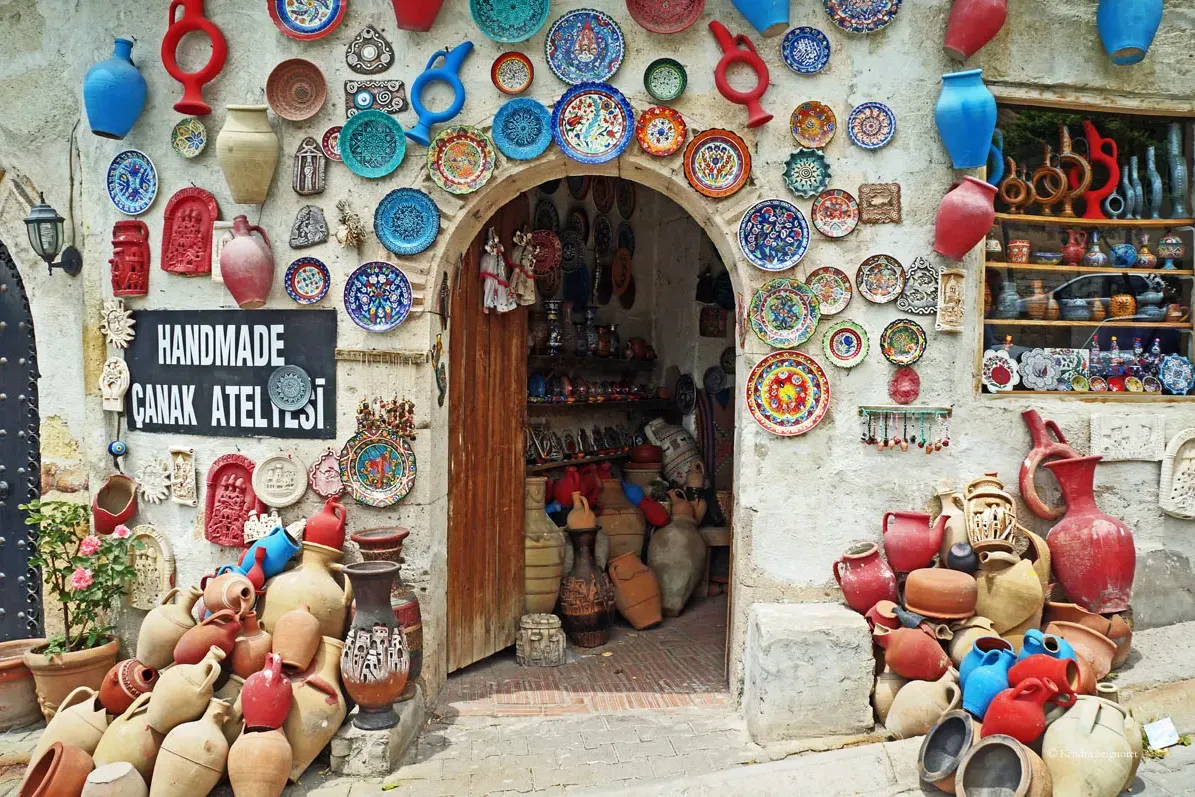
The best things to buy in Cappadocia are Avanos pottery, hand-knotted carpets and flat-woven kilims, onyx carvings, white wine from the local Emir grape, and food that survives the flight home, such as Nevşehir pumpkin seeds, grape molasses (pekmez) and Nevşehir simit. Of the crafts made in Nevşehir province, which covers most of Cappadocia, only the pottery carries a protected name: "Avanos Çömleği" has been a registered designation of origin since 25 December 2017, and you can watch it being made on our Cappadocia Red Tour with lunch, which stops at a pottery workshop in Avanos. Below: what is made locally, what to check before you pay, how to handle pushy showrooms and what you can carry home from a 2027 trip.
What to buy in Cappadocia: the short list
Geographical indications registered with TÜRKPATENT, Türkiye's patent office, are the surest sign of a local product.
| Souvenir | Where it is made | Check before you pay | Good to know |
|---|---|---|---|
| Pottery | Avanos, from local clay | The "Avanos Çömleği" label and indication emblem | Protected since 2017 |
| Hand-knotted carpet | Nevşehir and Kayseri; registered names in Bünyan and Yahyalı | Knot count, materials, written invoice | Both names protected since 1996 |
| Kilim | Many regions, with registered kilims from Sivas to Hakkari | Even weave, colours, weight | Flat-woven, lighter than a carpet |
| Onyx | Carvers such as those in Hacıbektaş, often using stone from elsewhere | Where stone and carving come from | Heavy to carry |
| Cloth dolls | Soğanlı village, Kayseri province | Hand-sewn local costume | Registered in 2005 |
| Evil-eye beads | Görece, İzmir province | Glass or plastic | Görece's registered indication since 2005 |
| Emir wine | Ürgüp and nearby vineyard towns | Grape and vintage | No shop sales from 22:00 to 06:00 |
| Pumpkin seeds | Nevşehir province | The indication logo on the pack | Protected since 2019 |
| Pastırma and sucuk | Kayseri | Fenugreek-paste coating | Eat them here |
Avanos pottery: Cappadocia's registered souvenir
GoTürkiye, the official tourism site, traces Avanos's pottery back to the Hittites, says locals take their clay from the nearby Kızılırmak, the Red River, and dates some techniques still in use to around 2000 BC; it names wine jugs among the pieces made. The registration file, filed by Avanos Municipality, adds the details:
- The clay. It is dug from old beds of the Kızılırmak and the surrounding hills, and its hematite turns fired pieces light yellow, light red or dark red.
- The history. Excavations at Topaklı Höyük, in Avanos district, found pottery in 24 building levels from the Bronze Age to the Byzantine period.
- The method. Clay is crushed, sieved, mixed with water and rested for a day in the workshop, the işlik, then thrown on a wheel called a çıkrık and fired at 750 to 950 °C in kilns that traditionally burn wood, sawdust and straw.
- The proof. Pieces sold under the name must carry the indication emblem with the words "Avanos Çömleği". Ask to see it, and ask whether the piece was thrown and painted in that workshop.
On our group Cappadocia Red Tour you can try the clay yourself; buying is your choice and is not part of the tour price. Our page on Avanos covers the rest of the town.
Carpets and kilims: how to judge one in a showroom
GoTürkiye lists "wool and natural dyed carpets" among Nevşehir's handicrafts, with silk and pottery. Two of Türkiye's oldest registered carpet names come from neighbouring Kayseri province, both protected since 1 September 1996; their files are a useful benchmark when a dealer quotes numbers:
- Bünyan El Halısı: 36 knots per 10 cm one way and 42 the other, or 1,512 per dm², with a 5–6 mm wool pile on a cotton warp and weft.
- Yahyalı El Halısı: 30 by 35 knots per 10 cm, or 1,050 per dm², all wool.
Both use the Turkish double knot. The Yahyalı file says these carpets have been woven for about 250 years and became known worldwide especially through tourists visiting Cappadocia, and describes navy, dark green, red and burgundy-brown tones with stylised plant and geometric motifs. A kilim is flat-woven: the coloured weft passes through the warp instead of being knotted, so it has no pile and weighs less than a carpet of the same size.
Before paying for either, get in writing:
- Origin and age, since new and old pieces follow different export rules.
- Knot count and materials, checked against the figures above.
- Dyes, natural or synthetic.
- An invoice with size, materials and price, plus shipping terms if the shop sends it.
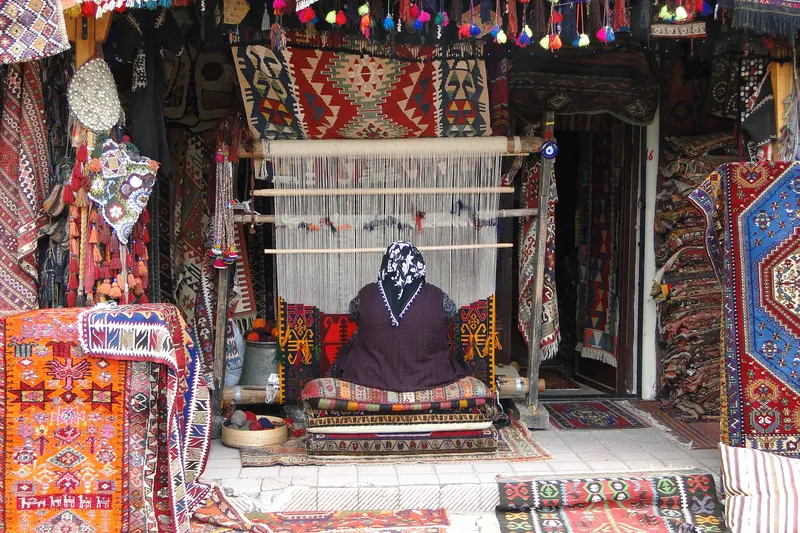
Photo: Adam Jones from Kelowna, BC, Canada, CC BY-SA 2.0, via Wikimedia Commons
Onyx, evil-eye beads and other small gifts
Onyx. Hacıbektaş, a Nevşehir district, is known for its greenish onyx and a stone carvers' guild said to date back about 500 years to the Hacı Bektaş lodge. A 2014 study published by Middle East Technical University found that local quarrying stopped in the 1990s and that the onyx worked there came from other provinces and even Pakistan. The same study lists what the workshops make from it: jewellery, prayer beads, keyrings and small fairy chimneys, eggs and animals. Ask where the stone and the carving come from. Day 4 of our four-day private Cappadocia tour visits an onyx workshop.
Soğanlı dolls. The cloth dolls of Soğanlı, a village in Kayseri province, are a registered indication, sewn by local girls and women in the costume of the village's older women. They range from about 20 cm to 70 cm and often hold a tiny water jug, a spindle or a baby.
Evil-eye beads. The blue nazar boncuğu is easy to find in Cappadocia, but the registered name, "Görece Nazar Boncuğu", has belonged since 2005 to Görece in İzmir province, on the Aegean. Buy the beads as a cheap gift, not as a Cappadocian craft.
Wine from Cappadocia's volcanic soil
GoTürkiye calls Cappadocia "famous for its white wine speciality made from the local Emir grape" and says its wineries are open to visitors all year. The oldest is Turasan in Ürgüp, founded in 1943 by Hasan Turasan and, by its own account, the region's first wine producer. It puts the region's vineyards at an average of 1,000 to 1,200 metres and describes Emir as a white grape native to the Nevşehir plateau, with high acidity and citrus and green-apple notes. It opens from 09:00 to 18:00 every day, at Tevfik Fikret Caddesi 44.
Two Turkish rules matter to wine buyers. Under Law No. 4250, alcohol cannot be sold retail between 22:00 and 06:00, and it cannot be sent to consumers through mail-order sales, so buy bottles during the day and carry them in checked luggage. Day 3 of our four-day private tour has an afternoon tasting at Turasan; see also our wine tours.
Edible souvenirs: pumpkin seeds, pekmez, simit and beans
- Nevşehir pumpkin seeds are sold raw or roasted, salted or unsalted; some producers still roast them in stone ovens. The indication logo is compulsory on every pack, and GoTürkiye notes the harvest is in early September.
- Grape molasses (pekmez), which GoTürkiye says goes into local dishes such as apricot stew and zerdeli pilav.
- Nevşehir simit, registered in 2020, is almost rectangular, raised with a natural chickpea yeast, made without sugar or salt, and keeps for seven to ten days.
- Nevşehir grape pickle became a registered indication on 31 August 2026: Parmak grapes with sugar, water and a preservative, fermented for three months at 5 to 10 °C, ideally in rock-cut cold stores. A women's cooperative in Nevşehir filed the registration.
- Derinkuyu dried beans, protected since 2021, cook in about 20 minutes and keep their shape.
- Kayseri pastırma, sucuk and packaged mantı. The cured beef and spicy sausage have been registered names since 2002, and the mantı registration allows a dried, packaged version. All three contain meat, so check the food rules first.
What to buy in Göreme, and where to shop in Cappadocia
Göreme. Many visitors stay in Göreme, where the souvenirs above are sold but few are made: pottery comes from Avanos, the registered carpets from Kayseri's weaving towns and evil-eye beads from Görece. Buy small gifts in Göreme and big pieces where they are made.
Avanos is the place for pottery, with workshops where you can try the wheel; all three of our Red Tours stop at one. Ürgüp is the place for wine, with Turasan in town; see our page on Ürgüp and Temenni Hill. Uçhisar and Ortahisar are also on GoTürkiye's Nevşehir vineyard route; combine a stop with Uçhisar Castle. Kayseri, which has one of Cappadocia's two airports, is home to registered pastırma, sucuk and mantı, and its province holds the carpet towns of Bünyan and Yahyalı; see our Kayseri Airport transfer guide.
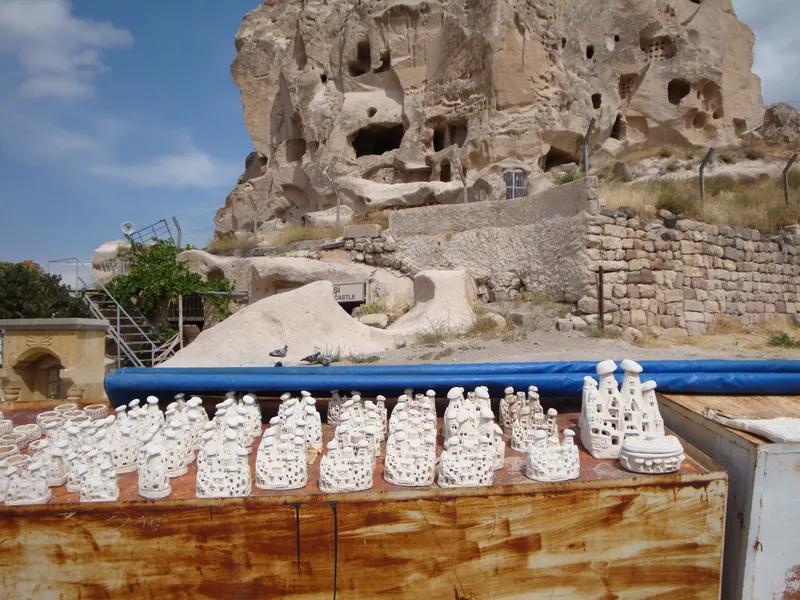
Photo: mayatomo, CC BY-SA 3.0, via Wikimedia Commons
How to avoid pushy shops in Cappadocia
- Know which stops are optional. On our Red and Green tours with lunch the local shop visit is optional, and the Avanos workshop is a demonstration. On a private Cappadocia tour your group sets the timing, so ask at the start for no shopping stops.
- Set your budget first. A glass of tea is hospitality, not a promise to buy.
- Ask the questions in this guide about emblems, knots and materials. If the answers are vague, leave.
- Get everything in writing, including the final price and any shipping cost, insurance and delivery date.
- Pay by card, in lira. If the machine offers your home currency, choose lira; the conversion at the till is usually worse.
- Say no and walk away: "Hayır, teşekkürler" means "No, thank you". And never buy "antiques" without papers, for the reasons below.
Can I take a carpet out of Turkey? Export rules and home allowances
Antiquities stay in Türkiye. Law No. 2863 on the Conservation of Cultural and Natural Property bars the export of protected movable cultural property (Article 32), and illegal export carries five to twelve years in prison plus a judicial fine (Article 68). The UK government's travel advice, updated on 27 October 2026, warns that some historical items sold legally in Turkish markets and antique shops are still illegal to export.
Older carpets and kilims can be checked. Ethnographic items may be bought and sold freely inside Türkiye, but anything leaving can be inspected by a ministry museum or by specialists at customs exits; pieces judged unsuitable go back to the owner on condition that they stay in Türkiye (Article 24). For an older piece, ask for museum directorate paperwork before you pay. No paperwork, no purchase.
New carpets. Keep the invoice with you when you fly.
Nothing from the ground. Belgium's foreign ministry warns that taking any object, however small, from an archaeological site is a crime under Turkish law.
Tax-free. Ask big shops for a tax-free form; our Istanbul shopping guide explains the refund.
At home, your own country's limits apply; these were the rules on 7 November 2026, so check again before you fly in 2027.
| Arriving in | Other goods free of duty | Wine | Meat and dairy |
|---|---|---|---|
| United States | $800 per returning resident | 1 litre of alcohol within the exemption, aged 21+ | Most beef, lamb and goat barred from countries with foot-and-mouth disease; declare all food |
| Great Britain | £390, or £270 by private plane or boat | 18 litres of still or sparkling wine | No meat or milk products from outside the EU; honey up to 2 kg |
| European Union | €430 by air or sea, €300 otherwise | 4 litres of still wine | No meat or milk products; honey up to 2 kg |
Türkiye reported more than 1,100 foot-and-mouth outbreaks in 2025, according to a UK government assessment, so the US rule applies to pastırma, sucuk and meat-filled mantı. A carpet also counts towards the goods allowance.
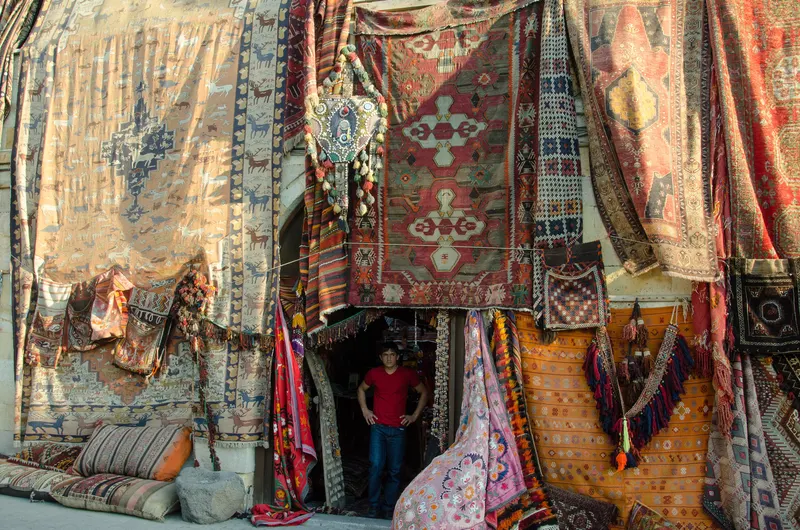
Photo: lasserbua, CC BY 2.0, via Wikimedia Commons
Tours that cover this
Our Cappadocia tours leave shopping to you. These include the workshops above:
- Cappadocia Red Tour with Lunch: Pasabag, Zelve, Avanos & Love Valley: 6 hours, from $80 per person, with an Avanos pottery workshop, lunch and entry fees.
- Cappadocia Red Tour: Guided North Valleys Day Trip with Lunch: from $50 per person, with an Avanos workshop where you try the clay.
- Private Cappadocia Red Tour – North Valleys, Lunch and Own Guide: from $161 per person, with your own guide and vehicle.
- Cappadocia Private Tour 4 Days: Valleys, ATV, Horse Riding, Wine: 4 days and 3 nights, from $1,100 per person, with an Avanos pottery session, a Turasan tasting and an onyx workshop; entry tickets, meals and workshop fees are listed as extras, so ask for the written plan.
No prepayment needed: pay on the tour day.
Send us your dates on WhatsApp and we will build the Avanos stop into your plan, starting with the Cappadocia Red Tour with lunch.
Frequently Asked Questions
What is the best thing to buy in Cappadocia?
Avanos pottery, because it is made from local clay and protected by the registered name "Avanos Çömleği"; look for the emblem with those words. For something larger, a hand-knotted carpet or a kilim are the classic buys. To eat or drink, choose Nevşehir pumpkin seeds, simit or Emir white wine.
What should I buy in Göreme?
Small, light gifts: painted bowls, onyx pieces, pumpkin seeds and a bottle of Emir wine, bought before 22:00, when shops must stop selling alcohol. For a wider choice, go where things are made: Avanos for pottery, Ürgüp for wine and Kayseri province for registered carpets. Our Red Tour from Göreme stops at an Avanos pottery workshop.
Where is the best place to shop in Cappadocia?
It depends on what you want. Avanos is best for pottery and Ürgüp for wine, where the Turasan winery opens from 09:00 to 18:00 every day. Göreme suits small souvenirs near your hotel, and Kayseri province is home to registered pastırma, sucuk and mantı and to the carpet towns of Bünyan and Yahyalı.
Do I have to buy anything at the Avanos pottery workshop?
No. On our Red Tours the Avanos stop is a demonstration of how pottery is made, and on the group tour you can try the clay yourself. Buying is your choice and is not included in the tour price. If you buy, get an invoice and any shipping terms in writing.
Can I take a carpet out of Turkey?
Yes, if it is new or cleared for export; keep the invoice for a new carpet. Older carpets and kilims can count as ethnographic items under Law No. 2863: they sell freely in Türkiye, but a ministry museum or customs specialists can inspect them on departure, and unsuitable pieces must stay. Ask for museum paperwork before paying for an old piece.
How much wine can I bring home from Cappadocia?
It depends on where you live. A US resident aged 21 or over can include 1 litre of alcohol in the $800 duty-free exemption. Great Britain allows 18 litres of still or sparkling wine and the EU 4 litres of still wine. Turkish law bars sending alcohol through mail-order sales, so carry bottles in checked luggage.
Can I take pastırma or sucuk home?
Usually not. Great Britain and the EU do not let travellers bring in meat or meat products from Türkiye, and the US Department of Agriculture bars most beef, lamb and goat products from countries with foot-and-mouth disease, which Türkiye reported more than 1,100 times in 2025. Eat them here and pack pumpkin seeds, pekmez or simit instead.
What is Cappadocia famous for?
Its fairy chimneys, cave churches and sunrise balloon flights, and, for food and shopping, Avanos pottery, Emir white wine and testi kebab cooked in a sealed clay jug. GoTürkiye also lists silk, wool and natural-dyed carpets among Nevşehir's handicrafts. The Göreme Open-Air Museum has been on UNESCO's World Heritage List since 1985.
Sources: TÜRKPATENT geographical indication registry and files (ci.turkpatent.gov.tr); GoTürkiye pages (Pottery Making, Nevşehir, Taste Cappadocia) and Vineyards of Türkiye brochure; Turasan winery; D. Akbulut, UTAK 2014 proceedings (METU); Laws No. 2863 and 4250 (mevzuat.gov.tr); GOV.UK Turkey travel advice (updated 27 October 2026), duty-free and food import guidance; Belgian Foreign Affairs travel advice for Turkey (2 July 2026); Your Europe allowances and food rules (European Commission); 19 CFR 148.33; USDA APHIS traveller guidance; UK government foot-and-mouth outbreak assessment, 23 December 2025 — checked 7 November 2026.
Written by the Get Turkey Tours team: licensed local guides and trip planners based in Istanbul.
Leave a Comment
Our private tours
Cappadocia Red Tour with Lunch: Pasabag, Zelve, Avanos & Love Valley
A full-day small-group Red Tour of North Cappadocia covering Goreme Panorama, Devrent Valley, Pasabag, Avanos pottery, Zelve and Love Valley, with lunch.
Cappadocia Red Tour: Guided North Valleys Day Trip with Lunch
A 7-hour guided group tour of north Cappadocia with Devrent Valley, Pasabag, Avanos pottery, the Goreme panorama, Zelve and Uchisar Castle. Lunch and entry fees included.
Related articles
 Travel Tips
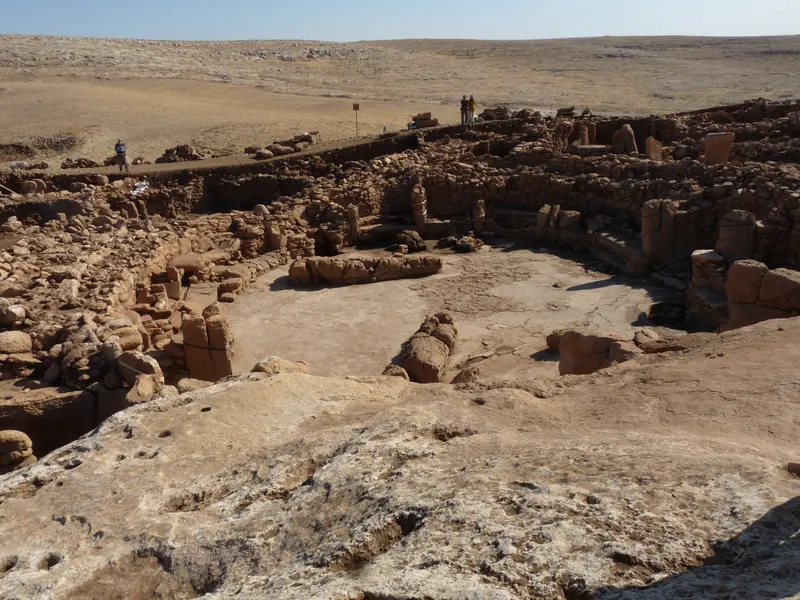
Karahan Tepe and Göbekli Tepe 2027: One-Day Plan, Tickets, Tours
Can you see Karahan Tepe and Göbekli Tepe in one day? Distances, the shared ticket and its 2027 price, Karahan Tepe's current closure, a day plan from Şanlıurfa and which tours include both.
Read More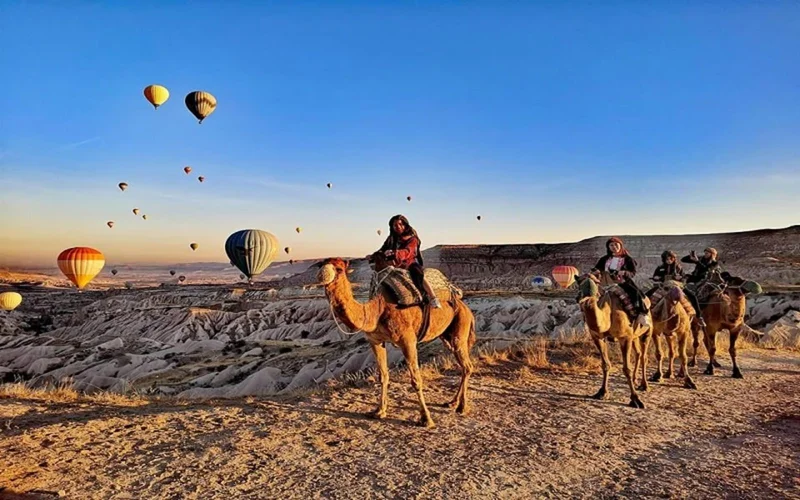 Travel Tips
Cappadocia with Kids: Balloon Age Limit, Family Cave Rooms, 3-Day Plan
The balloon age rule that operators actually publish, which cave rooms sleep a family of four, what children enjoy most and a 3-day family plan with real 2027 prices.
Read More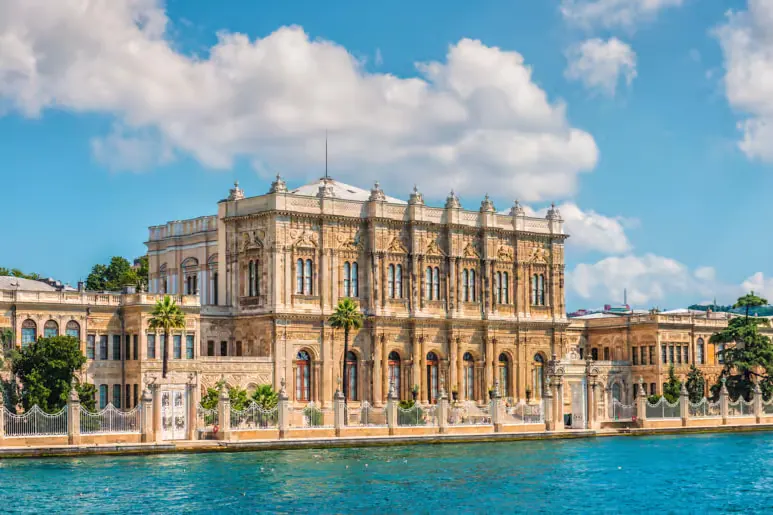 Travel Tips
Dolmabahçe Palace Tickets 2026-2027: Hours, Harem, Photo Rules
Official ticket prices and combined passes, 2027 closing days, what to see in the Selamlık and Harem, the new phone-photo rule, and three ways to pair the palace with a Bosphorus cruise.
Read More