

Tours & Experiences8 November 202614 min read
Whirling Dervish Ceremony in Istanbul: Where to See It, Times, Prices
Where to see a real sema in Istanbul: Hodjapasha's nightly ceremony and the Kasımpaşa Mevlevi Lodge, times and prices, the Galata lodge museum, what each part means, etiquette and Konya's Şeb-i Arus.
In this article
- Where to see the whirling dervishes in Istanbul: the venues compared
- Hodjapasha Cultural Center: a sema every evening in Sirkeci
- Galata Mevlevi Lodge Museum: Istanbul's oldest Mevlevi lodge
- Kasımpaşa Mevlevi Lodge and other lodge ceremonies
- What the sema means: the ceremony step by step
- Ceremony or show? How to tell the difference
- Etiquette and planning your evening
- Beyond Istanbul: Şeb-i Arus in Konya and the sema in Cappadocia
- Tours that cover this
- FAQ – Whirling dervish ceremony in Istanbul
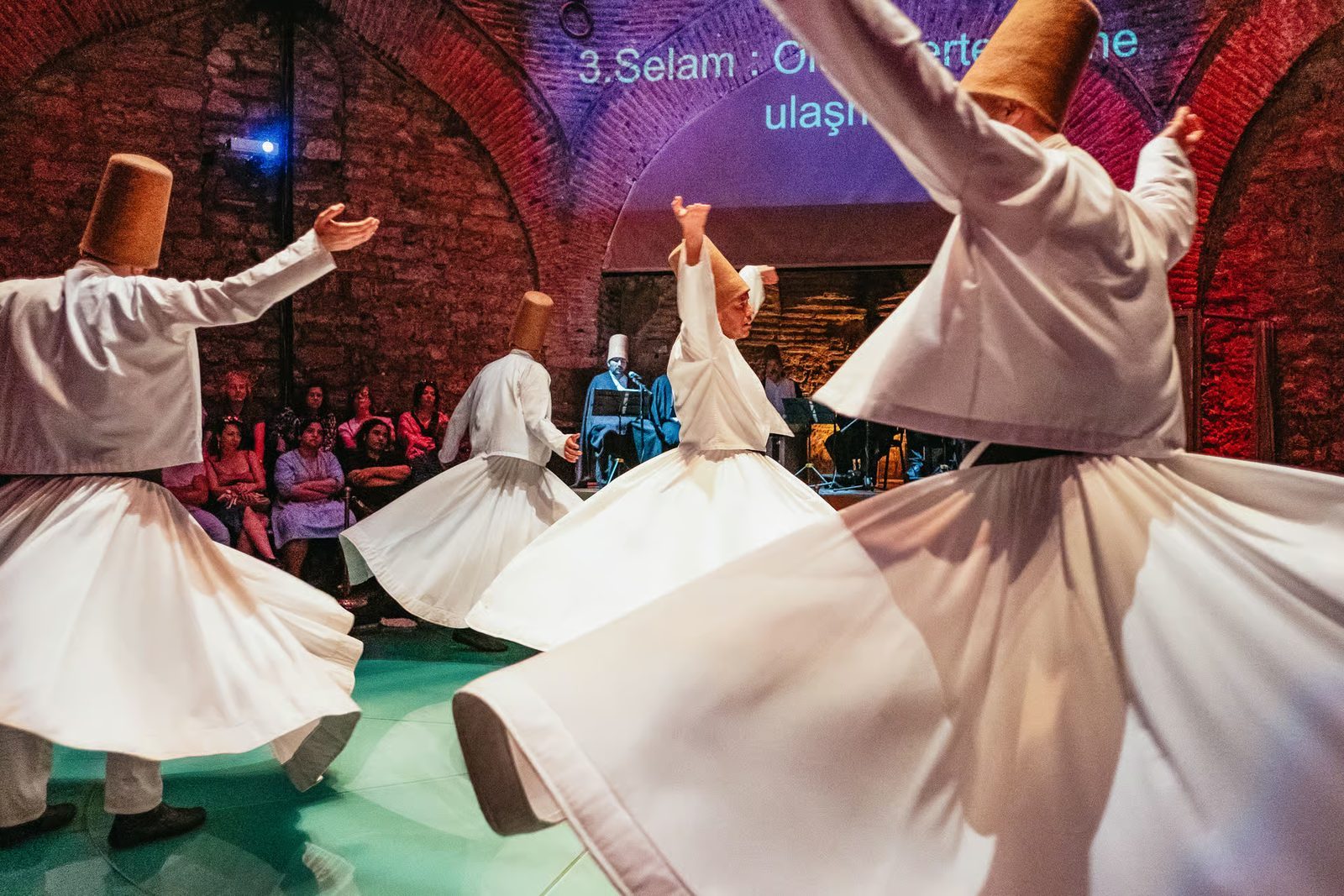
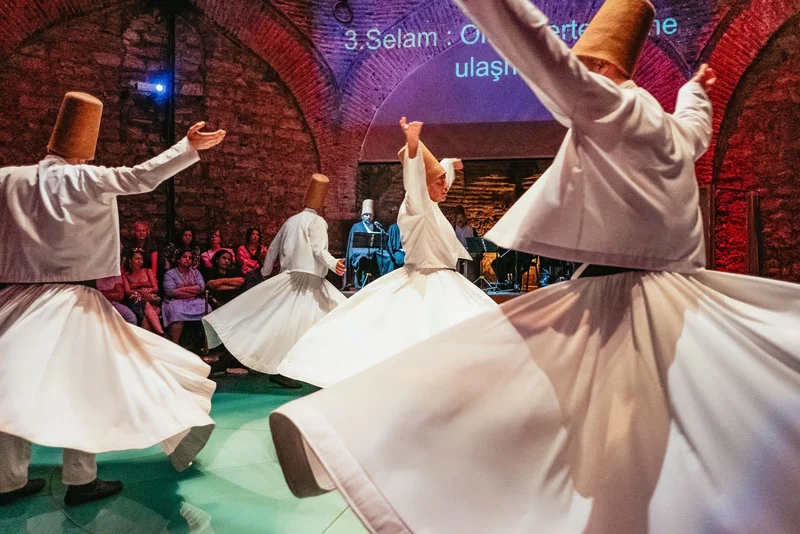
The most reliable place to see a whirling dervish ceremony in Istanbul is the Hodjapasha Cultural Center in Sirkeci, which holds an hour-long sema every evening at 19:00; its own booking page lists adult tickets at $42. For a ceremony in a reopened Mevlevi lodge, the Kasımpaşa Mevlevi Lodge in Beyoğlu holds a narrated sema on Wednesdays, Fridays and Sundays at 17:00. If you would rather have your seats arranged, our whirling dervish ceremony with reserved seating is from $60 per person, with an English-speaking assistant at the venue.
Below: the venues with days, times and prices checked on 8 November 2026, the Galata Mevlevi Lodge Museum, what each part of the ceremony means, how to behave, and where the sema goes in December, when Konya marks the death of Rumi. Venues change their programmes, so confirm before you go.
Where to see the whirling dervishes in Istanbul: the venues compared
Istanbul has no single official venue for the sema, the ceremony of the Mevlevi order. These are the places that publish a programme, plus our own ticket, with prices as published by each venue or seller.
| Venue | Setting | When | Price on 8 November 2026 |
|---|---|---|---|
| Hodjapasha Cultural Center, Sirkeci | A 15th-century Ottoman bathhouse turned theatre | Daily at 19:00; also 17:00 on Tuesday, Thursday, Saturday and Sunday | $42 adult, $24 child aged 7 to 12 (19:00); $30 (17:00) |
| Kasımpaşa Mevlevi Lodge, Beyoğlu | A Mevlevi lodge founded in the 1620s, rebuilt and reopened | Wednesday, Friday and Sunday at 17:00 | 1,300 TL, about $26, on bilet.com |
| Galata Mevlevi Lodge Museum, Tünel | Istanbul's oldest Mevlevi lodge, founded in 1491, now a state museum | Museum 09:00 to 18:30, closed Monday; no ceremony timetable published | €7 entry; €8 from 1 April 2027 |
| EMAV foundation, Şehremini (Fatih) | A community evening with a talk, music and the ceremony | Thursday, ceremony at 21:45; Saturday, ceremony at 19:50 | No price published; contact them first |
| Our reserved-seat ticket | A venue in central Istanbul, confirmed when you book | Usually 18:00 to 19:00 or 19:30 to 20:30 | from $60 per person |
Hodjapasha is the easiest to fit into a sightseeing day around Sultanahmet, Kasımpaşa gives you the lodge setting with commentary, and the Galata museum shows you a historic sema hall by day.
Hodjapasha Cultural Center: a sema every evening in Sirkeci
Hodjapasha occupies a large 15th-century double bathhouse, once with separate sections for men and women, on a side street off Ankara Caddesi in Sirkeci (Hocapaşa Hamamı Sokak 3B). Its history page says the bath appears in the records of Mehmed II's charitable foundation and is named after Hodja Sinan Pasha, the sultan's tutor and vizier; the domed hall was restored in 2008 as a culture centre.
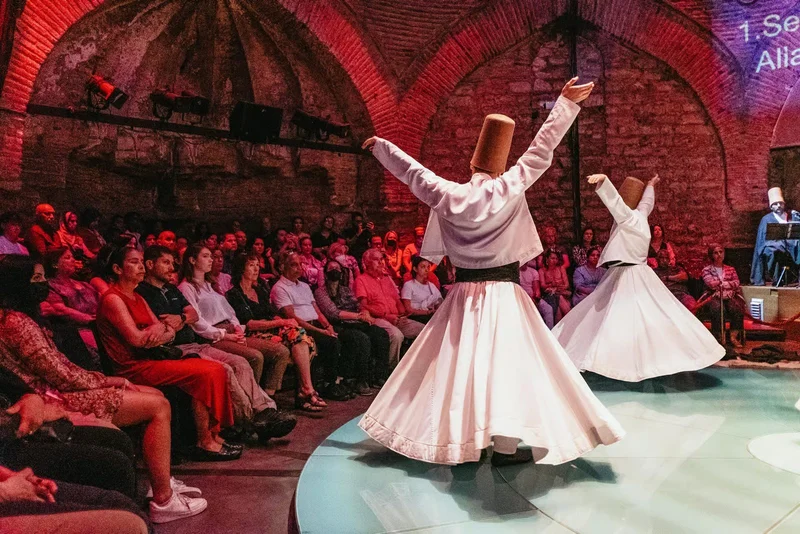
The 19:00 session lasts about an hour:
- Introduction video, 5 minutes.
- Sufi music concert, 10 minutes.
- The sema, 45 minutes.
An exhibition at the venue shows dervish clothing, musical instruments, books, Rumi's poems and realistic dervish figures. Hodjapasha describes the programme as "a spiritual ceremony that contains religious symbols". The rules on its booking page:
- Children under 7 are not admitted; children aged 7 to 12 pay $24.
- Photography is not allowed.
- Seats are allocated first booked, first served.
- Arrive 30 minutes before the start. Latecomers are let in only during the first 10 minutes, and more than 15 minutes late counts as a no-show without refund.
- The theatre is not suitable for wheelchairs. Bottled water is free.
The 17:00 session, on Tuesdays, Thursdays, Saturdays and Sundays, costs $30 and leaves the evening free for dinner. Do not confuse the sema with Rhythm of the Dance, Hodjapasha's separate dance show at 20:30 on Tuesdays, Thursdays and Saturdays. Booked through us, the 19:00 ceremony at Hodjapasha is from $43 per person, with nothing to pay in advance.
Galata Mevlevi Lodge Museum: Istanbul's oldest Mevlevi lodge
The Galata Mevlevi Lodge stands at the Tünel end of İstiklal Avenue, at the top of Galip Dede Street (Galip Dede Caddesi 15). The culture ministry's portal calls it the oldest Mevlevi lodge in Istanbul: founded in 1491 on the estate of İskender Pasha, a governor under Bayezid II, rebuilt by Mustafa III after a fire, repaired under Selim III and Mahmud II, and active until 1925. It opened in 1975 as the Museum of Divan Literature and became the Galata Mevlevi Lodge Museum in 2011.
What you see:
- The sema hall (semahane), octagonal, with a walnut floor, a prayer niche and pulpit, and a calligraphy panel reading "Ya Hazrat-e Mawlana" by Yesarizade Mustafa İzzet. The portal calls the building a fine example of 18th-century Baroque.
- The galleries around the hall, with marbling by Mustafa Düzgünman, calligraphy, hilye panels describing the Prophet, the Çelebi and royal lodges, and Ottoman military band instruments.
- The tomb of Şeyh Galip, built in 1819, where the poet Galip Dede (died 1799) and İsmail Ankaravi (died 1631) are buried.
The museum is open from 09:00 to 18:30, with the ticket office closing at 17:30, and is closed on Mondays. Entry for foreign visitors is €7, rising to €8 on 1 April 2027 under the ministry's new price list.
Can you see a ceremony here? The ministry's museum page publishes opening hours but no ceremony timetable, and we found no current schedule from an official source. Visit for the hall and the collection, and see the sema at one of the venues above. The lodge is a short walk from Galata Tower, and our guide to Galata and Karaköy has a walking route.
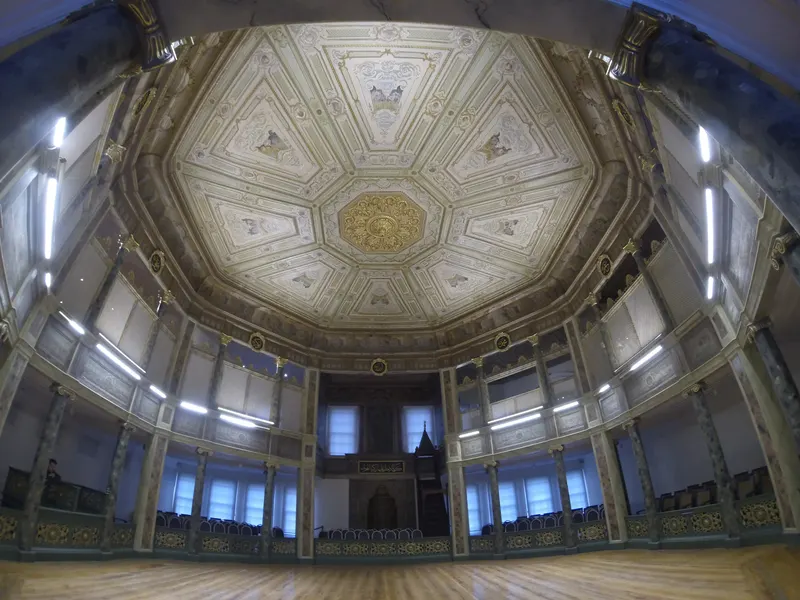
Photo: Nevit Dilmen, CC BY-SA 3.0, via Wikimedia Commons
Kasımpaşa Mevlevi Lodge and other lodge ceremonies
Kasımpaşa Mevlevi Lodge (Kasımpaşa Mevlevihanesi), Keramet Sokak 17 in Beyoğlu, was Istanbul's third Mevlevi lodge after Galata and Yenikapı. Its own history page says Abdullah Dede, a sheikh of the Galata lodge known as Sırrı Abdi Dede, founded it in the 1620s; Selim III and Mahmud II restored it, it closed with the other lodges in December 1925, and a fire in 1979 left only its stone steps, gate and small graveyard. It has reopened about a century after the closure.
- The ceremony. A narrated sema on Wednesdays, Fridays and Sundays at 17:00, in Turkish and English, according to its ticket listing on bilet.com, where it cost 1,300 TL on 8 November 2026. Seating is unnumbered.
- Booking. The lodge's own reservation form lets you pay at the door in cash or by card, with free cancellation up to 48 hours before. Tickets bought on bilet.com are non-refundable.
- Rules. No photos, filming or applause during the ceremony; shoulders and knees covered are preferred.
- Access. The lodge has accessible entrances and lifts. The lodge is a 15-minute walk from Şişhane metro station, 16 minutes from Galata Tower, or 10 minutes from Kasımpaşa ferry pier.
EMAV, the Universal Mevlana Lovers Foundation, in Şehremini in the Fatih district, builds its evenings around recorded talks by the late Hasan Dede, who shared Mevlevi teaching through sema at the Silivrikapı Mevlana Cultural Center until his death in 2018. Its English page lists a Thursday evening with a recorded talk at 19:30, a dinner treat at 20:35, Sufi music at 21:00 and the ceremony from 21:45 to 22:30, and a Saturday evening with music at 19:30 and the ceremony from 19:50 to 20:30. It publishes no ticket price, so call before you go (+90 212 588 57 80).
Sirkeci station. Older guides send visitors to ceremonies at Sirkeci railway station. The station has been under restoration as a transport and culture hub, which NTV reported in June 2026 as nearing completion, and we found no ceremony schedule there for 2026.
What the sema means: the ceremony step by step
UNESCO describes the Mevlevi order as a Sufi order founded in Konya in 1273, the year Rumi (Mevlana Celaleddin-i Rumi) died, on 17 December. UNESCO proclaimed the Mevlevi Sema Ceremony a masterpiece of intangible heritage in 2005 and inscribed it on its Representative List in 2008. Turkey's Ministry of Culture describes the sema as a ceremony that symbolises stages on the path to God, in this order:
- Naat. A eulogy of the Prophet Muhammad opens the ceremony.
- Ney solo. An improvisation on the reed flute follows.
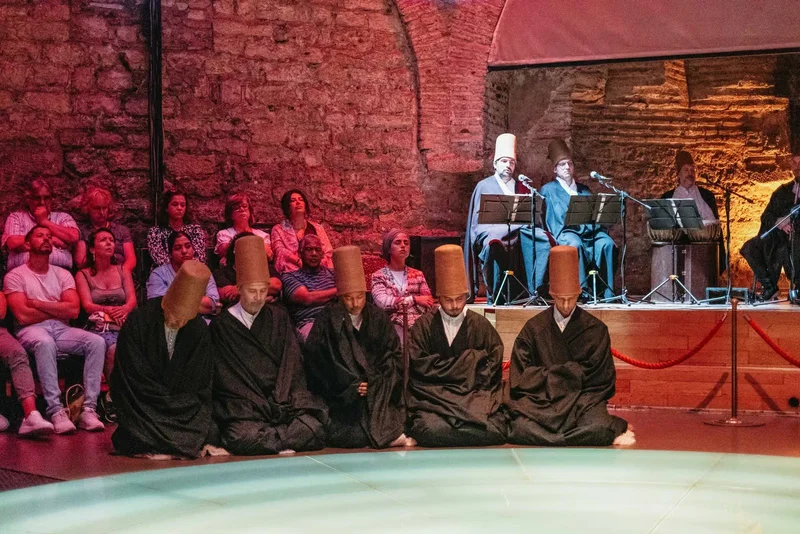
- The Circling of Veled. The dervishes take the places shown by the head dervish; this part depicts resurrection from the dead.
- The cloaks come off. The dervishes slowly remove their black cloaks, freeing themselves from worldly affairs.
- Four selams. The turning comes in four parts: the first expresses that people accept they are created beings, the second the rapture felt before God's power, the third that rapture turning into love, and the fourth the return to serve.
- Close. A reading from the Quran and prayers end the ceremony.
The symbols, as the ministry explains them:
- Cloak and hat. The cloak resembles the grave and the tall felt hat the gravestone; while seated, the dervish is considered dead.
- Hands. During the turning the arms are open, the right hand raised to receive God's blessing and the left lowered to pass it on.
- Leaders. The post-nişin directs the ceremony from the end of a red sheepskin, and a chief dervish moves among the dervishes to keep their spacing.
UNESCO adds that the music, the ayin, has four sections, played by at least one singer, a ney player, a kettledrummer and a cymbal player, and that the dervishes turn on the left foot, driving the turn with the right. Dervishes once trained for 1,001 days in the lodge. All lodges were closed in 1925 under secularisation policies; public performances were allowed from the 1950s, and restrictions eased in the 1990s.
Ceremony or show? How to tell the difference
UNESCO notes that many performances are now aimed at tourists and have been shortened and simplified, while some groups are restoring the ceremony's original spiritual and intimate character. In Istanbul you will meet two kinds of evening:
- A ceremony, like those above: live ney and kettledrum, the four selams, silence and no applause. Hodjapasha calls its programme a spiritual ceremony with religious symbols, and the Kasımpaşa listing stresses that there are no light effects and no applause.
- A short whirling act inside a Turkish night show, for example on a dinner cruise, where one dancer turns between folk dances. Our page on the Turkish night show in Istanbul explains those evenings.
If the sema is what you came for, book it on its own evening and keep the dinner cruise for another night. Our Istanbul at night page plans evenings around both.
Etiquette and planning your evening
- No applause. Kasımpaşa bans it during the ceremony, and Hodjapasha asks for a silent, calm atmosphere.
- Photos. Hodjapasha and Kasımpaşa do not allow photos or filming during the ceremony. Elsewhere the rules vary, but flash is never used while the dervishes turn; on our reserved-seat ticket, the assistant explains the rules on arrival.
- Dress. Modest clothes show respect for a religious ceremony; Kasımpaşa asks for shoulders and knees covered.
- Children. Hodjapasha does not admit children under 7. Elsewhere, bring children who can sit quietly for an hour.
- Timing. Hodjapasha and our reserved-seat ticket both ask you to arrive 30 minutes early. Switch your phone to silent before you sit down.
The 17:00 sessions, at Hodjapasha on Tuesdays, Thursdays, Saturdays and Sundays and at Kasımpaşa on Wednesdays, Fridays and Sundays, leave the whole evening for dinner. Hodjapasha's 19:00 ceremony ends around 20:00, early enough for a late meal. Our guide to things to do in Istanbul at night covers where to eat and walk afterwards, area by area.
Beyond Istanbul: Şeb-i Arus in Konya and the sema in Cappadocia
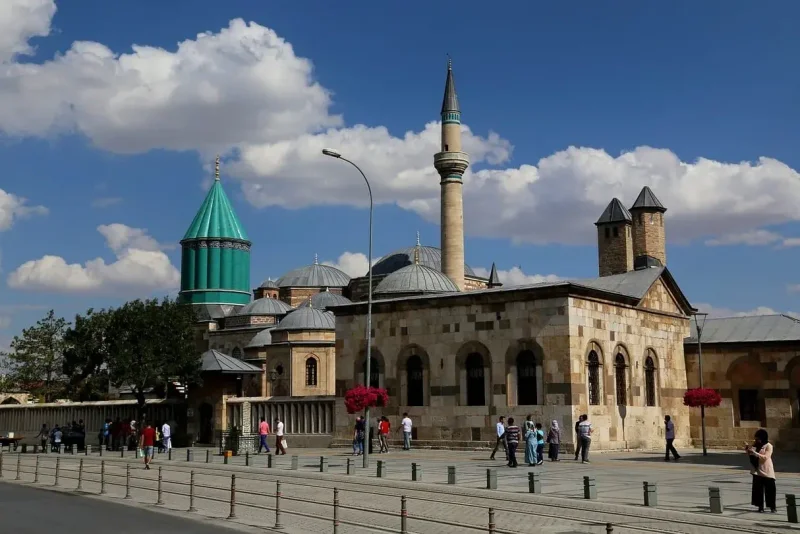
Rumi's tomb is in Konya, at the Mevlana Museum, and the city marks his death every year with ceremonies from 7 to 17 December, ending on the night of the 17th with Şeb-i Arus, the "wedding night". In December 2025 the 752nd commemoration opened with a walk to the Mevlana Museum and a sema at the Mevlana Cultural Centre. The 2026 programme had not been published when we checked; if the usual dates hold, it runs from Monday 7 to Thursday 17 December. For 2027, our Şeb-i Arus 2027 guide covers tickets, routes and how many nights to stay.
- From Istanbul, our Konya day tour by plane is from $431 per person. To spend a night in Konya, for example for an evening of the December ceremonies, the private 2-day Konya tour by plane is from $530 per person with a night in a 5-star hotel; the ceremonies themselves are not part of the tour.
- In Cappadocia, our Cappadocia whirling dervishes ceremony is from $56 per person and the ceremony in a cave or caravanserai hall from $60; both include hotel pick-up and drop-off.
Tours that cover this
- Whirling Dervish Sema Ceremony in Istanbul with Reserved Seating: from $60 per person, about an hour, with the entry ticket, a reserved seat, an English-speaking assistant and local taxes. The venue and time are confirmed when you book; hotel transfers are not included.
- Whirling Dervish Ceremony at Hodjapasha Istanbul: from $43 per person for the 19:00 ceremony; you make your own way to Sirkeci.
- Konya Day Tour from Istanbul by Plane: from $431 per person, with the Mevlana Museum and Rumi's tomb.
- Cappadocia Whirling Dervishes Ceremony, Evening Sufi Ritual: from $56 per person.
Both Istanbul tickets can be cancelled free of charge until 7 days before.
No prepayment needed: pay on the tour day.
Send us your dates on WhatsApp and we will reserve your seats for the whirling dervish ceremony.
FAQ – Whirling dervish ceremony in Istanbul
Where is the best place to see whirling dervishes in Istanbul?
For a ceremony on any evening, the Hodjapasha Cultural Center in Sirkeci holds a sema daily at 19:00 in a 15th-century bathhouse. For a lodge setting with commentary, the Kasımpaşa Mevlevi Lodge holds one on Wednesdays, Fridays and Sundays at 17:00. The Galata Mevlevi Lodge Museum shows Istanbul's oldest sema hall by day.
How much is a whirling dervish ceremony in Istanbul?
On 8 November 2026, Hodjapasha's booking page listed $42 for adults and $24 for children aged 7 to 12 at 19:00, and $30 for the 17:00 session. Kasımpaşa tickets cost 1,300 TL on bilet.com. Our reserved-seat ticket is from $60 per person and our Hodjapasha ticket from $43.
What time is the whirling dervish ceremony in Istanbul?
Hodjapasha starts every day at 19:00, with an extra 17:00 session on Tuesdays, Thursdays, Saturdays and Sundays. Kasımpaşa starts at 17:00 on Wednesdays, Fridays and Sundays. Our reserved-seat ceremony usually runs from 18:00 to 19:00 or from 19:30 to 20:30, depending on the venue and the season.
Is the whirling dervish ceremony a show or a religious ritual?
It is a religious ritual. The sema of the Mevlevi order symbolises stages on the path to God, and UNESCO lists it as intangible heritage of humanity. Hodjapasha calls its programme a spiritual ceremony with religious symbols. The short whirling act in a Turkish night show is entertainment, not the ceremony.
Can you take photos at the whirling dervish ceremony?
Usually not during the ceremony. Hodjapasha does not allow photography, and Kasımpaşa bans photos, filming and applause while the dervishes turn. Other venues set their own rules, but flash is never acceptable. Some allow pictures only at the very end, so ask the staff when you arrive.
Can children attend the whirling dervish ceremony?
Yes, if they can sit quietly for an hour. Hodjapasha does not admit children under 7 and charges $24 for children aged 7 to 12. Other venues have their own rules, so tell us your children's ages when you book and we will check with the venue before confirming.
Is there a sema at the Galata Mevlevi Lodge?
The Galata Mevlevi Lodge is a museum of the Ministry of Culture and Tourism, open from 09:00 to 18:30 except on Mondays, with entry at €7 (€8 from 1 April 2027). Its official page lists opening hours but no ceremony timetable. Visit it by day for the octagonal sema hall and the tombs, and see a ceremony at another venue.
Can I see the whirling dervishes for free in Istanbul?
Not at the venues with published timetables, which all charge for tickets. The EMAV foundation in Şehremini lists Thursday and Saturday evening programmes with no published price, so call before going. Turkish night shows include a short whirling act, but that is entertainment rather than the ceremony itself.
What should I wear to a whirling dervish ceremony?
Modest, comfortable clothes. The sema is a religious ceremony, so cover your shoulders and avoid anything revealing; the Kasımpaşa lodge asks for shoulders and knees covered. There is no need for formal wear. Switch your phone to silent before you sit down, and arrive 30 minutes early.
When is Şeb-i Arus in Konya?
Konya marks Rumi's death every year from 7 to 17 December, ending with the Şeb-i Arus ceremony on the evening of 17 December, the anniversary of his death in 1273. The 2026 programme had not been published when we checked. For 2027 dates, tickets and routes from Istanbul, see our Şeb-i Arus 2027 guide.
Sources: Hodjapasha Cultural Center (hodjapasha.com), programme, booking, history and contact pages; Kasımpaşa Mevlevi Lodge (kasimpasamevlevihanesi.com), history, reservation and visitor pages, and its listing on bilet.com; Ministry of Culture and Tourism: Galata Mevlevi Lodge Museum page (muze.gov.tr), DÖSİM museum price list, 2027 museum price list, Culture Portal (kulturportali.gov.tr) and the Mevlevi Sema Ceremony page of the General Directorate of Living Heritage; UNESCO Intangible Cultural Heritage, Mevlevi Sema Ceremony; TDV İslam Ansiklopedisi (İsmail Rusûhî Ankaravî); EMAV (emav.org); DHA, 7 December 2025; NTV, 22 June 2026; Central Bank of the Republic of Türkiye rates of 6 November 2026 — checked 8 November 2026.
Written by the Get Turkey Tours team: licensed local guides and trip planners based in Istanbul.
Leave a Comment
Our private tours
Whirling Dervish Sema Ceremony in Istanbul with Reserved Seating
An hour with the Whirling Dervishes at a venue in central Istanbul, watching the traditional Sufi Sema ceremony to live music from a reserved seat.
Whirling Dervish Ceremony at Hodjapasha Istanbul – Live Sema Show
A one-hour whirling dervish Sema ceremony with live Sufi music, held each evening at 19:00 in a 15th-century Ottoman hammam near Sultanahmet.
Related articles
 Tours & Experiences
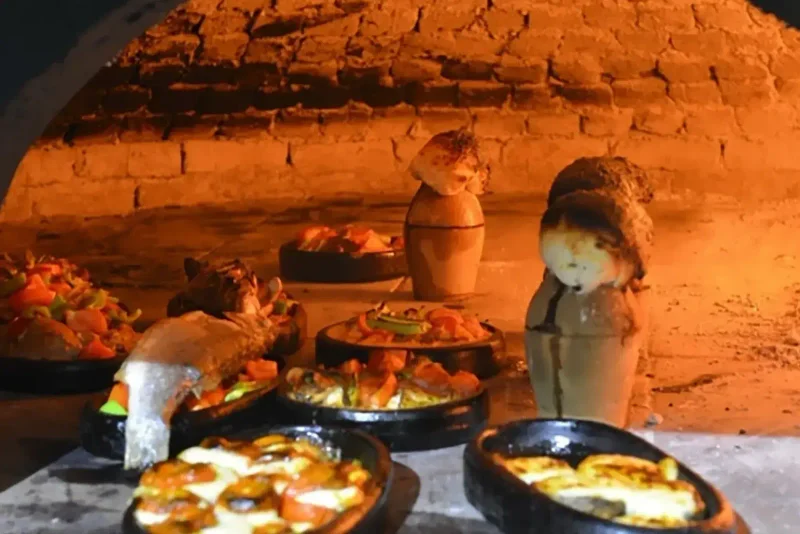
What to Eat in Cappadocia: Testi Kebab, Mantı and Where to Try Them
Testi kebab, Kayseri mantı, pastırma, clay-pot home cooking, kuru kaymak and Emir wine: what to eat in Cappadocia, how the registered recipes work, where to eat and which tours include meals.
Read More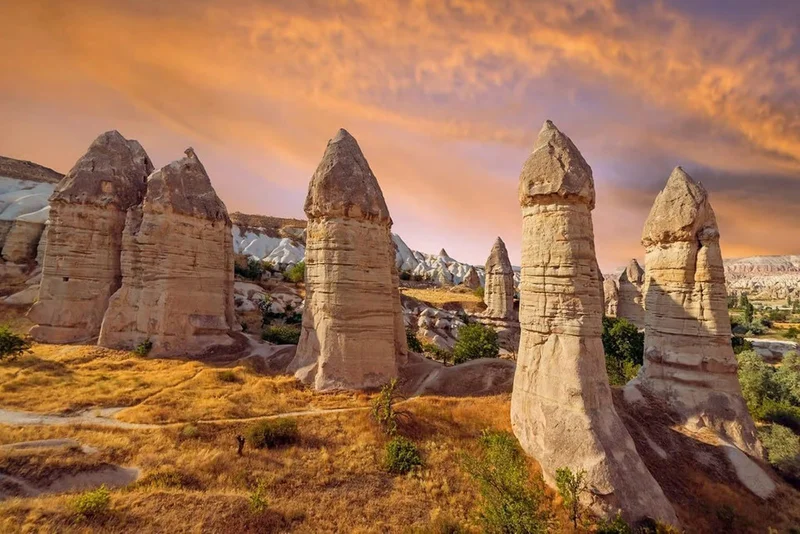 Tours & Experiences
Cappadocia Photo Spots: Where to Shoot and When, Sunrise to Sunset
Where and when to photograph Cappadocia: balloon viewpoints at first light, Love Valley, Uçhisar, Paşabağ and Red Valley at sunset, monthly light times, rooftop etiquette and the 2026 drone rules.
Read More Tours & Experiences
Turkish Breakfast in Istanbul: What's on the Table and Where to Go
What goes on a Turkish breakfast table, from kaymak and menemen to simit and su böreği, how a serpme spread works, and where in Istanbul to sit down for one, area by area.
Read More