

Tours & Experiences7 November 202613 min read
What to Eat in Cappadocia: Testi Kebab, Mantı and Where to Try Them
Testi kebab, Kayseri mantı, pastırma, clay-pot home cooking, kuru kaymak and Emir wine: what to eat in Cappadocia, how the registered recipes work, where to eat and which tours include meals.
In this article
- What to eat in Cappadocia: 12 dishes at a glance
- Testi kebab: how Cappadocia's pottery kebab is made
- Mantı: Kayseri's tiny dumplings and the Cappadocian version
- Pastırma, sucuk and the rest of Kayseri's table
- Home cooking in clay pots: apricots, beans and stuffed vegetables
- Breakfast in Cappadocia: kuru kaymak, honey and simit
- Sweets: pumpkin dessert, aside, köftür and nevzine
- What to drink: Emir wine and gilaburu
- Where to eat in Cappadocia: Ürgüp, cave restaurants and the MICHELIN picks
- Tours that cover this
- Frequently Asked Questions
The dishes to eat in Cappadocia are testi kebab, the clay-jug stew Nevşehir has registered as a geographical indication, Kayseri mantı, pastırma and sucuk, apricot-and-meat stews and beans cooked in earthenware, kuru kaymak with honey at breakfast, and white wine from the local Emir grape. The easiest way to try a spread of local food in one evening is a Turkish night: our Cappadocia Turkish Night with a cave restaurant dinner serves a traditional meal with folk dances and live music. Below: what each dish is, how the registered versions are made, where to eat, including the region's first MICHELIN picks, and which of our tours include meals. Going on to Istanbul? Our Istanbul street food guide and 10-day Turkey food itinerary cover the rest of the country.
What to eat in Cappadocia: 12 dishes at a glance
Several are registered geographical indications with TÜRKPATENT, Türkiye's patent office, which fixes their recipes in writing.
| Dish | What it is | Registered |
|---|---|---|
| Testi kebab | Beef or lamb with shallots, peppers, garlic and tomato, sealed in a clay jug and baked | Nevşehir, 2021 |
| Kayseri mantı | Tiny beef dumplings with butter sauce, yogurt and sumac | Kayseri, 2009 |
| Pastırma | Cured, air-dried beef in a cumin-heavy fenugreek paste | Kayseri, 2002 |
| Sucuk | Spiced beef sausage | Kayseri, 2002 |
| Yağlama | Minced-meat filling on thin şebit bread, with yogurt | Kayseri, 2021 |
| Kayısı yahnisi | Meat and apricots cooked in an earthen pot | No |
| Beans in a clay pot | Dried beans cooked in an earthenware pot | Derinkuyu beans, 2021 |
| Zerdeli pilav | Rice with grape molasses, chickpeas, almonds and raisins | No |
| Kuru kaymak | Dried clotted cream, served with honey | Kaymaklı, 2022 |
| Nevşehir simit | Near-rectangular bread raised with chickpea yeast | Nevşehir, 2020 |
| Nevzine | Walnut and tahini cake soaked in grape-molasses syrup | Kayseri, 2021 |
| Emir wine | White wine from Cappadocia's native grape | No |
Testi kebab: how Cappadocia's pottery kebab is made
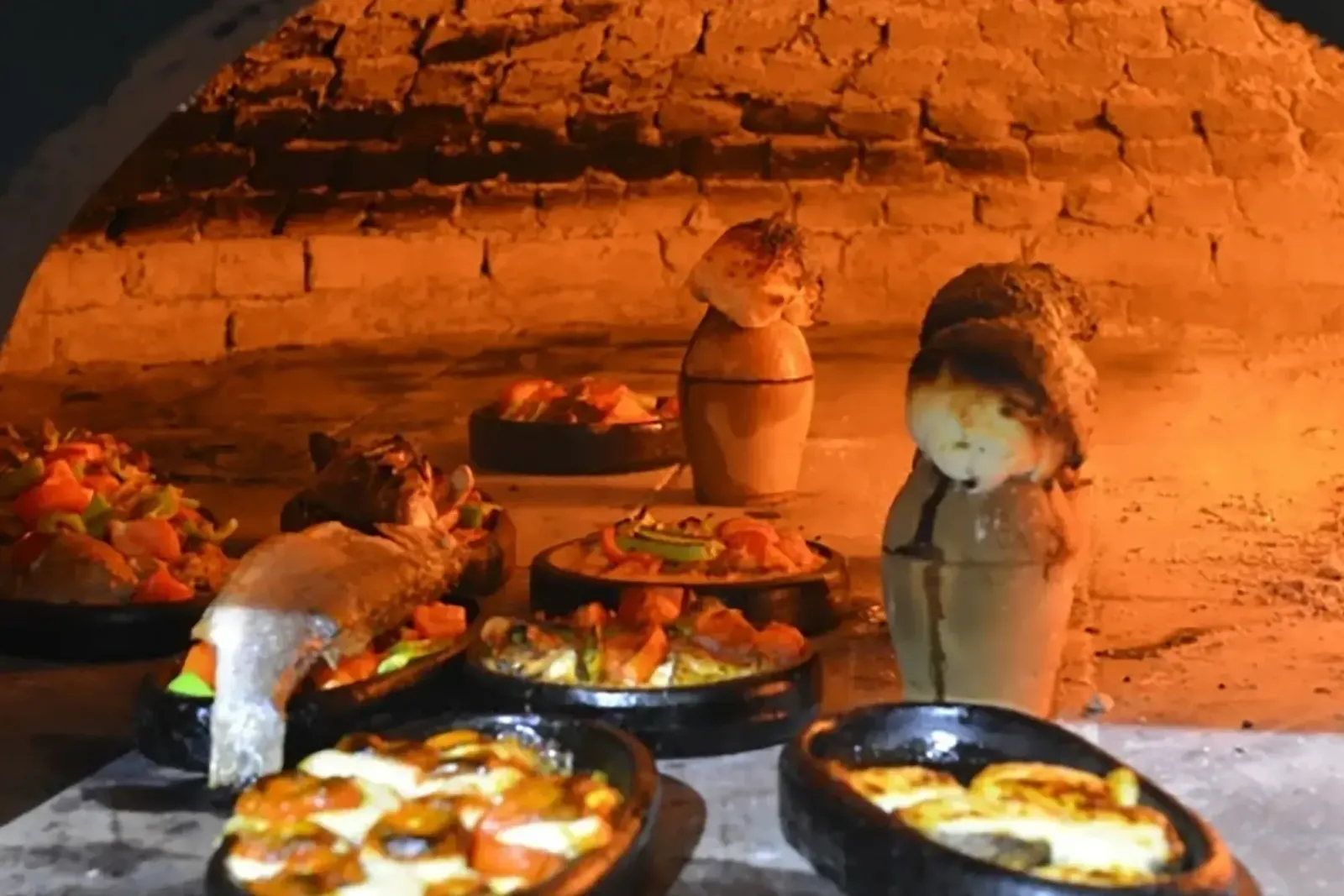
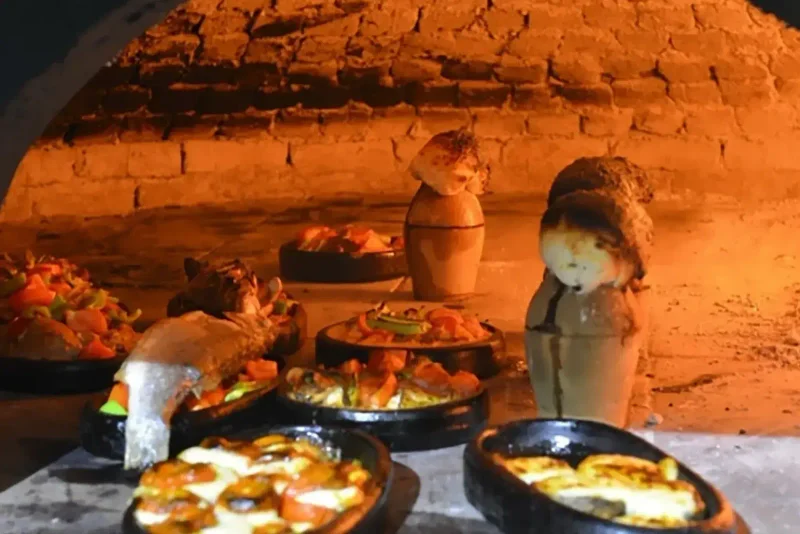
GoTürkiye, the official tourism site, calls the clay pot kebab a dish unique to Cappadocia and describes meat, vegetables and lentils slow-cooked in a sealed pot in traditional earthen ovens. The registered version, filed by the Nevşehir Chamber of Commerce and Industry and registered on 9 August 2021, is more precise. Per person it uses:
- 200 g of beef from the leg, or lamb from the leg or shoulder, in 20–30 g pieces
- 60 g of shallots, 35 g of çarliston peppers, 10 g of garlic and 140 g of peeled tomato
- salt, black pepper, 60 ml of water and 20 ml of sunflower oil
- a dough of 60 g of flour and 25 ml of water to seal the jug
Everything goes in raw, meat at the bottom, in a jug made in Avanos with the features of the town's registered pottery. It bakes at 250 °C for 1 hour 45 minutes, is sealed with the dough and goes back in for 30 to 45 minutes more: about two to two and a half hours in all. It arrives hot, and the jug is cracked open at the table with a knife or cleaver, although the stew may also be poured out without breaking it.
Because it takes over two hours, mention it when you book a table or order it as soon as you sit down. And because the registration requires the name "Nevşehir Testi Kebabı" and its emblem on the product or on display in the restaurant, the emblem is worth looking for. Our page on Avanos explains where the jugs come from.
Mantı: Kayseri's tiny dumplings and the Cappadocian version
Kayseri's registered mantı is defined by its size. A dough of flour, egg, water and salt is rolled to 1–1.2 mm, cut into 15–16 mm squares, filled with raw minced beef, onion, basil (reyhan), red pepper and black pepper, and closed with the corners brought together but not overlapped. After boiling it gets a sauce of butter, tomato paste and red pepper, with garlic or plain yogurt and sumac if you like, and it is served with a little liquid. Every kilo must contain at least 300 g of filling, at least 250 g of it meat, and locals sum it up as "forty mantı in one boxwood spoon". Kayseri has since registered three more mantı names: tepsi, yağ and purov mantısı.
GoTürkiye describes Cappadocian mantı as stamp-sized squares filled with minced meat, onion, parsley, pepper and salt, folded into triangles and served with garlic yogurt, spicy butter sauce, sumac and mint. Flying into Kayseri? See our Kayseri Airport transfer guide.
Pastırma, sucuk and the rest of Kayseri's table
Pastırma, registered since 2002, is beef that is salt-cured, washed, pressed and dried, then coated in çemen, a paste of ground fenugreek seed, vetch and wheat flour, red pepper, cumin, garlic and water; the cumin dominates. Its file credits the "pastırma summer" of autumn, when dry air and wind off Mount Erciyes let the meat dry outdoors, with days of 25–30 °C and nights of 0–5 °C. Sucuk, the spiced sausage, was registered the same day. Yağlama, registered in 2021, is a minced-meat filling on thin şebit flatbread, served with garlic or plain yogurt.
Eat them here rather than packing them. Great Britain and the EU do not allow travellers to bring in meat products from outside the EU, and US rules bar most beef and lamb products from countries with foot-and-mouth disease, which Türkiye reported more than 1,100 times in 2025.
Home cooking in clay pots: apricots, beans and stuffed vegetables
Much of Cappadocia's home cooking is done in earthenware pots. GoTürkiye's list includes:
- Kayısı yahnisi, meat cooked with apricots in an earthen pot on a wood stove, usually with sweet bitirgen apricots; if the fruit is not sweet enough, grape molasses goes in.
- Wedding soup made with thin bulgur, milk soup of bulgur cooked with milk, and chickpea stew with mutton.
- Stuffed apricots and stuffed quince, plus dishes called gendime, arapaşı and peşmani. GoTürkiye notes that all of them are cooked in the region's own pottery.
- Zerdeli pilav, layers of rice infused with grape molasses over rice and chickpeas, with peeled almonds, raisins and a little coconut.
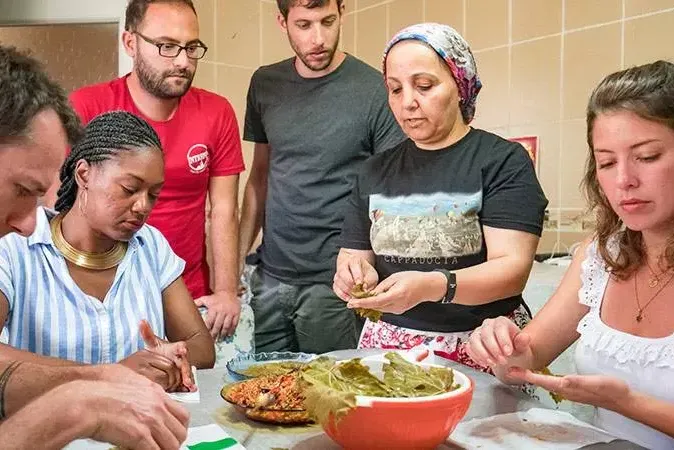
GoTürkiye names clay pot kebab and beans in casserole as the most popular tastes of Nevşehir. For the beans, Derinkuyu's dried beans have been a protected designation of origin since 2021, valued because they cook in about 20 minutes without falling apart. GoTürkiye's Cappadocia food page also pictures stuffed vine leaves (yaprak sarma).
Breakfast in Cappadocia: kuru kaymak, honey and simit
GoTürkiye starts its Cappadocia food page with the "sumptuous" Turkish breakfast. Three local items are worth asking for:
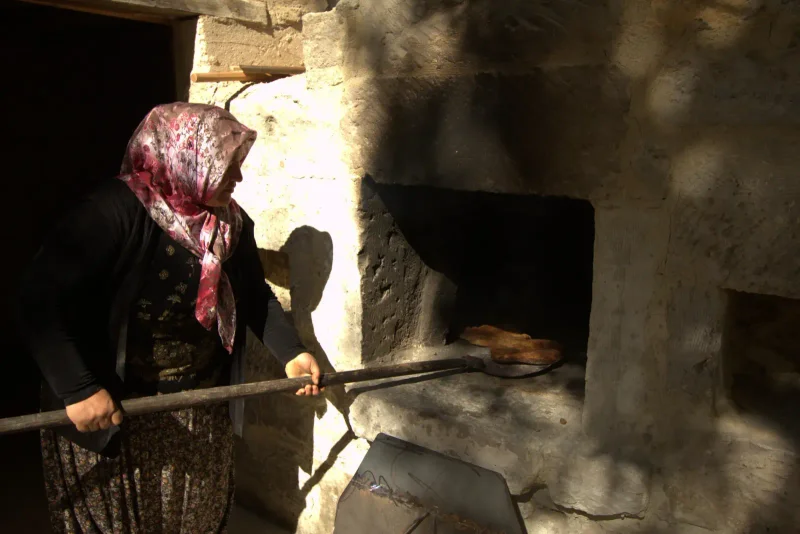
- Kuru kaymak, a dried clotted cream usually eaten with honey. GoTürkiye explains that about seven kilos of milk are boiled in a special tray over a wood fire for around ten hours; the cream that forms is lifted off, folded and dried in the shade. The town of Kaymaklı, home to one of the underground cities, registered its version in 2022: porous, dry, half-moon pieces made from cow's milk, which is poured from as high as a metre into a copper tray over the embers of an underground oven and left for six to seven hours. Kaymaklı has held a kaymak festival every year since 2006.
- Nevşehir simit, registered in 2020, which is not the round sesame ring of Istanbul. It is almost rectangular with rounded edges, raised with a natural chickpea yeast, made without sugar or salt, and stays fresh for seven to ten days. The round tahinli simit, made with tahini, about 15 cm across and 200 g, has its own registration from 2024.
- Kaymaklı çöreği, registered in 2022, a round loaf of 350–400 g made with boiled potato, brushed with diluted yogurt and baked on a perforated stone in a straw-fired oven.
Grape molasses (pekmez) belongs to the same tradition; GoTürkiye lists it among Nevşehir's local sweets. If breakfast with a view matters to you, our guide to Cappadocia cave hotels compares stays with balloon views.
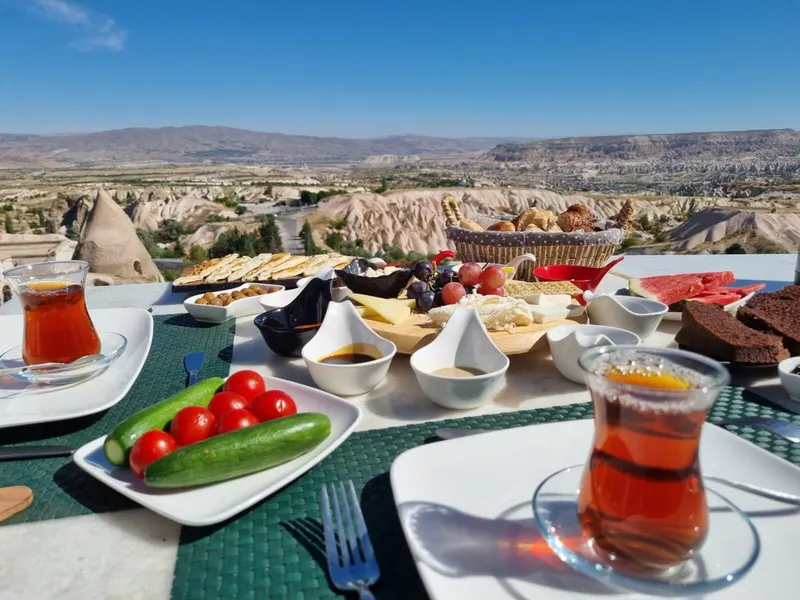
Photo: Magnificient, CC BY-SA 4.0, via Wikimedia Commons
Sweets: pumpkin dessert, aside, köftür and nevzine
- Pumpkin dessert. GoTürkiye tells visitors not to miss it, nor the pumpkin seeds harvested in early September; Nevşehir's seeds have been a protected designation of origin since 2019.
- Aside, which GoTürkiye's Kayseri food guide calls a type of halva made in various places in Anatolia.
- Köftür, which GoTürkiye describes as a kind of Turkish delight made with the region's grape juice.
- Nevzine, Kayseri's registered dessert of flour, fat, walnuts and tahini, baked and soaked in a grape-molasses syrup, then cut into 6–7 cm squares and served cold. Its file calls it a sweet for festivals, weddings, guests and iftar tables.
- Gül baklavası, Kayseri's rose-shaped baklava with walnuts, registered in 2022 and served cold.
- Grape pickle. Not a dessert, but sweet and sour: Nevşehir's grape pickle, made from local Parmak grapes and fermented for three months, became a registered indication on 31 August 2026.
What to drink: Emir wine and gilaburu
GoTürkiye suggests trying the local wine with your meal, especially wines from Emir, "a juicy, white grape variety unique to the region", and the wineries are open to visitors all year. Turasan in Ürgüp, founded in 1943 and by its own account Cappadocia's first wine producer, describes Emir as a native white grape with high acidity and citrus and green-apple notes, and opens from 09:00 to 18:00 every day. Our four-day private Cappadocia tour stops there for an afternoon tasting, and our wine tours page lists other vineyard days.
Under Law No. 4250, shops cannot sell alcohol between 22:00 and 06:00; licensed restaurants serve it with dinner for drinking on the premises. For a non-alcoholic local drink, look for gilaburu juice, made from the red berries of Viburnum opulus; the Bünyan variety, from Kayseri province, has been a protected designation of origin since 2018.
Where to eat in Cappadocia: Ürgüp, cave restaurants and the MICHELIN picks
Cappadocia entered the MICHELIN Guide with its 2026 selection, announced in December 2025: 18 establishments, five of them Bib Gourmands. The region's first star went to Revithia, inside the Kayakapı Premium Caves hotel in the centre of Ürgüp, where chef Duran Özdemir serves a seasonal tasting menu built on nearly forgotten Cappadocian recipes; the name is Greek for chickpea. Babayan Evi, which cooks almost everything, bread included, in a tandır oven, received both a Bib Gourmand and a Green Star for its sustainable practices. GoTürkiye notes that the Cappadocia list includes women's cooperatives, family-run businesses and long-established local eateries. Türkiye's first nationwide MICHELIN selection is expected by the end of 2026, so check for 2027 updates before you book.
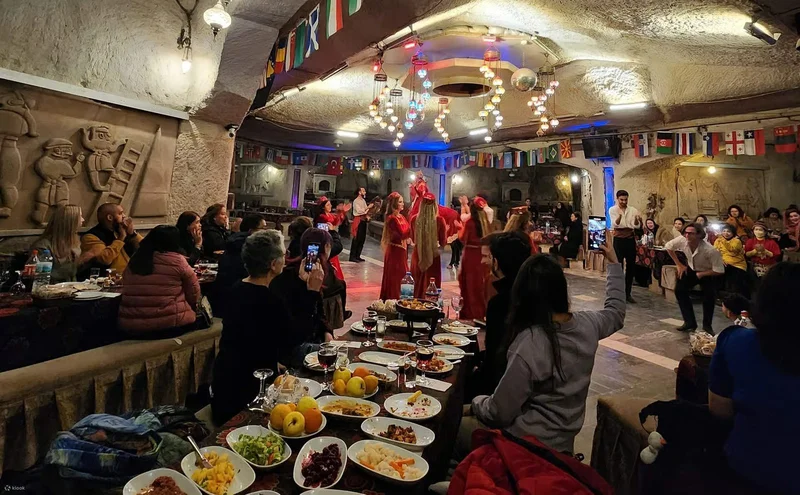
For everyday meals, our pages on Ürgüp and Göreme help you pick a base with restaurants on your doorstep. For a cave setting with entertainment, our Turkish night is held in a restaurant cut into the rock.
Tours that cover this
These tours include a meal:
- Cappadocia Turkish Night: Cave Restaurant Dinner & Folk Dance Show: 6 hours, from $80 per person, with a traditional dinner, folk dances, live music, unlimited soft drinks and hotel transfers.
- Cappadocia Turkish Night Show with Dinner & Unlimited Drinks: from $59 per person, with dinner, shows and unlimited local alcoholic and soft drinks; pick-up at 19:30, evening ends around 23:30.
- Cappadocia Red Tour with Lunch: Pasabag, Zelve, Avanos & Love Valley: 6 hours, from $80 per person, with lunch at a local restaurant (drinks extra) and the Avanos pottery workshop.
- Cappadocia Green Tour: Derinkuyu, Ihlara Valley & Selime with Lunch: 7 hours, from $80 per person, with lunch at a local restaurant (drinks extra) between Ihlara Valley and Selime.
Staying longer? The 4-day Cappadocia tour package, from $750 per person, includes hotel breakfasts and lunch on both tour days, but not dinners. More evening options are on our night tours and shows page. If anyone in your group is vegetarian, has an allergy or avoids certain meats, tell us when you book so we can pass it on to the restaurant.
No prepayment needed: pay on the tour day.
Send us your dates on WhatsApp and we will book your table at the Cappadocia Turkish Night.
Frequently Asked Questions
What food is Cappadocia famous for?
Testi kebab, beef or lamb with vegetables sealed in a clay jug and baked for two to two and a half hours, registered as Nevşehir Testi Kebabı in 2021. The region is also known for mantı, Kayseri's pastırma and sucuk, apricot-and-meat stews, beans cooked in clay pots, kuru kaymak with honey, and white wine from the local Emir grape, which GoTürkiye calls the region's speciality.
How is testi kebab served?
Hot, in the sealed clay jug it was cooked in. Under the registered recipe, the jug bakes at 250 °C for 1 hour 45 minutes, is sealed with dough and baked for another 30 to 45 minutes. At the table it is cracked open with a knife or cleaver and the stew is tipped onto your plate; some restaurants pour it out without breaking the jug.
Do I need to order testi kebab in advance?
It helps. The registered recipe takes about two to two and a half hours, so mention it when you reserve, or order it as soon as you sit down if you are happy with a long dinner. Restaurants serving the registered dish should show the "Nevşehir Testi Kebabı" name and emblem, either on the product or on display.
Is mantı from Cappadocia?
Partly. The registered version comes from Kayseri, a geographical indication since 2009: 15–16 mm squares of dough filled with beef, onion and basil, with butter sauce, yogurt and sumac. Cappadocia has its own style, which GoTürkiye describes as stamp-sized squares folded into triangles and served with garlic yogurt, spicy butter sauce, sumac and mint.
Are there Michelin restaurants in Cappadocia?
Yes. The MICHELIN Guide added 18 Cappadocia establishments in its 2026 selection, including five Bib Gourmands. Revithia, at Kayakapı Premium Caves in Ürgüp, holds the region's first star, and Babayan Evi earned a Bib Gourmand and a Green Star. Türkiye's first nationwide selection is expected by the end of 2026, so check for updates before a 2027 trip.
What wine is Cappadocia known for?
White wine from Emir, a grape native to the Nevşehir plateau. GoTürkiye calls it the region's speciality, and Turasan, the oldest winery, founded in Ürgüp in 1943, describes it as high in acidity with citrus and green-apple notes. Wineries are open to visitors all year, but shops cannot sell alcohol between 22:00 and 06:00.
What can vegetarians eat in Cappadocia?
More than the meat-heavy menus suggest, but ask before you order, because the registered testi kebab and many clay-pot dishes contain beef or lamb. Kuru kaymak with honey, Nevşehir simit, pumpkin dessert, aside and nevzine are meat-free. On our tours, tell us your needs when you book and we pass them to the restaurant.
Is food included on Cappadocia tours?
On many of ours, yes. The Red Tour and Green Tour with lunch include a meal at a local restaurant, with drinks extra, and both Turkish nights include dinner, one with unlimited soft drinks and one with unlimited local alcoholic and soft drinks. The 4-day package includes hotel breakfasts and lunch on tour days, but not dinners.
Sources: TÜRKPATENT geographical indication registry and files for Nevşehir Testi Kebabı, Kayseri Mantısı, Pastırması, Sucuğu, Yağlaması, Nevzinesi and Gül Baklavası, Nevşehir Simidi and Tahinli Simidi, Kaymaklı Kuru Kaymağı and Çöreği, Nevşehir Kabak Çekirdeği and Üzüm Turşusu, Derinkuyu Kuru Fasulyesi and Bünyan Gilaburusu (ci.turkpatent.gov.tr); GoTürkiye pages on Cappadocia, Nevşehir and Kayseri food and shopping, and Vineyards of Türkiye brochure (goturkiye.com); Turasan winery (turasan.com.tr); Law No. 4250 (mevzuat.gov.tr); GoTürkiye press release on MICHELIN dining in Cappadocia; Hürriyet Daily News, 6 December 2025 and 4 April 2026; Kayakapı Premium Caves (kayakapi.com); GOV.UK guidance on bringing food into Great Britain; Your Europe food rules (European Commission); USDA APHIS traveller guidance; UK government foot-and-mouth outbreak assessment, 23 December 2025 — checked 7 November 2026.
Written by the Get Turkey Tours team: licensed local guides and trip planners based in Istanbul.
Leave a Comment
Our private tours
Cappadocia Turkish Night: Cave Restaurant Dinner & Folk Dance Show
Dinner in a Cappadocia cave restaurant with live music, regional folk dances, a belly dance performance and unlimited soft drinks.
Cappadocia Private Tour 4 Days: Valleys, ATV, Horse Riding, Wine
Four private days in Cappadocia with a licensed guide and driver, mixing cave churches and underground cities with an ATV safari, horseback riding, wine tasting and a Turkish Night show.
Related articles
 Tours & Experiences
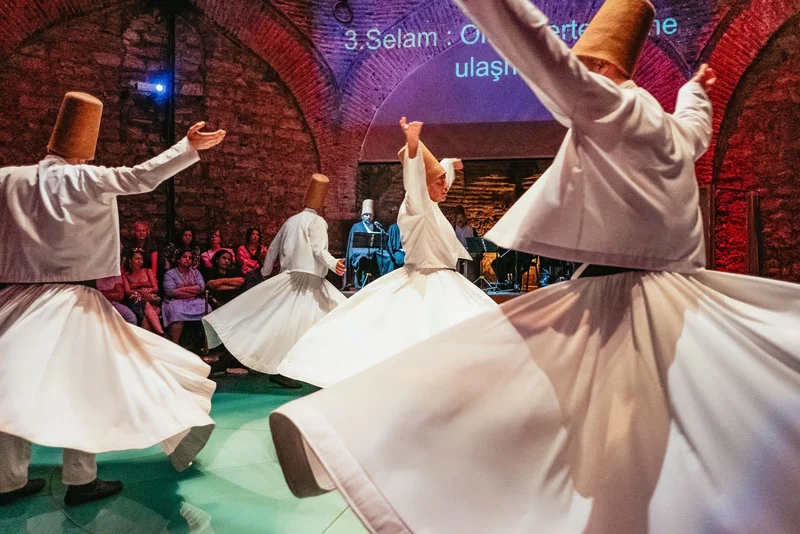
Whirling Dervish Ceremony in Istanbul: Where to See It, Times, Prices
Where to see a real sema in Istanbul: Hodjapasha's nightly ceremony and the Kasımpaşa Mevlevi Lodge, times and prices, the Galata lodge museum, what each part means, etiquette and Konya's Şeb-i Arus.
Read More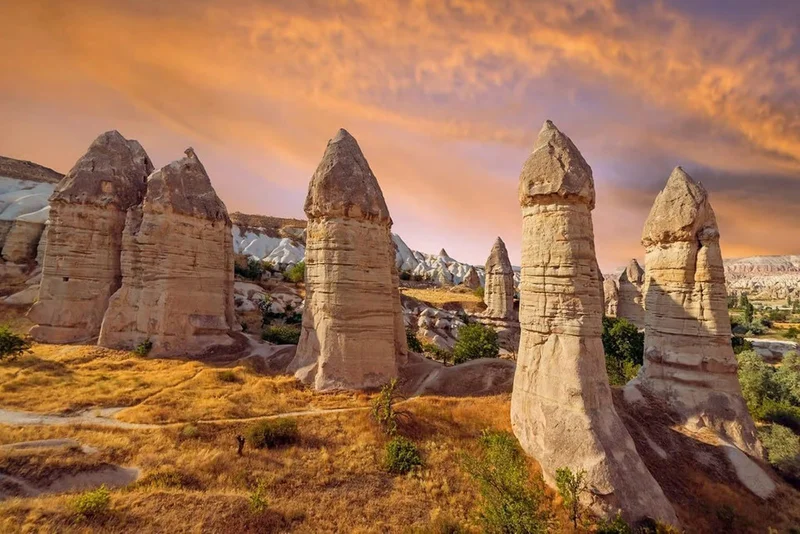 Tours & Experiences
Cappadocia Photo Spots: Where to Shoot and When, Sunrise to Sunset
Where and when to photograph Cappadocia: balloon viewpoints at first light, Love Valley, Uçhisar, Paşabağ and Red Valley at sunset, monthly light times, rooftop etiquette and the 2026 drone rules.
Read More Tours & Experiences
Turkish Breakfast in Istanbul: What's on the Table and Where to Go
What goes on a Turkish breakfast table, from kaymak and menemen to simit and su böreği, how a serpme spread works, and where in Istanbul to sit down for one, area by area.
Read More