

Prices & Costs6 November 202614 min read
Money in Turkey: Cash, Cards, ATM Fees and Tipping in 2026
How to pay in Turkey this year: lira or card, what ATMs charge foreign cards, the home-currency trap, the 2026 ban on service and cover charges, and how much to tip.
In this article
- Lira, cards and cash: the short version
- Where you need cash and where a card is fine
- ATMs: what they charge and the screen to refuse
- Paying by card, and the home-currency trap
- Changing cash: euros, dollars or pounds?
- The 2026 ban on service and cover charges
- Tipping in Turkey: who gets what
- A money plan for a 10-day trip
- Tours that cover this
- Frequently Asked Questions
The simplest way to pay in Turkey is in Turkish lira: use a card for hotels, restaurants and most shops, keep a few hundred lira in small notes for markets, village stops and tips, and refuse every offer to charge you in your home currency. On 6 November 2026 the Central Bank's indicative rate was just under 50 lira to the US dollar and about 56 to the euro, so the largest banknote, 200 lira, is worth roughly $4. Since 30 January 2026, restaurants and cafés may no longer add a service, table or cover charge, which changes how tipping works. This guide covers ATMs, cards, exchange offices, the new rules and tipping, whether you travel on your own or on a 10-day tour of Istanbul, Cappadocia, Pamukkale and Ephesus with hotels and domestic flights included. For daily budgets, see our breakdown of what a trip to Turkey costs.
Lira, cards and cash: the short version
- Currency. The Turkish lira (TRY, ₺). The Central Bank lists six banknotes in circulation: 5, 10, 20, 50, 100 and 200 lira, so a few thousand lira in cash is a thick wad.
- Exchange rate. The Central Bank's indicative buying rates on 6 November 2026 were 49.98 lira to the US dollar, 55.86 to the euro and 66.85 to the pound. Check the rate on the day you pay.
- Cards are normal. The Interbank Card Center (BKM) reports that four in every five in-store card payments in September 2026 were contactless.
- Cash still matters. Canada's travel advice, updated on 29 September 2026, notes that many small vendors, taxi drivers and rural businesses prefer cash.
- Tips go in cash. Turkey Travel Planner notes that you usually cannot add a tip to a card payment in Turkey.
Our own tours are priced in US dollars, so on a guided trip your lira is mainly for meals that aren't included, drinks, shopping and tips.
Where you need cash and where a card is fine
This is how we brief guests before a trip.
| Where you are paying | Card | Cash | What to know |
|---|---|---|---|
| Hotels | Yes | Rarely needed | Ask to be charged in lira, not in your home currency |
| Restaurants and cafés | Yes | For the tip | Prices must be posted at the door and on the table; no service, table or cover charge since 30 January 2026 |
| Taxis | Not every taxi yet | Yes, until card payment is standard | Taxis must use an approved fiscal device by 16 November 2026, then accept cards through it within 15 days |
| Istanbul metro, tram, bus and ferry | Bank cards work at the gates | — | An Istanbulkart is cheaper per ride than a bank card |
| Bazaars, markets and street carts | Shops, often | Yes | Small vendors often prefer cash |
| Village shops and remote areas | Not always | Yes | Carry cash when you leave the cities |
| Tips for waiters, guides, drivers and hammam staff | Usually not possible | Yes | Small notes in lira |
Taxis. Tax Procedure Law General Communiqué No. 591, published in the Official Gazette on 13 February 2026, makes a fiscal device linked to the meter compulsory in every taxi, and drivers must accept card payments through it within 15 days of the date they have to start using it; banks may not give taxis a separate card machine. The deadline was first set for 1 September 2026, but on 27 August 2026 the Revenue Administration (GİB) moved it to 16 November 2026, so not every taxi takes cards yet. Ask before you get in, carry cash and note the plate number. Our page on the Istanbul taxi fare explains the meter.
Istanbul public transport. Contactless bank cards work at the gates, but İstanbulkart charges each tap at the single-ticket price, about 40% more than a ride paid with an Istanbulkart. Buy an Istanbulkart on day one; our Istanbulkart guide and the latest Istanbul transport fares have the current prices.
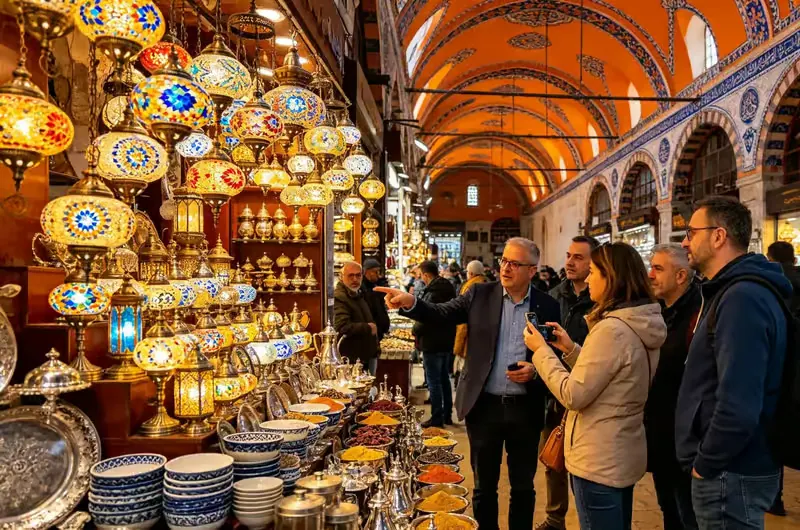
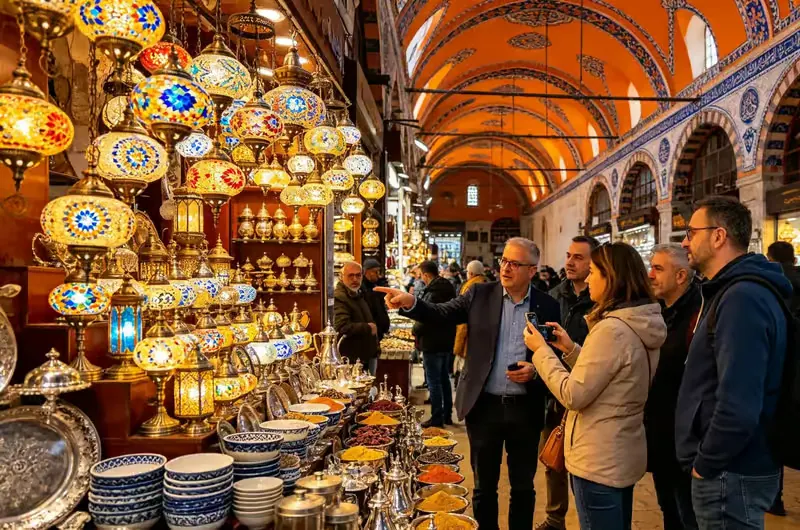
Markets and street food. In the Grand Bazaar and the Spice Bazaar, ask whether a shop takes cards before you choose, and carry small notes for stalls, carts and tea gardens. Our Istanbul street food guide covers what street food costs, and our guide to shopping beyond the Grand Bazaar covers bargaining and tax-free shopping.
ATMs: what they charge and the screen to refuse
ATMs are easy to find. İşbank alone says it runs more than 7,000 across Turkey, in cities, airports and tourist areas, with menus in 12 languages, including English, German, Arabic and Russian.
The cost comes in two layers:
- The Turkish operator's fee. Some banks charge foreign cards a percentage of the amount. Wise, the money-transfer company, warned in its June 2024 guide to ATMs in Turkey that fees vary between banks and operators and can reach 10%. Fees change often, so check the screen every time.
- Your own bank's charges. İşbank reminds foreign cardholders that the home bank may add its own foreign transaction fee and exchange rate.
Then comes the screen to watch for: many machines offer to convert the withdrawal into your home currency. Choose lira (TRY) or "without conversion". İşbank warns that this conversion "usually applies a less favorable exchange rate", and Wise tells travellers to press "no".
- Read every screen. If a fee appears that you don't like, cancel and try another bank's machine.
- Withdraw less often. If your bank charges a fixed fee per withdrawal, two large withdrawals cost less than six small ones.
- Expect limits. İşbank says its ATMs follow your card issuer's daily limit and the cash in the machine.
- Choose the machine. Canada advises using ATMs in well-lit public areas or inside a bank or business and covering the keypad, because card and ATM fraud does occur.
Paying by card, and the home-currency trap
At the till, the same trap appears in a different form. The card machine shows two amounts, one in lira and one in your currency, and asks which you want. This is dynamic currency conversion: if you choose your own currency, the shop's payment provider sets the exchange rate, not your bank. Choose lira every time, including for hotel bills at check-out and online bookings with Turkish companies. Our list of first-time mistakes in Istanbul covers this and the cash-or-card question for the city.
- Carry two cards on different networks, and keep one in the hotel safe.
- Keep the receipt until the payment shows on your statement in lira.
- Use contactless where you can. The card stays in your hand.
Changing cash: euros, dollars or pounds?
You don't need to arrive with lira. Canada's advice is to change money at reputable banks or official exchange offices (döviz bürosu). There is no limit on the foreign currency or lira you can bring into Turkey, according to both the UK and Canadian governments.
To judge an offer:
- Use the Central Bank's rate as your benchmark. On 6 November 2026 its banknote buying rate was 49.95 lira per dollar and 55.82 per euro. An office's alış (buying) rate is what you get for your notes; the closer to the benchmark, the better.
- Count the lira at the counter and keep the receipt.
- Change enough for a few days, not everything at once, so you don't have to change lira back at the end.
A card for big bills, some euros or dollars changed in town, and an ATM as a back-up is the combination we suggest to most guests.
The 2026 ban on service and cover charges
A regulation published in the Official Gazette on 30 January 2026 (No. 33153) rewrote Article 8(6) of the Price Tag Regulation. Restaurants, cafés, patisseries and similar businesses may not ask customers for any extra payment called a service charge, table charge, cover charge (kuver) or anything similar. It took effect on the day it was published, and the Ministry of Trade added the same day that anything beyond the food and drink you order can only be a voluntary payment, such as a tip.
One narrow exception remains. The regulation leaves Article 51 of Labour Law No. 4857 in place, the old system under which some hotels and restaurants add a percentage to bills and share it all among staff. According to Habertürk, this only applies where staff are actually employed under that system, and it must be announced visibly. At an ordinary restaurant, a "service" line on the bill is a reason to ask.
The rule is enforced. In June 2026 the ministry fined a restaurant in Beyoğlu, Istanbul, 274,137 lira for adding a service charge to 69 bills issued on 6 June, and a further 286,056 lira because 72 items on sale had no price on the menu at the entrance, Ekonomist reported. Price lists must be shown at the door and on the tables; our guide to Istanbul tourist scams explains how to check a bill and complain through the ministry's Alo 175 consumer line.

Tipping in Turkey: who gets what
Tipping in Turkey is common but voluntary. The ranges below come from Turkey Travel Planner, whose tipping page was last updated in August 2023, before the ban on service charges, so treat them as guidelines rather than current prices. The lira column uses the Central Bank's rate of about 50 lira to the dollar on 6 November 2026.
| Who | How it is usually done | Guideline | Roughly, in lira |
|---|---|---|---|
| Waiter at a sit-down restaurant | Cash left on the table | 10–15% of the bill | 10–15% |
| Taxi driver | Round the fare up | e.g. a 107-lira fare becomes 110 | A few lira |
| Private transfer driver | Not required | 5–10% of the fare for exceptional service | 5–10% |
| Tour guide | At the end of the tour or the trip | $20–40 a day from a small group, in total | 1,000–2,000 a day |
| Tour driver | At the end, separately | Less than the guide | — |
| Hammam attendants | After the treatment, shared out | About 15% of the price of the services | 15% |
| Hotel porter | Per bag | $1–2 a bag | 50–100 a bag |
| Hotel staff in a mid-range hotel | Left for the staff | $3–5 a day | 150–250 a day |
Turkey Travel Planner's guide figure is "the total tip for the entire group, not the tip per group member". In our experience, guests on a private tour hand the tip to the guide and the driver separately at the end of the last day. Tips are voluntary, and less is fine if the service was average. For what guiding costs, see our update on private tour guide prices in Turkey; for Istanbul-only private tours, see our sister site Get Istanbul Tours.
At the hammam, check whether the price already includes the scrub and massage; see Turkish bath prices in Istanbul.
A money plan for a 10-day trip
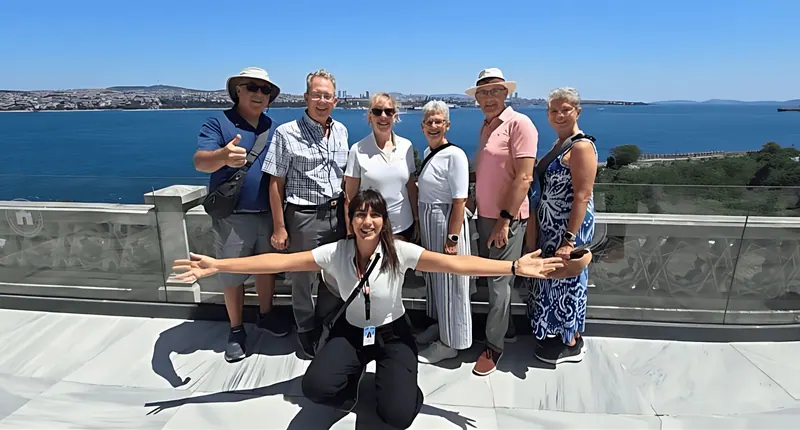
This is the plan we give guests on a typical Istanbul, Cappadocia and coast itinerary.
Before you fly. Tell your bank where you are going, check its foreign transaction and ATM fees, and pack two cards on different networks plus some euros, dollars or pounds to change. If you start in Istanbul, our Istanbul trip cost guide shows how far a day's budget goes.
Day one. Change enough for two or three days in town, or withdraw from an ATM inside a bank branch and refuse the conversion offer. Buy an Istanbulkart.
Every day. Pay meals, shops and hotel extras by card in lira. Use cash for tips, market stalls, simit carts, tea gardens and village shops, and keep a few 20- and 50-lira notes apart from the larger ones.
Before Cappadocia, Pamukkale or the coast. Top up your cash in the city.
On ticketed sites. Ministry museums and archaeological sites set foreign-visitor prices in euros, for example €12 at Zelve-Paşabağ in Cappadocia for visitors aged 8 and over. New ministry tariffs, including MuseumPass prices, apply from 1 April 2027, when Zelve-Paşabağ goes to €13; see Turkey museum prices for 2027.
Last day. Spend down your lira, keeping a little for the taxi or a tip on the way out.
Tours that cover this
- Istanbul, Cappadocia, Pamukkale and Ephesus Tour, 10 Days with Flights: from $1,410 per person.
- Private Istanbul Shopping Tour: Grand Bazaar and Spice Market: 6 hours, from $90 per person, with a licensed guide.
- Istanbul Street Food Tour: Local Neighbourhoods, Baklava and Coffee: 6 hours, from $90 per person.
- Private Istanbul Tour with a Licensed Guide: 1, 2 or 3 Days: 8 hours a day, from $199 per group.
Frequently Asked Questions
Is it better to use cash or a card in Turkey?
Use a card for most things and carry some cash. Cards, including contactless, are standard in hotels, restaurants and shops in cities; four in five in-store card payments in September 2026 were contactless, according to BKM. Cash is still needed for tips, street food, small market stalls and shops in villages and remote areas. Always pay in lira rather than in your home currency.
How much cash should I carry in Turkey?
Carry enough lira for a day or two of small spending: tips, snacks, tea, market stalls and the odd taxi that does not take cards yet. There is no limit on how much foreign currency you can bring into Turkey, according to UK and Canadian travel advice, so you can top up by changing euros or dollars in town. Keep the rest on cards.
Should I bring euros or US dollars to Turkey?
Either works, and so do pounds. Change them at a bank or an official exchange office, as Canada's travel advice recommends, and compare the office's buying rate with the Central Bank's daily rate, which on 6 November 2026 was 49.98 lira to the dollar and 55.86 to the euro. Pay for things in lira, not in euros or dollars.
Do ATMs in Turkey charge foreign cards?
Many do. Wise's June 2024 guide to ATMs in Turkey says fees vary between banks and operators and can reach 10%. Your own bank may add a foreign transaction fee and its own exchange rate on top, as İşbank also points out. Read each screen, cancel if the fee is high, and always refuse the offer to convert the withdrawal into your home currency.
Should I pay in lira or my own currency when the card machine asks?
Pay in lira. If you choose your own currency, the shop's payment provider converts the amount at its own rate, which İşbank warns is usually less favourable. Choosing lira lets your card issuer do the conversion. The same applies at ATMs, hotel check-out and online bookings with Turkish companies.
Can restaurants in Turkey still add a service charge?
No. A regulation published on 30 January 2026 bans restaurants, cafés and similar businesses from charging a service, table or cover charge under any name, and starters you did not order cannot be billed. Tips remain voluntary. A narrow exception covers businesses that legally run the old staff-percentage system, which must show it clearly.
How much should I tip in a restaurant in Turkey?
Turkey Travel Planner suggests 10 to 15% at sit-down restaurants, left in cash on the table, and notes that a tip usually cannot be added to a card payment. Its guidance dates from August 2023. Since January 2026 there should be no service charge on the bill, so the tip is your only extra.
How much do you tip a tour guide in Turkey?
Turkey Travel Planner suggests $20 to $40 a day in total from a small group, not per person, and a little less for the driver. At about 50 lira to the dollar in November 2026, that is roughly 1,000 to 2,000 lira a day. Tips are voluntary and are usually given in cash at the end of the tour.
Do taxis in Turkey accept credit cards?
Not all of them yet. Under a communiqué published on 13 February 2026, every taxi must use an approved fiscal device linked to its meter and then accept cards through it within 15 days. The Revenue Administration moved the deadline from 1 September to 16 November 2026, so ask before you get in, carry cash, and round the fare up rather than adding a percentage tip.
Sources: Central Bank of the Republic of Türkiye, indicative exchange rates for 6 November 2026 and banknotes in circulation (tcmb.gov.tr); Official Gazette No. 33153 of 30 January 2026 and No. 33044 of 11 October 2025, amendments to the Price Tag Regulation, and No. 33167 of 13 February 2026, Tax Procedure Law General Communiqué No. 591 (resmigazete.gov.tr); Revenue Administration (GİB) deadline extension notice of 27 August 2026 (ynokc.gib.gov.tr); Republic of Türkiye Ministry of Trade statement of 30 January 2026, as reported by Bloomberg HT and Diken; Habertürk, 2 February 2026; Ekonomist, 8 June 2026; Interbank Card Center (BKM) press bulletin for September 2026 (bkm.com.tr); Ministry of Culture and Tourism, Zelve-Paşabağları site information (muze.gov.tr, turkishmuseums.com) and 2027 tariff tables, as published by Alomaliye on 8 September 2026; İstanbulkart FAQ (istanbulkart.istanbul) and Metro Istanbul fares (metro.istanbul); Government of Canada travel advice for Türkiye, updated 29 September 2026; GOV.UK Turkey travel advice, updated 27 October 2026; İşbank Bankamatik information (isbank.com.tr); Wise, "ATMs in Turkey" (June 2024); Turkey Travel Planner, "Tipping in Turkey", updated August 2023 (turkeytravelplanner.com) — checked 6 November 2026.
Written by the Get Turkey Tours team: licensed local guides and trip planners based in Istanbul.
Leave a Comment
Our private tours
Istanbul, Cappadocia, Pamukkale & Ephesus Tour – 10 Days with Flights
Ten days from Istanbul to Cappadocia, Pamukkale and Ephesus and back, with 3 domestic flights, 9 hotel nights, transfers and guided touring days. Daily departures.
Private Istanbul Shopping Tour: Grand Bazaar and Spice Market Guide
A private shopping trip through the Spice Market and the Grand Bazaar, led by a local guide familiar with honest traders and fair prices.