

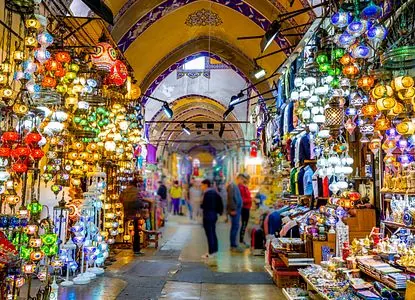
 Istanbul bazaar tours
Grand Bazaar Tour with a Private Guide: Hans, Workshops, Bargaining
The Grand Bazaar is free and open Monday to Saturday, about 09:00 to 19:00; it is closed on Sundays. A private guide shows you the hans, workshops and how to bargain.
Browse our tours
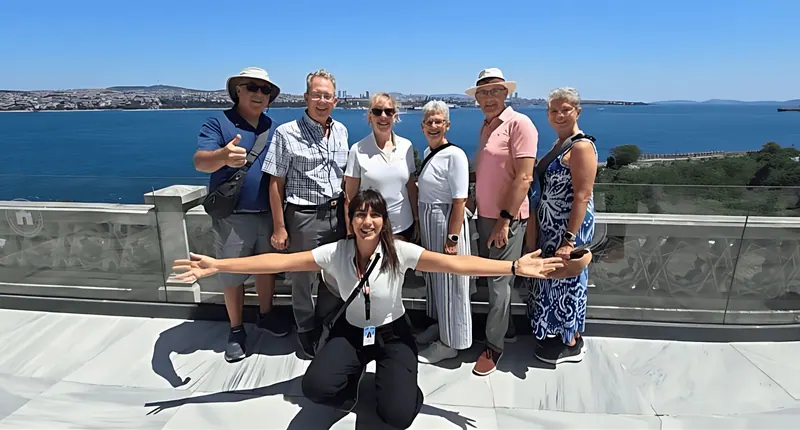
The Grand Bazaar is free to enter and open Monday to Saturday from about 09:00 to 19:00; it is closed on Sundays and during the main religious holidays. A private guide turns two or three hours there from a walk past souvenir stalls into a visit to the old hans, the working craft shops and the trades that have filled these streets since the 15th century, and helps you buy with confidence. Our private Grand Bazaar and Spice Market shopping tour is built around exactly that.
Opening days and hours
The Grand Bazaar, Kapalıçarşı in Turkish, has no ticket and no booking. You walk in through any of its gates.
| Day | Open? | Notes |
|---|---|---|
| Monday to Saturday | Yes, about 09:00 to 19:00 | Some shops open earlier, many start closing from 18:30 |
| Sunday | Closed all day | Visit the Spice Bazaar instead, which opens on Sundays |
| Religious holidays | Closed | The Ramadan and Sacrifice holidays; check dates for your trip |
Practical points:
- Sunday is the classic mistake. Many weekend visitors arrive to find the gates shut. If your only free day is Sunday, see the Spice Bazaar and the Old City mosques instead.
- Mornings are calmer. Shopkeepers are setting up, the lanes are quieter and it is easier to talk without pressure. Midday on Saturdays is the busiest time.
- Each shop keeps its own hours. The bazaar's official hours are the outer limit; workshops in the hans often close earlier.
- Bring small notes. Lira in small denominations is handy for tea, snacks and small purchases.
How the bazaar is laid out
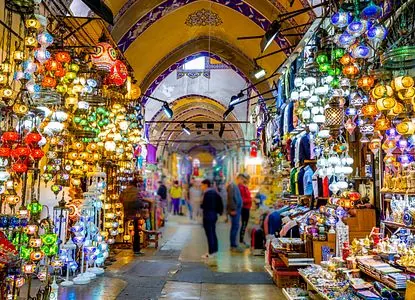
The bazaar grew from a single domed market hall, the Inner Bedesten, built under Sultan Mehmed II around 1461 to store and sell valuable goods. Over the following centuries a second hall, the surrounding streets and a ring of hans were added, and the whole area was roofed over. Today it covers around 60 covered streets and several thousand shops.
The main reference points a guide uses:
- The Inner Bedesten. The original core, with thick walls and iron doors, now home to antique dealers, old silver and jewellery.
- Kalpakçılar Street. The main jewellery street, running between the Beyazıt and Nuruosmaniye sides, lined with gold shops.
- The Nuruosmaniye Gate. The eastern entrance, beside the 18th-century Nuruosmaniye Mosque, and the easiest gate to reach on foot from Sultanahmet.
- The Beyazıt Gate. The western side, near the Beyazıt tram stop and the old book market.
- The Mahmutpaşa side. The northern exits lead downhill towards the Spice Bazaar through streets of everyday shops used by locals.
Streets are named after the trades that once filled them: slipper makers, fez makers, quilt makers. Many still keep their trade, which is why carpets, gold or leather tend to cluster together.
The hans and workshops a guide shows you
The hans are the part of the bazaar most visitors miss. They are courtyard buildings, many from the 16th to 18th centuries, built as inns, warehouses and workshops for travelling merchants. Today craftsmen still work in many of them.
- Zincirli Han. A small, quiet courtyard inside the bazaar, home to jewellers and goldsmiths. It is a good spot to understand how a han worked, with shops on the ground floor and workrooms above.
- Kalcılar Han. Silversmiths' workshops, where you can watch pieces being cast, soldered and polished.
- Büyük Valide Han. A large 17th-century han just outside the bazaar walls, built for the mother of a sultan. It is worn and partly ruined, with weavers and metal workshops inside. Roof access, once popular for its views, depends on the day and is not guaranteed.
- Çuhacı Han and the surrounding courtyards. Smaller workshops for engraving, repairing and finishing jewellery.
Hans are working places, not attractions. A guide knows which ones welcome visitors, when to go and how to ask before taking photos of people at work.
What to buy, and what to look for
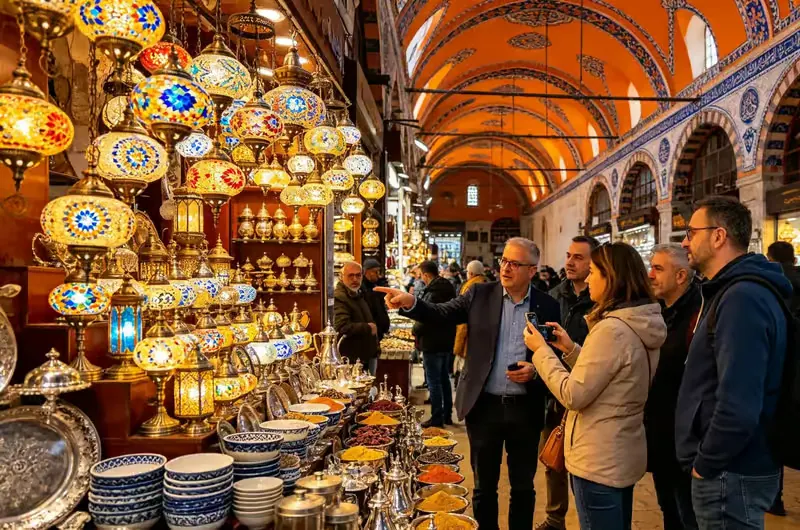
Almost everything is for sale, but some goods are worth the time more than others.
| Item | What to look for | Tip |
|---|---|---|
| Carpets and kilims | Hand-knotted or hand-woven, natural dyes, a clear origin | Ask the dealer to show you the back of the carpet; knots should be even |
| Ceramics | Hand-painted Kütahya or Iznik-style pieces | Hand-painted work has small irregularities; printed copies look perfect |
| Lamps | Mosaic glass on metal frames | Ask whether the glass is set by hand and how it is packed for flights |
| Gold and silver | Purity hallmarks, price by weight | Gold is priced daily by gram plus workmanship |
| Leather | Soft, even stitching, lining quality | Try on; sizes vary between workshops |
| Textiles | Cotton peshtemal towels, silk scarves | Pure silk feels cool and does not shine like polyester |
Shipping carpets home is common, and established dealers handle it. Get the details in writing, including the total price and the delivery method.
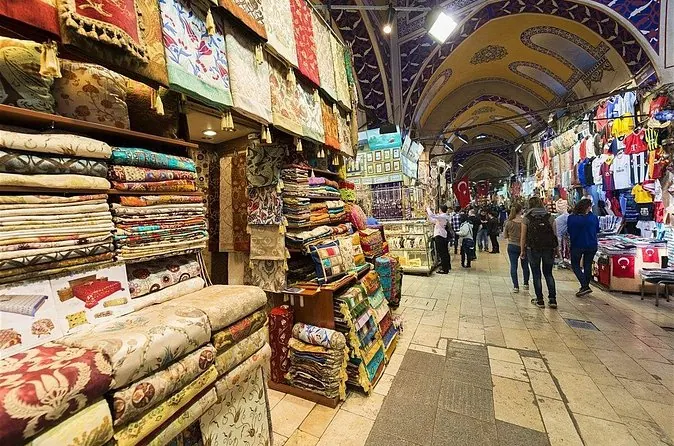
Bargaining without stress
Bargaining is normal in the Grand Bazaar, especially for carpets, lamps, ceramics and leather. It is less common for gold, which is priced by weight, and for packaged food.
How to do it well:
- Look first, buy later. Walk the bazaar, compare a few shops and get a sense of prices before you commit.
- Ask the price, then pause. A friendly pause or "Let me think" often brings a better offer without any haggling.
- Make a fair counter-offer rather than a very low one. Shopkeepers respect a reasonable start.
- Buy several items in one shop for a better overall price.
- Be ready to walk away. If the price is not right, thank them and leave. You may be called back.
- Cash or card. Cards are widely accepted; paying cash in lira can sometimes help on the final price.
- Tea is hospitality, not a commitment. Accepting a glass of tea does not oblige you to buy.
Ask any guide up front whether shop visits are part of the day. A good guide helps you understand quality and price, then lets you decide.
Adding the Spice Bazaar and the mosques nearby
The bazaar sits between two of the finest mosques in the city, and the Spice Bazaar is a 15-minute walk downhill through the Mahmutpaşa streets.
- Nuruosmaniye Mosque at the eastern gate, an 18th-century mosque in the Ottoman Baroque style.
- Süleymaniye Mosque, Sinan's great mosque on the hill above, a 10-minute walk from the Beyazıt side.
- Rüstem Pasha Mosque, a small mosque above the shops near the Spice Bazaar, famous for its Iznik tiles.
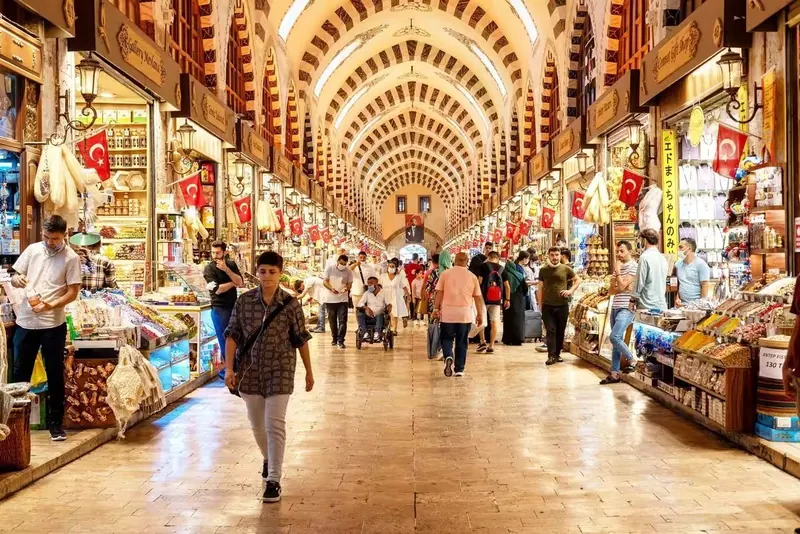
- The Spice Bazaar, built in the 17th century, for Turkish delight, spices, dried fruit and tea. Unlike the Grand Bazaar, it opens on Sundays.
Mosques close to visitors at prayer times, and the Friday midday prayer is the longest closure, so a guide places them around the timetable. If you are a keen eater, our private Istanbul food tour covers the food streets around the bazaars in more depth.
Tours that cover this
- Private Istanbul Shopping Tour: Grand Bazaar and Spice Market Guide, from $90 per person.
- Hagia Sophia Small-Group Tour with Entry Ticket, Blue Mosque & Bazaar, from $120 per person.
- Topkapi Palace Small-Group Tour: Ticket, Hagia Irene, Grand Bazaar, from $150 per person.
- Istanbul Old City Private Tour: Hagia Sophia, Topkapi & Grand Bazaar, from $200 per person.
Each tour page lists what is included. For more ideas, see our Istanbul city tours or our guide to choosing a private tour guide in Istanbul.
Frequently Asked Questions
Is the Grand Bazaar open on Sunday?
No. The Grand Bazaar is closed all day on Sundays, as well as during the main religious holidays. It opens Monday to Saturday from about 09:00 to 19:00. On a Sunday, visit the Spice Bazaar near Eminönü, which is open on Sundays, and spend the rest of the day at the Old City mosques and museums.
Do you need a guide for the Grand Bazaar?
Not to enter, as it is free and open to everyone. A guide helps you find the hans and workshops, understand quality in carpets, ceramics and jewellery, and avoid the most tourist-focused lanes. For first-time visitors with limited time, two or three hours with a guide is usually more productive than a whole day alone.
How long should I spend at the Grand Bazaar?
Two to three hours is enough for a guided walk through the main streets, the Inner Bedesten and a couple of hans, with time to shop. Serious carpet buyers should allow longer, as choosing and negotiating takes time. Add an hour or two if you continue to the Spice Bazaar and the Rüstem Pasha Mosque.
Is bargaining expected at the Grand Bazaar?
Yes, for most goods such as carpets, lamps, ceramics and leather. Ask the price, compare with other shops, make a fair counter-offer and be ready to walk away politely. Gold is the exception, priced daily by weight plus workmanship, so the room to negotiate is smaller. Packaged food and small items often have fixed prices.
Which gate of the Grand Bazaar is best to enter?
From Sultanahmet, the Nuruosmaniye Gate on the east side is the most convenient, a 10 to 15 minute walk or one stop by tram to Çemberlitaş. From the tram at Beyazıt, use the western gates. To finish at the Spice Bazaar, leave through the northern Mahmutpaşa side and walk downhill.
Is the Grand Bazaar safe for tourists?
Yes, it is generally safe, with security staff and cameras throughout. As in any crowded market, keep your bag closed and your phone in a front pocket, especially on busy Saturday afternoons. Be cautious with strangers who offer to guide you to a "cousin's shop", and get prices in writing before you buy expensive items.
Sources: Grand Bazaar visitor guides updated in 2026 (opening days and holiday closures), KLM Travel Guide and Advantour on the history and layout of Kapalıçarşı, Diyanet prayer times for Istanbul — checked 6 November 2026.
Private tours in Istanbul
Private Istanbul Shopping Tour: Grand Bazaar and Spice Market Guide
A private shopping trip through the Spice Market and the Grand Bazaar, led by a local guide familiar with honest traders and fair prices.
Hagia Sophia Small-Group Tour with Entry Ticket, Blue Mosque & Bazaar
The Hippodrome, Blue Mosque, Hagia Sophia and Grand Bazaar in a small group, with central hotel pick-up and entry tickets included.
Related guides
- Greek-Speaking Guide in Istanbul: Constantinople, the Phanar and Halki
- Hagia Sophia Guided Tour with Tickets: Blue Mosque and Topkapı Too
- Hair Transplant Trip to Turkey in 2027: A Month-by-Month Planner
- Hair Transplant Turkey Cost: What Drives the Price and Trip Budget
- Hair Transplant Turkey Package: What Is Included and What to Ask
- Hair Transplant for Women in Turkey: Suitability and Trip Planning
- Hair Transplant in Turkey from Canada: Coverage, Flights, Follow-up
- Hair Transplant in Turkey from the UK: Flights, NHS Advice, Aftercare
- Hair Transplant in Turkey from the USA: Flights, Checks and Aftercare
- Hair Transplant in Turkey: How to Check and Choose a Clinic Safely
- Hair Transplant in Turkey: Recovery Timeline and How Long to Stay
- Halal Holiday in Istanbul from the UK: Eid 2027 Dates, Food, Prayer