

 Istanbul
Nuruosmaniye Mosque
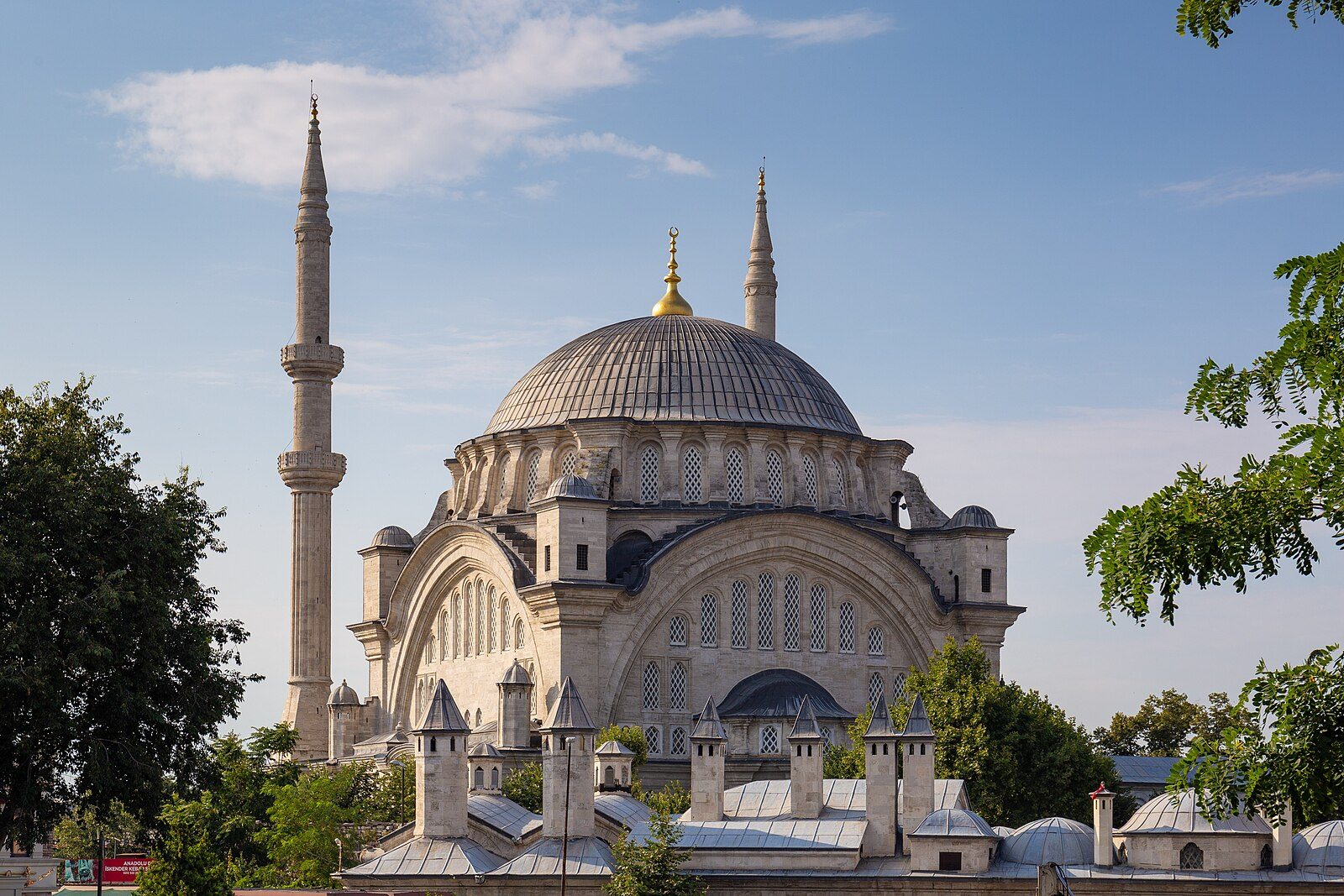
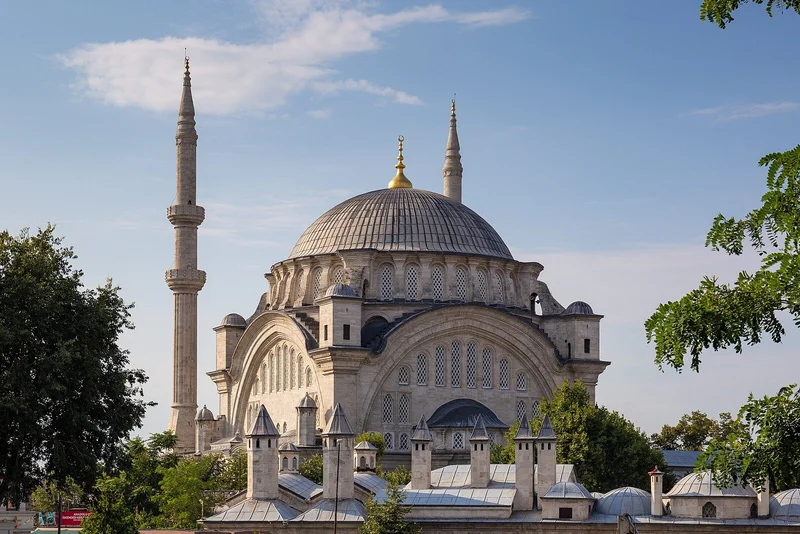
Finished in 1755, Nuruosmaniye Mosque was the first big Baroque mosque of the Ottomans, and it stands by the Grand Bazaar's eastern gate. Entry is free outside prayer times, so it is an easy addition to any bazaar visit.
Every day, thousands of people walk past Nuruosmaniye Mosque without going inside. Its courtyard lies directly beside the bazaar's Nuruosmaniye Gate, so the crowds stream by towards the shops. Turn through the courtyard gate instead and you reach one of Istanbul's most unusual mosques: the building that introduced European Baroque to Ottoman architecture. No ticket is needed.
Key facts
| Item | Details |
|---|---|
| Hours | Every day, from morning until the evening prayer; tourist visits stop during prayers |
| Closures | Closed to visitors on Fridays until around 14:30 and during each of the five daily prayers |
| Entry | Free |
| How long | 20-30 minutes |
| Where | Beside the Grand Bazaar's Nuruosmaniye Gate, Cemberlitas |
| What to wear | Knees and shoulders covered; a headscarf for women |
History
In 1748 Sultan Mahmud I commissioned the mosque. He died before work ended, and his brother Osman III finished it in 1755 and named it Nuruosmaniye, "the light of Osman". Simeon Kalfa is usually credited as the architect, working alongside Ottoman court builders.
By the middle of the 18th century the Ottoman elite had taken to European fashions, with French and Italian ornament reaching Istanbul via craftsmen, envoys and prints. No imperial mosque before Nuruosmaniye had used these ideas on such a scale: carved acanthus leaves, curving mouldings, rounded shapes and a lively blend of classical and Ottoman details. Later Baroque mosques and fountains around the city followed its lead.
The complex used to include a fountain, a soup kitchen, a madrasa, a library and the founder's mother's tomb, and some of these buildings survive around the mosque. Careful restoration work took place in the 2010s.
Highlights
- The courtyard. Ottoman mosque courtyards are normally square. Here it bends into a horseshoe, ringed by domed arcades. No other large mosque in Istanbul has one like it.
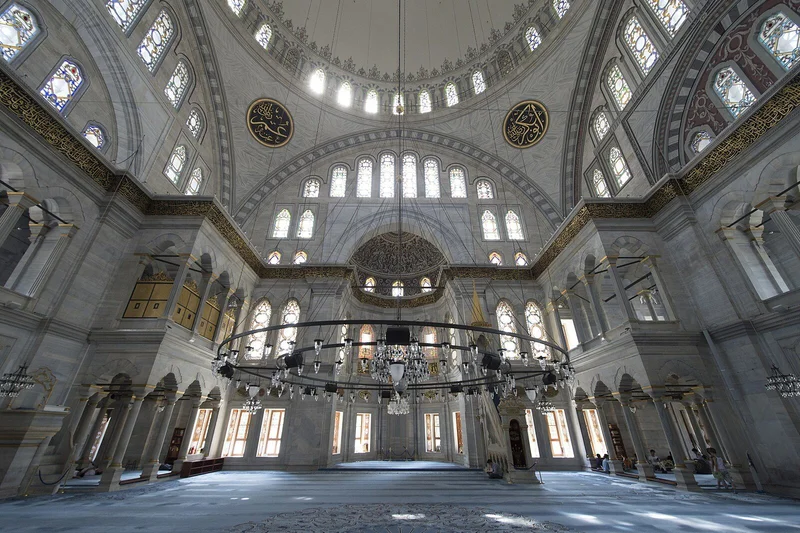
- The dome. One big dome, carried on huge arches, roofs the prayer hall. With no side half-domes, the space inside feels very open.
- The light. Rows of windows in the drum and walls flood the prayer hall with daylight, which suits the mosque's name.
- The fountain and tomb. Just outside the courtyard are the tomb of Sehsuvar Sultan, mother of Osman III, and a small public fountain, both part of the complex.
- The details. Study the column capitals, the carved railings of the galleries and the mihrab, where traditional calligraphy meets Baroque curves.
A place of worship first
Nuruosmaniye is in active use. Visits halt for the five daily prayers, whose times shift with the sun, and on Fridays around noon prayer. Take your shoes off at the door and speak quietly. Never walk in front of someone who is praying.
When to go
Ideally, just before or just after the bazaar. It is quiet in the middle of the morning. In late afternoon, as the bazaar begins to close, shopkeepers fill the courtyard on their way to prayer, so come a little earlier. The bazaar is closed on Sundays; the mosque is not.
Our four-hour private shopping tour covers the Grand Bazaar and the Spice Market with a local guide who can tell you what a fair price is. It costs from US$200 and goes past the Nuruosmaniye gate. The half-day private Old City tour with fast-track Hagia Sophia entry takes four hours to get from Sultanahmet to the bazaars, also from US$200. Ask for a ten-minute stop at the mosque to be added.
Nearby
Nuruosmaniye Street leads from the mosque towards Cagaloglu, lined with antique, jewellery and carpet shops that are calmer and smarter than the alleys of the bazaar. Two minutes away stands the Column of Constantine at Cemberlitas, and the historic Cemberlitas Hammam, dating from the 1580s, sits on that same corner. See our guide to the Grand Bazaar for more.
Tips
- Go in by the courtyard gate facing the bazaar, the most direct way.
- Carry a scarf, as loan scarves are not always on hand here.
- Photos are allowed without flash; do not aim your camera at people praying.
- The library buildings and the small tomb around the courtyard may be closed.
Frequently Asked Questions
Does Nuruosmaniye Mosque charge an entry fee?
No. It is a working mosque and entry is free. Visits stop at prayer times.
Where can I find Nuruosmaniye Mosque?
Directly beside the Grand Bazaar's Nuruosmaniye Gate, a few minutes' walk from the Cemberlitas tram stop.
Why is Nuruosmaniye Mosque special?
Completed in 1755, it was the first large Baroque mosque the Ottomans built, and no other imperial mosque in the city has a horseshoe-shaped courtyard like it.
Is Nuruosmaniye Mosque open on Sundays?
Yes. The Grand Bazaar closes on Sundays, but the mosque remains open outside prayer times.
How much time should I allow?
Twenty to thirty minutes is enough for the prayer hall and the courtyard.
More places to see in Istanbul
- Balat and Fener (Fener and Balat)
- Basilica Cistern (Yerebatan)
- Beylerbeyi Palace
- Blue Mosque (Sultanahmet Mosque)
- Bosphorus Strait (Bosphorus Cruise)
- Camlica Hill and Camlica Mosque
- Chora Church (Kariye Mosque)
- Dolmabahce Palace
- Emirgan Park
- Fatih Mosque
- Fener Greek Orthodox Patriarchate (Aya Yorgi)
- Galata Bridge and Eminonu
- Galata Tower
- Grand Bazaar (Kapalıçarşı)
- Hagia Irene (Aya Irini)
- Hagia Sophia (Ayasofya)
- Hippodrome of Constantinople (Hippodrome Square)
- Istanbul Archaeology Museums
- Istanbul Modern
- Istiklal Avenue and Taksim (Istiklal Street)
- Kadikoy and Moda
- Little Hagia Sophia (Kucuk Ayasofya)
- Maiden's Tower (Kız Kulesi)
- Miniaturk
- Ortakoy Mosque (Buyuk Mecidiye Mosque)
- Pera Museum
- Pierre Loti Hill and Eyup Sultan Mosque
- Princes' Islands (Adalar)
- Rumeli Fortress (Rumelihisarı)
- Rustem Pasha Mosque
- Spice Bazaar (Egyptian Bazaar)
- Suleymaniye Mosque
- Sultanahmet Square
- Topkapi Palace
- Turkish-Islamic Arts Museum (Ibrahim Pasha Palace)
- Yildiz Palace and Yildiz Park