

 Ramadan in Istanbul
Ramadan 2027 in Istanbul: Dates, Iftar Times and a Tour Plan
Ramadan 2027 is expected to run from 8 February to 8 March in Turkey, with Eid on 9-11 March. Iftar in Istanbul falls at about 18:35-19:10, so sightsee by day.
Browse our tours
Ramadan 2027 is expected to begin in Turkey on Monday 8 February and end on Monday 8 March, with the Eid holiday (Ramazan Bayramı) on 9-11 March, according to the Diyanet calendar. In Istanbul that means fasting days of roughly 12 to 13 hours, iftar at about 18:35 at the start of the month and about 19:10 at the end, and a city that stays fully open to visitors by day. A Ramadan trip works well if you plan around one simple rule: sightseeing in the morning and early afternoon, iftar at sunset, mosques and old streets after dark. Our Islamic Istanbul tour package is built on exactly that rhythm.
This page explains the 2027 dates, what a normal Ramadan day looks like in the city, where to have iftar, how visitors can experience tarawih prayers respectfully, and what changes during the three days of Eid.
Ramadan 2027 dates in Turkey
Turkey follows the calendar published by the Presidency of Religious Affairs (Diyanet), which is fixed well in advance. Unlike some countries, Turkey does not wait for a local moon sighting, so the dates below are the ones hotels, restaurants and mosques will work to.
| Date | Day | What happens |
|---|---|---|
| Night of 7 February 2027 | Sunday | First sahur (pre-dawn meal); drummers walk the neighbourhoods |
| 8 February 2027 | Monday | First day of fasting |
| Night of 5 March 2027 | Friday | Kadir Gecesi (Night of Power); mosques are at their fullest |
| 8 March 2027 | Monday | Last fast; arife (Eid eve), offices close at midday |
| 9-11 March 2027 | Tuesday to Thursday | Ramazan Bayramı (Eid al-Fitr), public holiday |
Iftar is taken at the evening prayer (akşam), which in Istanbul follows sunset by a few minutes. Based on sunset times, expect iftar at approximately:
- 8 February: about 18:35
- 15 February: about 18:45
- 22 February: about 18:55
- 1 March: about 19:00
- 8 March: about 19:10
Diyanet publishes the exact minute for each district in its imsakiye (Ramadan timetable), and your hotel reception will have it. Use the official time on the day rather than our approximation.
What a Ramadan day in Istanbul looks like
Visitors who have never been to a Muslim-majority city in Ramadan often expect closures. Istanbul is not like that. Museums, palaces, the Grand Bazaar, the Spice Bazaar, ferries, trams and taxis all run on their normal schedules. Restaurants and cafés in the old city, Galata, Karaköy, Beyoğlu and along the Bosphorus serve lunch as usual, and licensed venues continue to serve alcohol. Nobody expects a visitor to fast, though eating or smoking ostentatiously in front of a mosque courtyard is best avoided.
What changes is the shape of the day:
- Morning: quieter than usual in residential districts, because many people were awake for sahur.
- Afternoon: queues form outside bakeries for Ramazan pidesi, the round flatbread baked only in this month. It is worth buying one warm.
- The hour before iftar: the busiest traffic of the day. Everyone is trying to get home or to a restaurant table before the call to prayer. Do not plan a cross-city drive or an airport run for this window.
- Iftar itself: for ten or fifteen minutes the streets go almost silent. Then the city comes back to life.
- After dark: families stroll, mosque courtyards fill for tarawih, tea gardens stay open late, and the old city feels more festive than at any other time of the year.
- Around 3-4 am: the Ramadan drummer (davulcu) passes through some neighbourhoods to wake people for sahur. In Sultanahmet and Fatih you may hear him from your hotel room.
You will also see mahya, the lit messages strung between the minarets of the large imperial mosques, a tradition specific to Istanbul.
Iftar evenings and Sultanahmet after sunset
There are three good ways for a visitor to share iftar.
A restaurant iftar menu. Many restaurants offer a set menu for the month: dates and water to open the fast, a soup, pide, cheeses and olives, a main course and a Ramadan dessert such as güllaç, a delicate milk and rosewater pudding made with thin wafer sheets. Tables near the old city fill up fast, so book a day or two ahead for weekends and every night in the last ten days.
A public iftar. In recent years local authorities and charities have set up free iftar tents and long communal tables in several districts. Sultanahmet Square has hosted Ramadan events in many years, but who organises them, and whether there is a tent there at all, has changed from one year to the next. Treat any public iftar in 2027 as a bonus to confirm locally, not something to build a whole evening around.
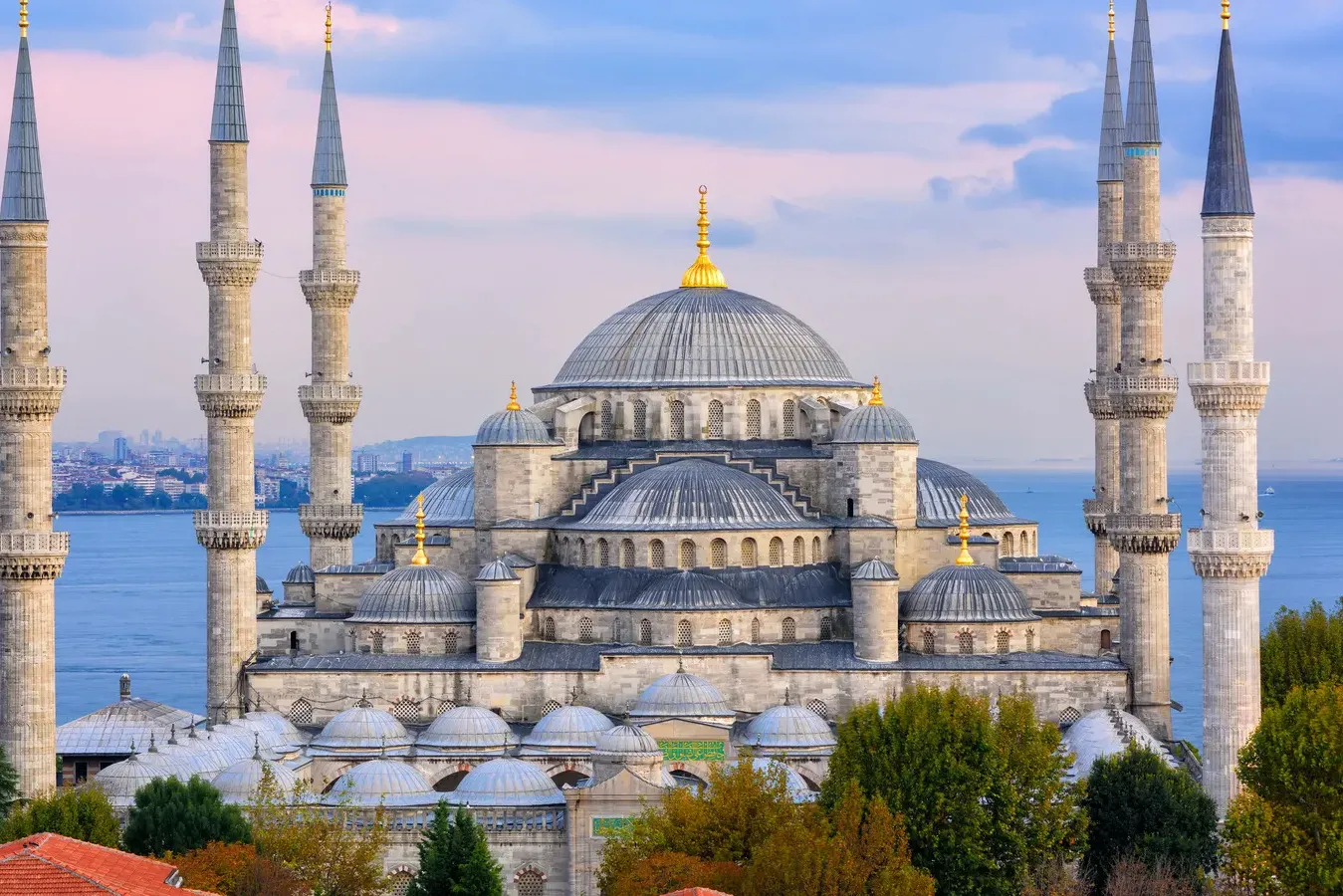
A Ramadan market and stroll. Around the Hippodrome and the Blue Mosque you often find food stalls, Ottoman-style sweets, roasted chestnuts, corn and tea in the evenings. Even when the layout differs from year to year, the walk from Sultanahmet Square past the Hippodrome to the mosque courtyard is the classic Ramadan night out in Istanbul.
For a quieter evening, the area around Eyüp Sultan Mosque and Pierre Loti Hill is one of the most visited religious sites in the city during Ramadan, and Çamlıca Hill and Çamlıca Mosque on the Asian side gives a wide view over the lit-up city after iftar.
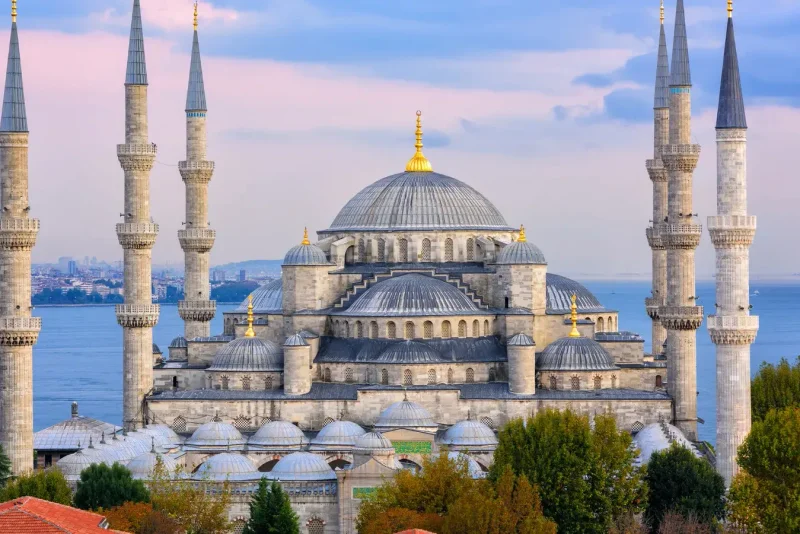
Tarawih at the Blue Mosque, Hagia Sophia and Süleymaniye
Tarawih is the extra night prayer performed after the night prayer (yatsı) throughout Ramadan. In Istanbul the night prayer comes roughly an hour and twenty minutes after iftar, and tarawih follows it.
If you are Muslim, praying tarawih in one of the imperial mosques is the highlight of a Ramadan trip. The Blue Mosque, Hagia Sophia and the Süleymaniye Mosque are the most popular, and they fill early, especially on Fridays, weekends and the Night of Power on 5 March. Arrive at least 30-45 minutes before the night prayer if you want a place inside rather than in the courtyard. Women's sections are separate; follow the signs or ask at the entrance.
If you are not Muslim, you are welcome to visit the mosques as a tourist outside prayer times, but the tourist entrances close during prayers, and during tarawih the mosques are places of worship, not sights. You can still enjoy the atmosphere from the courtyards and the square, listen to the recitation, and watch the crowds arrive.
Practical points for everyone:
- Dress: shoulders and knees covered for men and women; women cover their hair inside mosques. Bring a scarf; see what to wear in Istanbul for winter layers.
- Shoes: you remove them at the door. Carry a small bag for them.
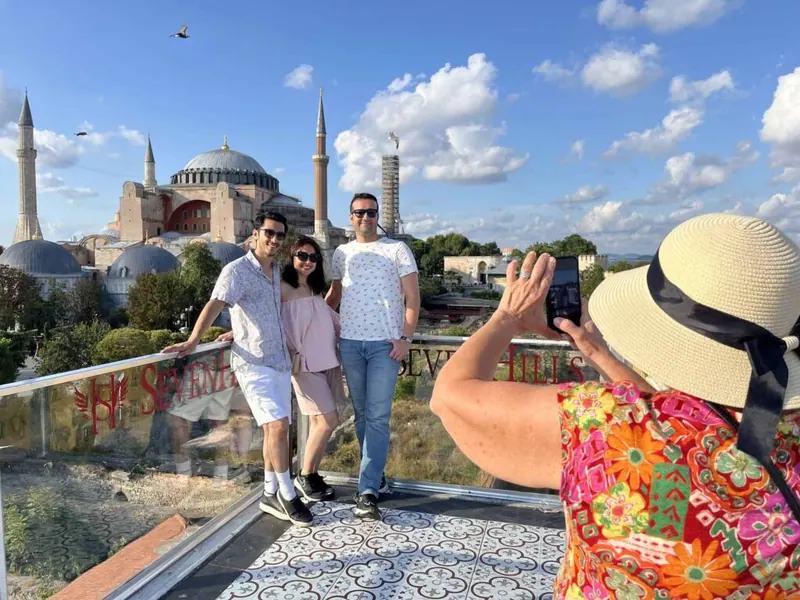
- Hagia Sophia: since January 2024 foreign visitors pay an entrance fee (€25 in 2026) to the upper gallery visitor route, while the ground floor is used for prayer. Read our Hagia Sophia ticket update before you go.
Our guides lead mosque tours of Istanbul by day and can explain the architecture and the Ramadan customs before you return on your own in the evening.
A sightseeing plan that works during Ramadan
Keep the heavy sightseeing to the first half of the day and leave the evening free. This is the four-day pattern we use for private guests.
| Day | Morning to early afternoon | After iftar |
|---|---|---|
| 1 | Arrival, hotel check-in, short walk around Sultanahmet | Iftar near the Blue Mosque, evening in the square |
| 2 | Hagia Sophia, Blue Mosque, Basilica Cistern, Topkapı Palace (not Tuesday) | Tarawih or a tea garden near the Hippodrome |
| 3 | Süleymaniye Mosque, Rüstem Pasha Mosque, Spice Bazaar, Grand Bazaar | Iftar on the Golden Horn side, walk to Eyüp |
| 4 | Bosphorus cruise, Dolmabahçe Palace (not Monday), Çamlıca Mosque | Departure, or iftar on the Asian shore |
- Topkapı Palace is closed on Tuesdays, Dolmabahçe Palace on Mondays.
- Mosques close to tourists for longer around Friday midday prayer. Put museums, not mosques, on Friday mornings.
- Afternoon fatigue is real if you are fasting. A private guide and car let you stop when you need to, which is why many fasting travellers prefer a private tour to a fixed group schedule.
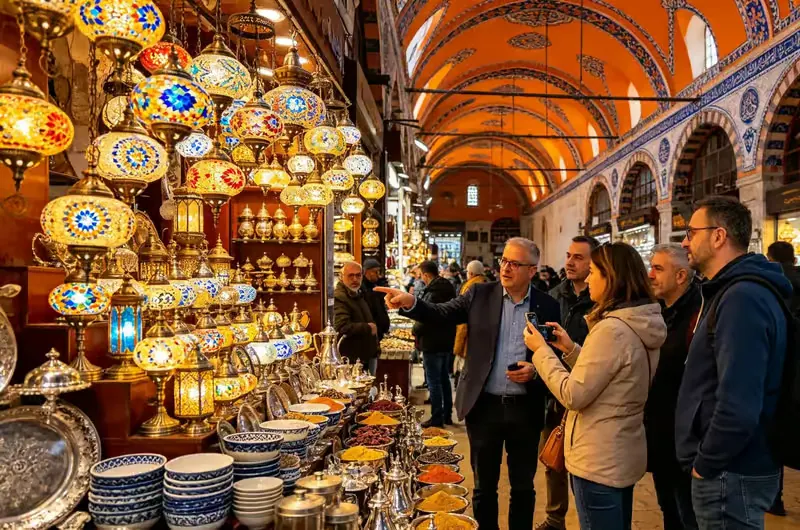
- Shopping at the Grand Bazaar and the Spice Bazaar is calmer in the mornings. The Grand Bazaar is closed on Sundays.
If you are travelling from the Gulf, South Asia or Southeast Asia, our pages on Istanbul tours for Gulf travellers and Istanbul tours for Indian travellers cover halal dining, prayer stops and family logistics in more depth. Travellers who want more guided days across the city can also look at private Istanbul tours on our sister site.
Eid al-Fitr in Istanbul: 9-11 March 2027
Ramazan Bayramı is a three-day public holiday, and the half-day before it (arife, 8 March) is when offices close and people start travelling. For visitors it brings a cheerful mood, children in new clothes, sweets offered everywhere, and some practical changes:
- Museums run by the Ministry of Culture and Tourism usually open from 13:00 on the first day of the holiday and keep normal hours on the second and third days.
- The National Palaces, which include Dolmabahçe and Beylerbeyi, have closed on the first day of recent Eid holidays and reopened on the second.
- The Grand Bazaar usually closes on the first day of religious holidays and reopens on the second.
- Traffic and transport are heavy on the eve and the last day, as many Istanbul residents leave the city or return. Domestic flights and intercity buses are often full.
- Hotels in Sultanahmet and on the Bosphorus are busy with domestic and Gulf visitors during the holiday, so book rooms well before the end of Ramadan.
Exact holiday hours are announced a few days before; we check them and adjust the order of visits.
Weather and packing for February and March
Ramadan 2027 falls in late winter. Istanbul's long-term averages from the Turkish State Meteorological Service show an average high of about 10°C and an average low of about 4°C in February, with rain on roughly 14 days of the month. March is a little milder, with an average high of about 12°C and a low of about 5.5°C.
Pack a warm waterproof jacket, layers you can take off inside heated mosques and museums, comfortable shoes that slip on and off easily, and a scarf. Evenings by the water are cold, especially on the Bosphorus after sunset.
Tours that cover this
These tours fit a Ramadan visit. The private ones can start late morning to suit sahur and fasting.
- Islamic Istanbul tour package, 4 days with private guided heritage tours: from $768 per person.
- Istanbul classic private guided tour: Hagia Sophia, Blue Mosque and the old city, from $200 per person, 6-8 hours.
- Premium Istanbul tour package, 6 days: from $1,050 per person.
- Whirling Dervish Sema ceremony with reserved seating: from $60 per person, a good after-iftar evening.
You can also browse our Istanbul destination guide, all Istanbul tours.
Frequently Asked Questions
When does Ramadan start in 2027 in Turkey?
Ramadan 2027 is expected to start on Monday 8 February in Turkey, with the first sahur on the night of 7 February. The last fast is on Monday 8 March, and Ramazan Bayramı (Eid al-Fitr) runs from 9 to 11 March. Turkey follows the Diyanet calendar, which is set in advance rather than by a local moon sighting, so hotels and restaurants plan around these dates.
What time is iftar in Istanbul during Ramadan 2027?
Iftar in Istanbul will be at roughly 18:35 at the start of Ramadan 2027 and about 19:10 at the end, moving later by a minute or so each day as sunsets get later. The exact time depends on the district. Diyanet publishes the official minute in its Ramadan timetable, and hotels post it at reception, so check that on the day.
Is it a good idea to visit Istanbul during Ramadan?
Yes, for most travellers it is a very good time. Sights, shops, restaurants and transport run normally by day, and the evenings in Sultanahmet, Eyüp and around the big mosques are lively and atmospheric. The main things to plan around are heavy traffic just before iftar, busy restaurants at sunset and the Eid holiday closures.
Can tourists eat and drink in public during Ramadan in Istanbul?
Yes. Istanbul is a large, mixed city and nobody expects visitors to fast. Restaurants and cafés serve food all day, and licensed venues serve alcohol as usual. It is polite to avoid eating, drinking or smoking right in front of mosque entrances or among people waiting for iftar, but there are no rules for tourists and you will not be challenged.
Can non-Muslims attend tarawih prayers at the Blue Mosque?
Non-Muslims can visit the Blue Mosque outside prayer times and enjoy the Ramadan atmosphere in the courtyard and the square in the evening. During tarawih the tourist entrances are closed and the mosque is used for worship. Standing quietly at the back of the courtyard to listen is fine; joining the prayer rows or taking photos of worshippers is not appropriate.
Are museums and palaces open during Ramadan in Istanbul?
Yes. During Ramadan museums, palaces and the bazaars keep their normal hours, with the usual weekly closures, such as Topkapı on Tuesdays and Dolmabahçe on Mondays. Changes come only at Eid: ministry museums usually open at 13:00 on the first day, the National Palaces have closed on the first day in recent years, and the Grand Bazaar normally closes that day.
Where can I have iftar in Sultanahmet?
Many restaurants around Sultanahmet, Divanyolu and the Hippodrome offer a fixed iftar menu with soup, pide, a main course and a Ramadan dessert. Book a table a day or two ahead, more for weekends and the last ten nights. Public iftar tents have appeared in Sultanahmet Square in some years, but organisers and locations change, so confirm locally rather than relying on them.
What should I wear in Istanbul during Ramadan?
Normal modest city clothing is enough. For mosque visits, men and women should cover shoulders and knees, and women need a headscarf inside. Ramadan 2027 falls in February and early March, when the average high is around 10-12°C and rain is common, so bring a warm waterproof jacket, layers and shoes that slip off easily at mosque doors.
Is the Grand Bazaar open during Ramadan and Eid?
The Grand Bazaar is open as normal during Ramadan, from Monday to Saturday, and closed on Sundays as on any week. It usually closes on the first day of Ramazan Bayramı, 9 March 2027, and reopens on the second day. Mornings are the calmest time to shop, before the afternoon crowds.
Sources: Presidency of Religious Affairs (Diyanet) 2027 religious calendar as reported by Milli Gazete and Dünya, Turkish State Meteorological Service (mgm.gov.tr) long-term Istanbul averages, Republic of Türkiye Ministry of Culture and Tourism (muze.gov.tr) holiday opening rules, National Palaces administration (millisaraylar.gov.tr) holiday notices, Daily Sabah — checked 6 November 2026.
Private tours in Istanbul
Islamic Istanbul Tour Package: 4 Days, Private Guided Heritage Tours
A private 4-day Istanbul package focused on Islamic heritage: Eyup Sultan, the Sahaba sites, Suleymaniye Mosque, Hagia Sophia and Topkapi Palace, with 3 hotel nights.
Istanbul Old City Private Tour: Hagia Sophia, Topkapi & Grand Bazaar
One private day with your own guide through Istanbul's top Byzantine and Ottoman sights, starting at Topkapi Palace and ending in the Grand Bazaar.
Related guides
- Ramadan in Istanbul 2027: Dates, Iftar, Mosque Visits and Eid
- Rhinoplasty in Istanbul: Planning the Stay, Hotel and Transfers
- Rhinoplasty in Turkey 2027: A Recovery Calendar for Your Travel Dates
- Romanian-Speaking Guide in Istanbul: Booking, Prices, Orthodox Sites
- Romantic Things to Do in Istanbul: Sunsets, Boats and Dinners
- Russian May Holidays 2027 in Istanbul: 1 to 10 May, Easter, Cappadocia
- Russian New Year Holidays 2027 in Istanbul: A Plan for 31 Dec-10 Jan
- Sabiha Gökçen Airport Transfer to Sultanahmet, Taksim and Kadıköy
- Sabiha Gökçen Airport to Beşiktaş: Car, Havabus, Metro and Ferry
- Sabiha Gökçen to Ataşehir: 30 km by Car, M4 and M8 Metro or Havabus
- Sabiha Gökçen to Fatih: Eurasia Tunnel, Marmaray or the Eminönü Ferry
- Sabiha Gökçen to Kadıköy: M4 Metro, Havabus, Taxi or Private Car