

 Istanbul
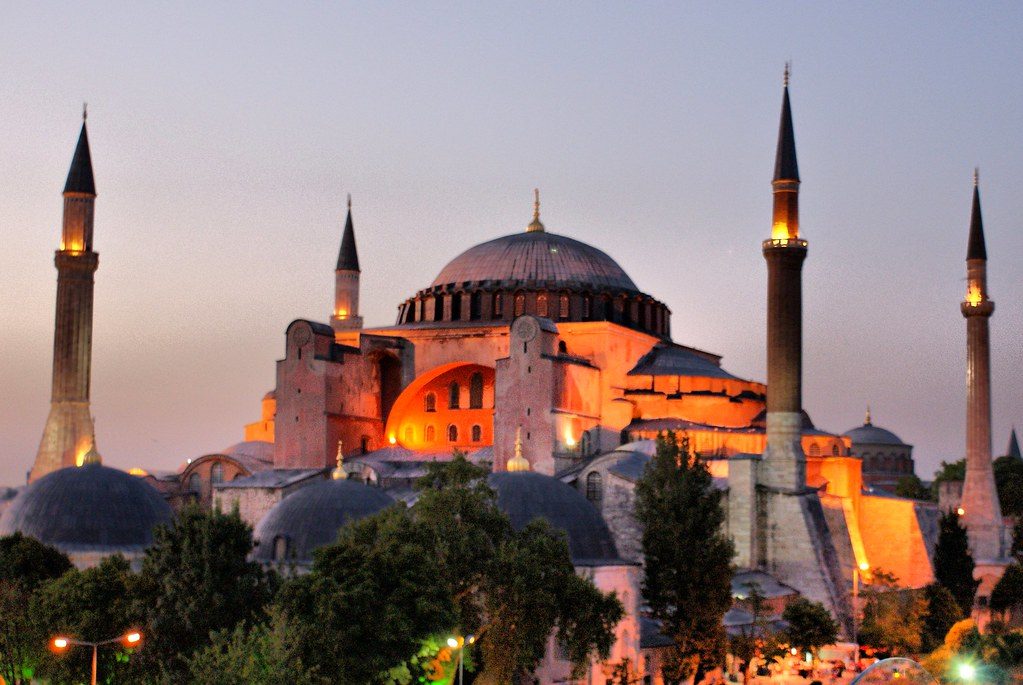
Hagia Sophia (Ayasofya)
Built by Justinian in the 6th century as a domed church, Hagia Sophia served as a mosque from 1453, became one again in 2020, and is still the best key to Istanbul's past. The upper gallery route, which leads to the Byzantine mosaics, costs foreign visitors €25.
Tours that visit Hagia Sophia
Private Istanbul Tour with a Licensed Guide: 1, 2 or 3 Days
Book your own licensed guide in Istanbul for one, two or three days and explore the Old City, Golden Horn and Bosphorus at a pace that suits your interests.
Istanbul Private Driver Tour: Mercedes Vito for 8 Hours, 1-6 Guests
Your own Mercedes Vito and professional driver for a day in Istanbul, with up to six guests and the freedom to set the stops and pace.
Hagia Sophia in 2026 has two separate entrances, and knowing this saves a lot of confusion. The ground-floor prayer hall is open to worshippers at no charge. Foreign visitors take a different route up to the upper galleries, priced at €25 per person. Up there you stand beside the mosaics the building is known for and look down over the main hall.
Key facts
| Item | Details |
|---|---|
| Opening hours | Visitor route about 09:00-19:00, opening earlier in the summer season; last entry roughly 30 minutes before closing (as of October 2026) |
| Closed | Open every day, though the visitor route stops for each of the five daily prayers and on Fridays from around 12:00 to 14:30 |
| Ticket for foreign visitors | €25 per person; under-8s go in free (as of October 2026). Pay by card at the ticket office or via authorised sellers |
| Time needed | 45-75 minutes inside, plus queueing from late morning |
| Location | Sultanahmet Square, Fatih. Take tram T1 to the Sultanahmet stop and walk three minutes |
| Dress code | Cover shoulders and knees; women cover their hair. Staff at the entrance hand out scarves and wraps |
Prayer times follow the sun and shift daily. A closure beginning at 12:50 in October begins earlier in winter, so look up that day's times before setting off.
History in brief
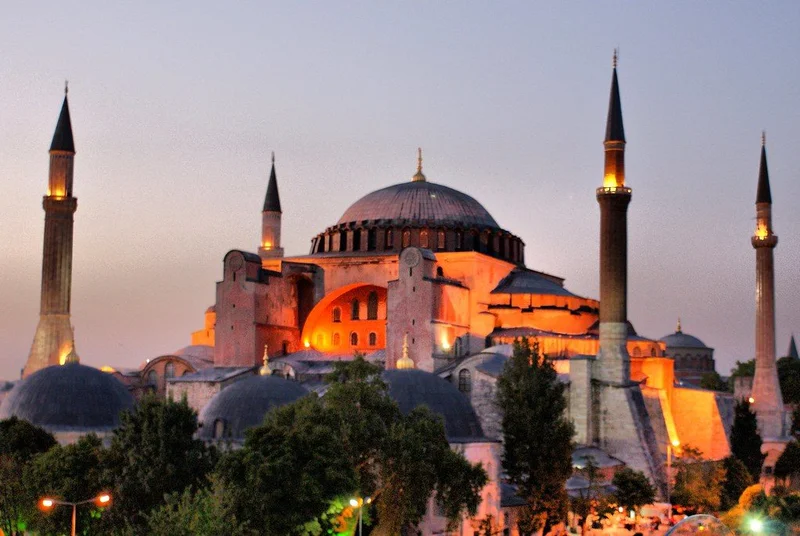
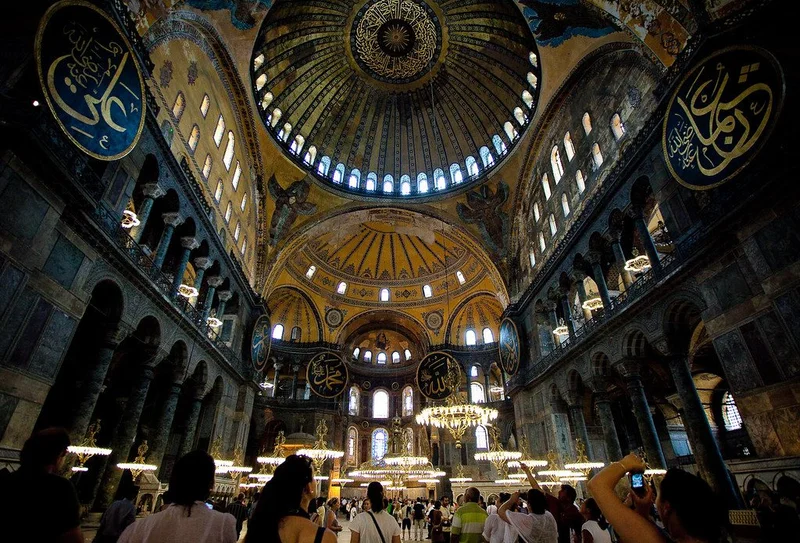
The current building went up between 532 and 537 under Emperor Justinian, replacing an earlier church burned in riots. Its dome spans roughly 31 metres. That was a bold piece of engineering, and in 558 part of it fell in; it was rebuilt higher. For nine hundred years this was the cathedral of Constantinople. When the Ottomans took the city in 1453, Mehmed II converted it into a mosque, and later sultans added the minarets, the mihrab and the enormous calligraphy roundels. The Turkish Republic turned it into a museum in 1934. Since July 2020 it has again been a mosque, and that is why prayer times now set the rhythm of a visit.
Inside the galleries
The paid route climbs a stone ramp to the galleries. Go up at an easy pace; the worn paving is itself a piece of the building's history.
- The Deesis mosaic (south gallery): a 13th-century scene of Christ flanked by the Virgin Mary and John the Baptist. Its lower part has gone, yet the faces rank with the best Byzantine art anywhere.
- The imperial mosaics at the eastern end of the south gallery. One shows Empress Zoe beside Constantine IX; the emperor's face was altered when Zoe remarried.
- The nave from above: the eight calligraphy roundels, the marble floor, and daylight entering through the 40 windows around the base of the dome.
- Viking graffiti: runes scratched into a balustrade in the upper gallery spell out the name of a man called Halfdan.
- The Omphalos, a circle of coloured stone set in the floor where emperors were crowned, visible from the galleries.
During prayers, curtains or lighting effects cover some ground-floor mosaics. The Virgin and Child in the apse is partly screened, so a clear look at it is not guaranteed.
When to go and how to save time in line
The ticket queue is at its shortest during the first hour of the day and again after 16:00. From 11:00 to 14:00 cruise passengers and day tours turn up at once, and the Friday midday closure pushes everyone into the afternoon. Tuesdays are crowded too: Topkapi Palace closes that day, so tour groups come here instead.
Buying tickets online ahead of time lets you skip the ticket line, though not the security check. A licensed guide has no special door, but groups holding pre-booked tickets get through more quickly. That is the idea behind our Istanbul Half-Day Private Old City Tour & Hagia Sophia Fast-Track: four hours, hotel pick-up, Hagia Sophia first, then the Blue Mosque and the square. To fit Topkapi Palace into the same day, choose the Private Istanbul Heritage Tour, which lasts six to eight hours and can begin at your hotel or at the Galataport cruise terminal. For a lower budget, the Hagia Sophia (Ticket Included), Blue Mosque & Grand Bazaar Group Tour is a six-hour small-group outing from US$120 per person, with entry tickets and pick-up from central hotels in the price.
Practical advice
- Carry a card; paying in Turkish lira cash is the awkward option here.
- Wraps are given out at the door to anyone in shorts, but waiting for one costs time. Dress appropriately before you arrive.
- Expect steps and a long sloping ramp to the galleries, with no lift on the visitor route. The climb can be tiring for people with limited mobility.
- You may take photos without flash. Do not photograph people at prayer.
- The Blue Mosque stands opposite, across a park, so both fit into one morning. The Basilica Cistern is a two-minute walk away.
- In summer you can visit in the evening, and after dark the view from the park is at its best, with both buildings lit.
Is the €25 ticket worth paying?
For most people on a first visit, it is. The ground floor shows you the size of the dome, but the mosaics are on the upper level, and they are what gives Hagia Sophia its place in art history. If money or time is tight and you only want the atmosphere, you can go in free as a worshipper through the prayer hall entrance. You will see less, and you must observe mosque etiquette in full.
Our Istanbul destination page covers the rest of the city and its other landmarks.
Frequently Asked Questions
Do you have to pay to enter Hagia Sophia?
Only worshippers going into the ground-floor prayer hall enter free. Foreign visitors who want to tour the building pay €25 for the upper gallery route, where the Byzantine mosaics are found. Children under 8 go in without charge.
How much time should I allow for Hagia Sophia?
Allow 45 to 75 minutes inside. Queues on a busy day can add 30 to 60 minutes, so if you arrive between late morning and early afternoon, set aside about two hours.
Is Hagia Sophia open to visitors on Fridays?
It is, except around midday. Friday prayers close the visitor route from roughly 12:00 to 14:30, so come in the morning or return late in the afternoon.
What is the dress code at Hagia Sophia?
Shoulders and knees must be covered, and women should cover their hair with a scarf. Loose trousers or a long skirt plus a light scarf in your bag will do; wraps are available at the entrance as well.
Is Hagia Sophia a museum today?
No. Since July 2020 it has functioned as a mosque. The upper galleries are run as a paid visitor route, and tourists can enter outside prayer times.
More places to see in Istanbul
- Balat and Fener (Fener and Balat)
- Basilica Cistern (Yerebatan)
- Beylerbeyi Palace
- Blue Mosque (Sultanahmet Mosque)
- Bosphorus Strait (Bosphorus Cruise)
- Camlica Hill and Camlica Mosque
- Chora Church (Kariye Mosque)
- Dolmabahce Palace
- Emirgan Park
- Fatih Mosque
- Fener Greek Orthodox Patriarchate (Aya Yorgi)
- Galata Bridge and Eminonu
- Galata Tower
- Grand Bazaar (Kapalıçarşı)
- Hagia Irene (Aya Irini)
- Hippodrome of Constantinople (Hippodrome Square)
- Istanbul Archaeology Museums
- Istanbul Modern
- Istiklal Avenue and Taksim (Istiklal Street)
- Kadikoy and Moda
- Little Hagia Sophia (Kucuk Ayasofya)
- Maiden's Tower (Kız Kulesi)
- Miniaturk
- Nuruosmaniye Mosque
- Ortakoy Mosque (Buyuk Mecidiye Mosque)
- Pera Museum
- Pierre Loti Hill and Eyup Sultan Mosque
- Princes' Islands (Adalar)
- Rumeli Fortress (Rumelihisarı)
- Rustem Pasha Mosque
- Spice Bazaar (Egyptian Bazaar)
- Suleymaniye Mosque
- Sultanahmet Square
- Topkapi Palace
- Turkish-Islamic Arts Museum (Ibrahim Pasha Palace)
- Yildiz Palace and Yildiz Park