

 Istanbul
Blue Mosque (Sultanahmet Mosque)
Sultan Ahmed I's imperial mosque dates from the early 1600s and takes its popular name from the blue Iznik tiles that line its interior. Entry costs nothing outside prayer times, and since Hagia Sophia stands right across the square, most visitors pair the two in a single morning.
Tours that visit Blue Mosque
Private Istanbul Tour with a Licensed Guide: 1, 2 or 3 Days
Book your own licensed guide in Istanbul for one, two or three days and explore the Old City, Golden Horn and Bosphorus at a pace that suits your interests.
Istanbul Private Driver Tour: Mercedes Vito for 8 Hours, 1-6 Guests
Your own Mercedes Vito and professional driver for a day in Istanbul, with up to six guests and the freedom to set the stops and pace.
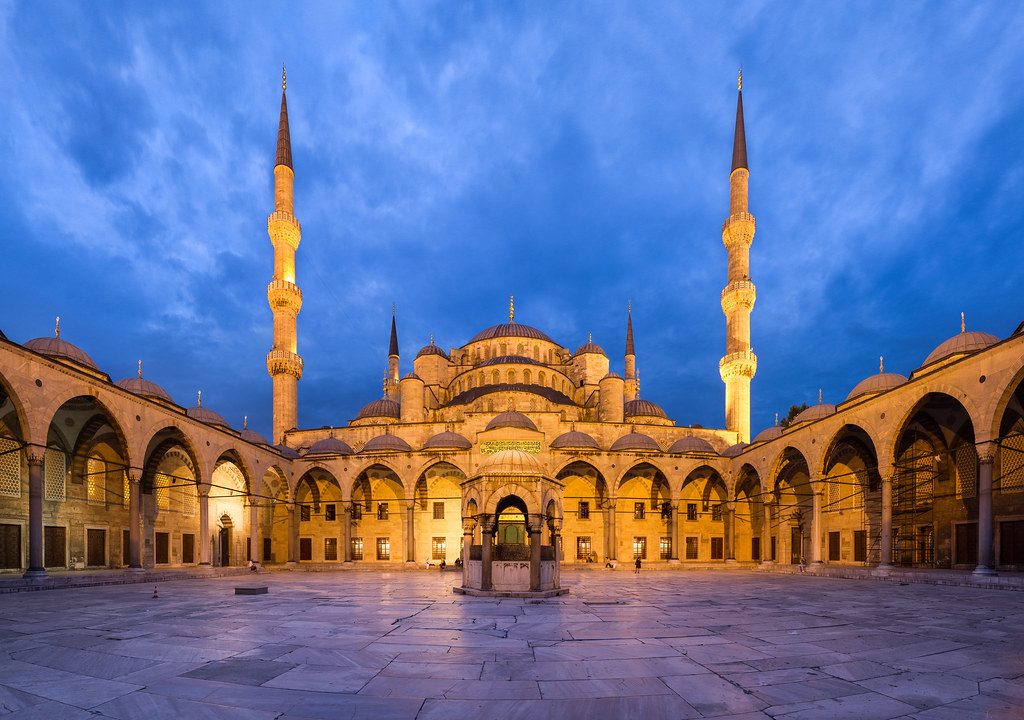
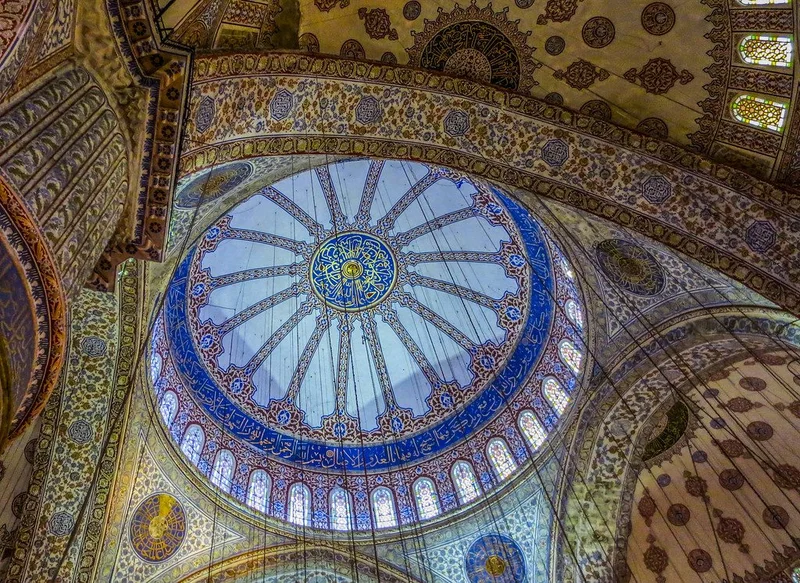
People often arrive expecting a blue building. The outside is actually grey stone under lead domes; the colour is all inside, where over 20,000 handmade Iznik tiles and painted upper domes fill the prayer hall. You pay nothing to enter. What you do have to plan is time, because your visit must fall between the daily prayers.
Key information
| Item | Details |
|---|---|
| Opening hours | Visitors admitted from around 08:30 to early evening; each prayer stops visits for about 60-90 minutes (as of October 2026) |
| Closed | Fridays from late morning to around 14:30, for the congregational prayer |
| Ticket for foreign visitors | No charge and no reservation (as of October 2026). You can leave a donation on the way out |
| Time needed | 30-45 minutes, longer if there is a queue at peak times |
| Location | Sultanahmet Square, opposite Hagia Sophia. T1 tram, Sultanahmet stop |
| Dress code | Cover shoulders and knees; women cover their hair; remove shoes and carry them in a bag |
Tourists go in on the south-west side, through the park. The main courtyard gate on the Hippodrome side is the worshippers' entrance.
History in brief
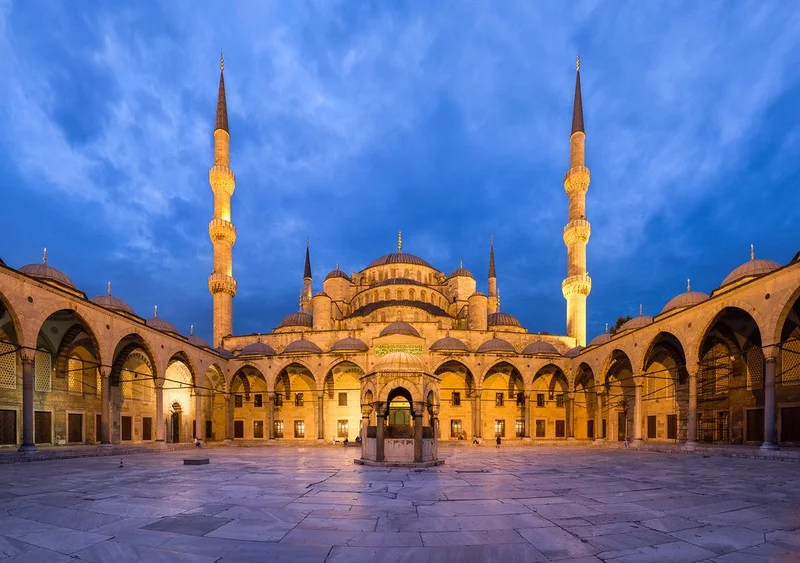
Ahmed I was still in his teens when he ordered the mosque. Sedefkar Mehmed Aga, who had trained under Mimar Sinan, built it from 1609 to 1616. The six minarets were controversial: at the time only the mosque in Mecca had six, and according to the well-known story Mecca received a seventh to end the dispute. The original complex also had a school, a hospital, a market and the tomb of the sultan; the tomb survives on the north side. Restoration work kept sections closed for several years and finished in 2023, and the tiles and painted domes now look cleaner than they have in decades.
Inside the mosque
- Iznik tiles cover the lower walls and the galleries, with tulips, carnations and cypress trees. The best panels sit up at gallery height, so raise your eyes.
- The main dome measures about 23.5 metres in diameter and rises 43 metres, resting on four massive pillars known as the elephant feet.
- Mihrab and minbar, both in carved white marble, at the front of the hall. A low barrier keeps visitors back so the prayer space stays free.
- Over 200 stained-glass windows. Most are not original, yet on a bright morning they still throw colour onto the carpet.
- The courtyard is the biggest of any Ottoman mosque in Istanbul and has an ablution fountain in the middle. Walk through it even if you skip the interior.
When to go
Arrive before 10:00, or use the window between the noon and afternoon prayers. Tourists cannot enter on Friday mornings, and Friday afternoons get crowded as everyone who missed the morning turns up together. In Ramadan the evening prayers draw bigger crowds and food stalls take over the square after sunset. That is a nice moment to look at the mosque from outside, not to go in.
With free entry, there is no ticket that lets you skip the queue. Timing is what makes the difference, and a guide takes care of it. The private full-day Istanbul city tour with a professional guide runs eight hours, picks you up at your hotel, and orders the Blue Mosque, Hagia Sophia and Topkapi Palace around the prayer times. If you prefer a small group, the Hagia Sophia, Blue Mosque and Grand Bazaar group tour lasts six hours, costs from US$120 per person and includes entrance tickets and pick-up from central hotels. To go more slowly, the private heritage tour of Istanbul gives a whole day to the Byzantine and Ottoman monuments.
Before you go
- Staff at the door give out plastic bags for your shoes. In winter the marble is cold, so wear socks in good condition.
- Long, loose trousers work better than shorts plus a borrowed wrap, and wraps can run out when it is busy.
- Keep your voice down and never cross in front of someone at prayer. That is what the barrier is for.
- You may take photos as long as you do not use flash. Tripods are not permitted.
- For the exterior, stand in the park between the mosque and Hagia Sophia, or on the Hippodrome side late in the afternoon.
- Toilets and ablution taps along the outer courtyard are for worshippers; there are public toilets near the Hippodrome too.
When it can let you down
A summer visit at midday means standing in the sun and then shuffling through a packed hall behind a rope. The interior is at its best when it is calm, so book it in early, even if Hagia Sophia has to come second.
More Old City sights are on our Istanbul destination page.
Frequently Asked Questions
Do you pay to enter the Blue Mosque?
No. You do not need a ticket or a booking. There is a donation box at the exit, and the money helps maintain the building.
Where does the name Blue Mosque come from?
From the blue Iznik tiles and painted decoration inside; the exterior is not blue. Officially it is the Sultan Ahmed Mosque, Sultanahmet Camii in Turkish.
When can tourists visit the Blue Mosque?
Usually from about 08:30 until early evening. During each of the five daily prayers it closes to visitors for 60 to 90 minutes, and on Fridays tourists cannot enter until about 14:30.
Must women cover their hair at the Blue Mosque?
Yes. Women cover their hair, and all visitors cover shoulders and knees. If you have nothing suitable, free scarves and wraps are available at the visitor entrance.
Can I see the Blue Mosque and Hagia Sophia in one day?
Yes, and that is what most visitors do. A park of about 300 metres separates them. Go first to whichever has the shorter line, and fit both around prayer times.
More places to see in Istanbul
- Balat and Fener (Fener and Balat)
- Basilica Cistern (Yerebatan)
- Beylerbeyi Palace
- Bosphorus Strait (Bosphorus Cruise)
- Camlica Hill and Camlica Mosque
- Chora Church (Kariye Mosque)
- Dolmabahce Palace
- Emirgan Park
- Fatih Mosque
- Fener Greek Orthodox Patriarchate (Aya Yorgi)
- Galata Bridge and Eminonu
- Galata Tower
- Grand Bazaar (Kapalıçarşı)
- Hagia Irene (Aya Irini)
- Hagia Sophia (Ayasofya)
- Hippodrome of Constantinople (Hippodrome Square)
- Istanbul Archaeology Museums
- Istanbul Modern
- Istiklal Avenue and Taksim (Istiklal Street)
- Kadikoy and Moda
- Little Hagia Sophia (Kucuk Ayasofya)
- Maiden's Tower (Kız Kulesi)
- Miniaturk
- Nuruosmaniye Mosque
- Ortakoy Mosque (Buyuk Mecidiye Mosque)
- Pera Museum
- Pierre Loti Hill and Eyup Sultan Mosque
- Princes' Islands (Adalar)
- Rumeli Fortress (Rumelihisarı)
- Rustem Pasha Mosque
- Spice Bazaar (Egyptian Bazaar)
- Suleymaniye Mosque
- Sultanahmet Square
- Topkapi Palace
- Turkish-Islamic Arts Museum (Ibrahim Pasha Palace)
- Yildiz Palace and Yildiz Park