

 For Persian speakers
Persian-Speaking Guide in Istanbul: Requests, Entry and Payment
A Persian-speaking guide is arranged on request, subject to availability, and priced on confirmation. A private guided day with a licensed guide starts from $199 per group.
Browse our tours
A Persian-speaking guide in Istanbul can be requested, but it is not a fixed option on any of our tours: we arrange it subject to availability and quote the price only when a licensed guide who works in Persian confirms your dates. Where no Persian-speaking guide is free, the same plan runs with a licensed English-speaking guide, and our private Istanbul tour with a licensed guide starts from $199 per group for an eight-hour day. This page is for Persian speakers wherever they live: travellers from Iran, Afghanistan and Tajikistan, and the Iranian diaspora in Europe and North America. It covers the request itself, entry rules by passport, the changed flight situation in late 2026, paying without an Iranian bank card, and the places in Istanbul with a Persian story.
How a request for a Persian-speaking guide works
Tourist guiding in Türkiye is a licensed profession, and each guide is registered for the languages they are qualified in. Persian is a smaller guiding language than English, Arabic or Russian, so the number of guides is limited and the good ones are booked early around Nowruz and the summer holidays.
What to send us, on WhatsApp or through the tour page:
- your dates and how many people are travelling, including children and older relatives;
- the hotel area, so we can plan pickups;
- which sights matter most, and whether anyone needs to avoid long walks or stairs;
- whether you prefer Persian for every day or only for the history-heavy days.
We then ask licensed guides who work in Persian whether they are free. If one accepts, you receive the guide's name, the plan and the price. If not, we say so and offer an English-speaking guide.
A practical note on language. Dari speakers from Afghanistan and Tajik speakers from Tajikistan usually follow a guide who speaks Iranian Persian without difficulty. And many travellers from Iranian Azerbaijan already understand a good deal of Turkish, because Azerbaijani and Turkish are closely related; for them, a Turkish-speaking guide can be an easier alternative than English.
Entry rules depend on your passport
Persian speakers travel on very different passports, and the Turkish rules differ sharply between them. This is what the Turkish Ministry of Foreign Affairs publishes:
| Passport | Visa for a tourist trip? | Notes |
|---|---|---|
| Iran (ordinary) | No visa for up to 90 days | No e-visa or entry fee |
| Afghanistan (ordinary) | Visa required | Holders of a valid Schengen, US, UK or Irish visa or residence permit may qualify for a one-month e-visa if they meet the conditions |
| Tajikistan (ordinary) | Visa required | Apply before travel |
| Second passport (EU, UK, US, Canada and others) | Depends on the country | Check the ministry's list for that passport |
For every passport, validity is the trap. Under Turkish law your passport must be valid for at least 60 days beyond the end of your permitted stay. For a 90-day stay that means 150 days on arrival, and the ministry recommends six months. Families should check every child's passport before booking. Our Turkey visa requirements update covers more nationalities.
Flights from Iran in late 2026: what changed
This is the part of the trip to check most carefully, because air links between Iran and Türkiye have been interrupted several times this year.
- Strikes in early 2026. Flights stopped after the strikes on Iran at the end of February, and Tehran began reopening its airspace to some international flights in April, with Istanbul among the first routes.
- New US sanctions in September. On 8 September 2026 the US Treasury placed sanctions on 36 aviation-related targets, including 27 Iranian airlines. Turkish Airlines, AJet and Pegasus then cancelled all flights to and from Iran from 21 September, and their booking systems showed no Iran services through March 2027. Mahan Air also stopped its Türkiye flights from 21 September.
- Iran Air. At the end of September Iran Air was still flying between Tehran Imam Khomeini Airport and Istanbul Airport, but reports at the time said remaining Iranian flights to Türkiye might also be suspended.
Before you pay for hotels or tours, confirm that your flight is actually operating, and keep your plans flexible. The alternatives are the road through the Bazargan–Gürbulak border crossing, with long bus journeys on both sides, or a flight through a third country. Travellers from the diaspora flying from Europe, North America or the Gulf are not affected by these changes.
Istanbul is 30 minutes behind Tehran all year, as neither country changes its clocks.
Paying for a tour without an Iranian bank card
Bank cards issued in Iran do not work on the Visa and Mastercard networks because of sanctions, so they cannot be used at Istanbul hotels, shops or cash machines. Most visitors from Iran travel with cash, usually US dollars or euros, and change it into lira at a döviz (exchange office).
For a guided trip, this is how families usually manage:
- Agree the payment method before booking. Tell us how you plan to pay, and we confirm what works for your tour before anything is reserved.
- A relative abroad can pay. Many families have someone in Europe, Canada or the Gulf who pays a deposit with a foreign card. Put that person's name on the booking.
- Carry small lira notes. Ferries, tea, taxis, toilets and tips are easier in cash.
- Exchange in the city, not at the airport. Exchange offices in Sultanahmet, Laleli and around the Grand Bazaar usually give better rates.
Our Istanbul tour prices for Iranian travellers page lists our tours by budget, and Istanbul trip cost gives a wider daily budget.
Persian traces in Istanbul
A guide who knows Persian history can show a different Istanbul.
Büyük Valide Han. Just behind the Grand Bazaar, this large seventeenth-century merchants' inn was commissioned by Kösem Sultan, with construction starting in 1651. In the nineteenth century it became the centre of Istanbul's Iranian merchant community, mostly traders from Iranian Azerbaijan dealing in carpets and silk. A small Shia mosque stands in its courtyard; the original burned in 1947 and was rebuilt in 1951, and Ashura ceremonies were once held here. The building is worn but still in use, and a guide is the best way to find your way inside.
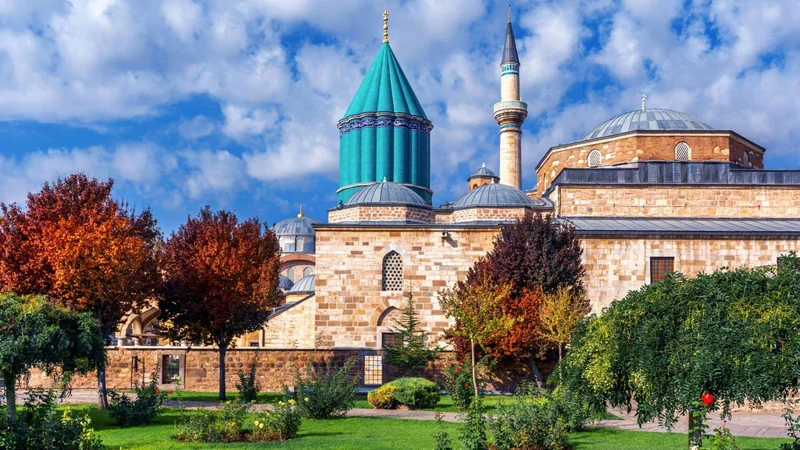
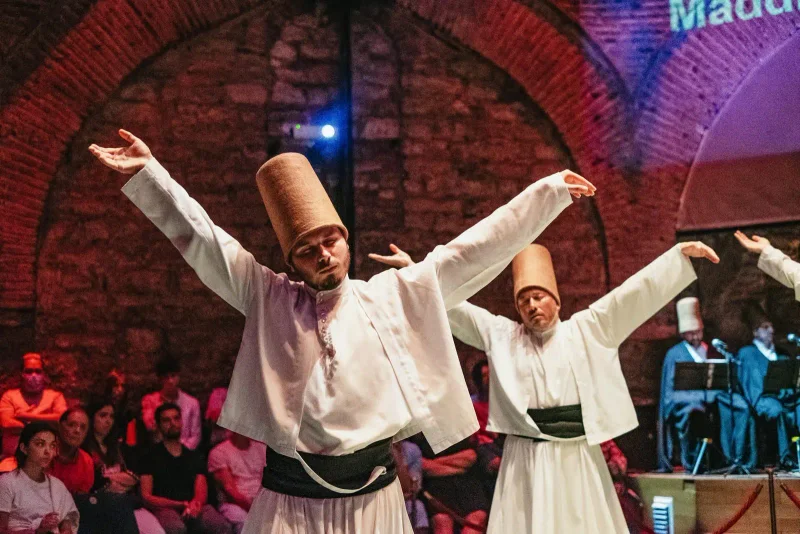
Rumi and the whirling dervishes. Mevlana Jalaluddin Rumi wrote the Masnavi in Persian, and the Mevlevi order that grew from his teaching is behind the sema ceremony of the whirling dervishes. In Istanbul you can watch a ceremony in the evening, and the order's former lodge in Galata is now a museum. His tomb is in Konya, a short domestic flight from Istanbul.
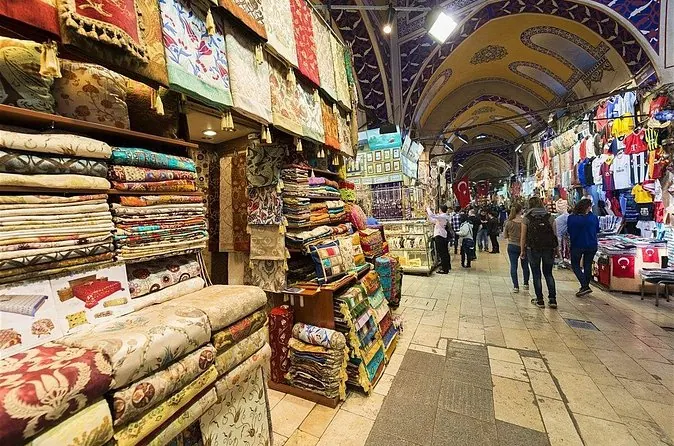
Persian in the Ottoman world. For centuries Persian was a language of poetry and learning at the Ottoman court, and you will see Persian verse and Persian-style miniatures in palace and museum collections. The carpets in the Grand Bazaar also tell the story of trade between the two empires.
Nowruz, summer and the best months
Nowruz, around 20 and 21 March, is the busiest time of year for Iranian visitors in Istanbul. Hotels in Laleli, Taksim and Sultanahmet fill, and guides who work in Persian are booked weeks in advance. If you want a Persian-speaking guide during the Nowruz holiday, write to us as early as possible.
The weather in late March can still be cool and rainy, so pack a jacket. April, May, September and October are the most comfortable months for walking tours. July and August are hot and crowded, and November brings fewer visitors and shorter days; see our Istanbul in November guide. For a month-by-month view, read best time to visit Istanbul.
Families, food and shopping
Many Persian-speaking travellers come as families, often with several generations. A few things make the day easier:
- Halal food is the norm. Meat in Turkish restaurants is halal as standard, so families can eat almost anywhere. Our Istanbul street food tour is a good introduction.
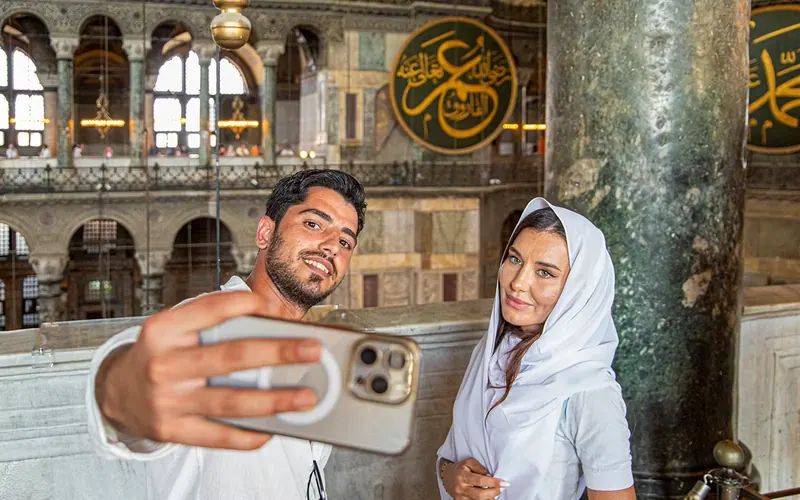
- Dress. Headscarves are not required in the street, but women need one inside mosques, and everyone should cover shoulders and knees. See what to wear in Istanbul.
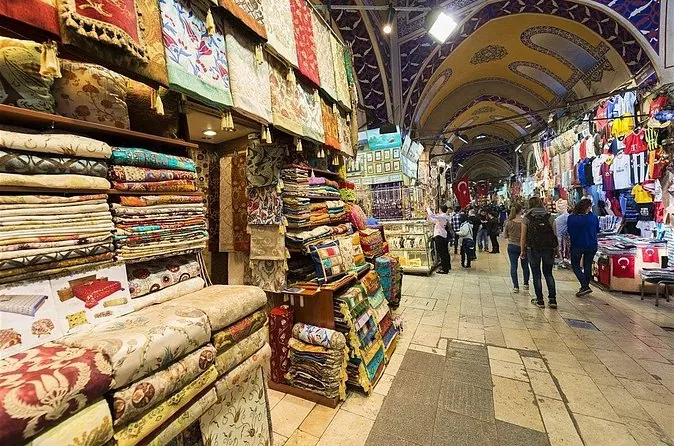
- Shopping time. Laleli, the Grand Bazaar and the Spice Bazaar are the classic stops; plan a guided morning of sights and a free afternoon for shopping. The Grand Bazaar is closed on Sundays.
- A car for older relatives. A private car with driver avoids long walks between sights. Our private car with driver page explains how it works.
Topkapı Palace is closed on Tuesdays and Dolmabahçe Palace on Mondays, so plan those visits on other days.
Tours that cover this
- Best of Istanbul private guided tour, 1 to 3 days: from $199 per group per day, eight hours with a licensed guide. The format we use when a Persian-speaking guide is confirmed.
- Private shopping tour of the Grand Bazaar and Spice Market: from $90 per person, six hours, including the market lanes around the Valide Han.
- Istanbul whirling dervish sema ceremony: from $60 per person, one hour.
- Private Mercedes Vito city tour with driver: from $299 per group for eight hours, for families with grandparents.
For multi-day ideas, see our Istanbul 3-day itinerary and the Islamic Istanbul tour package, 4 days, from $768 per person.
Frequently Asked Questions
Can I book a Persian-speaking guide in Istanbul?
Yes, on request and subject to availability. Persian is a smaller guiding language in Türkiye, so we check which licensed guides who work in Persian are free on your dates and quote the price when one confirms. If no one is available, we offer a licensed English-speaking guide, or a Turkish-speaking guide for families who understand Turkish.
Do Iranians need a visa for Istanbul?
No. The Turkish Ministry of Foreign Affairs states that Iranian ordinary passport holders are exempt from visa for travel of up to 90 days. There is no e-visa or entry fee. Your passport must be valid for at least 150 days on arrival for a full 90-day stay, and six months of validity is recommended.
Do Afghan citizens need a visa for Turkey?
Yes. Afghan ordinary passport holders need a visa to enter Türkiye. Those who hold a valid Schengen, US, UK or Irish visa or residence permit may be able to get a one-month, single-entry e-visa online if they meet the conditions. Otherwise, apply through a Turkish embassy or consulate before travel.
Are there flights from Tehran to Istanbul now?
The situation changed in late 2026. Turkish Airlines, AJet and Pegasus cancelled their Iran flights from 21 September 2026 and showed none through March 2027. At the end of September Iran Air was still flying Tehran to Istanbul, but further suspensions were reported as possible. Check with the airline before booking anything else.
Can I use an Iranian bank card in Istanbul?
No. Because of sanctions, Iranian bank cards do not work on the Visa and Mastercard networks, so they cannot be used in Turkish shops, hotels or cash machines. Bring US dollars or euros in cash and change them at an exchange office, or ask a relative abroad to pay deposits with a foreign card.
Do Dari speakers understand a Persian-speaking guide?
Usually, yes. Dari, spoken in Afghanistan, and Iranian Persian are forms of the same language, and most Dari speakers follow an Iranian Persian guide easily, as do most Tajik speakers. Accents and some vocabulary differ, but rarely enough to get in the way of a day of sightseeing.
When is Nowruz busiest in Istanbul?
The days around Nowruz, on 20 and 21 March, and the school holiday that follows are the busiest time for Iranian visitors. Hotels fill and Persian-speaking guides are booked weeks ahead, so request a guide early. The weather in late March can still be cool and wet.
Is the food in Istanbul halal?
Yes. Meat served in Turkish restaurants is halal as standard, so Muslim families can eat almost anywhere without asking. Alcohol is available in many restaurants but never compulsory, and plenty of places do not serve it. Ask your guide for family restaurants near each stop if you prefer an alcohol-free setting.
Where did Iranian merchants trade in old Istanbul?
Many traded from the Büyük Valide Han, a seventeenth-century inn just behind the Grand Bazaar. In the nineteenth century it housed Istanbul's Iranian merchant community, mostly carpet and silk traders from Iranian Azerbaijan, and a small Shia mosque still stands in its courtyard. A guide can take you inside on a bazaar walk.
Sources: Republic of Türkiye Ministry of Foreign Affairs, visa information for foreigners and passport validity rules (mfa.gov.tr); Türkiye Today, reporting on US aviation sanctions and Turkish airlines' Iran cancellations, 22 September 2026; Iran International, report on Iran's air links, 28 September 2026 (iranintl.com); National Palaces Administration, weekly closing days (millisaraylar.gov.tr); historical accounts of the Büyük Valide Han — checked 6 November 2026.
Private tours in Istanbul
Private Istanbul Tour with a Licensed Guide: 1, 2 or 3 Days
Book your own licensed guide in Istanbul for one, two or three days and explore the Old City, Golden Horn and Bosphorus at a pace that suits your interests.
Istanbul Street Food Tour: Local Neighbourhoods, Baklava and Coffee
Walk through real Istanbul neighbourhoods and markets with a local food guide, tasting street food, baklava, Turkish tea and coffee along the way.
Related guides
- Pierre Loti Hill: Eyüp Cable Car, Café, Getting There and Best Time
- Plastic Surgery in Istanbul: Safety Checks, Recovery Stay and Travel
- Polish-Speaking Guide in Istanbul: How to Book and What It Costs
- Portuguese-Speaking Guide in Istanbul: How to Book One
- Princes' Islands Day Trip from Istanbul: Ferries, Büyükada, Tours
- Princes' Islands Excursion from Istanbul: Ferry, Tours and Trotsky
- Princes' Islands with a Gulf Family: Büyükada Day Plan and Tips
- Prinzeninseln from Istanbul: Ferry Plan, Swimming Spots and Walks
- Private Car and Driver in Istanbul: 8 Hours on a Route You Choose
- Private Driver in Istanbul for German Speakers: Prices and Day Plans
- Private Driver in Istanbul for Gulf Families: Cars, Days and Prices
- Private Driver in Istanbul for Russian Travellers: Prices and Payment