

 First-trip advice
Turkey Travel Tips: 25 Practical Things to Know for a First Visit
Check your visa and passport validity, plan around Tuesday and Sunday closings, fly between regions and carry ID, a scarf and some lira. 25 tips from our guides.
The travel tips that matter most for a first trip to Turkey fall into a few groups. Check your entry rules and passport validity before you book. Plan around the closing days of the big sights (Topkapı Palace on Tuesdays, the Grand Bazaar on Sundays). Fly rather than drive between regions. And carry ID, a scarf and a little cash every day. Below are 25 tips from the guides and drivers who meet first-time visitors every week, grouped so you can read only the parts you need. For safety advice, see our separate guide on whether Turkey is safe to travel to, and for weather by month, the best time to visit Turkey. If you would rather have someone handle the moving parts, our 10-day Istanbul, Cappadocia, Pamukkale and Ephesus tour starts from $1,410 per person.
Before you fly
1. Check the entry rule for your own passport. Turkey's visa rules differ by nationality. Some passports enter visa-free, some use the online e-Visa, and some need a visa from an embassy or visa centre before travel. The Ministry of Foreign Affairs keeps the official list. Our Turkey visa requirements update summarises it, and the only official e-Visa site is evisa.gov.tr. Lookalike sites charge extra.
2. Count your passport's remaining validity. Turkish rules require your passport to be valid for at least 60 days beyond the end of your permitted stay, and the Ministry recommends six months from arrival. Children's passports are the ones that most often fall short.
3. Know which Istanbul airport you land at. Istanbul has two international airports: Istanbul Airport (IST) on the European side and Sabiha Gökçen (SAW) on the Asian side. They are far apart. Check your ticket before you book a transfer or a hotel near one of them.
4. Get travel insurance that covers medical treatment. The UK government's travel advice warns British visitors that their EHIC and GHIC cards do not work in Turkey, and most other countries' public health cover does not travel either. Choose a policy that includes medical evacuation, and check whether it covers activities such as balloon flights.
Money and prices
5. Museum prices for foreigners are set in euros. State museums and the main sites quote foreign-visitor prices in euros and charge them in Turkish lira at the day's rate. Hagia Sophia, for example, charges foreign visitors €25 for the upper galleries; our Hagia Sophia ticket update has the details.
6. Carry some cash, even if you plan to use cards. Cards work in most city hotels, restaurants and shops. Small cafés, street vendors, public toilets and village shops often want lira. Take small notes from a bank ATM rather than changing large sums at the airport.
7. Tip around 10 per cent in restaurants. That is normal in sit-down restaurants when service is not already added. Rounding up is fine for taxis. Guides and drivers are tipped at your discretion at the end of a tour.
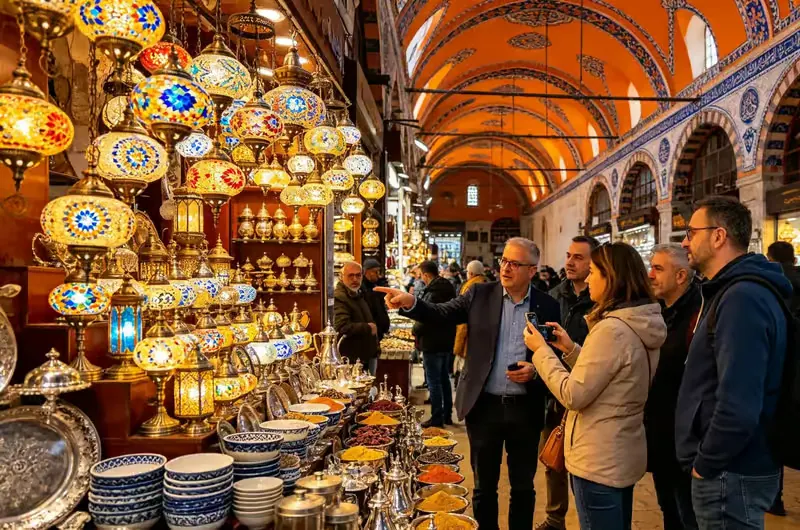
8. Bargain in bazaars, not in shops with price tags. In the Grand Bazaar and the Spice Bazaar, the first price is an opening offer. In supermarkets, pharmacies and shops with marked prices, it is not. Walk away politely if the price does not suit you; it often comes down.
9. Know the cash limit on the way out. According to the UK government's summary of Turkish customs rules, you cannot take Turkish lira worth more than $5,000 out of the country, and other currency above that amount must be declared when you leave.
Getting around
10. Buy an Istanbulkart on day one. The rechargeable card pays for trams, the metro, buses, the Marmaray and the public ferries in Istanbul. It works out cheaper than single tickets and saves queuing at every station.
11. Use registered taxis or a pre-booked car. The UK government's advice is to avoid unofficial taxis and use metered ones, app-based ones or pre-booked cars. Note the registration number. For airport runs and long days, a private car with a fixed price takes the argument out of it; see our private car with driver page.
12. Turkey is big: fly between regions. Istanbul to Cappadocia is a short domestic flight, while driving takes most of a day. The same applies to Ephesus and Antalya. Build your route around flights, or use a package where they are already booked. Our Turkey 9 nights 10 days comparison shows how the flights fit five different routes.
13. Pack for the domestic baggage allowance. On our group packages, internal flights include 15 kg of checked baggage and 8 kg of cabin baggage per person, often less than your international ticket. Leave room, and do the big shopping on your last days.
14. Expect early starts in Cappadocia. Balloon pickups are before sunrise, and some regional flights leave at dawn. The best photographs come at that hour too, so plan early nights.
Sights: closing days and timing
15. Check the closing day before you fix your plan. The big sights do not all close on the same day.
| Place | Closed or limited | What to do |
|---|---|---|
| Topkapı Palace | Closed on Tuesdays | Put your Old City day on another weekday |
| Dolmabahçe Palace | Closed on Mondays | Visit with the Bosphorus shore on another day |
| Grand Bazaar | Closed on Sundays | Shop on Saturday or Monday |
| Blue Mosque | Visits pause at each prayer | Go early morning or mid-afternoon |
| Hagia Sophia | Visitors use the upper galleries; prayer times affect access | Arrive at opening |
| Mosques on Fridays | Longer pause around the noon prayer | Use Friday midday for a museum |
16. Arrive at opening time. Queues for Hagia Sophia, Topkapı and the Basilica Cistern build quickly from mid-morning, especially from April to October. The first hour is the quietest.
17. Never count on a balloon flight. Cappadocia balloons fly only when the aviation authorities approve the weather that morning, and wind can ground them for days at a time. Keep two Cappadocia sunrises if the balloon matters to you, and see our balloon price update for the current range.

Mosques and dress
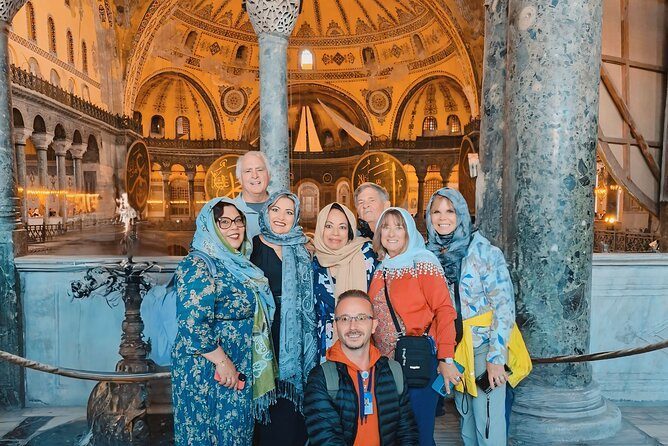
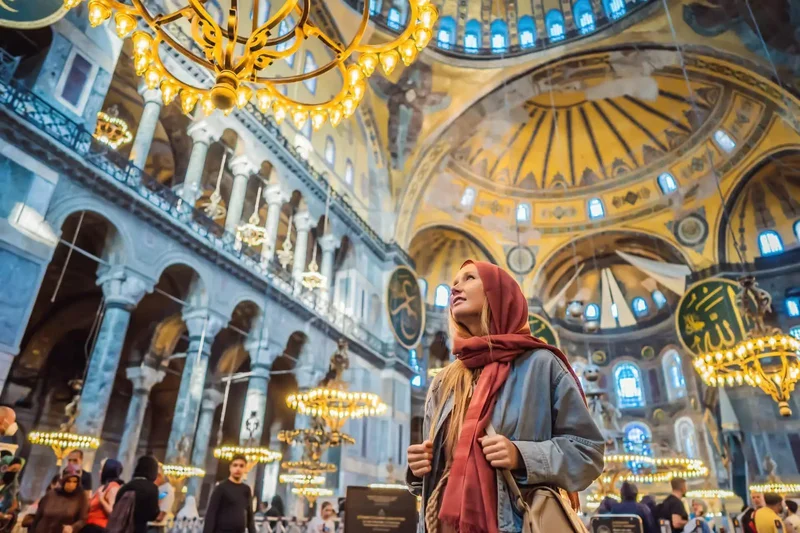
18. Carry a scarf. Women cover their hair, shoulders and knees inside mosques, and men avoid shorts. Shoes come off at the door, and the Blue Mosque lends coverings at the entrance, but your own scarf is quicker. Our what to wear in Istanbul guide has a list by season.
19. Keep quiet near people praying. Do not walk in front of worshippers or photograph them up close. The UK government also advises dressing modestly at shrines, and being especially careful about this during Ramadan.
Food and drink
20. Halal is the norm, alcohol is a choice. Turkey is a Muslim-majority country and meat in ordinary restaurants is halal as standard. Many restaurants in tourist areas also serve alcohol. Muslim travellers can find more detail on our Muslim-friendly Turkey tours page.
21. Buy alcohol only from licensed places. The UK government warns about methanol in counterfeit drinks, which cannot be detected by taste or smell. Avoid unusually cheap spirits, and seek medical help quickly if you feel unwell after drinking.
22. Plan around Ramadan if your dates fall in it. In 2027, Ramadan runs from February into early March. Sights stay open, but restaurants fill at iftar time and some small places change their hours. The Eid holidays that follow are busy travel days inside Turkey.
Phone, power and time
23. Bring a plug adapter if your home plugs differ. Turkey uses the two-pin European plugs (types C and F) at 230 volts. Pakistani, Indian and continental European two-pin chargers usually fit; UK and US plugs need an adapter.
24. Get data before you leave the airport. Buy a local SIM at an official operator shop or install an eSIM before departure. Maps, ride apps and translation apps make the trip far easier. Turkey stays on the same clock all year, three hours ahead of GMT.
Rules worth knowing
25. Carry photo ID and respect a few laws. The UK government notes that it is illegal not to carry photographic ID in Turkey, so keep your passport or a copy with you. Do not photograph military or official sites. Never buy antiquities to take home, as exporting them is a serious crime. Insulting the Turkish state, the flag or Atatürk is a criminal offence, including online. Smoking is banned on public transport and in indoor public places. In an emergency, call 112 for police and ambulance.
For the wider picture on scams, health and natural hazards, read is Turkey safe to travel. If you are planning your route, the Turkey trip cost page and the Türkiye destination guide are the next two places to look.
Tours that cover this
- Private Istanbul tour with a licensed guide, 1 to 3 days: from $199 per group.
- Istanbul Airport VIP transfer by Mercedes Vito: from $60 per group.
- Istanbul, Cappadocia, Pamukkale and Ephesus tour, 10 days with flights: from $1,410 per person.
- Turkey tour package, 8 days, private, Istanbul, Cappadocia, Ephesus and Pamukkale: from $2,250 per person.
- Cappadocia sunrise balloon-watching tour: from $35 per person.
Frequently Asked Questions
What should I know before my first trip to Turkey?
Check your visa rule and make sure your passport is valid for at least 60 days beyond your stay, ideally six months. Plan around closing days: Topkapı Palace shuts on Tuesdays and the Grand Bazaar on Sundays. Fly between regions, carry photo ID, keep a scarf for mosques and have some Turkish lira for small purchases.
Do I need cash in Turkey or can I use cards?
You need both. Cards are accepted in most hotels, restaurants and shops in Istanbul and the tourist towns. Small cafés, street food, public toilets and village shops often take cash only. Withdraw lira from a bank ATM in small amounts as you go, rather than changing a large sum at the airport.
How much should I tip in Turkey?
Around 10 per cent in sit-down restaurants is normal when service is not already on the bill. Round up taxi fares. Hotel porters usually get a small note per bag. Tips for guides and drivers are at your discretion at the end of the tour and are never added to our prices as a fee.
What should I wear to visit mosques in Turkey?
Women cover their hair, shoulders and knees; men wear trousers rather than shorts. Everyone takes off their shoes at the entrance. The Blue Mosque lends coverings at the door, but carrying your own light scarf is quicker. Visits pause during the five daily prayers, and for longer around the Friday noon prayer.
Which days are the main Istanbul sights closed?
Topkapı Palace is closed on Tuesdays, Dolmabahçe Palace on Mondays and the Grand Bazaar on Sundays. Mosques, including the Blue Mosque and Hagia Sophia, stay open every day but pause tourist visits at prayer times. Put your Old City day on a Monday, Wednesday, Thursday or Saturday to avoid most clashes.
Is it better to fly or drive between Istanbul and Cappadocia?
Fly. The domestic flight is short, while the drive takes most of a day each way. Most first-time visitors fly from Istanbul to Cappadocia, then on to Izmir for Ephesus, and back to Istanbul. Package tours include these flights; on our group packages the baggage allowance is 15 kg checked and 8 kg cabin.
What plug type does Turkey use?
Turkey uses two-pin European plugs, types C and F, at 230 volts. Chargers from continental Europe, Pakistan and India usually fit. Visitors from the UK, the US, the Gulf and Australia need an adapter. Most phone and laptop chargers handle 230 volts, but check hair dryers and other appliances.
What is the emergency number in Turkey?
Call 112 for police, ambulance and fire, and to report wildfires. Keep your hotel's address written down in Turkish so you can give it quickly. On a private tour, your guide or driver can also help you call and explain what has happened.
Sources: Ministry of Foreign Affairs of the Republic of Türkiye, visa information for foreigners (mfa.gov.tr); UK Foreign, Commonwealth & Development Office travel advice for Turkey, safety, health and entry requirements pages (gov.uk); official e-Visa portal (evisa.gov.tr); Hagia Sophia and Topkapı Palace visitor information; Get Turkey Tours tour itineraries and price list — checked 6 November 2026.
Private tours in Turkiye
Istanbul, Cappadocia, Pamukkale & Ephesus Tour – 10 Days with Flights
Ten days from Istanbul to Cappadocia, Pamukkale and Ephesus and back, with 3 domestic flights, 9 hotel nights, transfers and guided touring days. Daily departures.
Private Istanbul Tour with a Licensed Guide: 1, 2 or 3 Days
Book your own licensed guide in Istanbul for one, two or three days and explore the Old City, Golden Horn and Bosphorus at a pace that suits your interests.
Related guides
- Turkey Trip Cost from Bangladesh: Packages, Visa, Flights and Extras
- Turkey Trip Cost from Canada: Flights, Packages and Extras
- Turkey Trip Cost from China in 2027: A Budget Part by Part
- Turkey Trip Cost from the USA: 7 Days vs 10 Days Compared
- Turkey Trip Prices from France: What 4, 7 or 10 Days Really Cost
- Turkey Trip from Argentina: Visa-Free Entry, Flights, Days and Budget
- Turkey Trip from Belgium 2027: ID Card Entry, Flights and Itineraries
- Turkey Trip from Brazil in 2027: Feriados, July and the Autumn Bridges
- Turkey Trip from Canada in 2027: Long Weekends, March Break, Routes
- Turkey Trip from Egypt for Families and Friends: Istanbul and Bursa
- Turkey Trip from India in 2027: Festival Breaks, Visa Timing, Routes
- Turkey Trip from Iraq 2027: Visa by Age, Flights and Family Plans