

 Поради для подорожей
Що одягти в Стамбулі: дрес-код для мечетей, сезони та що взяти з собою
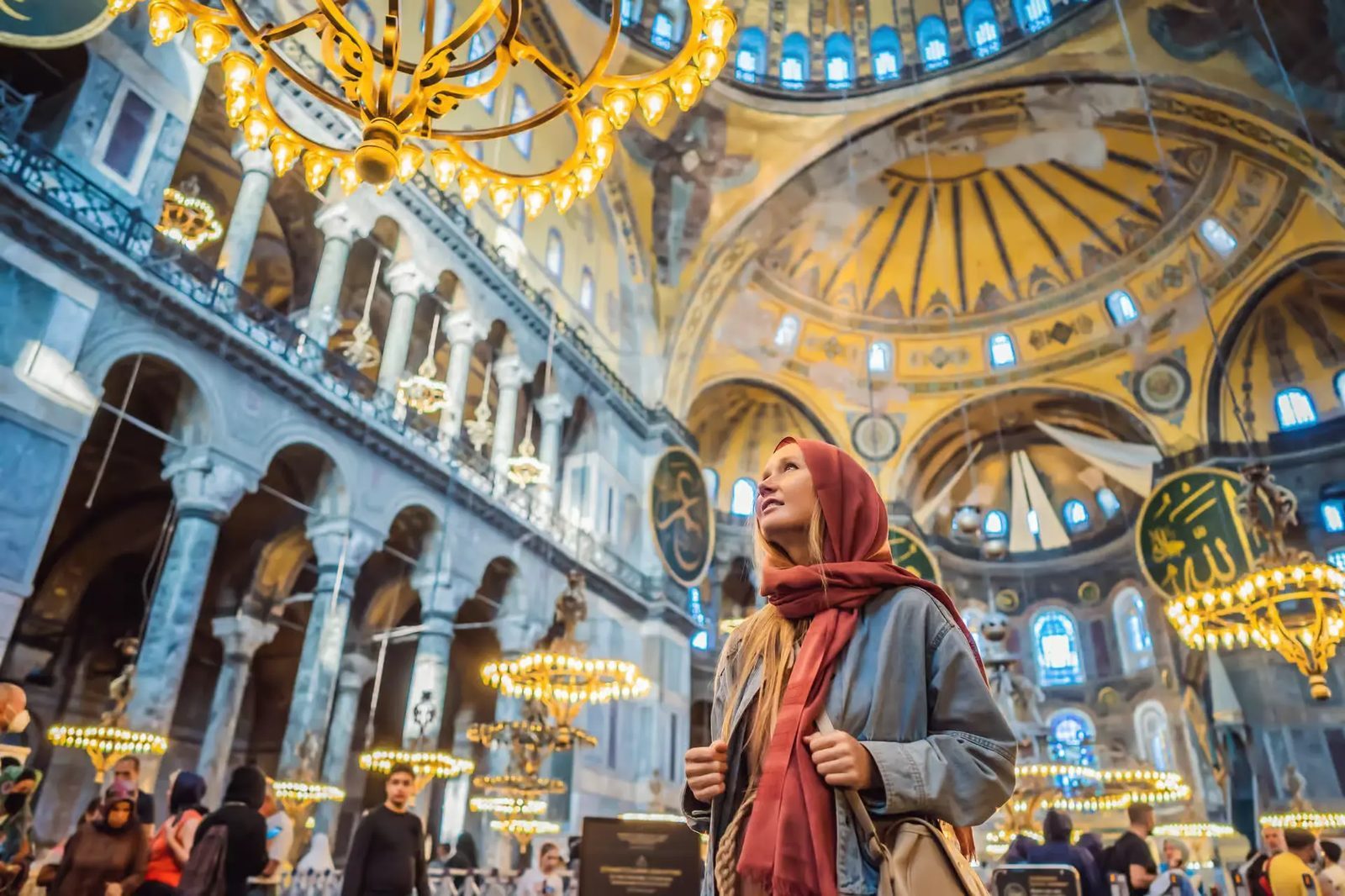
Одягайтеся так само, як у будь-якому європейському місті. Для відвідин мечетей чоловіки і жінки повинні прикривати коліна та плечі, жінки — покривати голову, а всі знімають взуття.
In Istanbul you can wear what you would wear in any large European city, with one exception: mosques. Türkiye has no national dress law for visitors, and shorts, T-shirts, summer dresses and jeans are all normal on the streets of Sultanahmet, Beyoğlu or Kadıköy. Inside a mosque, including Hagia Sophia and the Blue Mosque, men and women must cover their knees and shoulders, women must cover their hair, and everyone takes off their shoes. Most first-time visitors see two or three mosques on their main sightseeing day, so the practical answer is to dress for the mosques that day and for the weather the rest of the time. On our Istanbul Old City private tour, the guide tells you the day before which sites are on the plan and what to bring.
The mosque dress code at a glance
The same rules apply at Hagia Sophia, the Blue Mosque, Süleymaniye and every other working mosque in the city. They are enforced at the door by mosque staff.
| Men | Women | |
|---|---|---|
| Legs | Long trousers, or shorts below the knee | Long skirt, dress or loose trousers below the knee |
| Shoulders and arms | T-shirt or shirt, no sleeveless tops | Shoulders and upper arms covered, no low necklines |
| Head | No covering needed | Hair covered with a scarf |
| Shoes | Off before the carpet | Off before the carpet |
| Avoid | Sleeveless vests, very short shorts | Tight or see-through clothing, short skirts |
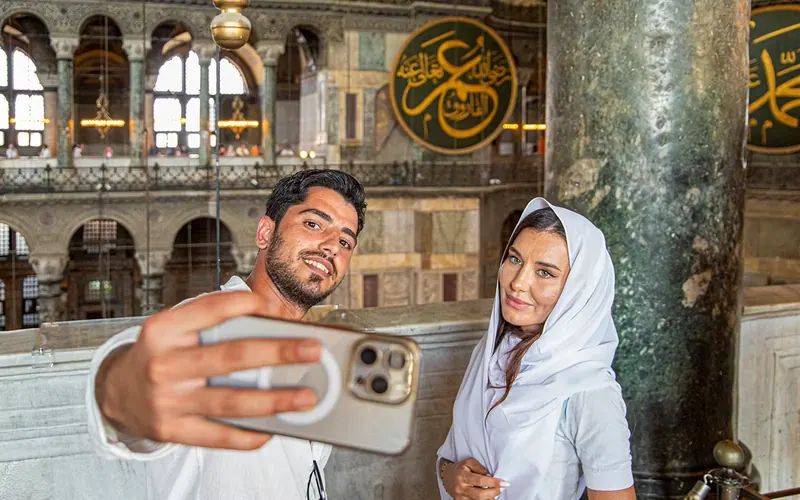
The big mosques on the tourist route usually lend headscarves and wraps at the visitors' entrance for people who arrive uncovered. Bringing your own is quicker and more comfortable, especially in summer when the queue for coverings can be long. A large, light scarf does both jobs for women: it covers the hair, or it wraps around the waist as a skirt.
How a mosque visit works
A few practical points that are easy to miss:
- Shoes come off at the edge of the carpet. Large mosques such as the Blue Mosque and the Süleymaniye Mosque hand out plastic bags so you can carry your shoes inside. Wear socks, and choose shoes that are easy to slip on and off, since you may do this four or five times in a day.
- Visits stop at prayer times. Visitor entry pauses for each of the daily prayers and for longer at the Friday midday prayer. The prayer times change every day, so check them, or let your guide plan the order.
- Hagia Sophia has a separate visitor route. Foreign visitors buy a ticket and follow a route through the upper galleries, while worshippers use the ground floor. The dress code is the same as in any other mosque. See our Hagia Sophia ticket price guide for the current fee.
- Behaviour matters as much as clothing. Keep your voice low, do not walk in front of people who are praying, and do not photograph worshippers. Photography of the building is generally allowed.
Women do not need to cover their hair in the courtyards or gardens of a mosque, only inside the prayer hall. Some women keep the scarf loose around their neck between visits.
What to wear in Istanbul by season
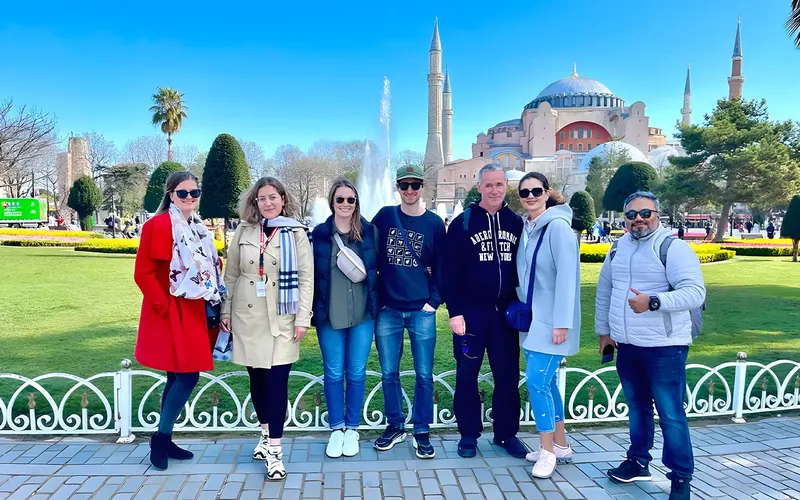
Istanbul has four real seasons, and the right clothing changes a lot through the year. The figures are long-term average highs and lows from the Turkish State Meteorological Service (MGM), 1950 to 2025.
| Season | Average high | Average low | What to wear |
|---|---|---|---|
| Winter (Dec-Feb) | 10-12°C | 4-7°C | Warm coat, waterproof layer, scarf, gloves, waterproof shoes |
| Spring (Mar-May) | 12-22°C | 6-14°C | Layers, light jacket, a sweater for evenings |
| Summer (Jun-Aug) | 27-30°C | 18-21°C | Breathable cotton or linen, sun hat, a cover-up for mosques |
| Autumn (Sep-Nov) | 26-16°C | 18-10°C | Summer clothes in September, layers and a rain jacket by November |
Some details the averages hide:
- Wind. The water is always close by in Istanbul. A ferry deck or a Bosphorus cruise in April or November feels several degrees colder than the street, so carry an extra layer whenever you plan to be on the water.
- Humidity in summer. July and August feel hotter than 30°C near the sea. Loose, long, light clothing is more comfortable than you might expect, and it also works for mosques.
- Rain in winter. December and January average around 16 rainy days each. A hooded jacket is more practical than an umbrella in the narrow, crowded streets around the bazaars.
Shoes: the most important choice
Istanbul is a walking city built on seven hills. The streets of Galata, Balat and Cihangir are steep, the Old City is paved with stone and marble that gets slippery in the rain, and pavements are often uneven. On a normal sightseeing day you can easily walk 10 km or more.
Bring comfortable walking shoes with a good grip, already broken in. Slip-on styles or trainers with elastic laces save time at mosque entrances. Sandals are fine in summer, but make sure they are comfortable for long days on stone. Leave heels for the evening, and even then, pick a block heel if you are heading to Galata or Karaköy.
Around the city: neighbourhoods, evenings and the beach
Most of central Istanbul is relaxed about clothing. A few useful distinctions:
- Sultanahmet, Beyoğlu, Karaköy, Kadıköy and Beşiktaş. Anything goes within normal city standards. Shorts, short sleeves and summer dresses are common.
- Conservative areas. In parts of Fatih such as Çarşamba, and around Eyüp Sultan Mosque, many residents dress very conservatively. Visitors are not required to cover up, but long trousers or skirts and covered shoulders are more respectful and attract less attention.
- Churches and synagogues. Modest clothing is expected, with shoulders and knees covered. Head coverings are not usually required for women in Orthodox or Catholic churches.
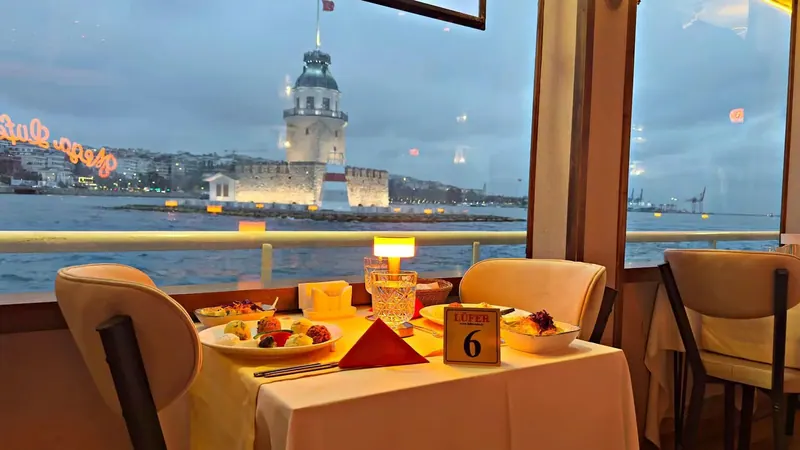
- Restaurants and nightlife. Smart casual is the norm at good restaurants and rooftop bars in Beyoğlu, Nişantaşı and along the Bosphorus. Very few places enforce a strict dress code.
- Beaches and hammams. Swimwear is normal at beaches, beach clubs and pools, but cover up when you leave the beach. In a hammam you are given a peştemal, a thin cotton wrap, to wear.
A packing list for Istanbul
Whatever the season, these are the items we see visitors most glad to have:
- A large, light scarf or pashmina (women), for mosques and cool evenings.
- One pair of long, light trousers or a long skirt that packs small.
- A top or shirt that covers the shoulders, or a cardigan to throw over a vest.
- Comfortable walking shoes that slip on and off easily, plus socks.
- A light waterproof jacket from October to April, and a warm coat from December to February.
- A sun hat, sunglasses and sunscreen from May to September.
- A small day bag that closes properly, for crowded trams and bazaars.
- A swimsuit from June to September, for a Black Sea beach day or a hotel pool.
If you are travelling on to other parts of Türkiye, the same rules apply in mosques everywhere. Cappadocia mornings are much colder than Istanbul, so add a warm layer. Our Turkey in winter guide covers the rest of the country.
Tours that cover this
These tours include mosque visits, so plan your clothes for the day:
- Istanbul Old City private guided tour, from $200 per person. Hagia Sophia, the Blue Mosque, the Hippodrome and Topkapı with a licensed guide who explains each dress rule at the door.
- Old City morning highlights small-group tour, from $120 per person. Two working mosques in one morning.
- Islamic Istanbul tour package, 4 days, from $768 per person. Mosques, tombs and Ottoman heritage over four days.
- Istanbul active churches tour with a private guide, from $180 per person. Working churches, where modest dress is expected.
Frequently Asked Questions
Can I wear shorts in Istanbul?
Yes, on the street. Shorts are common in summer in Sultanahmet, Beyoğlu and Kadıköy, and nobody will stop you. You cannot wear short shorts inside a mosque. Men need shorts that reach below the knee or long trousers, and women need a skirt or trousers below the knee. Carry a light wrap if your day includes mosques.
Do women have to cover their hair in Istanbul?
Only inside mosques. On the street, in restaurants, museums and palaces, there is no requirement, and many Turkish women do not cover their hair. In mosques, including Hagia Sophia and the Blue Mosque, women must cover their hair with a scarf. The main mosques usually lend scarves, but your own is quicker.
What is the dress code for Hagia Sophia?
Hagia Sophia is a working mosque, so the normal mosque dress code applies on the visitor route. Men and women cover their knees and shoulders, women cover their hair, and tight or see-through clothing is not allowed. Shoes come off before entering the carpeted areas. The same rules apply next door at the Blue Mosque.
Can I wear leggings in a mosque?
Leggings alone are usually considered too tight. Wear them under a long tunic, dress or skirt that reaches below the knee, or wrap a scarf around your waist. Loose trousers are the simplest choice. Staff at the entrances of the big mosques can refuse entry, or ask you to borrow a wrap, if your clothing is too tight.
What shoes should I wear in Istanbul?
Comfortable, broken-in walking shoes with good grip. Istanbul is hilly and paved with stone and marble that gets slippery when wet, and a sightseeing day can mean 10 km or more on foot. Choose shoes that slip on and off easily, because you remove them at every mosque, and wear socks.
Is Istanbul conservative about clothing?
Not in most of the central districts. Beyoğlu, Karaköy, Kadıköy and Beşiktaş are as relaxed as most European cities. A few neighbourhoods, such as parts of Fatih and the area around Eyüp Sultan Mosque, are more conservative, and modest clothing is more respectful there. Mosques are the only places where a dress code is enforced.
Sources: Turkish State Meteorological Service (MGM) Istanbul long-term statistics 1950-2025 (mgm.gov.tr), Presidency of Religious Affairs (Diyanet) prayer times for Istanbul, Turkey Travel Planner mosque etiquette guide (turkeytravelplanner.com) — checked 6 November 2026.
Приватні тури Стамбулом
Приватний тур Старим містом Стамбула: Собор Святої Софії, Топкапи та Великий базар
Один приватний день із власним гідом по головних візантійських і османських пам'ятках Стамбула: від палацу Топкапи до Великого базару.
Екскурсія Святою Софією у малій групі з вхідним квитком, Блакитна мечеть і базар
Іподром, Блакитна мечеть, Айя-Софія та Гранд-базар у невеликій групі, включені трансфер від центральних готелів і квитки на вхід.
Пов'язані путівники
- Трансфер для людей на інвалідних візках у Стамбулі: аеропорти, транспорт, екскурсії
- Коли відвідати Стамбул: погода, натовпи та ціни за місяцями
- Де зупинитися в Стамбулі: порівняння шести районів для будь-якої поїздки
- Чому пересадка волосся дешевша в Туреччині? Що входить у ціну
- Зимові екскурсії зі Стамбула для російських мандрівників: сніг, острови
- 15 типових помилок під час першої поїздки до Стамбула та як їх уникнути
- Озеро Абант як денна поїздка зі Стамбула: час у дорозі, сезон і планування
- All-on-4 у Туреччині: планування двох поїздок, готель і трансфери
- Анталія – Стамбул за один день: ви летите, наш гід зустрічає вас по прибутті
- Круїз з Афін до Стамбула 2027: що бронювати для стамбульського етапу
- Турецька лазня в Стамбулі: п'ять історичних хамамів, ціни та етикет
- Турецька лазня в Стамбулі: ціни на хамам і що входить у кожен