行程2026年11月6日15 分钟阅读
伊斯坦布尔的锡南清真寺:必看之处与步行顺序
米马尔·希南塑造了伊斯坦布尔的天际线。您可以参观他设计的清真寺,了解每座的看点,安排一天的步行路线,并在于斯屈达尔游览半天,还附有礼拜时间和着装要求。
本文
- Who was Mimar Sinan
- Sinan's mosques in Istanbul at a glance
- The Süleymaniye: if you see only one
- Şehzade and Rüstem Pasha: the apprentice work and the tiled jewel
- Sokollu Mehmed Pasha and Hagia Sophia: Sinan in Sultanahmet
- Across the water: Kılıç Ali Pasha and the Üsküdar mosques
- Mihrimah Sultan at Edirnekapı: light on the sixth hill
- A walking order: one day in the old city and half a day in Üsküdar
- Visiting rules and prayer times
- Tours that cover this
- Frequently Asked Questions
Mimar Sinan, chief architect of the Ottoman Empire from 1538 until his death in 1588, built the mosques that still shape Istanbul's skyline, and nine of them are easy to visit in two days: the Şehzade, Süleymaniye and Rüstem Pasha mosques on the old city's hills, the Sokollu Mehmed Pasha Mosque in Kadırga, the Kılıç Ali Pasha Mosque in Tophane, the two Mihrimah Sultan mosques at Edirnekapı and Üsküdar, and the Şemsi Pasha and Atik Valide mosques in Üsküdar. All are working mosques and free to enter. Walk it on your own with this guide, or plan it with a guide on our private Istanbul tour with a licensed guide, from $199 per group for an eight-hour day.
Our Istanbul mosques tour page covers a guided day at Hagia Sophia, the Blue Mosque, the Süleymaniye and Rüstem Pasha. This guide follows one architect instead: what he built, what to look for and the order to see it in, around the five daily prayers.
Who was Mimar Sinan
Sinan was born around 1490 in Ağırnas, a village near Kayseri in central Anatolia. He became chief royal architect in 1538 (some sources give 1539), held the post for almost fifty years under Süleyman the Magnificent, Selim II and Murad III, and died in Istanbul on 17 July 1588. One Ottoman list of his works, the Tezkiretü'l-Ebniye, credits him with 476 buildings constructed or supervised during his tenure, of which 196 survive.
He ranked his own career in three mosques. The Şehzade in Istanbul was his apprentice work, the Süleymaniye his journeyman work and the Selimiye in Edirne his master work. That is also a good order in which to see them.
His influence did not stop with his death. The Blue Mosque, built between 1609 and 1617, was designed by Sedefkâr Mehmed Ağa, who drew on the ideas of his master Sinan and based the plan on Sinan's Şehzade Mosque.
Sinan's mosques in Istanbul at a glance
The table lists the nine mosques in this guide in the order they were completed, so you can watch the style develop.
| Mosque | Built | Built for | Where | Look for |
|---|---|---|---|---|
| Mihrimah Sultan, Üsküdar | 1543/44–1548 | Mihrimah Sultan, Süleyman's daughter | By the Üsküdar ferry pier | Raised platform and broad double portico |
| Şehzade | 1545–1548 | Prince Mehmed, Süleyman's son | Fatih, on the third hill | Central dome with four half-domes; carved minarets |
| Süleymaniye | 1550–1557 | Süleyman the Magnificent | Third hill, above the Golden Horn | 53-metre-high dome; four minarets with ten balconies |
| Rüstem Pasha | c. 1561–1563 | Grand vizier Rüstem Pasha | Above the shops near the Spice Bazaar | About 2,300 İznik tiles |
| Mihrimah Sultan, Edirnekapı | c. 1563–1570 | Mihrimah Sultan | Sixth hill, near the land walls | Walls of windows under a 20-metre dome |
| Sokollu Mehmed Pasha | completed 1571/72 | Grand vizier Sokollu Mehmed Pasha and İsmihan Sultan | Kadırga, 600 metres from the Blue Mosque | Tiled minbar; fragments of the Kaaba's black stone |
| Kılıç Ali Pasha | 1578–1580 | Grand Admiral Kılıç Ali Pasha | Tophane, facing Galataport | A plan that recalls Hagia Sophia |
| Şemsi Pasha | 1580–1581 | Şemsi Pasha | On the Üsküdar shore | One of Sinan's smallest Istanbul works |
| Atik Valide | 1571–1586 | Nurbanu Sultan, mother of Murad III | On a hill above Üsküdar | Tiled qibla wall and a large complex |
The Süleymaniye: if you see only one
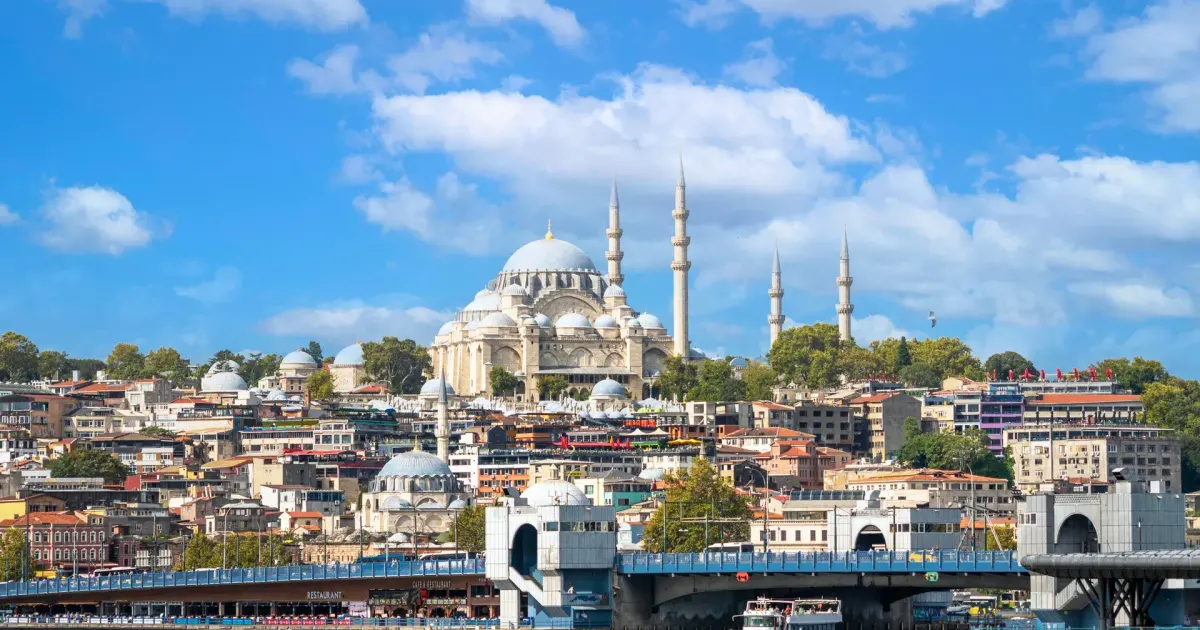
The Süleymaniye Mosque was founded in 1550 and inaugurated in 1557 for Süleyman the Magnificent. It stands on the third hill and looks down over the Golden Horn. The dome is 53 metres high and 26.5 metres across. The four minarets carry ten balconies between them, which is said to mark Süleyman as the tenth Ottoman sultan.
What to look for:
- The light. The prayer hall is wide and open, and the most elaborate stained-glass windows are on the qibla wall around the mihrab.
- Restraint with tiles. Here İznik tiles are used only around the mihrab. Compare that with Rüstem Pasha, about ten minutes downhill.
- The complex. The mosque sits at the centre of a külliye with four madrasas, a hospital, a hamam and a public kitchen that is now a restaurant.
- The tombs. In the garden are the octagonal tombs of Süleyman, dated 1566, and of his wife Hürrem Sultan, dated 1558. Süleyman's tomb also holds his daughter Mihrimah, the patron of the two Mihrimah mosques.
- Sinan's own tomb. It stands just outside the complex walls to the north, a small tomb of his own design, restored in 1922. It is easy to miss, so look for it on your way out.
- The view. The terraces on the Golden Horn side give a wide view over the water and the city.
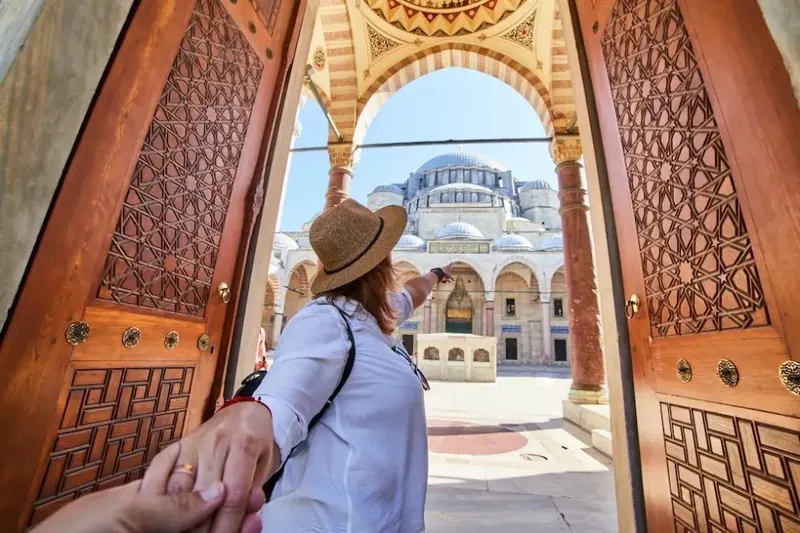
Şehzade and Rüstem Pasha: the apprentice work and the tiled jewel
The Şehzade Mosque was commissioned by Süleyman in memory of his son Prince Mehmed, who died in 1543 on his way back from a campaign in Hungary. It was built from 1545 to 1548 and was Sinan's first important imperial commission. The plan is a square under a central dome about 19 metres across, flanked by four half-domes. Sinan was not satisfied with it and never repeated the layout, but the Blue Mosque later did. Look up at the two 55-metre minarets, whose carved decoration is more detailed than on most later Ottoman minarets. In the garden are five tombs, among them the tomb of Rüstem Pasha, also by Sinan and decorated with İznik tiles.
The Rüstem Pasha Mosque was built around 1561 to 1563 for Rüstem Pasha, twice grand vizier to Süleyman and husband of Mihrimah Sultan. It is easy to miss: it stands on a high terrace above vaulted shops whose rents paid for its upkeep, and you reach the courtyard by narrow staircases from the market street. Inside, about 2,300 İznik tiles in some 80 patterns cover almost every wall, and more tiles line the porch outside. No other mosque by Sinan uses tiles so lavishly. It reopened for worship in 2021 after an extensive restoration, and the Spice Bazaar is a three-minute walk away.
Sokollu Mehmed Pasha and Hagia Sophia: Sinan in Sultanahmet
The Sokollu Mehmed Pasha Mosque in Kadırga is the one to make an effort for. It was completed in 1571/72 for the grand vizier Sokollu Mehmed Pasha and his wife İsmihan Sultan, a daughter of Selim II. Sinan built it on a steep slope and fronted it with a two-storey courtyard, shops below and small madrasa rooms above. Inside, İznik tiles with blue, red and green flowers and white calligraphy on blue cover the walls, the white marble minbar has a tiled conical cap, and fragments of the Kaaba's black stone are set above the main entrance, the minbar and the mihrab.
Hagia Sophia carries Sinan's work too. Under Selim II he strengthened the building with exterior supports, designed the two identical, larger minarets at the western end, and built the original sultan's lodge and the tomb of Selim II to the southeast in 1576–1577. From the square, look for the two thick western minarets; some of the heavy buttresses around the walls also date from his work.
Across the square is the Hürrem Sultan Hamam, built by Sinan in 1556 for Süleyman's wife, Hürrem Sultan. It reopened as a working bath in May 2011 after restoration; see our page on Turkish bath prices in Istanbul.
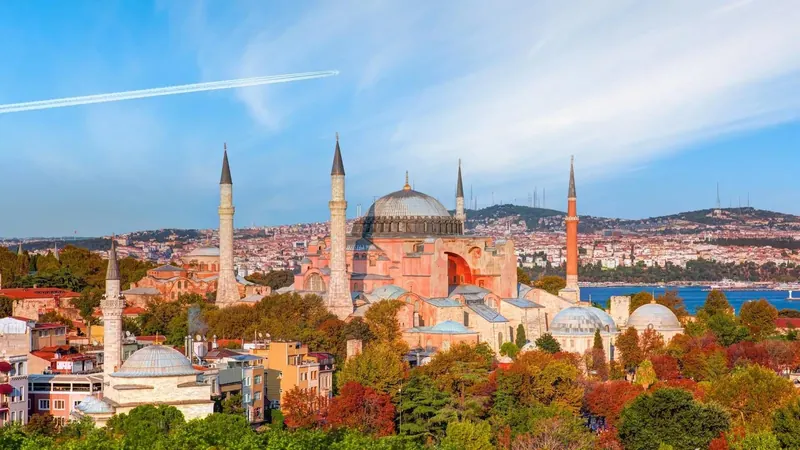
Across the water: Kılıç Ali Pasha and the Üsküdar mosques
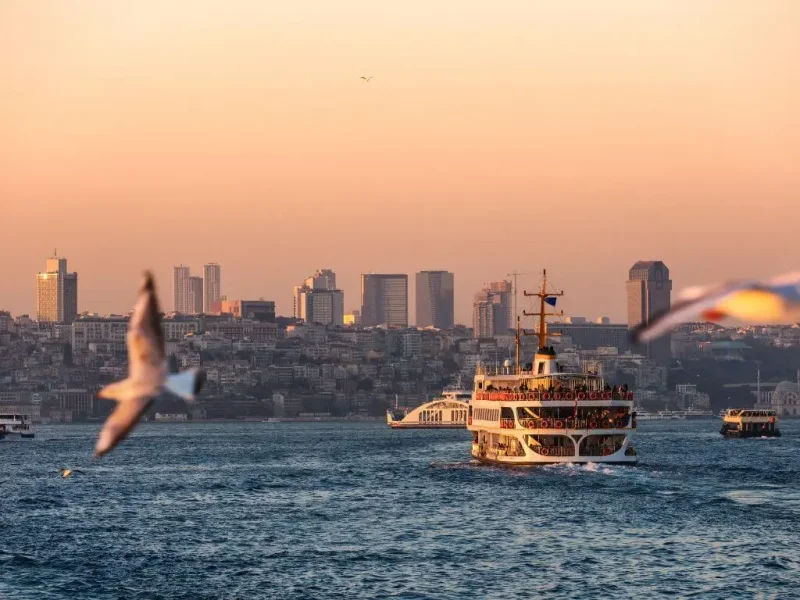
The Kılıç Ali Pasha Mosque in Tophane was built in 1578–1580 for the grand admiral Kılıç Ali Pasha, when Sinan was reportedly in his nineties. The central dome sits between two half-domes, which gives the hall something of the look of a Byzantine basilica and is why it is often compared with Hagia Sophia. It once stood at the water's edge; the sea in front was later filled in, and it now faces the Galataport cruise terminal. The complex hamam was completed in 1583. Take the T1 tram to Tophane; our guide to Galata and Karaköy covers the streets around it.
Üsküdar, on the Asian shore, has three Sinan mosques within walking distance of the ferry pier:
- Mihrimah Sultan Mosque (Üsküdar). Completed in 1548, it is the earlier of Mihrimah's two mosques and is also called the İskele, or Jetty, Mosque after the ferry terminal in front of it. It stands on a raised platform with a broad double portico and two slender minarets.
- Şemsi Pasha Mosque. Built in 1580–1581 on the Bosphorus shoreline, it is one of the smallest of Sinan's Istanbul works. Şemsi Pasha's tomb opens into the prayer hall through a grilled arch, and the garden by the sea wall looks over the water.
- Atik Valide Mosque. Built from 1571 to 1586 for Nurbanu Sultan, wife of Selim II and mother of Murad III, on a hill above Üsküdar. İznik tiles cover the qibla wall and the mihrab.
Mihrimah Sultan at Edirnekapı: light on the sixth hill
Mihrimah's second mosque, built around 1563 to 1570, stands on the summit of the sixth hill near the Byzantine land walls, close to the city's highest point. Windows cover so much of the walls that it has one of the lightest interiors of all Sinan's buildings. The dome is 20 metres across and 37 metres high, there is a single slender minaret, and the entrance porch has seven domed bays. The 1766 earthquake brought down the minaret and the main dome, both since rebuilt, but the carved white marble minbar is original.
The mosque is 460 metres on foot from the Chora, so the two make a good pair, and the walk down to Balat continues the day. By public transport, take the T1 tram to Topkapı and change to the T4, which has a stop at Edirnekapı.
A walking order: one day in the old city and half a day in Üsküdar
Day one: the old city. This order follows Sinan's career from the Şehzade to the Süleymaniye, then works downhill. The times are for Tuesday 17 November 2026, when the noon prayer in Istanbul is at 12:54 and the afternoon prayer at 15:28, according to the Presidency of Religious Affairs. Walking distances come from OpenStreetMap routing.
| Time | Stop | Getting there | Why this time |
|---|---|---|---|
| 09:00 | Şehzade Mosque | Start here | An early start leaves room for prayer breaks |
| 10:00 | Süleymaniye Mosque, tombs and Sinan's tomb | 770 m, about 10 minutes | Nearly two hours before the noon prayer |
| 11:50 | Rüstem Pasha Mosque | 780 m downhill, about 10 minutes | Inside before 12:54 |
| 12:40 | Lunch near the Spice Bazaar | 220 m, 3 minutes | Eat while the noon prayer is on |
| 14:00 | Sokollu Mehmed Pasha Mosque | T1 tram from Eminönü to Sultanahmet, then 600 m from the Blue Mosque | Inside before 15:28 |
| 16:00 | Hagia Sophia's Sinan additions, Hürrem Sultan Hamam | 1 km, about 14 minutes | After the afternoon prayer |
That is roughly 3.5 kilometres on foot plus one tram ride. On a Friday, see the Şehzade and the Süleymaniye early, then keep the late morning and early afternoon for lunch and the Spice Bazaar, because Friday's congregational prayer and sermon fill that part of the day.
Half a day: Tophane and Üsküdar. See the Kılıç Ali Pasha Mosque in the morning, take the T1 tram two stops to Eminönü, and cross to Üsküdar by ferry, or ride the Marmaray train under the Bosphorus from Sirkeci. Begin with the Mihrimah Sultan Mosque by the pier, walk about 1.5 kilometres uphill to the Atik Valide Mosque, and come back down about 1.8 kilometres to the Şemsi Pasha Mosque on the shore, which is a good place to be at sunset. From there it is about 600 metres back to the pier.
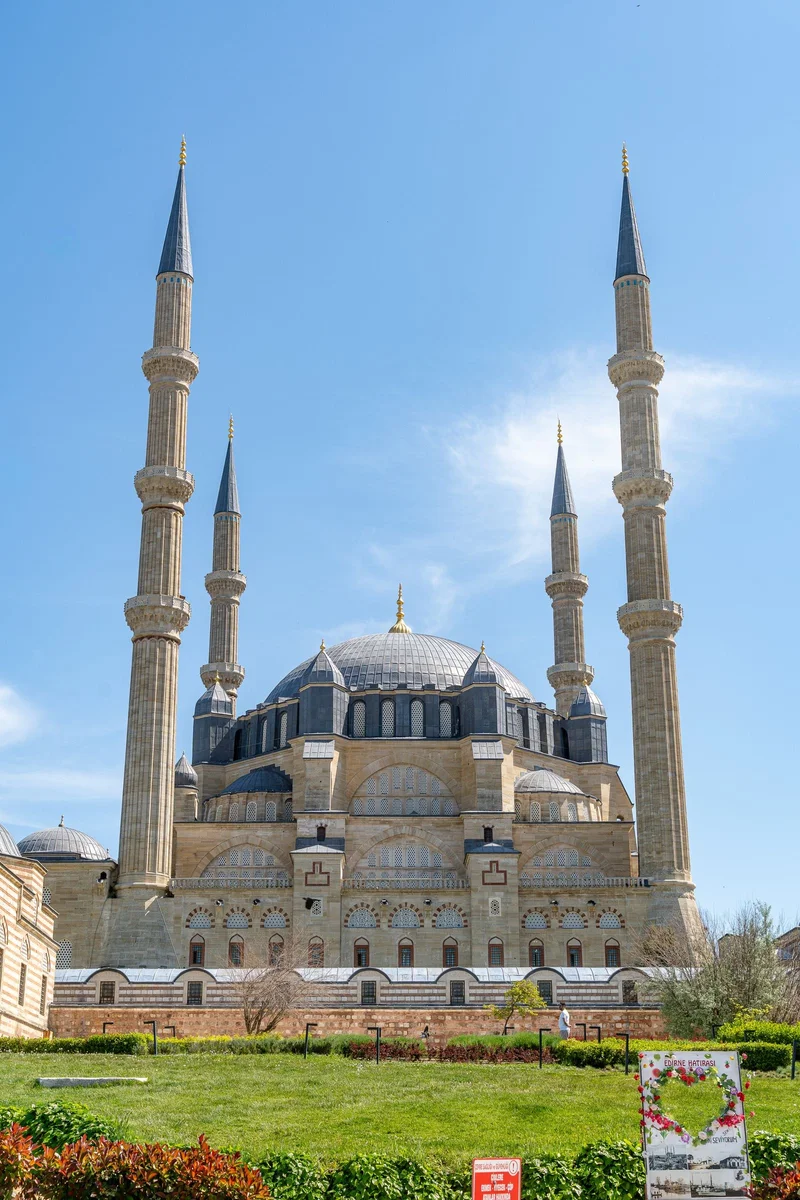
A day trip: the Selimiye in Edirne. Sinan called the Selimiye his master work. Built from 1568 to 1575 for Selim II, it has a dome about 31 metres across and four 70.89-metre minarets, and with its social complex it has been a UNESCO World Heritage Site since 2011. Edirne is roughly three hours each way by road; our Edirne day trip also takes in the Old Mosque, the Üç Şerefeli Mosque and the Bayezid II complex.
Visiting rules and prayer times
The imperial mosques are free to enter, and donations for their upkeep are welcome. They are places of worship first, so a few rules apply:
- Avoid prayer time. Turkey Travel Planner advises against visiting at the call to prayer or within half an hour after it, and on Fridays from late morning to early afternoon, when the main congregational prayer and sermon take place.
- Shoes off. Everyone, Muslim or not, removes their shoes before stepping on the carpet, so clean socks help.
- Dress. Men wear long trousers and a shirt with sleeves. Women wear trousers or a skirt below the knee, sleeves to the elbow and a headscarf. The busiest mosques may lend robes if your clothes are too casual. Our guide on what to wear in Istanbul has the details.
- Behaviour. Speak quietly, do not walk in front of people praying, switch off the flash, and do not photograph people while they pray.
- Doors. If a smaller mosque is locked, a caretaker can often let you in, so ask nearby; if it is busy with worshippers, come back later.
The five prayer times move with the sun. These are the Presidency of Religious Affairs (Diyanet) times for Istanbul on three November dates:
- 6 November 2026: dawn 06:07, sunrise 07:33, noon 12:53, afternoon 15:36, sunset 18:02, night 19:23.
- 15 November 2026: dawn 06:16, sunrise 07:44, noon 12:54, afternoon 15:29, sunset 17:53, night 19:16.
- 30 November 2026: dawn 06:31, sunrise 08:01, noon 12:58, afternoon 15:22, sunset 17:44, night 19:09.
Diyanet publishes the times for every day of the year on its website.
Tours that cover this
- Private Istanbul Tour with a Licensed Guide: 1, 2 or 3 Days: from $199 per group for an eight-hour day. Give your guide this route.
- Edirne Day Trip from Istanbul: Private Selimiye Mosque Tour: 12 hours, from $370 per person, with a private guide, van and entrance fees.
- Islamic Istanbul Tour Package: 4 Days: from $768 per person, with the Süleymaniye and Eyüp Sultan on one guided day and the Sultanahmet sights on another.
- Istanbul Private Driver Tour: Mercedes Vito for 8 Hours: from $299 per group of up to six, useful for linking Edirnekapı, Tophane and Üsküdar in one day.
For more faith-based routes, see our Islamic history tour of Istanbul and all our religious tours. For more Istanbul-only ideas, see our sister site Get Istanbul Tours.
Frequently Asked Questions
What is Mimar Sinan's most famous mosque in Istanbul?
The Süleymaniye Mosque, built from 1550 to 1557 for Süleyman the Magnificent, is Sinan's best-known work in Istanbul. Its dome is 53 metres high and its four minarets have ten balconies. Sinan himself called it his journeyman work and the Selimiye in Edirne his masterpiece.
How many buildings did Sinan design?
One Ottoman list of his works, the Tezkiretü'l-Ebniye, credits Sinan with 476 buildings built or supervised during his nearly fifty years as chief architect, of which 196 survive. They include mosques, madrasas, baths, bridges and tombs, from Istanbul and Edirne to other cities of the empire.
Where is Mimar Sinan buried?
Sinan is buried in a small tomb of his own design just outside the walls of the Süleymaniye complex, on its north side. He died in Istanbul on 17 July 1588, and the tomb was completely restored in 1922. Look for it as you leave the Süleymaniye.
Is the Süleymaniye Mosque free to visit?
Yes, the Süleymaniye is free to enter, like the other imperial mosques, and donations for upkeep are welcome. Visitors should avoid the call to prayer and the half hour after it, and the Friday midday prayer. Dress modestly, women should cover their hair, and everyone removes their shoes at the door.
Which Istanbul mosque has the best İznik tiles?
The Rüstem Pasha Mosque near the Spice Bazaar, with about 2,300 İznik tiles in some 80 patterns covering almost every interior wall. No other Sinan mosque uses tiles so lavishly. The Sokollu Mehmed Pasha Mosque in Kadırga is the second choice, with tiled walls and a tiled minbar.
Did Sinan build the Blue Mosque?
No. The Blue Mosque was built between 1609 and 1617, after Sinan's death, by Sedefkâr Mehmed Ağa, who drew on the ideas of his master Sinan. Its plan is based on Sinan's Şehzade Mosque, which is why a visit to the Şehzade helps explain the Blue Mosque.
What did Sinan build at Hagia Sophia?
Under Selim II, Sinan strengthened Hagia Sophia with exterior buttresses and designed the two large minarets at its western end. He also built the original sultan's lodge and the tomb of Selim II to the southeast of the building in 1576–1577.
How long does a Sinan mosque walk take?
Allow a full day for the old city route of the Şehzade, Süleymaniye, Rüstem Pasha and Sokollu Mehmed Pasha mosques and Hagia Sophia. It is roughly 3.5 kilometres on foot plus one tram ride, with lunch during the noon prayer. Üsküdar's three Sinan mosques need another half day.
Is the Selimiye in Edirne worth a day trip from Istanbul?
Yes, if you are interested in Sinan, because he called the Selimiye his master work. Built from 1568 to 1575, it has a dome about 31 metres across and four 70.89-metre minarets, and it is a UNESCO World Heritage Site. Edirne is roughly three hours each way by road.
Sources: Wikipedia, "Mimar Sinan", "Süleymaniye Mosque", "Şehzade Mosque", "Rüstem Pasha Mosque", "Mihrimah Sultan Mosque, Edirnekapı", "Mihrimah Sultan Mosque, Üsküdar", "Sokollu Mehmed Pasha Mosque, Kadırga", "Kılıç Ali Pasha Complex", "Şemsi Pasha Mosque", "Atik Valide Mosque", "Hagia Sophia", "Hagia Sophia Hurrem Sultan Bathhouse", "Blue Mosque, Istanbul", "Selimiye Mosque, Edirne", "T1 (Istanbul Tram)", "T4 (Istanbul Tram)" and "Marmaray"; Daily Sabah, "Mimar Sinan: architect extraordinaire of Ottoman grandeur" (19 July 2024); Presidency of Religious Affairs, Istanbul prayer times for November 2026 (namazvakitleri.diyanet.gov.tr); Turkey Travel Planner, mosque etiquette; OpenStreetMap routing for walking distances; Get Turkey Tours itineraries — checked 6 November 2026.
由Get Turkey Tours团队撰写:我们是总部位于伊斯坦布尔的持证本地导游和行程规划师。
发表评论
我们的私人游览
从伊斯坦布尔出发的埃迪尔内一日游:私人参观塞利米耶清真寺,12小时
前奥斯曼帝国首都埃迪尔内(Edirne)私人一日游,重点参观米马尔·锡南设计的塞利米耶清真寺,以及城中的清真寺、集市和桥梁。