

 التحقق من ترخيص المرشد
كيفية التحقق من رخصة مرشد السياحة في تركيا: البطاقة والاسم والسجل
اطلب رؤية بطاقة العمل، ثم ابحث عن اسم المرشد في السجل الإلكتروني المجاني لاتحاد TUREB. وتعني عبارة «Eylemli» بجانب الاسم أن المرشد يحمل بطاقة هذا العام ويحق له العمل قانوناً.
استعرض جولاتنا


To check a tour guide in Turkey, ask to see the work card on the guide's chest, then type the name into the free guide register on the website of TUREB, the national union of guides' chambers. If the register shows the name with the word Eylemli, the guide holds this year's card and may legally work. The whole check takes about a minute on a phone. Every guide we assign on a private Istanbul tour with a licensed guide, from $199 per group per day, can be checked this way.
This page is the practical part: what to look at, where to click and how to read the Turkish words on the screen. For the background on how guides qualify and what the law allows them to do, see our overview of hiring a private tour guide in Turkey.
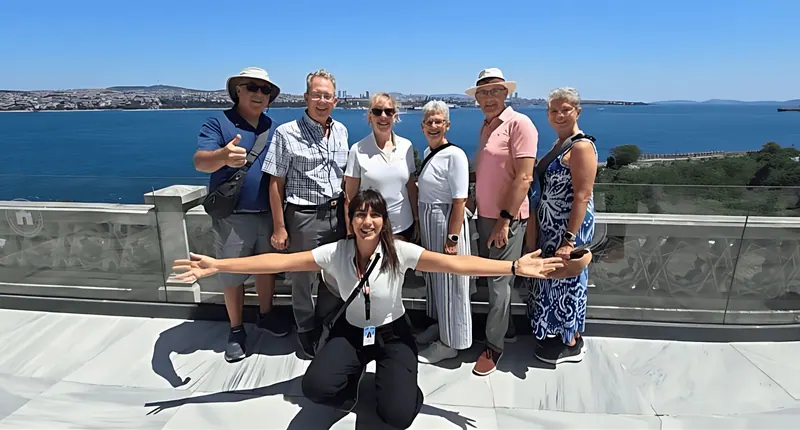
The quick check in four steps
- Get the full name before the day. Ask the agency or the guide for the guide's first name and surname, spelled as on their ID. Turkish names often have letters such as ç, ş, ğ, ı and ö, so ask for the exact spelling.
- Search the name on tureb.org.tr. Open the Rehber Veritabanı (guide database), type the first name in Adı and the surname in Soyadi, and press Ara (search).
- Read the last column. Eylemli means the guide holds a current work card. Eylemsiz means the guide has a licence but no card this year, and may not guide.
- Match it on the day. At pickup, look at the card the guide wears. The photo, the name and the languages should fit what you found online.
If the name does not appear at all, the person is not in the register. Ask the agency for an explanation before you go anywhere with them.
What the work card shows
The card is called a çalışma kartı (work card); many guides also call it a kokart. It is issued by the guide's regional chamber and is valid for one year. Under the Tourist Guiding Profession Regulation, the card shows the guide's identity details with a photo and a registration number, and it lists the foreign languages and the region the guide may work in. The guide must wear it visibly at chest level while working.
What to look at when you meet:
- The photo and name. They should match the person in front of you and the name you searched.
- The languages. The law allows a guide to work only in the languages written on the card, or in Turkish.
- The region. A card for a regional guide names the region; a national card allows work anywhere in Turkey.
- The validity. Cards are renewed yearly, so an old card is not proof of a current right to work.
Not carrying the card, or not wearing it where it can be seen, is a disciplinary offence for the guide under Law No. 6326. A licensed guide will not mind being asked to show it.
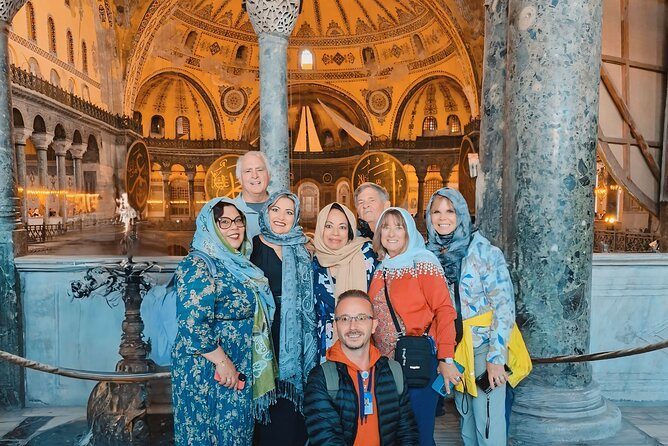
Searching the TUREB register, field by field
The register is public because the law requires it: Article 4 of Law No. 6326 says the names and registration numbers of all guides must be published on the union's official website. The page is in Turkish only. Here is what each part means.
| On the screen | In English | How to use it |
|---|---|---|
| Rehber Veritabanı | Guide database | The page you need, linked from the TUREB home page |
| Adı / Soyadi | First name / Surname | Type part or all of the name, then press Ara |
| Oda | Chamber | The regional chamber the guide belongs to, such as İRO in Istanbul |
| Bölge | Region | "Ülkesel" means national; the others are the seven regions |
| Yabancı Dil | Foreign language | Filter by language, for example İngilizce (English) |
| Listele | List | Shows every guide that matches the three filters |
| Eylemli / Eylemsiz | Active / Not active | Active guides hold this year's work card |
There are two ways to search. The name search is fastest when you already know who is coming. The filter search, with Oda, Bölge and Yabancı Dil, is useful when you want to see how many guides in a region speak your language. Results show the name, the chamber, the languages and the status; some guides also choose to publish a phone number and email address.
Note the disclaimer at the top of the page. TUREB says it lists every guide because the law requires it, and that being listed as active does not prove a guide is working at the moment. In plain terms: the register confirms the right to work, not quality. TUREB also runs a separate document check (Belge Doğrulama), but it asks for the guide's Turkish ID number and licence number, so it is mainly a tool for agencies rather than travellers.
Eylemli or eylemsiz: the word that matters
Law No. 6326 defines both words. An eylemli guide holds a work card and has the right to guide. An eylemsiz guide holds the licence (the ruhsatname) but no work card for the current year. The law is clear that only eylemli guides may practise the profession.
A guide becomes eylemsiz for ordinary reasons, such as retiring, taking a year off or not renewing chamber membership. It is not a mark of misconduct. But it does mean that person should not be guiding you today. The law sets an administrative fine of 1,500 Turkish lira for an eylemsiz guide who works anyway, and anyone who stays eylemsiz for eight years in a row has to pass a ministry exam before returning.
When we checked the TUREB statistics on 6 November 2026, the register held 16,314 guides: 12,799 eylemli and 3,515 eylemsiz. So roughly one listed guide in five is not currently allowed to work, which is exactly why the status column is worth a glance.
National or regional licence: match the guide to your route
The Bölge field tells you where a guide may work. Some guides are licensed nationally (Ülkesel); others are licensed for one region: Marmara, Aegean (Ege), Mediterranean (Akdeniz), Central Anatolia (İç Anadolu), Black Sea (Karadeniz), Eastern Anatolia (Doğu Anadolu) or South-eastern Anatolia (Güneydoğu Anadolu). Under the law, a regional guide who works outside the region commits a disciplinary offence that can lead to a temporary ban.
The register's statistics, checked on 6 November 2026, show 10,480 guides with a national licence and 5,834 with a regional one.
What this means for your trip:
- One city only. A guide licensed for that region is fine. Istanbul falls in Marmara, Cappadocia in Central Anatolia, Ephesus in the Aegean.
- A multi-region tour with one guide throughout. The guide needs a national licence. Check that the register shows Ülkesel.
- A multi-region tour with local guides. Each local guide should be licensed for their own region, and you can check each name in turn.
Our multi-day Turkey tours use one of these two set-ups, and you can ask which one applies before you book.
Check the language before you book
The 2024 amendment to Law No. 6326 kept a strict rule: a guide may work only in the foreign languages written on the work card, or in Turkish when the guests speak it and ask for it. Guiding in a language that is not on the card can lead to a temporary ban.
The register lets you see how many guides hold each language. These are the active and inactive counts from TUREB's statistics page on 6 November 2026, for some of the languages our guests ask about most:
| Language | Active (eylemli) | Not active (eylemsiz) |
|---|---|---|
| English | 7,551 | 2,163 |
| German | 1,143 | 476 |
| Spanish | 1,048 | 118 |
| Russian | 919 | 146 |
| French | 815 | 329 |
| Arabic | 456 | 94 |
| Italian | 443 | 129 |
| Japanese | 422 | 170 |
| Chinese | 390 | 55 |
| Korean | 39 | 9 |
| Hindi | 1 | 1 |
A guide can hold several languages, so these numbers overlap. The point for travellers is simple: English is easy anywhere, the larger European languages are well covered, and some languages have only a handful of licensed guides in the whole country. Guides in a rare language are arranged on request, subject to availability, and it is worth asking months rather than weeks ahead. If you want an English-speaking guide in Istanbul, see our Istanbul private tour guide page.
Warning signs, and what the law says
Most problems happen at the gate of a big site, where someone offers a cheap tour on the spot. These are the signs to walk away:
- No card, or a card kept in a pocket. A working guide must wear it visibly.
- A name that is not in the register. Since the 2024 amendment, guiding without a licence can be fined by the local governor's office. The amounts written in the law run from 25,000 to 100,000 Turkish lira, depending on the number of guests and the area.
- A "free" stop at a shop. The same amendment made it a fineable offence for a guide to take you to a shop without your knowledge and consent in return for a commission, with the same range of fines in the law. A carpet or ceramics visit is fine if you asked for it.
- A change of route or length without a reason. Under the law this can lead to a temporary ban for the guide.
- No written agreement, or a fee below the official minimum. The law requires a written guiding contract and a minimum fee tariff, and working without either is a disciplinary offence.
If a guide refuses to show a card, you do not have to argue. Thank them, keep your ticket and go in on your own; at most museums you can visit without a guide.
Booking through an agency: the second check
The guide's licence is half of the picture. In Turkey a guide may offer guiding only, and may not sell tours, package tours, transport or hotel rooms. Those are travel agency services. If your day includes a vehicle, a driver, flights or a hotel, the seller should be a licensed agency.
Agencies are checked separately. Ask for the agency's TÜRSAB number and look it up in the member search on TÜRSAB's own website. Get Turkey Tours is a licensed Turkish tour operator, TÜRSAB A-15751, operated by Viracocha Travel. Ask us for your guide's full name before the tour and you can run the register check yourself; if anything does not match on the day, message us on WhatsApp. You can read about the people behind the company on our team page.
Tours that cover this
- Private Istanbul Tour with a Licensed Guide: 1, 2 or 3 Days: from $199 per group.
- Istanbul Old City Private Tour: Hagia Sophia, Topkapi & Grand Bazaar: from $200 per person.
- Private Cappadocia Red Tour with lunch and your own guide: from $161 per person.
- Private Ephesus Tour: Full Day with Guide, Van & Skip-the-Line Access: from $300 per person.
For guide day rates and tipping, read what a private tour guide costs in Turkey. For site-by-site help, see our Hagia Sophia guided tour and Topkapı Palace guided tour pages, or browse all tours across Turkey.
Frequently Asked Questions
How do I check if a tour guide in Turkey is licensed?
Search the guide's first name and surname in the Rehber Veritabanı on tureb.org.tr, the register run by the guides' union. The result shows the chamber, the languages and a status. "Eylemli" means the guide holds this year's work card and may work. Then compare the photo and name on the card the guide wears with what you found online.
What does eylemli mean on the TUREB register?
Eylemli means active: the guide holds a current work card from their chamber and has the legal right to guide. Eylemsiz means the guide holds a licence but no work card this year, and may not guide. Under Law No. 6326, only eylemli guides may practise, and an eylemsiz guide who works can be fined by the ministry.
Is the TUREB guide register available in English?
No, the register is in Turkish only, but it is short and easy to use with the translations on this page. The name fields are Adı and Soyadi, the search button is Ara, and the filters are Oda, Bölge and Yabancı Dil. A phone browser's translate function also works well on the page.
What should be written on a Turkish guide's work card?
The card carries the guide's photo, identity details and registration number, the foreign languages the guide may work in, and the region of the licence. It is valid for one year and issued by the guide's regional chamber. The guide must wear it visibly at chest level while working, so you should not need to ask twice.
Can a regional guide take us from Istanbul to Cappadocia?
Not as the guide in Cappadocia. A regional guide may work only inside the region on the licence; working outside it is a disciplinary offence. For a tour that crosses regions, either the guide holds a national licence, shown as Ülkesel in the register, or a licensed local guide meets you in each region. Both are normal arrangements.
What happens if someone guides without a licence in Turkey?
Since the 2024 amendment to Law No. 6326, guiding without a licence can be fined by the local governor's office. The law sets the range at 25,000 to 100,000 Turkish lira, depending on the number of guests and the area. The fine falls on the person guiding, not on you, but an unlicensed guide also gives you no protection if something goes wrong.
Is a TÜRSAB number the same as a guide licence?
No. A TÜRSAB number belongs to a travel agency, not to a guide. Guides are licensed by the Ministry of Culture and Tourism and registered with TUREB through their chamber. If your tour includes a vehicle, hotel or flights, check both: the agency's number on TÜRSAB's website and the guide's name in TUREB's register.
Can I find a guide who speaks my language in the register?
Yes. Choose your language in the Yabancı Dil filter and press Listele to see every guide who holds it. English, German, Spanish, Russian and French are widely held. Some languages have only a few guides nationwide; when we checked in November 2026, two guides held Hindi. Rare languages are arranged on request, subject to availability.
Do I have to use a guide at Turkish museums?
No. You can visit museums and ancient sites with a ticket and no guide. The licensing rules decide who may work as a guide, not whether you need one. Many travellers book a guide for the places where history is layered, such as Hagia Sophia, Topkapı Palace or Ephesus, and explore the rest on their own.
Sources: Tourist Guiding Profession Law No. 6326 as amended by Law No. 7500 of 17 April 2024 (mevzuat.gov.tr); Tourist Guiding Profession Regulation of 7 November 2024 (Resmî Gazete); TUREB guide database and guide statistics (tureb.org.tr); TÜRSAB member search — checked 6 November 2026.
جولات خاصة في تركيا
جولة خاصة في إسطنبول مع مرشد مرخّص: 1 أو 2 أو 3 أيام
احجز مرشدك المحلي المرخّص في إسطنبول ليوم أو يومين أو ثلاثة، واستكشف المدينة القديمة والقرن الذهبي ومضيق البوسفور بالوتيرة التي تناسب اهتماماتك.
جولة خاصة في المدينة القديمة بإسطنبول: آيا صوفيا، topkapı والبازار الكبير
يوم خاص واحد مع مرشدك الخاص عبر أهم المعالم البيزنطية والعثمانية في إسطنبول، تبدأ من قصر توبكابي وتنتهي في البازار الكبير.
مرشدات ذات صلة
- رحلات Insight Vacations إلى تركيا 2027 أم رحلة خاصة؟ ما الذي يقدمه كل خيار
- إسطنبول وكابادوكيا من البرازيل: باقات لمدة 6 أو 8 أو 10 أيام
- العطلات الشتوية في تركيا في يوليو 2027 من أمريكا الجنوبية: خطة 12 يوماً
- رحلة فاخرة إلى إسطنبول وكابادوكيا: أجنحة في الكهوف، ويخت، ومرشد خاص
- جولة في تركيا مناسبة للمسلمين من سنغافورة: المساجد والطعام الحلال والمسار
- مرشد سياحي خاص في تركيا: كيف يعمل الترخيص وكيف تختار
- جولات المجموعات الصغيرة في تركيا: أيام الانضمام للمجموعة ومسارات المجموعات متعددة الأيام
- الرحلات الطلابية إلى تركيا للمدارس والجامعات الخليجية في 2027
- تركيا 9 ليالٍ و10 أيام: مقارنة خمس بكجات لدينا ليلة بليلة
- شركة الخدمات الوجهية في تركيا للرحلات متعددة المناطق: كيف تتكامل الترتيبات اللوجستية
- قواعد الدخول إلى تركيا للكنديين: جواز السفر و90 يومًا والأطفال والنقد
- بكجات شهر العسل في تركيا من الولايات المتحدة: ميزانيات للزوجين والرحلات بالمنطاد