

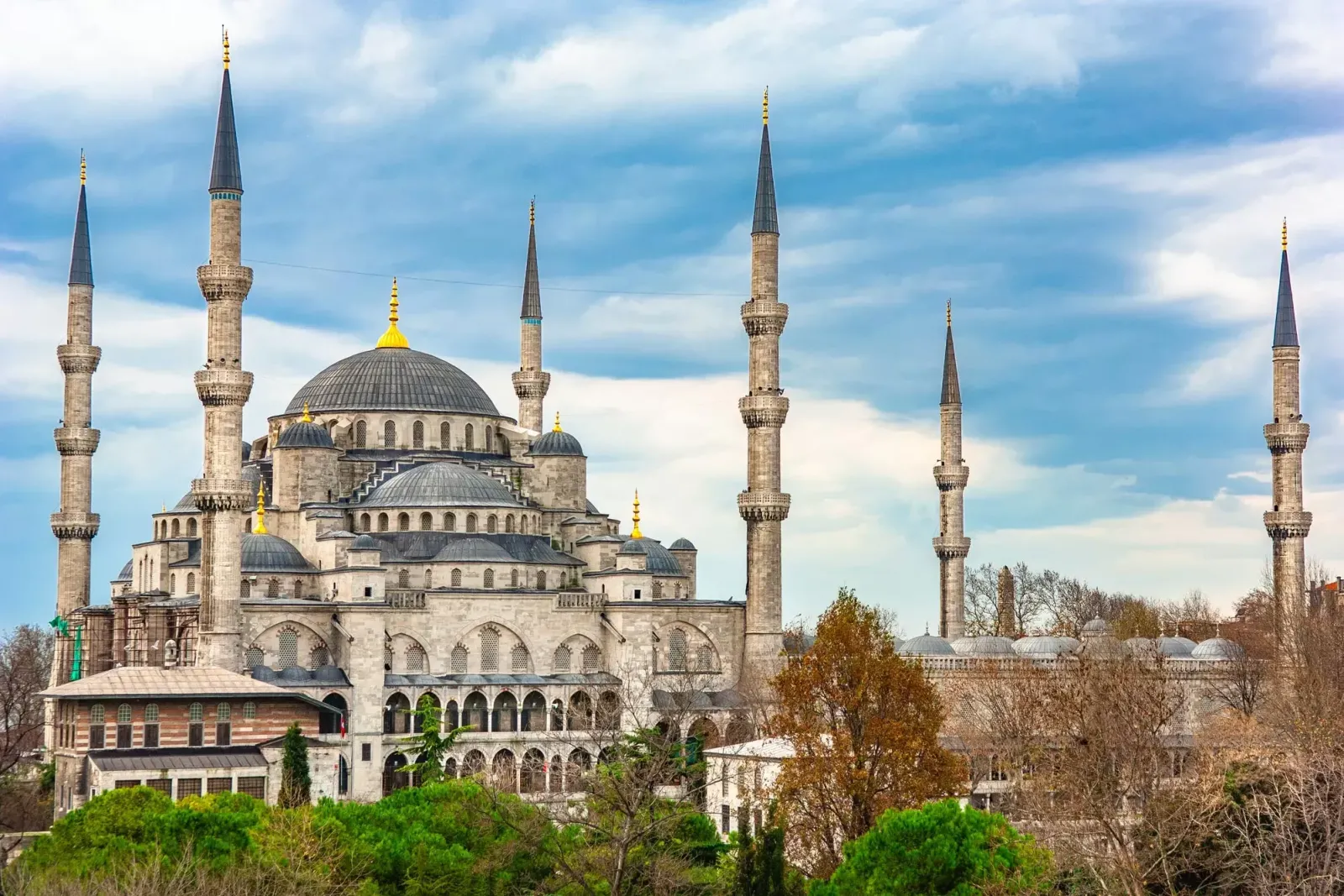
 Sultanahmet mosque visits
Blue Mosque Tour: Prayer Times, Dress Code and Hagia Sophia Next Door
The Blue Mosque is free and a guided visit takes 30 to 45 minutes. It closes to visitors at each of the five daily prayers and on Friday mornings, so timing matters.
Browse our tours
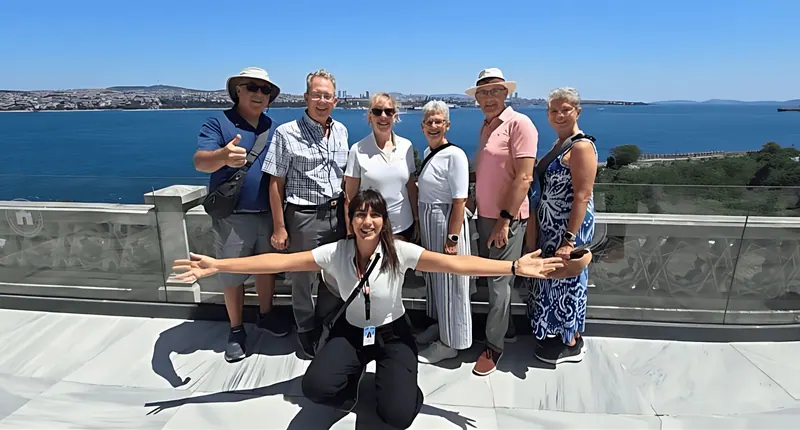
The Blue Mosque is free to enter, a guided visit inside takes about 30 to 45 minutes, and the only real obstacle is timing: it closes to visitors around each of the five daily prayers and for most of Friday morning. A guide plans your visit around those windows, explains the building and walks you across to Hagia Sophia and the Hippodrome, which stand a few minutes away. Our Hagia Sophia small-group tour with the Blue Mosque covers all three in one morning.
Entry, prayer closures and opening times
The Blue Mosque, officially the Sultan Ahmed Mosque, is a working mosque. There is no ticket and no booking, and anyone selling "Blue Mosque entry" is selling a guided tour, not admission.
Visitors can enter outside prayer times. The mosque stops tourist entry before each prayer and reopens once the prayer is over, usually after 60 to 90 minutes in total. Prayer times follow the sun, so they move every day. As an example, these were the Diyanet prayer times for Istanbul on 6 November 2026:
| Prayer | Time on 6 Nov 2026 | Effect on visitors |
|---|---|---|
| Dawn (Fajr) | 06:07 | Before visiting hours |
| Midday (Dhuhr) | 12:53 | Closed for about 60 to 90 minutes around it |
| Afternoon (Asr) | 15:36 | Closed for about an hour around it |
| Sunset (Maghrib) | 18:02 | Closed around sunset |
| Night (Isha) | 19:23 | After visiting hours |
In summer the midday prayer falls a little later and the afternoon prayer much later, so the morning window is longer. The safest plan in any season is to arrive by mid-morning.
Fridays are different. The Friday midday prayer is the main congregational prayer of the week, and the mosque closes to visitors for most of the late morning. Tourist entry usually resumes around 14:30. If Friday is your Old City day, see the Blue Mosque in the afternoon.
Dress code and what to expect at the door
The rules are the same as at any working mosque in Turkey, and attendants at the visitor entrance check them.
- Women cover their hair, shoulders and arms, and wear a skirt or loose trousers below the knee. Leggings and see-through fabrics are often turned back even if they cover the skin.
- Men wear long trousers or shorts below the knee, and no sleeveless tops.
- Shoes come off before you step onto the carpet. Plastic bags are provided so you can carry them with you.
- Scarves and wraps are handed out at the entrance when needed, but bringing your own saves time and works at Hagia Sophia too.
- Inside, the main prayer area is roped off for worshippers. Keep your voice low, avoid photographing people at prayer and do not walk in front of anyone praying.
Tourists use a separate visitor entrance from the one used by worshippers. Queues at peak times move quickly because there is no ticket to check, but they can stretch into the courtyard in summer, just before a prayer closure.
What a guide shows you inside
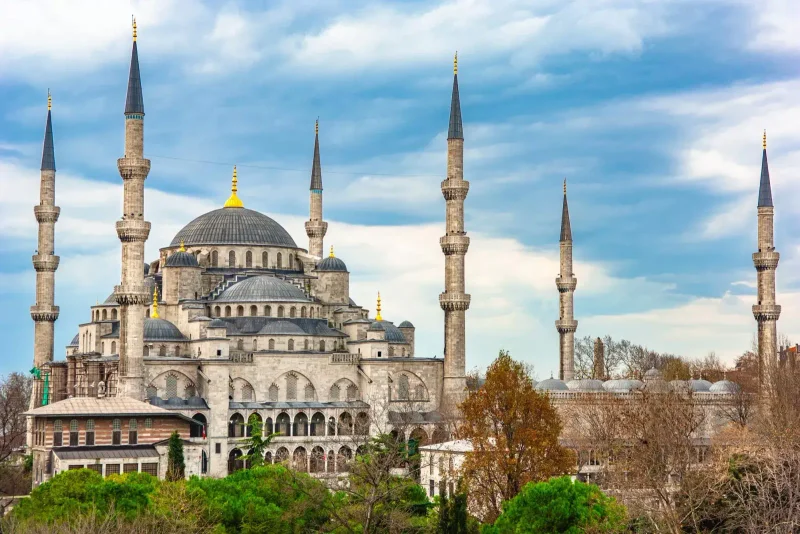
The mosque was built between 1609 and 1616 for Sultan Ahmed I by the architect Sedefkâr Mehmed Ağa, a pupil of the great Ottoman architect Sinan. It reopened in April 2023 after a restoration of about five years, so the interior is brighter now than in older photographs.
Points a guide explains:
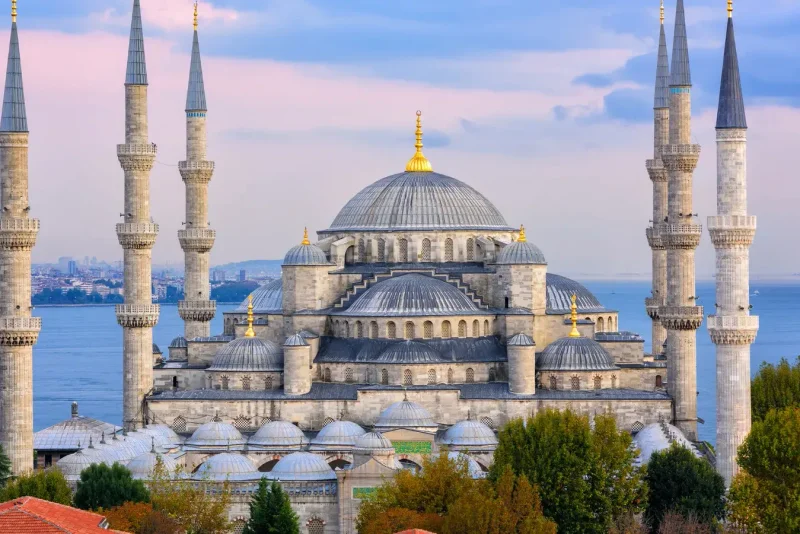
- The six minarets. Most imperial mosques of the time had four. The story of how the sultan's six caused offence, and what was done about it, is a guide favourite.
- The Iznik tiles. More than 20,000 hand-made tiles line the lower walls and galleries. Their blue and green tones, especially in the upper levels, gave the building its English name.
- The dome and the "elephant feet". Four huge fluted piers carry the central dome. A guide shows how this design answers the dome of Hagia Sophia across the square, built a thousand years earlier.
- The mihrab and minbar. Carved white marble, facing Mecca, with the sultan's private gallery to one side.
- The courtyard. The arcaded courtyard is as large as the prayer hall, with a central fountain. It is a good spot to explain the daily rhythm of a mosque before you go in.
Without a guide, most visitors spend ten minutes looking up at the domes and leave. With one, the visit becomes a short lesson in Ottoman architecture and religious life.
Combining the Blue Mosque with Hagia Sophia
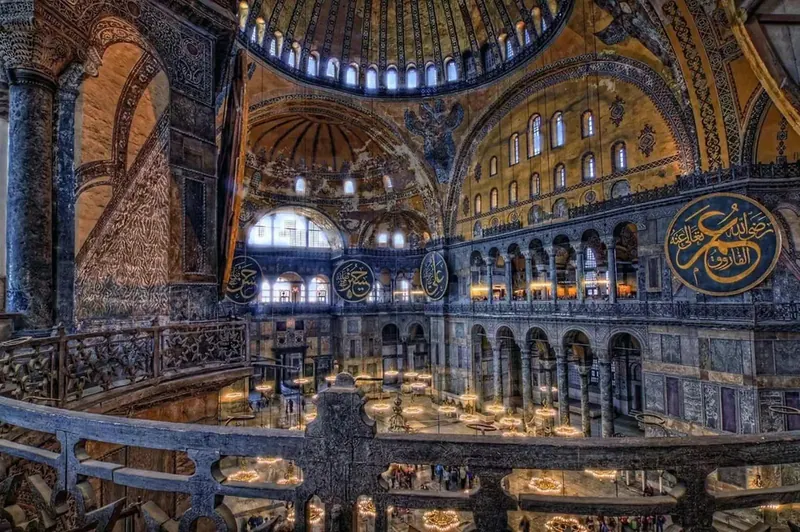
Hagia Sophia faces the Blue Mosque across Sultanahmet Square, about five minutes on foot. Seeing them together is the point: one is a 6th-century Byzantine cathedral, the other an Ottoman mosque designed to rival it.
The practical differences:
- Tickets. The Blue Mosque is free. Foreign visitors pay €25 for Hagia Sophia's upper-gallery visitor route, and the Museum Pass is not valid there. Our Hagia Sophia ticket price page has the details.
- Queues. Hagia Sophia has the longer line, so most guides start there at opening time and cross to the Blue Mosque afterwards.
- Prayer closures. Both are working mosques and both pause visitor entry at prayer times, with the longest break at Friday midday.
- Dress code. The same rules apply in both, so one outfit covers the morning.
The Hippodrome next door
Step out of the Blue Mosque's visitor exit and you are on the Hippodrome, the long square that was the chariot-racing arena of Byzantine Constantinople. Nothing of the stands survives, but the monuments along the old central barrier do.
- The Obelisk of Theodosius. An Egyptian obelisk from the temple of Karnak, more than 3,000 years old, raised here in the 4th century on a carved marble base that shows the emperor at the races.
- The Serpent Column. The bronze base of a monument from Delphi in Greece, made to mark the Greek victory over the Persians in the 5th century BC.
- The Walled Obelisk. A rough stone column that was once covered in bronze plates.
- The German Fountain. A domed fountain given by Kaiser Wilhelm II, completed in 1900.
The Hippodrome is outdoors and never closes, which makes it the natural stop while you wait for the mosque to reopen after a prayer.
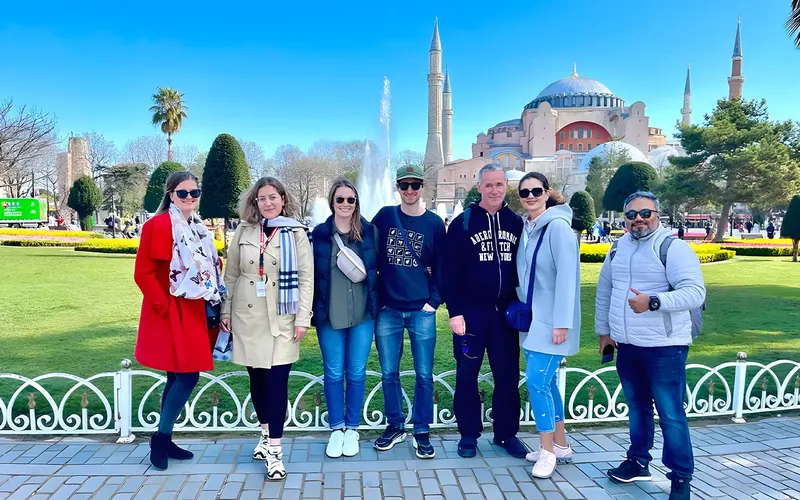
A sample morning in Sultanahmet
This is a typical order our guides use, adjusted each day to the prayer timetable.
| Time | Stop | Why then |
|---|---|---|
| 08:45 | Meet at Hagia Sophia | Be in line before the morning rush |
| 09:00 to 10:15 | Hagia Sophia galleries | Shortest queue of the day |
| 10:30 to 11:15 | Blue Mosque | Well before the midday closure |
| 11:15 to 11:45 | Hippodrome monuments | Outdoors, open all day |
| 12:00 onwards | Lunch, then Topkapı Palace, the Basilica Cistern or the Grand Bazaar | Covers the prayer break |
Two adjustments: on Fridays move the Blue Mosque to the afternoon, and on Tuesdays leave out Topkapı Palace, which is closed that day. The Grand Bazaar is closed on Sundays.
Tours that cover this
- Hagia Sophia Small-Group Tour with Entry Ticket, Blue Mosque & Bazaar, from $120 per person.
- Istanbul Half-Day Morning Tour: Hagia Sophia, Blue Mosque & Bazaar, from $67 per person.
- Istanbul Old City Tour: Small-Group Full Day with Tickets & Lunch, from $199 per person.
- Istanbul Old City Private Tour: Hagia Sophia, Topkapi & Grand Bazaar, from $200 per person.
Each tour page lists exactly what is included. More options are on our Istanbul city tours page.
Frequently Asked Questions
Is the Blue Mosque free to enter?
Yes. The Blue Mosque is a working mosque and entry is free for everyone, with no ticket or reservation. Paid "tickets" sold online are guided tours, not admission. Hagia Sophia across the square is different: foreign visitors pay €25 for its visitor route. Donations are welcome at the Blue Mosque but never required.
When is the Blue Mosque closed to tourists?
It closes to visitors around each of the five daily prayers, usually for 60 to 90 minutes, and for most of Friday morning until about 14:30. Prayer times change daily with the sun; in early November the midday prayer falls just before 13:00. Mid-morning is the most reliable window in every season.
What should I wear to visit the Blue Mosque?
Women cover their hair, shoulders and arms and wear a long skirt or loose trousers. Men wear long trousers or shorts below the knee and no sleeveless tops. Shoes come off at the door and are carried in a bag. Scarves are provided if needed, but your own is quicker and can be reused at Hagia Sophia.
How long do you need at the Blue Mosque?
Plan on 30 to 45 minutes with a guide, including the courtyard and the time it takes to remove shoes and pass the queue. Add 20 to 30 minutes for the Hippodrome outside. A half-day tour that also includes Hagia Sophia takes about four hours, and a full Old City day runs six to eight hours.
Can I visit the Blue Mosque and Hagia Sophia on the same day?
Yes, and most visitors do. They face each other across Sultanahmet Square, a five-minute walk apart. Start with Hagia Sophia at opening time, then visit the Blue Mosque before the midday prayer closure. On Fridays, reverse the afternoon plan and see the Blue Mosque after about 14:30, once the main weekly prayer is over.
Do I need a guide for the Blue Mosque?
You can visit on your own, because entry is free and the route is short. A guide adds the history, explains the tiles and the architecture, and plans the visit around prayer times so you do not wait outside. Most travellers book a guide for the whole Sultanahmet area rather than for the mosque alone.
Sources: Diyanet İşleri Başkanlığı prayer times for Istanbul (namazvakitleri.diyanet.gov.tr), Istanbul Foundations Regional Directorate notice on the Hagia Sophia visitor fee (January 2024), Daily Sabah (April 2023) on the Blue Mosque restoration, 2026 Blue Mosque visitor guides — checked 6 November 2026.
Private tours in Istanbul
Hagia Sophia Small-Group Tour with Entry Ticket, Blue Mosque & Bazaar
The Hippodrome, Blue Mosque, Hagia Sophia and Grand Bazaar in a small group, with central hotel pick-up and entry tickets included.
Istanbul Half-Day Morning Tour: Hagia Sophia, Blue Mosque & Bazaar
A guided 4-hour morning walk through Sultanahmet covering the Hippodrome, Blue Mosque, Hagia Sophia and Grand Bazaar, finishing around 12:30 so your afternoon stays free.
Related guides
- Bosnian, Croatian or Serbian-Speaking Guide in Istanbul
- Bosphorus Boat Trip for Brazilians: Prices in Reais and How to Choose
- Bosphorus Cross-Continental Swim 2027: Date, Entry and Race Week
- Bosphorus Cruise Options in Istanbul: Ferry, Lunch, Dinner, Sunset
- Bosphorus Cruise Today: Ferry Times, Piers and Ticket Prices
- Bosphorus Cruise for Chinese Travellers: Price Ladder and Routes
- Bosphorus Cruise for Dutch Visitors: Ferry, Lunch, Dinner or Yacht
- Bosphorus Cruise for French Visitors: Sunset Times and Boat Choices
- Bosphorus Cruise for Gulf Families: Private Yacht, Halal Food, Prices
- Bosphorus Cruise for Italian Visitors: Morning, Sunset, Dinner, NYE
- Bosphorus Cruise for Italians: Genoese Galata, the Route and Piers
- Bosphorus Cruise for Korean Travellers: Which Boat, Which Pier