

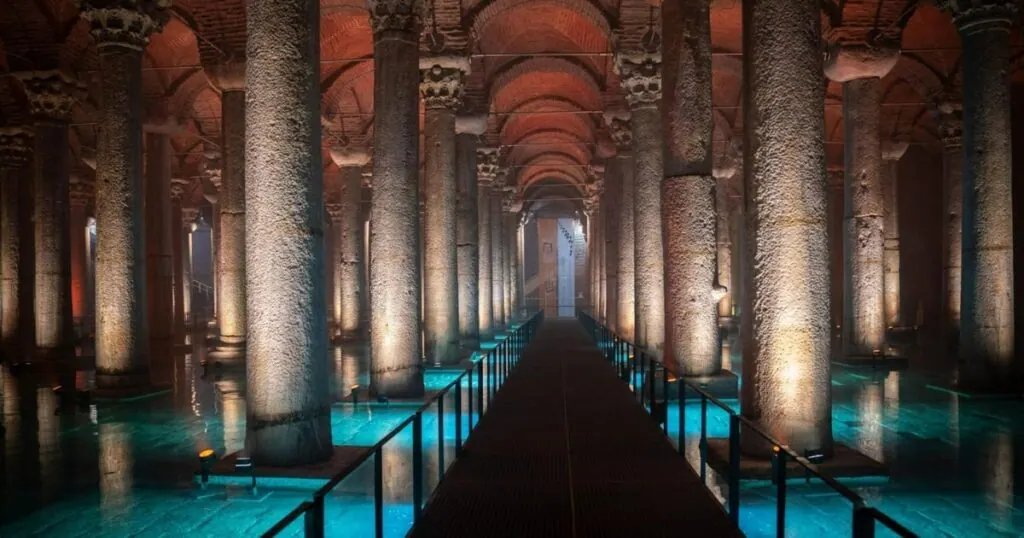
 Byzantine Istanbul
Basilica Cistern Guided Tour: Tickets, Night Visits and the Old City
A Basilica Cistern visit takes 30 to 45 minutes, opposite Hagia Sophia. Since June 2026 a new state operator runs it, so check the ticket price and evening times first.
Browse our tours
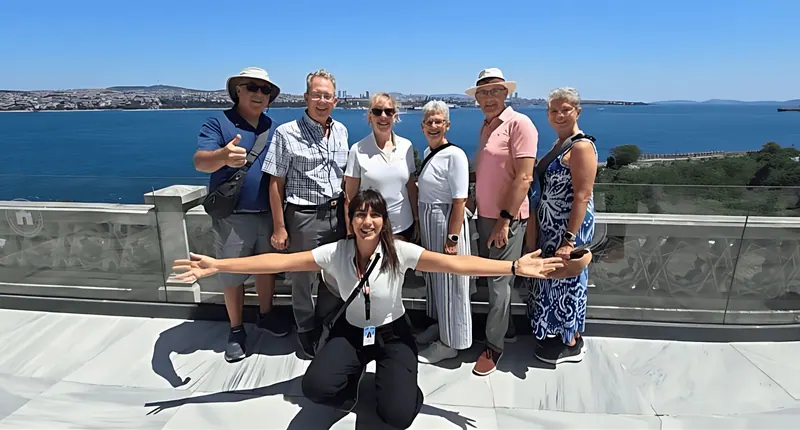
A visit to the Basilica Cistern takes 30 to 45 minutes and fits easily into a day in Sultanahmet, because the entrance is across the road from Hagia Sophia. One thing changed in 2026: since June the cistern has been run by Türkiye's General Directorate of Foundations instead of the city, so confirm the current foreign-visitor ticket price and the evening session times shortly before you go. On a guided day the guide handles the timing and explains what you are looking at underground. Our Basilica Cistern private tour with the ticket included pairs it with Topkapı Palace.
Tickets and who runs the cistern in 2026
The Basilica Cistern, known in Turkish as Yerebatan Sarnıcı, was run for years by an Istanbul Metropolitan Municipality company. In spring 2026 the title passed to the state General Directorate of Foundations. The site closed on 2 June 2026 for the handover and reopened on 6 June, with new visitor routes and renewed security systems. The legal dispute between the city and the foundations directorate has continued in the courts.
What this means for visitors:
- Ticket price. Foreign visitors pay an entrance fee set by the new administration. We could not confirm the current tariff from an official source, so check it at the ticket office or on the official channels a few days before your visit. Prices quoted on older websites date from the city's management.
- Turkish citizens have had separate pricing, including a period of free entry in June 2026, which is why you may see very low figures online. They do not apply to foreign visitors.
- Payment. Card payment was the norm under the previous operator. Carry a card rather than relying on cash.
- Passes. The Museum Pass Istanbul was not valid here under the city's management. If you hold a pass, ask before you queue.
On a guided tour, the ticket is either included or bought on the spot by your guide. Each tour page says which.
What you see underground
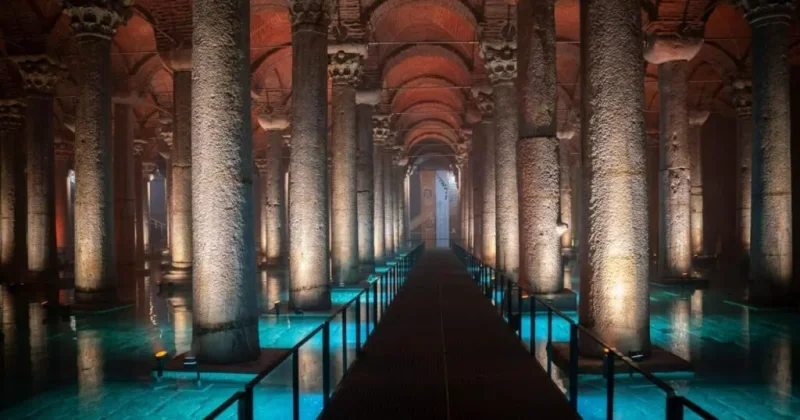
The cistern was built in the 6th century, under Emperor Justinian, to store water for the Great Palace and the buildings around it. Water came into the city from forests to the north through a long system of channels and aqueducts. It is the largest of the hundreds of Byzantine cisterns beneath Istanbul, roughly 140 metres long and 70 metres wide.
The highlights a guide points out:
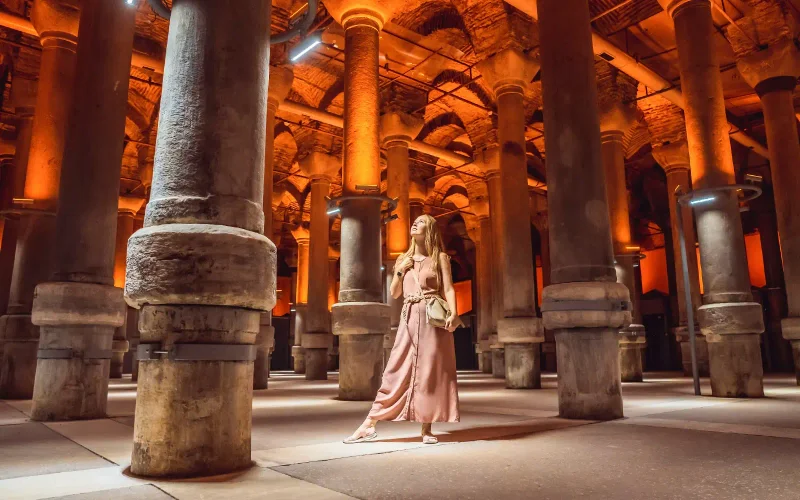
- The forest of columns. 336 marble columns in 12 rows hold up the brick vaults. Many were taken from older buildings, which is why their capitals do not match.
- The two Medusa heads. In the far corner, two carved heads of Medusa serve as column bases, one on its side and one upside down. Nobody knows for certain why they were placed that way, and a guide will give you the main theories.
- The "weeping" column. A column carved with tear-drop and eye shapes that is always damp. Local tradition links it to the slaves who died building the cistern.
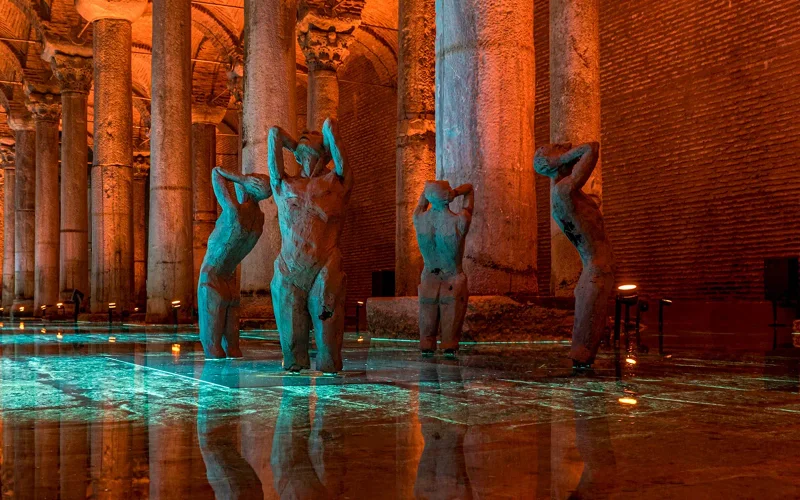
- Contemporary art. Since the 2022 restoration, sculptures and installations stand in the shallow water. Some pieces change over time.
- Lighting and sound. The interior is lit in shifting colours with background music, which makes it one of the most photographed places in the city.
The cistern was largely forgotten after the Ottoman conquest, until a French scholar in the 16th century noticed people drawing water and fish through holes in their basements. It later appeared in the James Bond film From Russia with Love and in Dan Brown's novel Inferno.
Day visit or evening visit?
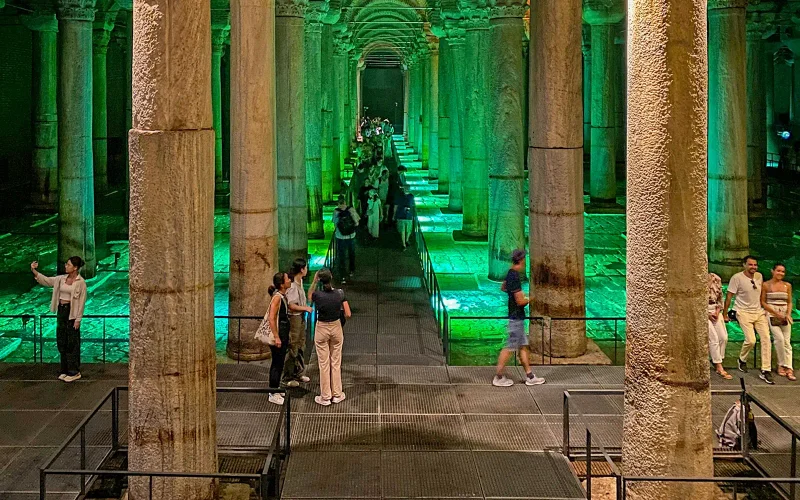
Under the city's management, the cistern ran a daytime session and a separate evening session at a higher price, sold at the ticket office. Whether and when the evening session runs under the new administration should be checked locally, because schedules were reorganised after the June 2026 handover.
| Daytime visit | Evening visit | |
|---|---|---|
| Crowds | Busiest from late morning to mid-afternoon | Usually fewer people |
| Atmosphere | Same lighting; daylight outside | Darker, quieter, better for photos |
| Best for | Combining with Hagia Sophia and Topkapı | A second Old City evening, after dinner |
| Planning | Easy to add to a guided day | Check that the evening session is running |
| With a guide | Part of most Old City days | Only on a private, tailor-made evening |
For most first-time visitors, a daytime visit as part of a guided Old City day works best. If you are staying in Sultanahmet, an evening visit is easy to do on your own after a guided day.
Getting the timing right
The cistern is underground and has had no weekly closing day, so it is the best stop to slot around closures elsewhere.
- Use it around prayer times. When Hagia Sophia and the Blue Mosque pause visitor entry for prayers, the cistern stays open. On Fridays, our guides often place it in the long midday prayer break.
- Tuesdays. Topkapı Palace is closed on Tuesdays, so the cistern often replaces it on a Tuesday itinerary.
- Early morning or late afternoon queues are usually shorter than at midday.
- Allow 30 to 45 minutes inside. With queueing and security, plan on about an hour.
- Bring a layer. The cistern stays cool and slightly damp all year. That is welcome in July and August and chilly in winter.
- Watch your step. The walkways are raised and well lit, but they can be slippery, and there are stairs at the entrance and the exit. Visitors with limited mobility should ask in advance about access.
Combining the cistern with the Old City
The cistern entrance is on Yerebatan Street, opposite Hagia Sophia and a few steps from the Sultanahmet tram stop. Everything in the historic core is within a ten-minute walk.
| Stop | Walking time from the cistern | Notes |
|---|---|---|
| Hagia Sophia | 2 minutes | Foreign visitors pay €25; prayer closures |
| Blue Mosque | 5 minutes | Free; closes at prayer times |
| Hippodrome | 5 minutes | Outdoors, always open |
| Topkapı Palace | 7 minutes | Closed on Tuesdays |
| Grand Bazaar | 15 minutes, or two tram stops | Closed on Sundays |
A typical full day with a private guide: Hagia Sophia at opening time, the Blue Mosque before the midday prayer, the cistern during the prayer break, lunch, then Topkapı Palace or the Grand Bazaar in the afternoon. The order changes on Fridays, Tuesdays and Sundays, which is where a guide earns their fee.
Is a guide worth it at the Basilica Cistern?
On its own, the cistern is easy to visit without a guide: the route is one-way, it is well signed and it takes less than an hour. Where a guide helps is the day around it.
- The story. Byzantine water engineering, Justinian's building programme and the reused columns make much more sense with someone explaining them.
- The order of the day. A guide fits the cistern into the gaps left by prayer closures and queues at the bigger sites.
- Tickets. On tours with the ticket included, you skip buying it yourself, which matters at a site where fees and rules have changed in 2026.
- Pace. On a private tour you set the speed and can stay longer for photos.
If you have only a few hours, a private half day covering Hagia Sophia, the Blue Mosque and the cistern is a good choice. See our page on choosing a private tour guide in Istanbul.
Tours that cover this
- Basilica Cistern Private Tour: Ticket Included, Topkapi Optional, from $150 per person.
- Istanbul Full-Day Historical Tour: Hagia Sophia, Topkapi, Grand Bazaar, from $161 per person.
- Istanbul Old City Private Tour: Hagia Sophia, Topkapi & Grand Bazaar, from $200 per person.
- Private Istanbul Tour with a Licensed Guide: 1, 2 or 3 Days, from $199 per group.
Check each tour page for the exact sites and what is included. For other ideas, see our Istanbul city tours.
Frequently Asked Questions
How much is the Basilica Cistern ticket in 2026?
The fee for foreign visitors is set by the General Directorate of Foundations, which took over the cistern in June 2026, and we could not confirm the current tariff from an official source. Check at the ticket office or on the official channels shortly before you go. Figures on older websites date from the previous city management.
Is the Basilica Cistern open now?
Yes. The cistern closed briefly on 2 June 2026 for the handover from the city to the General Directorate of Foundations and reopened at 09:00 on 6 June 2026. As the management change brought new routes and schedules, check the closing time, and especially any evening session, close to the day of your visit.
How long do you need at the Basilica Cistern?
Most visitors spend 30 to 45 minutes inside, walking the one-way route past the columns, the Medusa heads and the art installations. Add time for the queue and the security check, especially from late morning to mid-afternoon. In total, plan on about an hour, which makes it easy to combine with Hagia Sophia and the Blue Mosque.
Can you visit the Basilica Cistern at night?
Under the previous city management there was an evening session at a higher price than daytime entry, popular for its quieter atmosphere. After the June 2026 handover, check whether the evening session is running and at what times before you plan around it. A daytime visit remains the simplest option on a guided Old City day.
Is the Basilica Cistern worth visiting?
Yes, for most visitors. It is one of the largest surviving Byzantine structures in Istanbul, the visit is short, and the lit columns and Medusa heads are unlike anything else in the city. It is also open during prayer times, which makes it a useful stop when the nearby mosques are closed to visitors.
Where are the Medusa heads in the Basilica Cistern?
The two Medusa heads are at the far end of the visitor route, in the northwest corner of the cistern. They serve as bases for two columns, one placed sideways and one upside down. Both were probably reused from an older Roman building. Expect a short queue for photos at busy times.
Sources: Türkiye Today (June 2026) on the Basilica Cistern handover and reopening, Hurriyet Daily News on the court ruling for the General Directorate of Foundations, Bianet, Istanbul Foundations Regional Directorate notice on the Hagia Sophia visitor fee — checked 6 November 2026.
Private tours in Istanbul
Basilica Cistern Private Tour: Ticket Included, Topkapi Optional
Your own licensed guide takes you through the Basilica Cistern, entrance ticket included, and you can add Topkapi Palace or Hagia Sophia for a fuller day.
Istanbul Full-Day Historical Tour: Hagia Sophia, Topkapi, Grand Bazaar
Eight hours on foot in Sultanahmet with a guide, joining up Topkapi Palace, Hagia Sophia, the Hippodrome, the Blue Mosque and the Grand Bazaar, lunch included.
Related guides
- Baño Turco in Istanbul: Hammam Prices and What Each One Includes
- Best Istanbul Tours Compared: Price, Length and Who Each Suits
- Best Istanbul Tours for Spanish Speakers: Old City, Bosphorus, Prices
- Beylerbeyi Palace Tickets and Hours: Prices, Closing Days, Transport
- Birthday Yacht Party in Istanbul: Boat Sizes, Guests and Prices
- Blue Mosque Tour: Prayer Times, Dress Code and Hagia Sophia Next Door
- Bosnian, Croatian or Serbian-Speaking Guide in Istanbul
- Bosphorus Boat Trip for Brazilians: Prices in Reais and How to Choose
- Bosphorus Cross-Continental Swim 2027: Date, Entry and Race Week
- Bosphorus Cruise Options in Istanbul: Ferry, Lunch, Dinner, Sunset
- Bosphorus Cruise Today: Ferry Times, Piers and Ticket Prices
- Bosphorus Cruise for Chinese Travellers: Price Ladder and Routes