

Travel Tips6 November 202613 min read
What to Pack for Turkey by Season: Istanbul, Cappadocia and Coast
A packing list for Turkey by season and region, built on MGM weather data: layers for Cappadocia dawns, mosque clothes, Pamukkale's barefoot rule, plugs, medicines and a printable checklist.
In this article
- The one number per region that decides your bag
- Spring: March to May
- Summer: June to August
- Autumn: September to November
- Winter: December to February
- Mosques, ruins and Pamukkale: clothes and shoe rules
- Plugs, power and gadgets
- Medicines, documents and insurance
- The printable packing checklist
- Tours that cover this
- Frequently Asked Questions
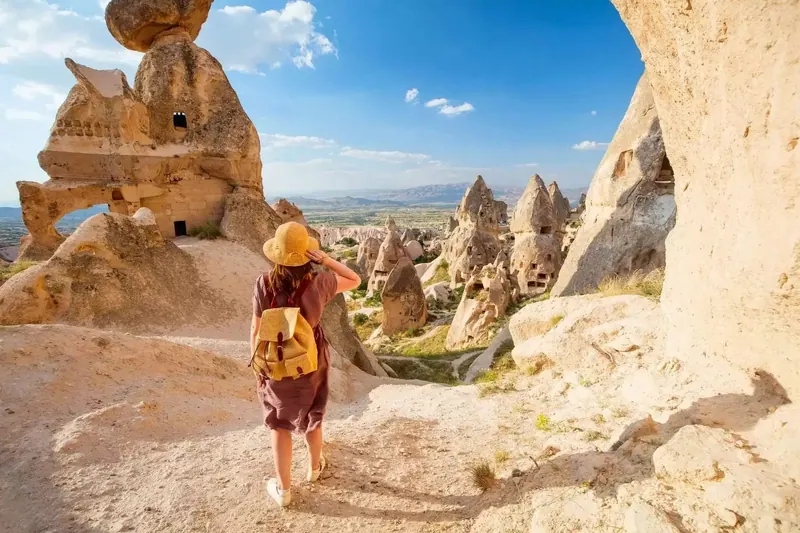
Pack for Turkey in layers rather than for a single season: even in July, the average overnight low in Cappadocia is under 14°C while the average afternoon high on the Antalya coast is 34°C, and in January Istanbul gets rain on about one day in two. One trip can cover all of that, so the right bag holds a warm layer, a light waterproof, one pair of broken-in walking shoes with grip, clothes that cover shoulders and knees for mosques, a Type C or F plug adapter and your medicines with their paperwork. Below is a season-by-season and region-by-region list built from long-term data of Turkey's State Meteorological Service (MGM), the rules that affect what you wear and carry, and a printable checklist. If you are joining our 10-day tour of Istanbul, Cappadocia, Pamukkale and Ephesus, this is the list we would pack.
The one number per region that decides your bag
Turkey's regions behave like different countries. Instead of a month-by-month weather table (our guide to the best time to visit Turkey has one), here is the figure from MGM's long-term statistics that most changes what you pack in each region.
| Region (MGM station) | The figure that matters | What it means for your bag |
|---|---|---|
| Istanbul | 16 rainy days in January on average; July average high 29.7°C | A waterproof layer from November to March; light but covering clothes in summer |
| Cappadocia (Nevşehir) | July average low 13.7°C against a high of 28.5°C; January low −3.6°C | A fleece or light down jacket for dawn in every season |
| Ephesus and the Aegean (İzmir) | July average high 33.3°C, with 0.45 rainy days | Sun hat, sunscreen and a refillable bottle; start early |
| Pamukkale (Denizli) | July average high 34.8°C | Sun protection and a bag to carry your shoes on the terraces |
| Antalya and the Mediterranean | July average high 34.2°C; December rainfall 250.9 mm, the wettest month | Swimwear in summer, a real rain jacket in winter |
| Black Sea (Trabzon) | Between 7.7 and 12.8 rainy days in every month of the year | A rain jacket whatever the season |
| Southeast (Şanlıurfa, for Göbekli Tepe) | July average high 38.8°C | Loose, light long sleeves and a hat |
The measurement periods differ by station, from 1927–2025 in Trabzon to 1959–2025 in Nevşehir. They are long-term averages, not forecasts, so check the forecast a week before you fly.
Spring: March to May
Spring is the season of mild days and cold mornings. In Istanbul, April averages 17.4°C by day and 9.2°C at night, with around 10 rainy days. In Cappadocia, April averages a high of 16.0°C and a low of 5.1°C, and MGM counts about 12 to 13 rainy days a month from March to May. On the Antalya coast, May averages 25.7°C by day.
Pack for spring:
- A light waterproof jacket that fits over a fleece.
- A fleece or thin down jacket for Cappadocia mornings and Istanbul evenings.
- Long trousers or a long skirt, and a couple of long-sleeved tops.
- Walking shoes with grip; valley paths in Cappadocia can be muddy after rain.
- A light scarf, which doubles as a mosque head covering.
- Sunglasses and sunscreen for the clear days.
If your trip ends on the coast in late May, add swimwear and sandals.
Summer: June to August
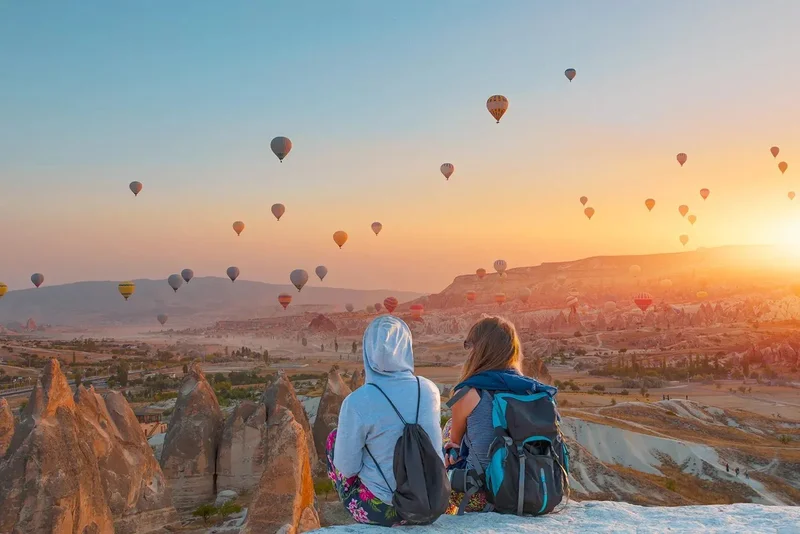
Summer is hot almost everywhere except at dawn in Cappadocia. Average July highs are 29.7°C in Istanbul, 33.3°C in İzmir, 34.2°C in Antalya, 34.8°C in Denizli near Pamukkale and 38.8°C in Şanlıurfa. In Nevşehir the average July high is 28.5°C but the average low is 13.7°C, which is what you feel at a balloon viewpoint before sunrise. Canada's travel advice, updated in September 2026, also notes that wildfires often occur in summer on the Mediterranean and Aegean coasts, so follow local instructions if you are near a fire.
Pack for summer:
- Breathable clothes in cotton or linen, including at least one outfit that covers shoulders and knees for mosques.
- A sun hat, sunglasses and high-factor sunscreen; you spend hours outdoors at Ephesus and Pamukkale.
- A refillable water bottle.
- Swimwear and a quick-dry towel for the coast or a gulet cruise.
- Sandals plus walking shoes; sandals alone are poor on ancient paving.
- A fleece for the Cappadocia dawn, even in July.
Autumn: September to November
Autumn starts as late summer and ends close to winter. In October Istanbul averages 20.6°C by day and 13.7°C at night; by November that drops to 16.1°C and 9.9°C, with about 11 rainy days. Cappadocia falls from an October average of 18.3°C by day and 6.8°C at night to 11.8°C and 2.5°C in November. The coast stays warmer longer: Antalya still has an average high of 26.6°C in October, but November brings 127.7 mm of rain.
Pack for autumn:
- In September, summer clothes plus a fleece.
- From October, a warm mid-layer and a waterproof jacket.
- From November, a proper warm jacket, hat and gloves for Cappadocia mornings.
- Swimwear for the coast until October; after that, a rain jacket is more useful.
- Shoes that cope with wet stone, because autumn rain returns in Istanbul.
Winter: December to February
Winter splits the country in two. Istanbul is cool and wet: January averages 9.6°C by day and 4.2°C at night, with about 16 rainy days. Cappadocia is properly cold: January averages 4.0°C by day and −3.6°C at night, and MGM's record snow depth in Nevşehir is 64 cm, measured in February 1992. Antalya stays mild, with a January average high of 15.0°C, but December and January are its wettest months, with 250.9 mm and 225.5 mm of rain on average. Our guide to Turkey in winter covers snow, skiing and winter opening hours in detail.
Pack for winter:
- A warm, waterproof jacket.
- A fleece or down layer you can take off indoors.
- Hat, gloves and scarf for balloon mornings, when you stand still outside before sunrise.
- Waterproof boots with grip for icy lanes in Cappadocia and wet stone in Istanbul.
- A compact umbrella for Istanbul.
Mosques, ruins and Pamukkale: clothes and shoe rules
Three places on a typical Turkey itinerary have rules that affect what you pack.
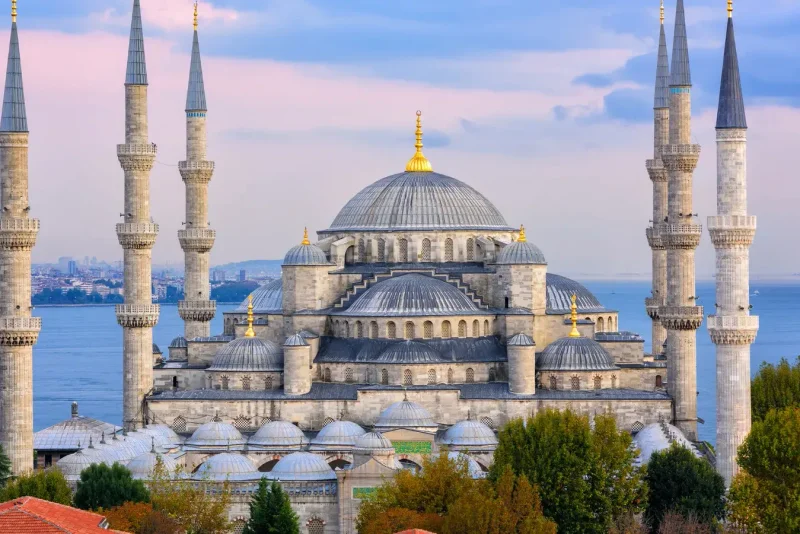
Mosques. The dress code is the same in mosques across Turkey, not only in Istanbul: Canada's travel advice states that "in all places of worship, women must cover their heads with a scarf and all visitors must cover their arms and legs". For your bag, that means one scarf and one pair of long trousers or a long skirt that fits in a daypack. Our guide on what to wear in Istanbul has the full dress code and how a visit works, and our Blue Mosque tour page covers prayer times.
Ruins. At Ephesus and Hierapolis you walk for a long time on ancient, uneven stone. Closed shoes with grip are better than sandals, and a hat matters more than at any city sight.
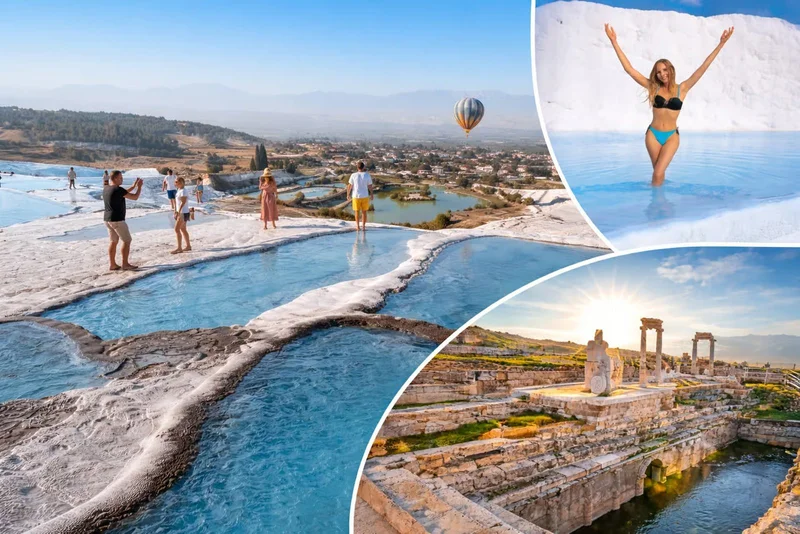
Pamukkale. On the white travertine terraces, shoes come off. GoTürkiye, the official tourism site, says most of the travertines are protected, that visitors may walk only in some areas with small pools, and that they must remove their shoes and socks before entering. Bring a light backpack or bag to carry your shoes, and swimwear if you plan to wade in the pools. See Pamukkale travertines and Hierapolis for the site itself.
Plugs, power and gadgets
Turkey uses the two-round-pin European plugs, types C and F, at 230 volts and 50 hertz, according to WorldStandards. If your plugs have two round pins, they will fit; UK, Irish, North American and Australian plugs need an adapter.
Voltage is the other question. Look at the small print on each charger: if it says "100–240 V", you need only the adapter. If a device is rated for 110–120 V only, it needs a voltage converter or should stay at home. A multi-port USB charger means one adapter can charge a phone, a camera and a watch overnight.
Drones. If you were planning to pack one, read the rules first. Under the drone instruction of Turkey's Directorate General of Civil Aviation (SHGM), in force since 30 July 2026, drones brought in by travellers must carry SHGM's compliance software before they can be registered or flown, and only toy drones that cannot fly beyond a 10-metre radius or above 20 metres are exempt from registration and licences. For most visitors, the drone is the one gadget to leave behind.
Medicines, documents and insurance
Prescription medicines. Turkey's Ministry of Trade says travellers bringing medicine for their own treatment must show customs a document stating that they need it during the trip, such as a report from a health institution, a doctor's report or a prescription. A Turkish embassy notice on the customs circular of 2011 adds that a reasonable quantity is allowed, judged against the length of your stay, that the document should state the medicine and the dose you need while in Turkey, and that the same applies to medicines with narcotic content.
Two warnings from foreign governments are worth acting on:
- Some medicines are controlled in Turkey. The UK government notes that some common medicines are controlled there and that British prescriptions are not accepted in Turkish pharmacies. Bring enough for the whole stay.
- Pack them properly. Canada advises keeping medicines in their original containers, carrying a copy of the prescription and packing them in your carry-on luggage, and warns that some prescription medicines may not be available in Turkey.
Documents. The UK government says it is illegal not to carry some form of photographic ID in Turkey, and Canada advises carrying the original, not just a photocopy or digital version, while keeping a digital copy in case it is lost. Check entry rules for your passport in our update on Turkey visa requirements.
Insurance. The UK government points out that the European Health Insurance Card and the Global Health Insurance Card are not valid in Turkey, and Canada advises travel insurance that covers medical evacuation and hospital stays, so pack your policy details. For everything else that is useful to know before a first visit, see our Turkey travel tips.
The printable packing checklist
Print this table or save it to your phone. "Yes" means pack it; a region name means pack it only if your route goes there.
| Item | Spring (Mar–May) | Summer (Jun–Aug) | Autumn (Sep–Nov) | Winter (Dec–Feb) |
|---|---|---|---|---|
| Passport or photo ID, plus a digital copy | Yes | Yes | Yes | Yes |
| Travel insurance details | Yes | Yes | Yes | Yes |
| Medicines in original packs, with prescription or doctor's letter | Yes | Yes | Yes | Yes |
| Type C or F plug adapter | Yes | Yes | Yes | Yes |
| Scarf for mosque visits (women) | Yes | Yes | Yes | Yes |
| Long trousers or long skirt | Yes | Yes | Yes | Yes |
| Walking shoes with grip | Yes | Yes | Yes | Waterproof boots |
| Light waterproof jacket | Yes | Black Sea | Yes | Warm waterproof coat |
| Fleece or light down layer | Yes | Cappadocia | Yes | Yes |
| Hat, gloves, warm scarf | Cappadocia, March | No | Cappadocia, November | Yes |
| Torch or headlamp for pre-dawn starts | Cappadocia | Cappadocia | Cappadocia | Cappadocia |
| Sun hat, sunglasses, sunscreen | Yes | Yes | Yes | Coast only |
| Refillable water bottle | Yes | Yes | Yes | Yes |
| Swimwear and quick-dry towel | Coast, late May | Yes | Coast, to October | Thermal pools only |
| Sandals or slip-ons | Optional | Yes | Optional | No |
| Light daypack (carries shoes at Pamukkale) | Yes | Yes | Yes | Yes |
| Compact umbrella | Istanbul | No | Istanbul | Istanbul |
Tours that cover this
- Istanbul, Cappadocia, Pamukkale and Ephesus Tour, 10 Days with Flights: from $1,410 per person, covering city, valley and ruins in one trip.
- 7-Day Turkey Highlights Tour with Fethiye Gulet Cruise and Flights: from $2,660 per person, for a route that ends on the coast.
- Cappadocia Tour Package 4 Days: Cave Hotel, Red Tour and Valleys: from $750 per person.
- Eastern Turkey and Black Sea Tour Package: 7 Days from Rize to Van: from $2,480 per person, where the rain jacket earns its place.
Frequently Asked Questions
What should I pack for Turkey in summer?
Pack light, breathable clothes, at least one outfit that covers shoulders and knees for mosques, a sun hat, sunglasses, sunscreen and a refillable bottle. Average July highs are 34.2°C in Antalya and 34.8°C near Pamukkale, so sun protection matters. Add swimwear for the coast, sandals plus proper walking shoes, and a fleece for Cappadocia, where the average July low is 13.7°C.
Do I need a jacket in Cappadocia in summer?
Yes, for the mornings. MGM's long-term data give Nevşehir an average July high of 28.5°C but an average low of 13.7°C, and balloon pickups and viewpoints happen before sunrise, when it is coldest. A fleece or light down jacket that packs small is enough in summer; from November to March you need a warm coat, hat and gloves.
What plug adapter do I need for Turkey?
Turkey uses European plug types C and F, with two round pins, at 230 volts and 50 hertz. Visitors from the UK, the US, Canada and Australia need an adapter. Check the label on each charger: one marked 100–240 V works with an adapter alone, while a device rated for 110–120 V only needs a voltage converter or should stay at home.
Can I bring prescription medicine into Turkey?
Yes, in a reasonable quantity for your stay. Turkey's Ministry of Trade asks travellers to show customs a document proving they need the medicine during the trip, such as a prescription or doctor's report. Keep medicines in their original packaging in your hand luggage, and bring enough for the whole trip, because the UK government notes that British prescriptions are not accepted in Turkish pharmacies.
Can I wear shoes on the Pamukkale travertines?
No. GoTürkiye says visitors must remove their shoes and socks before walking on the travertines, and only some areas with small pools are open to walkers, so you cross the terraces barefoot. Bring a light bag to carry your shoes, and swimwear if you plan to wade in the pools. Closed shoes are still useful for the ruins of Hierapolis above the terraces.
Should I carry my passport with me in Turkey?
Carry photo ID at all times. The UK government says it is illegal not to carry some form of photographic ID in Turkey, and Canada advises carrying the original document rather than only a photocopy or digital version. Keep a digital copy of your passport and travel documents separately, in case the original is lost or stolen.
Where does it rain most in Turkey in winter?
It depends on how you count. By volume, the Antalya coast is wettest: MGM's long-term averages give Antalya 250.9 mm of rain in December and 225.5 mm in January, on about 12 rainy days each month. Istanbul gets less rain, 99.2 mm in December, but on more days, about 16 in January. Pack a proper rain jacket for both, and waterproof boots with grip for Cappadocia's icy lanes.
Can I wear shorts in Turkey?
In our experience, shorts are fine in resorts, on the coast and in most city streets, but not inside mosques, where all visitors must cover their legs according to Canada's travel advice. If you plan a mosque visit on a hot day, carry long trousers or a wrap in your daypack, or wear light long trousers all day. Beachwear belongs on the beach and at the pool.
Sources: Turkish State Meteorological Service (MGM), long-term statistics for Istanbul, Nevşehir, İzmir, Denizli, Antalya, Trabzon and Şanlıurfa (mgm.gov.tr); Republic of Türkiye Ministry of Trade, customs guide on travellers' medicines (gumrukrehberi.gov.tr); Embassy of Türkiye in Belgrade, notice on medication rules under customs circular 2011/39 (mfa.gov.tr); GOV.UK Turkey travel advice, updated 27 October 2026; Government of Canada travel advice for Türkiye, updated 29 September 2026; WorldStandards, plug and voltage page for Turkey (worldstandards.eu); GoTürkiye press release on Pamukkale's spa and healing traditions (goturkiye.com); Directorate General of Civil Aviation, drone instruction SHT-İHA (web.shgm.gov.tr) — checked 6 November 2026.
Written by the Get Turkey Tours team: licensed local guides and trip planners based in Istanbul.
Leave a Comment
Our private tours
Istanbul, Cappadocia, Pamukkale & Ephesus Tour – 10 Days with Flights
Ten days from Istanbul to Cappadocia, Pamukkale and Ephesus and back, with 3 domestic flights, 9 hotel nights, transfers and guided touring days. Daily departures.
7-Day Turkey Highlights Tour with Fethiye Gulet Cruise & Flights
Istanbul, Cappadocia, Ephesus and Pamukkale in quick succession, followed by three days on a gulet along the coast from Fethiye to Kekova and Demre.
Related articles
 Travel Tips
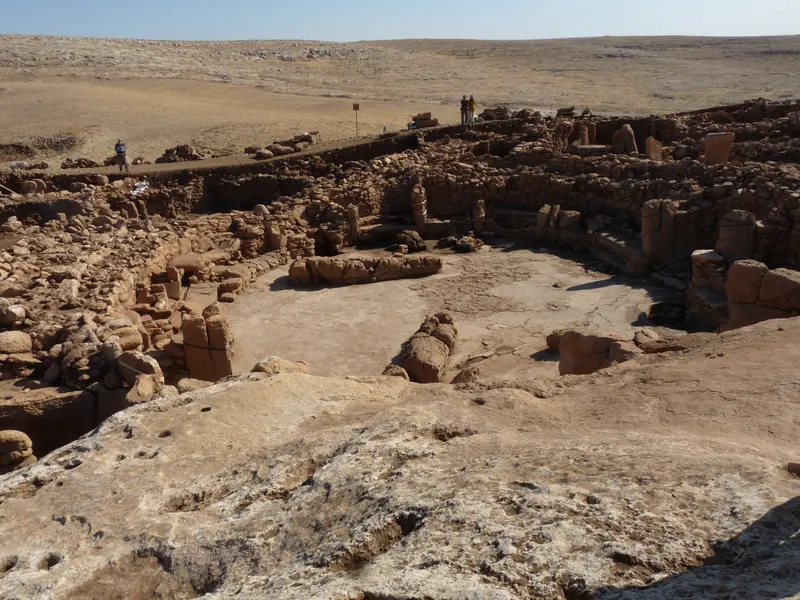
Karahan Tepe and Göbekli Tepe 2027: One-Day Plan, Tickets, Tours
Can you see Karahan Tepe and Göbekli Tepe in one day? Distances, the shared ticket and its 2027 price, Karahan Tepe's current closure, a day plan from Şanlıurfa and which tours include both.
Read More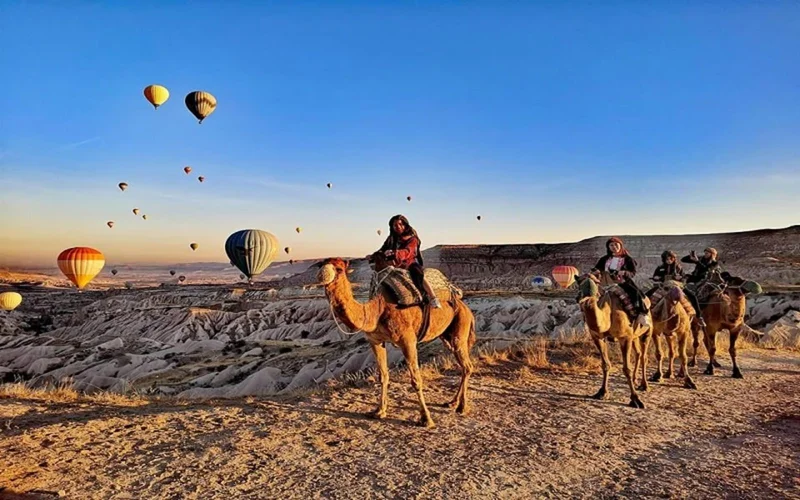 Travel Tips
Cappadocia with Kids: Balloon Age Limit, Family Cave Rooms, 3-Day Plan
The balloon age rule that operators actually publish, which cave rooms sleep a family of four, what children enjoy most and a 3-day family plan with real 2027 prices.
Read More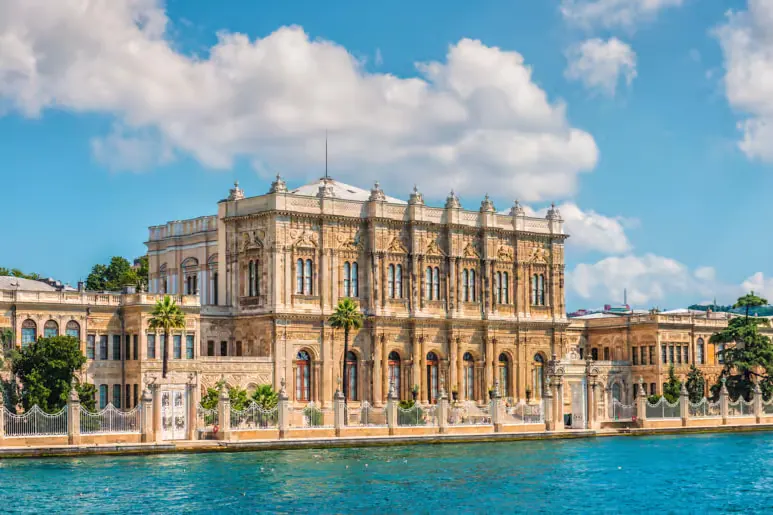 Travel Tips
Dolmabahçe Palace Tickets 2026-2027: Hours, Harem, Photo Rules
Official ticket prices and combined passes, 2027 closing days, what to see in the Selamlık and Harem, the new phone-photo rule, and three ways to pair the palace with a Bosphorus cruise.
Read More