

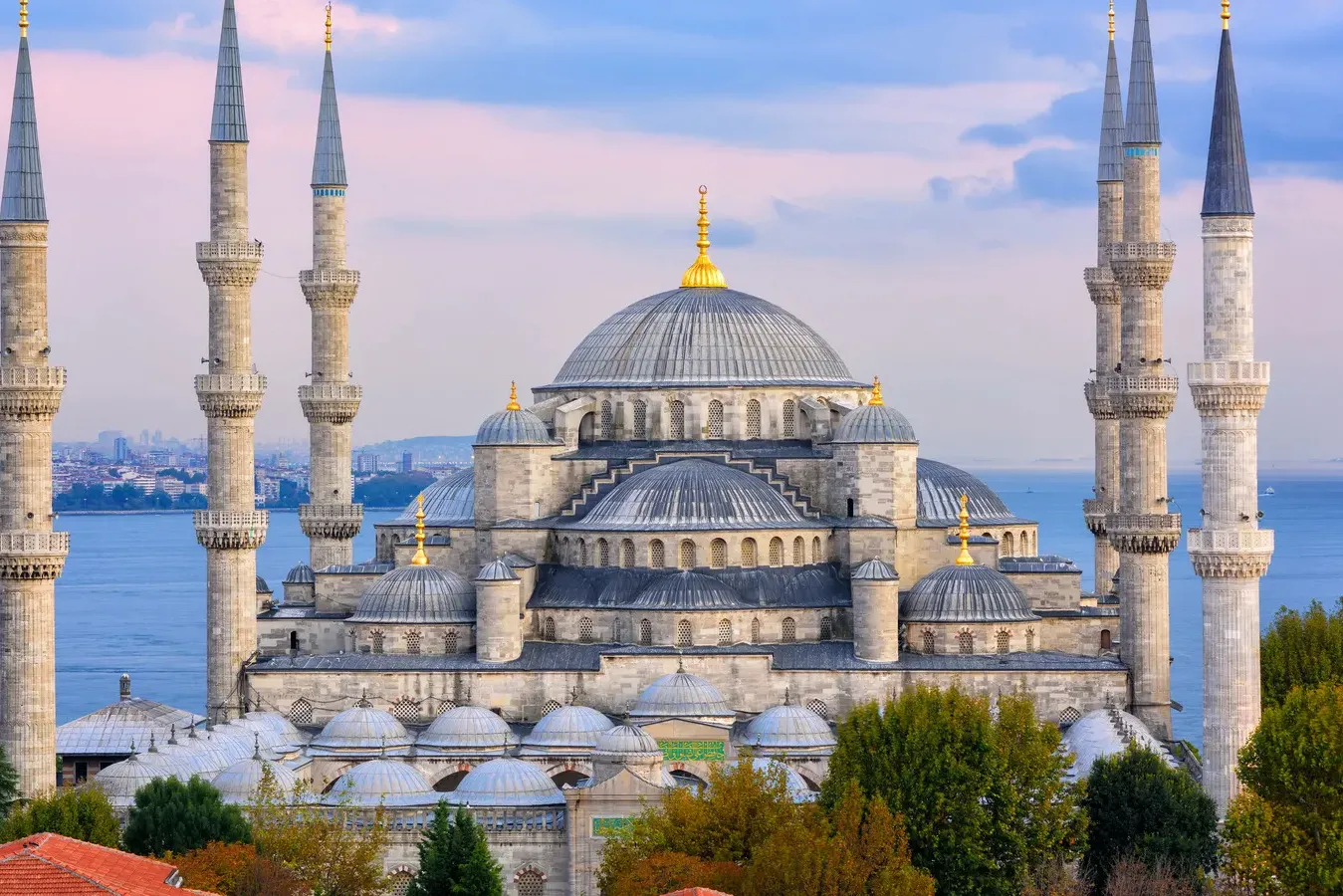
 Islamic heritage
Islamic History Tour of Istanbul: Eyüp Sultan, Companions, Relics
One long day or two easy days: Eyüp Sultan, the companions' graves at Ayvansaray, Topkapı's Holy Relics and the Ottoman mosques. Our 4-day Islamic package is from $768 per person.
Browse our tours
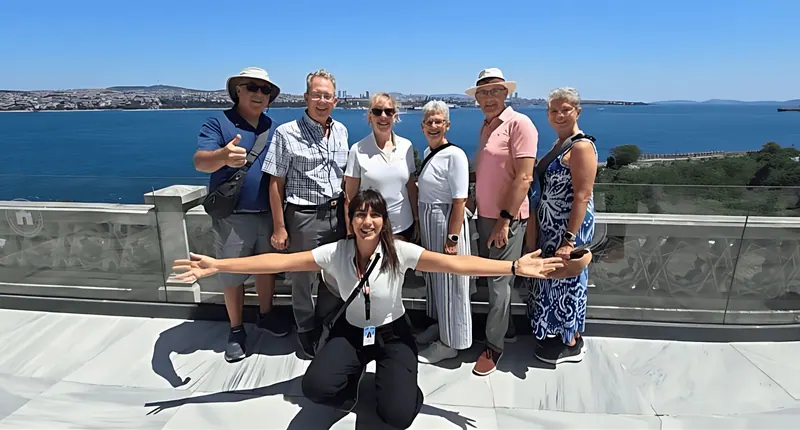
An Islamic history tour of Istanbul needs one long day or, better, two relaxed days: the tomb of Abu Ayyub al-Ansari at Eyüp, the companions' graves along the land walls at Ayvansaray, the Holy Relics in Topkapı Palace (closed on Tuesdays) and the great Ottoman mosques that came after 1453. The sites are spread across the old city and the Golden Horn, so most visitors use a guide and a car. Our Islamic Istanbul tour package covers this over four days, from $768 per person.
This page follows the story in order: why the early Muslims came to Constantinople, where the companions of the Prophet are remembered today, what you can see of the sacred relics, and how to fit it all into a day or two.
Why Constantinople mattered to the first Muslims
Constantinople, the Byzantine capital, drew Muslim armies within a few decades of the Prophet's death. Ottoman and earlier writers linked this to hadiths that foretold the city's conquest. According to the Istanbul Metropolitan Municipality's history project, companions such as Abdullah ibn Umar, Abdullah ibn Abbas and Abdullah ibn Zubayr took part in the sieges, and some of those who died were buried outside the walls.
Two Umayyad sieges stand out. The first, in the late 660s and 670s, is the one in which Abu Ayyub al-Ansari fell ill and died. The TDV Encyclopedia of Islam gives his death as 49 AH (669 CE), while noting that other sources give 670, 672 or 675. The second and larger siege came in 717-718. Neither took the city, but the graves of those who died there became places of visit, first for the Byzantines and later for the Ottomans.
When Sultan Mehmed II took the city in 1453, his teacher Akşemseddin identified the grave of Abu Ayyub. The tomb and the mosque complex around it were the first buildings the Ottomans raised in their new capital, which tells you how much the site meant to them.
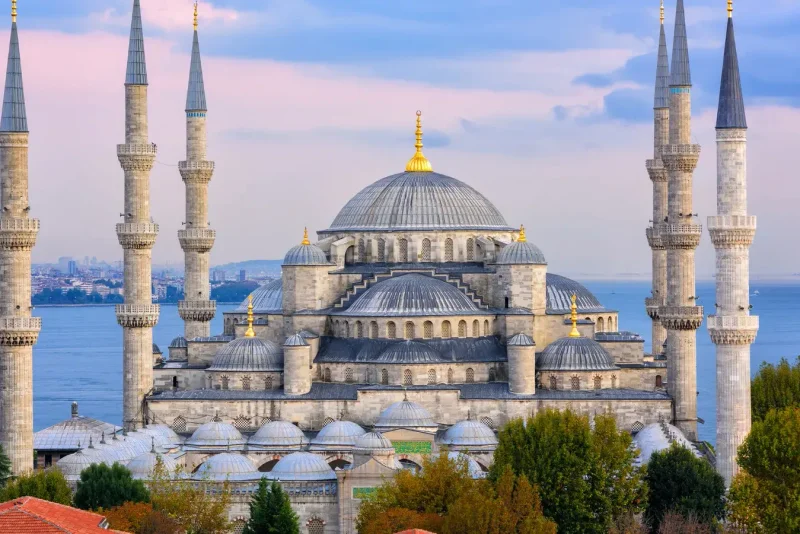
Eyüp Sultan: the tomb of Abu Ayyub al-Ansari
Abu Ayyub, Khalid ibn Zayd, is remembered in Turkish as Eyüp Sultan and as Mihmandar-ı Resul, the host of the Messenger, because the Prophet stayed in his house on arrival in Medina. His tomb stands in the courtyard of the Eyüp Sultan Mosque, at the top of the Golden Horn.
Why the site carries such weight:
- Ottoman ceremony. New sultans were girded with a sword here, an act that stood in for a coronation. Sultans visited before and after major events.
- Pilgrimage. Istanbul people going on Hajj traditionally visited the tomb before setting off, and the district around it was kept free of taverns and gambling houses.
- Daily life. It is still one of the busiest places of visit in the city, especially on Fridays, at weekends and during Ramadan.
Plan around 60 to 90 minutes for the tomb, the mosque and the square. Women need a headscarf, and everyone needs covered shoulders and knees. Visits to the tomb pause during prayers, and the queue can be long after Friday prayer. From Eyüp a cable car climbs to Pierre Loti hill for tea and a view over the Golden Horn; it is a good place to finish the day.
The companions' tombs along the walls
Eyüp is not the only grave of its kind. The municipality's history project counts almost 30 tombs and maqams (memorial tombs) linked to companions and to those who came with them. Some hold remains; others are symbolic, built where tradition places a death. Historians accept only a few as certain, and the two most firmly identified are Abu Ayyub at Eyüp and Abu Shayba al-Khudri at Ayvansaray.
| Site | Who is remembered | Area | What to know |
|---|---|---|---|
| Eyüp Sultan tomb | Abu Ayyub al-Ansari | Eyüp | The best-known companion grave in the city |
| Tokludede cemetery ("sahabeler haziresi") | Abu Shayba al-Khudri; also Hamidullah al-Ansari, Ahmad al-Ansari, Muhammad al-Ansari and Ka'b | Ayvansaray, inside the land walls | Abu Shayba, reported as the Prophet's foster brother, died during the siege aged about 85-90 |
| Maqam in the Karabaş quarter | Abu Dhar al-Ghifari | Ayvansaray | A memorial tomb, not a confirmed grave |
| Maqam near the Chora | Abu Sa'id al-Khudri | Edirnekapı | Close to the Chora Church |
| Atik Mustafa Pasha (Jabir) Mosque | A companion named Jabir | Ayvansaray | The tomb lies under the minbar of a converted Byzantine church |
| Karaköy Underground Mosque | Amr ibn al-As and Abdurrahman-ı Şami (maqams) | Karaköy | A small mosque below street level, near the waterfront |
Ayvansaray is a quiet, residential corner where the land walls meet the Golden Horn, between Balat and Fener and Eyüp. The graves are small and modestly marked, often behind a gate in a courtyard, so a guide who knows where each one is saves a lot of searching. Sultan Mahmud II had most of them restored in the 19th century, and the calligraphic plaques on many doors date from that work.
The Holy Relics at Topkapı Palace
The single most important collection of relics associated with the Prophet is kept in Topkapı Palace. After Sultan Selim I conquered Egypt in 1517, the relics were brought to Istanbul, and the palace's former Privy Chamber is now the Apartment of the Holy Relics.
Among the pieces on display are:
- the Holy Mantle (Hırka-i Saadet), kept in a gold chest in the Chamber of the Holy Mantle;
- swords attributed to the Prophet and to the early caliphs;
- hairs from the Prophet's beard (Sakal-ı Şerif), a tooth broken at the Battle of Uhud, a letter and a footprint attributed to him.
The Qur'an is recited in the chamber during opening hours, a tradition that goes back to Selim I's reign.
Practical points, from the National Palaces Administration, which runs the palace:
- Closed on Tuesdays. Ticket offices open at 09:00 and close at 17:00.
- Ticket. Foreign visitors pay 2,750 TL for the combined ticket, which includes the Harem and Hagia Irene.
- Crowds. The relics rooms are small and fill quickly by late morning. Go first, then see the rest of the palace.
Our Topkapı Palace guided tour page explains the palace route in more detail.

The Holy Mantle at the Hırka-i Şerif Mosque
A second mantle, traditionally the one the Prophet left to Uwais al-Qarani, is kept in the Hırka-i Şerif Mosque in the Fatih district, where it has been since 1851. It is not on permanent display. The mosque opens it to visitors during Ramadan only.
In 2026 the viewing opened on the first Friday of Ramadan, 20 February, and ran through the month. Ramadan 1448 is expected to begin in early February 2027, subject to the official announcement. If your trip falls in Ramadan:
- Expect queues that grow longer in the second half of the month, and very long on the Night of Power.
- Turkish reports say elderly, disabled and sick visitors are allowed in with a companion without queueing.
- Opening hours were reported differently by different sources in 2026, so check the announcement of the Fatih mufti's office or the Hırka-i Şerif foundation the week you go.
Outside Ramadan, the mosque is still worth a short stop for its Ottoman architecture, and it is a few minutes' drive from the Fatih Mosque, where Mehmed II is buried.
Ottoman mosques that complete the story
The conquest of 1453 turned a Byzantine city into an Ottoman Muslim capital, and its mosques show that change in stone. On an Islamic history day, these are the ones that matter most:
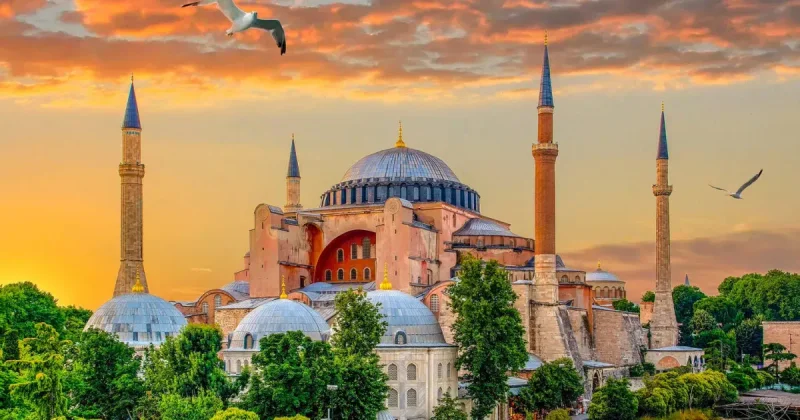
- Hagia Sophia. A cathedral for nine centuries, converted to a mosque in 1453 and a working mosque again today. Foreign visitors pay for the upper-gallery visit; see our Hagia Sophia ticket price update.
- Fatih Mosque. Built for Mehmed II on one of the city's hills, with his tomb behind the prayer hall.
- Süleymaniye Mosque. Mimar Sinan's masterpiece for Süleyman the Magnificent, with the tombs of the sultan and Hürrem Sultan in the garden.
- Blue Mosque. The Sultan Ahmed Mosque, facing Hagia Sophia across the square.
- Rüstem Pasha Mosque. Small, above the market streets, covered inside with İznik tiles.
For the art of the period, the Turkish and Islamic Arts Museum on the Hippodrome holds carpets, Qur'an manuscripts and woodwork from across the Islamic world. Our Istanbul mosques tour covers visiting etiquette and the architecture of the main mosques in more depth.
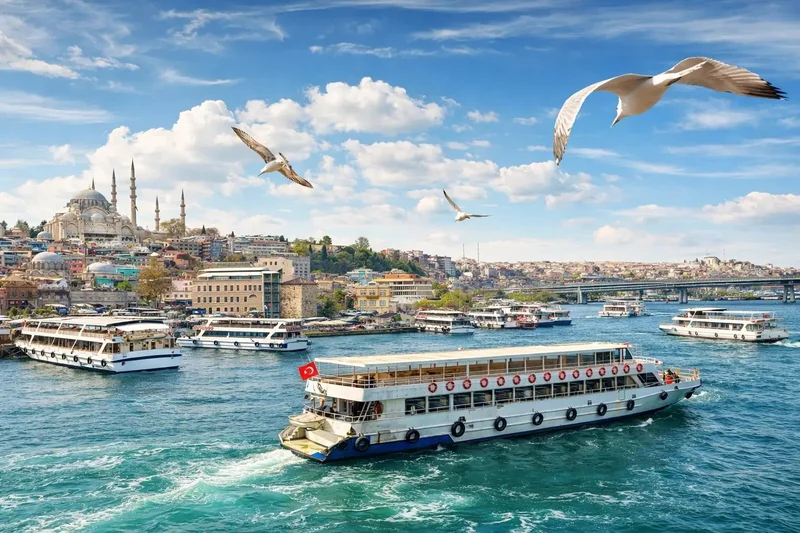
A one-day and a two-day route
One long day (not a Tuesday):
- 09:00 Topkapı Palace, Holy Relics first, then the courtyards.
- 11:30 Hagia Sophia and the Blue Mosque, timed around the midday prayer.
- 13:30 Lunch near the Grand Bazaar, then the Süleymaniye Mosque and Sinan's tomb.
- 16:00 Drive along the Golden Horn to Ayvansaray for Abu Shayba al-Khudri's grave.
- 17:00 Eyüp Sultan for the tomb and the evening atmosphere, then Pierre Loti hill.
Two days at an easier pace:
- Day 1: Topkapı and the relics, Hagia Sophia, the Blue Mosque and the Turkish and Islamic Arts Museum, all within walking distance in Sultanahmet.
- Day 2: Fatih Mosque, the Hırka-i Şerif Mosque, the companions' graves at Ayvansaray and the Atik Mustafa Pasha Mosque, then Eyüp Sultan for the afternoon prayer and Pierre Loti.
With a third day, take the ferry across the Marmara to Bursa, the first Ottoman capital, on our Bursa day trip, from $90 per person.
Practical notes for visitors
- Prayer times. Every working mosque closes to sightseers during the five prayers, and for longer around Friday midday prayer. If you want to pray, a guide can plan the route so you reach a mosque at prayer time, with time for ablutions.
- Dress. Women cover their hair, arms and legs; men wear long trousers. Shoes come off at the door, so slip-on shoes help on a day with eight or nine mosques.
- Distances. Sultanahmet, Fatih, Ayvansaray and Eyüp are spread along the old city and the Golden Horn. Walking between all of them is not realistic in one day; a car with driver saves hours, especially for older family members.
- Fridays and Ramadan. Eyüp is very crowded on Friday and in Ramadan evenings, when families come to break the fast near the mosque. It is a special time to be there, but plan extra time.
- Language. Our private tours are guided in English as standard. An Arabic-speaking guide, or another language, is arranged on request, subject to availability; see our Arabic-speaking guide page.
Families from the Gulf will find more on flights, halal food and family planning in Istanbul for Gulf travellers. For private city tours from an Istanbul-only team, our sister site Get Istanbul Tours is another option.
Tours that cover this
- Islamic Istanbul Tour Package: 4 Days, Private Guided Heritage Tours: from $768 per person. The full programme, with Eyüp, the old city mosques and Topkapı.
- Istanbul Private Driver Tour: Mercedes Vito for 8 Hours, 1-6 Guests: from $299 per group. Car and driver for the Golden Horn day, linking Fatih, Ayvansaray and Eyüp.
- Private Istanbul Tour with a Licensed Guide: 1, 2 or 3 Days: from $199 per group. Build your own route with a guide.
- Topkapı Palace Afternoon Tour with Harem and Treasury: from $88 per person. A shorter option focused on the palace.
More faith-based ideas are on our religious tours page and in the Istanbul destination guide.
Frequently Asked Questions
Which companions of the Prophet are buried in Istanbul?
The best-known is Abu Ayyub al-Ansari, buried at Eyüp. Abu Shayba al-Khudri lies at Ayvansaray, inside the land walls. Around 30 tombs and memorial tombs are linked to companions and their followers, including Hamidullah al-Ansari, Abu Dhar al-Ghifari and Abu Sa'id al-Khudri, but historians regard many as symbolic rather than confirmed graves.
How long does an Islamic history tour of Istanbul take?
One long day covers the essentials: Topkapı's Holy Relics, Hagia Sophia, the Blue Mosque, the Süleymaniye, Ayvansaray and Eyüp Sultan. Two days are better, because the sites are spread out and prayer times pause visits. With a third day you can add Bursa, the first Ottoman capital, across the Sea of Marmara.
Can you see the Prophet's mantle in Istanbul?
Yes. The Holy Mantle is on display all year in the Chamber of the Holy Mantle at Topkapı Palace, which is closed on Tuesdays. A second mantle, at the Hırka-i Şerif Mosque in Fatih, is shown to visitors only during Ramadan. In 2026 the viewing opened on the first Friday of Ramadan.
When did Abu Ayyub al-Ansari die?
He died during the first Arab siege of Constantinople. The TDV Encyclopedia of Islam gives 49 AH, or 669 CE, and notes that other sources give 670, 672 or 675. His grave was identified after the Ottoman conquest of 1453 by Akşemseddin, Mehmed II's teacher, and a tomb and mosque were built around it.
How much is the Topkapı Palace ticket?
Foreign visitors pay 2,750 TL for the combined ticket, which covers the palace, the Holy Relics rooms, the Harem and Hagia Irene, according to the National Palaces Administration. The palace is closed on Tuesdays, and the ticket offices are open from 09:00 to 17:00. Prices are set in lira, so check them shortly before you travel.
What should I wear to visit Eyüp Sultan and the mosques?
Women should cover their hair, shoulders, arms and legs, and men should wear trousers below the knee. Shoes come off at the entrance, and plastic bags are usually provided. Loose, comfortable clothing and easy shoes help on a day with many mosque visits. Scarves are sometimes available at the larger mosques, but bring your own.
Is Eyüp Sultan busy on Fridays?
Yes, Eyüp is at its busiest on Fridays, at weekends and in the evenings during Ramadan. The tomb closes to visitors during prayers, and the queue after Friday prayer can be long. For a calm visit, go on a weekday morning. For the atmosphere, go on a Ramadan evening, but allow extra time.
Can I get an Arabic-speaking guide for this tour?
An Arabic-speaking guide can be arranged on request, subject to availability on your dates. Our tours are guided in English as standard, so tell us early which language you need. If no guide in that language is free, we let you know before you pay and offer an English-speaking guide instead.
Do I need a car, or can I use public transport?
The Sultanahmet sights are within walking distance of each other, but Fatih, Ayvansaray and Eyüp are spread along the Golden Horn. Buses and ferries reach them, but changes take time. With elderly relatives or children, a private car with driver is far easier and lets you stop at each grave without searching.
Sources: Istanbul Metropolitan Municipality, History of Istanbul project, "The Sahabah in Istanbul" (istanbultarihi.ist); TDV Encyclopedia of Islam, "Ebû Eyyûb el-Ensârî" (islamansiklopedisi.org.tr); National Palaces Administration, Topkapı Palace visitor information and ticket prices (millisaraylar.gov.tr); Daily Sabah on the Topkapı Qur'an recitation tradition; Milliyet, Habertürk and Türkgün on the 2026 Hırka-i Şerif viewing — checked 6 November 2026.
Private tours in Istanbul
Islamic Istanbul Tour Package: 4 Days, Private Guided Heritage Tours
A private 4-day Istanbul package focused on Islamic heritage: Eyup Sultan, the Sahaba sites, Suleymaniye Mosque, Hagia Sophia and Topkapi Palace, with 3 hotel nights.
Bursa & Uludag Tour from Istanbul: Ferry, Cable Car & Lunch
Take the ferry over the Sea of Marmara for a day in Bursa, with a cable car ride towards Uludag, visits to Bursa's Green Mosque and Green Tomb, a local lunch and time of your own.
Related guides
- Istanbul 10-Day Itinerary: City Days, Day Trips and Cappadocia
- Istanbul 3-Day Itinerary: A Realistic Plan for First-Time Visitors
- Istanbul 4-Day Itinerary: Old City, Bosphorus, Balat and Kadıköy
- Istanbul 5-Day Itinerary with a Day Trip to the Islands or Bursa
- Istanbul 7-Day Itinerary: A Week with Princes' Islands and Bursa
- Istanbul Airport Car Rental: Desks, Documents and Driving Tips
- Istanbul Airport Meet and Greet: How the Name-Sign Pickup Works
- Istanbul Airport Minibus for Families and Groups: Seats, Bags, Price
- Istanbul Airport Private Transfer: IST and SAW Prices, Times, Pickup
- Istanbul Airport Shuttle: Havaist Lines, Stops and How to Pay
- Istanbul Airport Taxi: How Fares Work, Taxi Types and Tips
- Istanbul Airport Transfer Price: What It Costs and Why It Varies