

جولات & تجارب6 نوفمبر 202614 دقيقة قراءة
الإفطار التركي في إسطنبول: ما يُقدَّم على المائدة وأين تذهب
ما يُقدَّم على مائدة الإفطار التركي، من القشطة والمنمن إلى السميط وبوريك الماء، وكيف تُرتب مائدة سربمة، وأين تجلس في إسطنبول بمفردك، منطقة بمنطقة.
في هذا المقال
- What is on a Turkish breakfast table
- Eggs in the pan: menemen, sucuk and çılbır
- Kaymak, honey and the sweet end of the table
- Bread, simit and börek
- Serpme or à la carte: two ways to order
- Tea all morning, coffee afterwards
- Where to have breakfast in Istanbul, by area
- How to plan a breakfast morning
- Tours that cover this
- Frequently Asked Questions
A Turkish breakfast, kahvaltı, is not one dish but a table of small ones: white cheese and yellow kaşar, olives, tomatoes and cucumbers, honey with kaymak cream, jams, eggs cooked in a two-handled pan, bread or simit, and black tea poured again and again. In Istanbul you eat it in one of two ways, as a spread laid out for the whole table, called serpme, or as a few plates ordered one by one. Either way it is a slow meal, and at weekends it can last for hours. If you would like a local to take you through the city's food in one go, our six-hour Istanbul street food tour, from $90 per person, visits local neighbourhoods for tastings, baklava and coffee.
Breakfast on the move, the simit, börek and açma you buy from carts and bakeries, is covered in our Istanbul street food guide. This page is about the sit-down version: what each plate is, how to order, and where in the city to sit down for it.
What is on a Turkish breakfast table
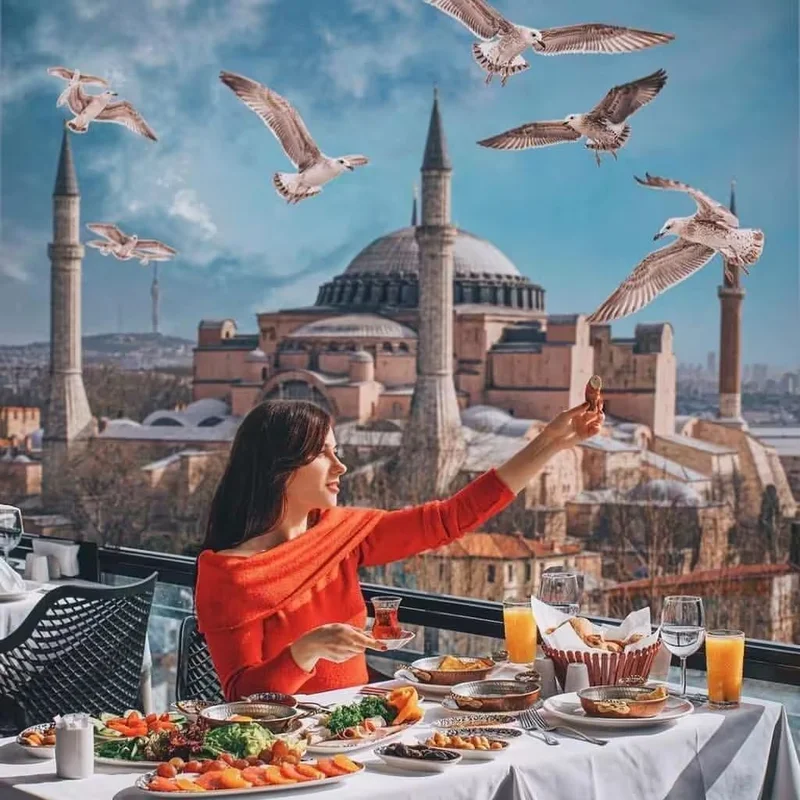
No two tables are identical, but the same core plates turn up across the city. These are 15 you will meet on menus, with the Turkish name to point at.
| On the table | Turkish name | What it is |
|---|---|---|
| White cheese | beyaz peynir | Soft, salty brined cheese; "Ezine" on a menu is a named type |
| Yellow cheese | kaşar | Firm yellow cheese, served fresh (taze) or aged (eski) |
| Tulum and braided cheese | tulum, örgü peyniri | A crumbly, sharp cheese and a braided string cheese |
| Olives | zeytin | Black and green, often both on one plate |
| Fresh vegetables | söğüş | Sliced tomatoes, cucumbers and green peppers |
| Honey and cream | bal kaymak | Thick cream skimmed from slow-cooked milk, eaten with honey |
| Jam | reçel | Fruit preserves, often homemade (ev reçeli) |
| Butter | tereyağı | Served with the honey or with the bread |
| Eggs with tomato and pepper | menemen | Eggs cooked with tomatoes and green peppers in olive oil |
| Eggs with sausage | sucuklu yumurta | Eggs cooked in the pan with slices of spiced sucuk sausage |
| Eggs with cured beef | pastırmalı yumurta | Eggs cooked with pastırma, a dried, spice-coated beef |
| Poached eggs on yoghurt | çılbır | Poached eggs on garlicky yoghurt with spiced butter |
| Cheese and cornmeal | mıhlama or kuymak | Melted cheese and cornmeal with butter, from the Black Sea |
| Pastry | börek | Layered pastry with cheese or minced meat |
| Sesame bread ring | simit | The city's bread ring, eaten with tea, jam or cheese |
Tea is the sixteenth item and the one that keeps being refilled: Turkish tea comes with breakfast as a matter of course.
Eggs in the pan: menemen, sucuk and çılbır
The hot dishes arrive in a sahan, a small two-handled pan, and are eaten straight from it with bread.
Menemen is eggs scrambled with tomatoes, green peppers and spices in olive oil. Whether it should contain onions is a running national argument. When the food critic Vedat Milor put it to his followers in a Twitter poll in 2018, 437,657 people voted and the onion side won with just 50.6 per cent, so the question is still open. If you have a view, ask "soğanlı mı?" (with onions?) when you order.
Sucuklu yumurta and pastırmalı yumurta are eggs cooked with sliced sucuk sausage or pastırma, the cured beef, in the same small pan. They are the meat dishes of the table.
Çılbır is poached eggs on yoghurt, usually flavoured with garlic and topped with melted butter infused with red pepper. It makes a good second hot dish to share.
Mıhlama, also called kuymak, is cornmeal and cheese cooked with butter. It comes from the Black Sea region and is eaten with bread and a spoon. Order it to share, because it is rich.
For two people, one hot pan plus the cold plates is usually plenty; add a second pan only if you are still hungry when the first is gone.
Kaymak, honey and the sweet end of the table
Kaymak is the thick cream that makes a Turkish breakfast feel like a treat. The traditional method is to boil raw milk slowly, simmer it for about two hours over very low heat, then skim off the cream and leave it to chill for several hours or days. It can be made from the milk of water buffalo, cows, sheep or goats, and Afyonkarahisar in western Turkey is known for a water-buffalo kaymak. Some Istanbul menus list manda kaymağı (water-buffalo kaymak) and köy kaymağı (village kaymak) separately.
It is eaten as bal kaymak: a spoon of kaymak on bread with honey poured over the top. The rest of the sweet end of the table is homemade jam and butter. Locals mix and match: cheese and olives in one bite, kaymak and honey in the next, which is part of the point of having everything on the table at once.
Bread, simit and börek
Bread comes in a basket, and the most Istanbul thing in it is the simit, a ring of bread crusted with sesame seeds. It has a long history here. Simit has been produced in Istanbul since 1525, its weight and price were standardised in Üsküdar in 1593, and the Ottoman traveller Evliya Çelebi counted 70 simit bakeries in the city in the 1630s. It is still eaten the same way, with tea, jam or cheese.
Börek is layered pastry with a filling, and two kinds you will see on breakfast menus are su böreği, soft layers with cheese or minced meat, and kol böreği, a rolled version. Karaköy Güllüoğlu, a baklava house run by a family that has made baklava since 1843, lists several kinds of su böreği, including mince and spinach versions, next to its baklava.
Pişi, small pieces of fried dough, are another breakfast extra. Eat them hot with cheese or jam.
Serpme or à la carte: two ways to order
Serpme kahvaltı. The name comes from the verb serpmek, to scatter or sprinkle, and that is the idea: many small plates are spread across the table at once, and you help yourself. A serpme is ordered for the table and normally priced per person. It is the choice for a long weekend breakfast with a group, and it lets you try everything without knowing the names.
À la carte. The alternative is to order plate by plate. Sütiş, a dairy-restaurant chain with branches across Istanbul, is a good example of the style: its menu lists honey and kaymak, two kinds of kaymak, Ezine white cheese, aged and fresh kaşar, tulum and braided cheese, a plate of fresh vegetables, homemade jams, boiled, fried, sucuk, pastırma and kavurma eggs, eight kinds of menemen, mıhlama, kol and su börek, simit and a bread basket, each as a separate item.
Before you order a serpme, check three things:
- Whether the hot dishes are included. Ask whether a pan of eggs comes with the spread or is ordered separately.
- Whether tea is unlimited. Ask "çay dahil mi?" (is tea included?).
- How many people the price is for. Menus show the price per person, and the plates arrive sized for the table.
With a small appetite, or when travelling alone, à la carte is usually the better choice.
Tea all morning, coffee afterwards
The word kahvaltı is built from kahve (coffee) and altı (under or before): it is the food you eat before coffee. The idea goes back to an Ottoman habit of eating something to line the stomach before drinking coffee, which was taken after meals rather than with them. Ottoman households ate two meals a day, a mid-morning meal and an early evening one, and the many-plate breakfast of today took shape later, when cafés, tea gardens and breakfast restaurants made it a standard format in the twentieth century.
So the drink on the table is tea, not coffee: strong black tea in small tulip-shaped glasses, refilled through the meal. If you want a Turkish coffee, have it at the end. Our guide to Turkish coffee and tea in Istanbul explains how to order both.
Where to have breakfast in Istanbul, by area
Breakfast places are spread across the city, so the most practical choice is usually the one closest to what you are doing that day. The table pairs six areas with a named place or spot to look for and a sight to visit afterwards.
| Area | What you will find | Where to look | Pair it with |
|---|---|---|---|
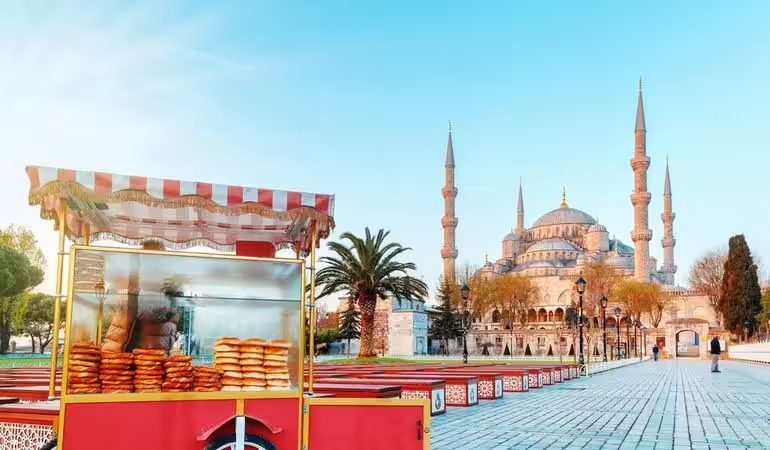
| Sultanahmet | Simit carts, hotel roof terraces | Simit carts on Sultanahmet Square | Hagia Sophia and the Blue Mosque |
| Karaköy | Börek and baklava by the ferry piers | Karaköy Güllüoğlu, Kemankeş Caddesi 67 | Galata, then a ferry |
| Beşiktaş | A market quarter of cafés and bakeries | Sütiş Akaretler | Dolmabahçe Palace |
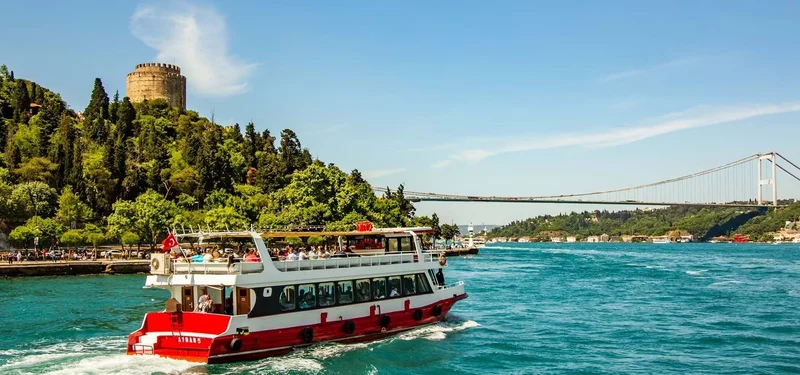
| Emirgan | A Bosphorus village below a large hillside park | Sütiş Emirgan, Sakıp Sabancı Caddesi | Emirgan Park, Rumeli Fortress |
| Çengelköy | An Asian-shore village on the water | Sütiş Çengelköy | Beylerbeyi Palace |
| Kadıköy and Moda | A large food market and the streets around it | Kadıköy market by the Osman Ağa Mosque | The Moda seafront, the ferry back |
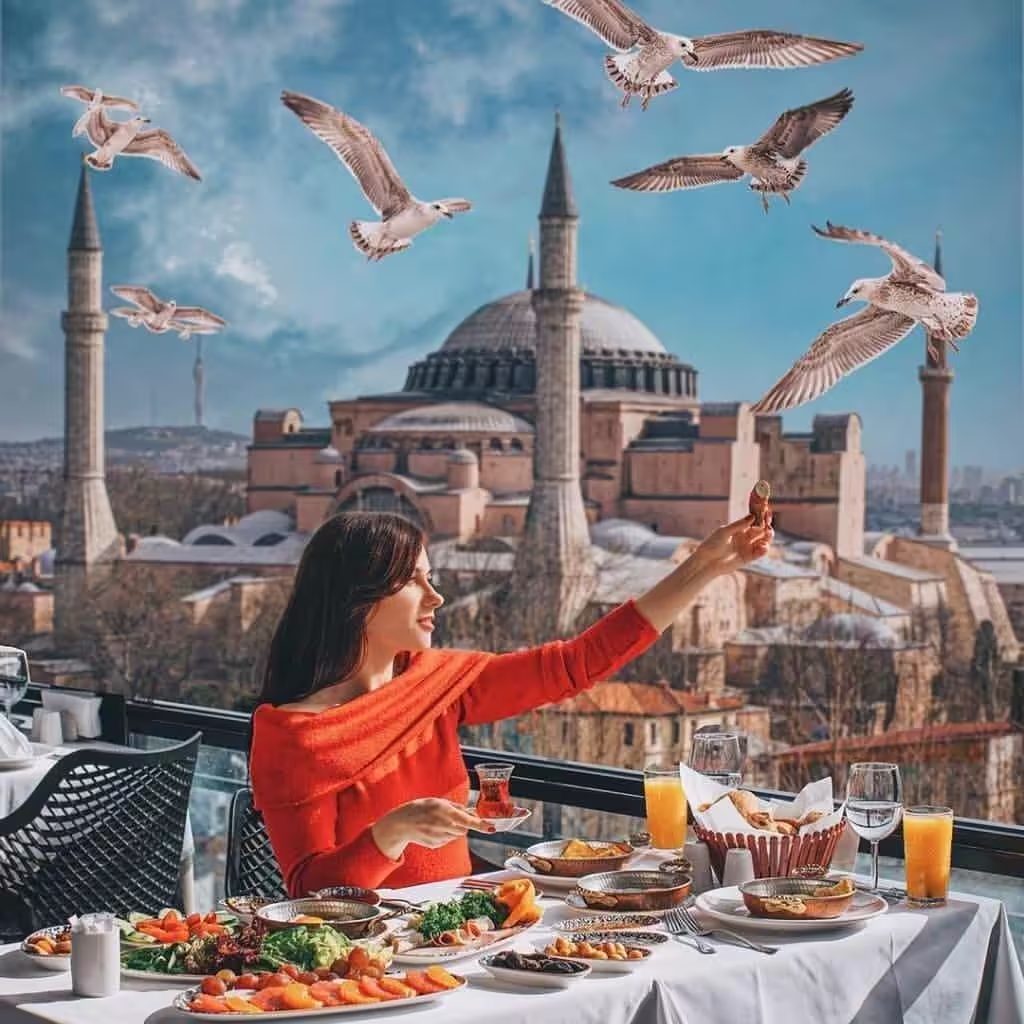
Sultanahmet and the old city. Breakfast here is either a simit from one of the carts on the square or a long breakfast at your hotel. If your hotel has a roof terrace, that is the place for it, with the domes of the old city in view. Our guide to things to do in Sultanahmet plans the rest of the morning.
Karaköy. Start with su böreği at Karaköy Güllüoğlu, then walk up to Galata or catch a ferry from the piers. Our page on Galata and Karaköy covers the streets around it.
Beşiktaş. The old Beşiktaş quarter, made up of the Çarşı market area near the ferry pier and Akaretler, is known for its cafés and bakeries. Sütiş has a branch at Akaretler, a short walk from Dolmabahçe Palace.
Emirgan. This Bosphorus village has a Sütiş branch on Sakıp Sabancı Caddesi and, on the slope behind it, Emirgan Park, with three restored pavilions built for Khedive Ismail Pasha of Egypt in the 19th century; the Yellow Pavilion went up between 1871 and 1878 as a hunting lodge. Some of the pavilions have cafés or restaurants, but which ones serve breakfast, and on which days, varies, so check before you go. The park is at its most colourful during the tulip festival in April. Rumeli Fortress is just down the shore.
Çengelköy. On the Asian shore, Çengelköy was once famous for the small cucumbers grown there, which now come from Kandıra. Sütiş has a branch in the village, and Beylerbeyi Palace is close by, which makes a good morning on the Asian side.
Kadıköy and Moda. Kadıköy's market starts next to the Osman Ağa Mosque, is mostly closed to traffic and sells fresh food from all over Turkey, including plenty of fish; its streets also hold traditional restaurants, patisseries and tea houses. Moda, a short walk or a ride on the Kadıköy–Moda nostalgic tram away, has restaurants and old shops of its own. Buy fresh produce in the market for a picnic, or sit down somewhere nearby. See things to do in Kadıköy for the area and our Kadıköy food tour page for a guided version.
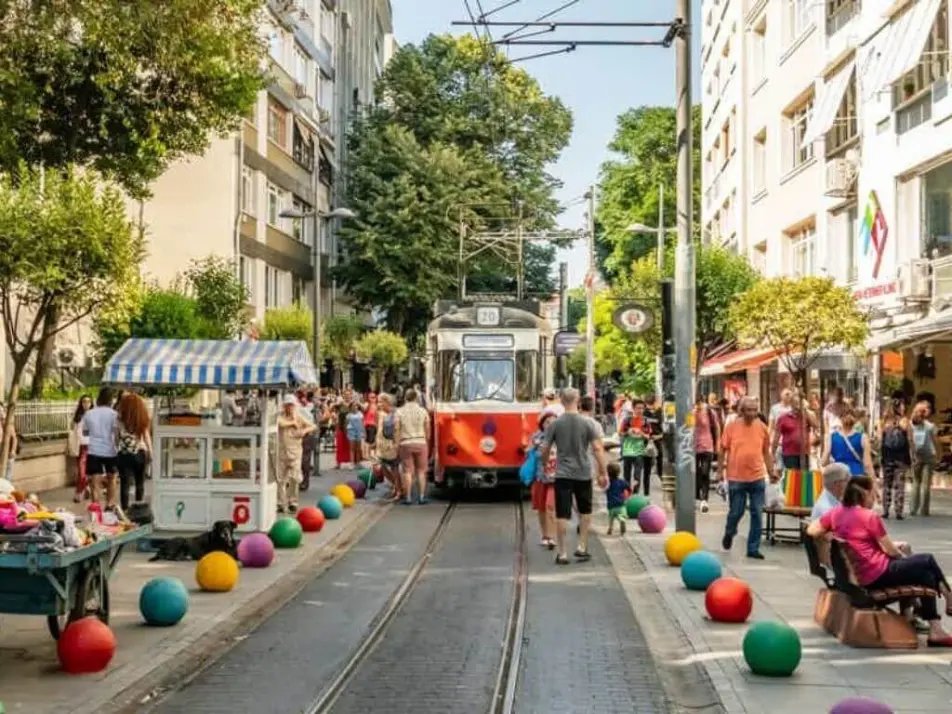
Sütiş also lists a branch at Eyüp Sultan Konağı, if you are heading to the Eyüp Sultan Mosque and Pierre Loti Hill.
How to plan a breakfast morning
- Go early at weekends. A Turkish breakfast often lasts several hours on weekends and holidays, which means tables turn over slowly. On a Saturday or Sunday, arrive early or expect to wait, or go on a weekday if you can.
- Make it the first stop of a sightseeing day. A big breakfast in Emirgan or Çengelköy followed by a Bosphorus ferry, or breakfast in Kadıköy followed by the ferry back to Eminönü, uses the morning well. An İstanbulkart pays for the ferries; our İstanbulkart guide explains how.
- Vegetarians eat well. Most of the table is cheese, eggs, vegetables, bread, honey and jam; sucuk, pastırma and kavurma are the meat items to avoid. Our Istanbul vegetarian food tour page lists the meat-free dishes worth knowing.
- Pace yourself. The plates keep coming and the tea keeps being refilled. Leave room if you plan to try street food or baklava later in the day.
Tours that cover this
A sit-down breakfast is something you do on your own time, but these tours fit well around one:
- Istanbul Street Food Tour: Local Neighbourhoods, Baklava and Coffee: 6 hours, from $90 per person. The closest match if you want a local to explain what you are eating.
- Beylerbeyi Palace and Çamlıca Hill Half-Day Morning Tour: from $52 per person. A guided Asian-side morning from 08:30 to about 12:00 with hotel pick-up; Çengelköy, just north of the palace on the same shore, is a breakfast idea for another day.
- Morning Bosphorus Cruise Tour with Spice Bazaar Stop: from $40 per person. A morning on the water with time at the Spice Bazaar.
- Private Istanbul Shopping Tour: Grand Bazaar and Spice Market Guide: 6 hours, from $90 per person. A private guide for the Grand Bazaar and the Spice Bazaar; it does not run on Sundays, when the Grand Bazaar is closed.
For a fully private food day built around your diet, see our private Istanbul food tour page, or browse all food tours.
Frequently Asked Questions
What is a traditional Turkish breakfast?
A traditional Turkish breakfast is a table of small plates rather than one dish. It usually includes white cheese and kaşar, olives, tomatoes, cucumbers, honey with kaymak, jam, butter and bread or simit, plus a hot egg dish such as menemen or sucuk with eggs. Black tea in tulip-shaped glasses is served throughout the meal.
What does kahvaltı mean?
Kahvaltı means "before coffee". The word joins kahve (coffee) and altı (under or before), because breakfast was the food eaten to line the stomach before coffee, which was drunk after meals. That is why the drink at a Turkish breakfast is tea, and coffee comes at the end.
What is serpme kahvaltı?
Serpme kahvaltı is a spread breakfast, from the verb serpmek, to scatter. Many small plates of cheese, olives, vegetables, jams, honey, kaymak and pastries are laid across the table at once, and everyone shares. It is ordered for the table and normally priced per person. Check whether hot egg dishes and tea refills are included.
What is kaymak made from?
Kaymak is the cream skimmed from milk that has been boiled slowly and simmered for about two hours over very low heat, then left to chill. It can be made from water buffalo, cow, sheep or goat milk. Some Istanbul menus list water-buffalo kaymak (manda kaymağı) and village kaymak separately. It is eaten with honey as bal kaymak.
Does menemen have onions?
Sometimes, and Turks argue about it. The basic menemen is eggs, tomatoes, green peppers and spices cooked in olive oil. When the food critic Vedat Milor polled his followers on Twitter in 2018, 437,657 votes were cast and 50.6 per cent backed onions, so either version is correct. Ask "soğanlı mı?" when you order.
Where can I have breakfast by the Bosphorus in Istanbul?
Emirgan and Çengelköy are two easy choices. Emirgan, on the European shore, has a Sütiş branch and Emirgan Park, where some of the historic pavilions have cafés. Çengelköy, on the Asian shore, has another Sütiş branch and is close to Beylerbeyi Palace. Both pair well with a Bosphorus ferry afterwards.
Is Turkish breakfast good for vegetarians?
Yes, most of a Turkish breakfast is vegetarian. Cheese, eggs, olives, tomatoes, cucumbers, bread, honey, kaymak, jam, menemen and cheese börek contain no meat. The meat items are sucuk sausage, pastırma and kavurma, usually served with eggs, and minced-meat börek. Vegans have less choice, because so much of the table is dairy.
What do Turkish people drink with breakfast?
Black tea, served in small tulip-shaped glasses and refilled throughout the meal. Turkish coffee is traditionally drunk after a meal rather than with it, which is where the word kahvaltı, "before coffee", comes from. If you want a coffee, order it at the end, when the plates are cleared.
When is the best time to go for a Turkish breakfast in Istanbul?
Early, and on a weekday if you can. A Turkish breakfast often lasts several hours on weekends and holidays, so popular places fill up and tables turn over slowly. On a Saturday or Sunday, arrive early, especially at cafés by the Bosphorus or in Beşiktaş, or plan a later brunch-style meal.
Sources: Wikipedia, "Turkish breakfast", "Turkish cuisine", "Menemen (food)" (on Vedat Milor's 2018 poll), "Çılbır", "Kaymak", "Kuymak", "Simit", "Emirgan Park", "Kadıköy", "Moda, Kadıköy", "Beşiktaş" and "Çengelköy"; Wiktionary, "serpmek"; Sütiş official website, menu and branch list with addresses (sutis.com.tr); Karaköy Güllüoğlu official website, history, börek list and shop address (karakoygulluoglu.com) — checked 6 November 2026.
كتبه فريق Get Turkey Tours: مرشدون محليون مرخصون ومخططو رحلات مقيمون في إسطنبول.
اترك تعليقًا
جولاتنا الخاصة
جولة الطعام في شوارع إسطنبول: أحياء محلية وبقلاوة وقهوة
تجوّل في أحياء إسطنبول الحقيقية وأسواقها مع مرشد محلي للطعام، مع تذوق الطعام في الشارع والبقلاوة والشاي التركي والقهوة على الطريق.
جولة صباحية لنصف يوم في إسطنبول: قصر بيلربي وتل تشاملجا
جولة صباحية مدتها 4 ساعات تبدأ من فندقك إلى الجانب الآسيوي لزيارة قصر بيلربيي والاستمتاع بالإطلالات من تلة تشاملجا، مع العودة إلى الفندق قبل الظهر.
مقالات ذات صلة
 جولات & تجارب
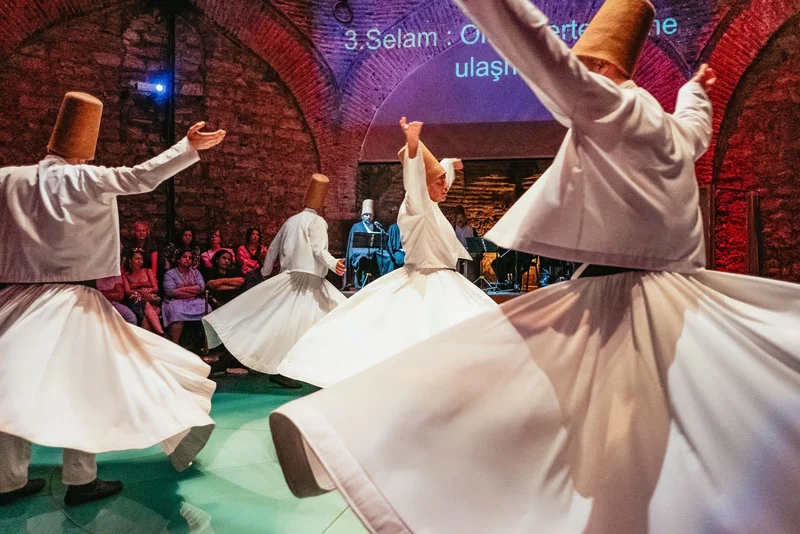
طقس الدراويش الدوّارين في إسطنبول: أين تشاهده والمواعيد والأسعار
أين تشاهد حفل السماع الحقيقي في إسطنبول: الطقس الليلي في تكية حاجي باشا وتكية المولوية في قاسم باشا، والمواعيد والأسعار، ومتحف التكية في غلطة، وما يرمز إليه كل جزء، والآداب، وشب آروس في قونية.
اقرأ المزيد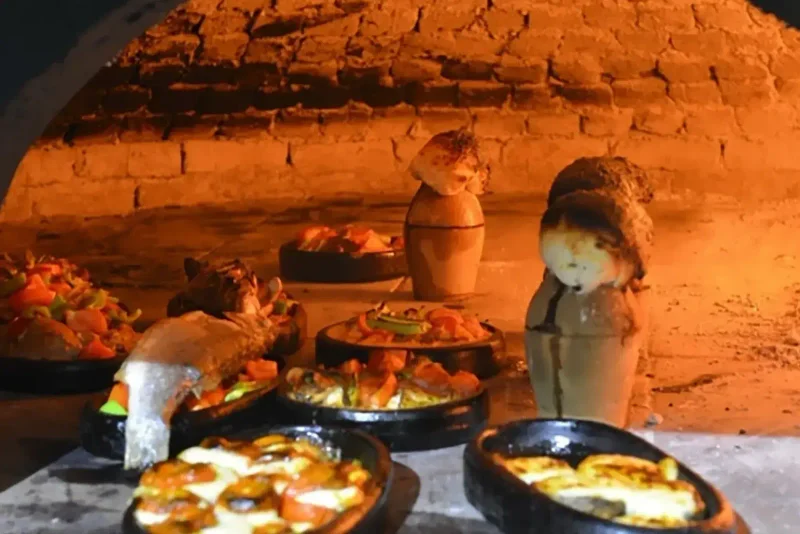 جولات & تجارب
ماذا تأكل في كابادوكيا: كباب التستي والمنتي وأين تجربها
كباب التستي، ومانتي قيصري، والبسترمة، وطبخ المنزل في الأواني الفخارية، والكوي كايماغي، ونبيذ إيمير: ماذا تأكل في كبادوكيا، وكيف تعمل الوصفات المسجلة، وأين تأكل، وأي الجولات تشمل الوجبات.
اقرأ المزيد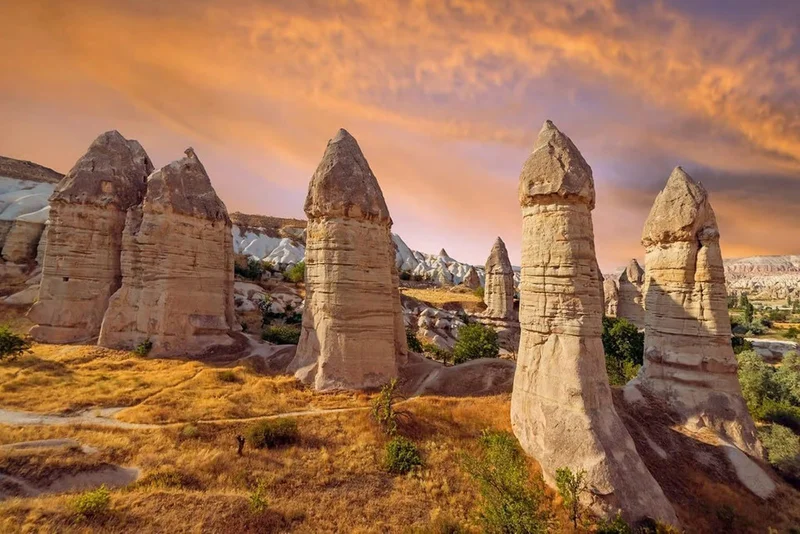 جولات & تجارب
أماكن التصوير في كابادوكيا: أين ومتى تصور من شروق الشمس إلى غروبها
أين ومتى تصوّر كبادوكيا: نقاط المشاهدة الخاصة بالمناطيد عند أول ضوء، ووادي الحب وأوتشيسار وباشابا ووادي الأحمر عند الغروب، ومواقيت الإضاءة الشهرية، وآداب التصوير من فوق الأسطح، وقواعد الطائرات المسيّرة لعام 2026.
اقرأ المزيد