

 Golden Horn guide
Things to Do in Balat and Fener: Golden Horn Streets and Churches
See the Fener Patriarchate and the iron Bulgarian church, walk the colourful streets and cafés of Balat, then climb to the Chora mosaics. Half a day, or a full day with Pierre Loti.
The main things to do in Balat and Fener are visiting the Ecumenical Patriarchate and the iron Bulgarian Church of St Stephen, climbing the steep streets of colourful wooden houses, browsing the antique shops and cafés of Balat, and walking uphill to the Byzantine mosaics of the Chora (Kariye) Mosque. Allow half a day for the two neighbourhoods, or a full day if you add Chora and the view from Pierre Loti Hill. These are two old quarters on the southern shore of the Golden Horn, once home to Greek, Jewish and Armenian communities, and most of the interest is in the streets themselves. For a guide who knows the churches and the back lanes, our Yedikule, Galata and Balat half-day tour includes the area.
Balat and Fener at a glance
Fener (the old Greek Phanar) and Balat (the old Jewish quarter) run into each other along the shore road, so you can walk both without noticing the border. The order below starts at the Fener ferry pier and works north and uphill.
| Order | Stop | Time | Entry | Note |
|---|---|---|---|---|
| 1 | Ecumenical Patriarchate (Church of St George) | 30 minutes | Free | Active church, dress modestly |
| 2 | Bulgarian Church of St Stephen | 20 minutes | Free | Iron church on the shore road |
| 3 | Phanar Greek College and St Mary of the Mongols | 30 minutes | Free (exterior) | Steep climb |
| 4 | Colourful streets of Fener and Balat | 1 hour | Free | Best light in the morning |
| 5 | Balat cafés and antique shops | 1 hour | Price of coffee | Busiest at weekends |
| 6 | Chora (Kariye) Mosque | 1 hour | €20 | 20-25 minutes uphill walk |
Getting to Balat and Fener
Balat and Fener are not on the tram line, which is why they still feel like neighbourhoods rather than tourist zones. There are three easy ways in:
- The Golden Horn ferry. The Haliç ferry line calls at Fener and Balat on its way up the Golden Horn, and it is the most pleasant way to arrive. Pay with an Istanbulkart.
- Bus or taxi along the shore road. City buses run along the Golden Horn from Eminönü. A taxi from Sultanahmet is a short ride outside rush hour.
- On foot from the Fatih Mosque. If you are already at the Fatih Mosque, the walk downhill to Fener takes about 20 minutes through residential streets.
The Ecumenical Patriarchate and the Bulgarian iron church
Start with the Fener Greek Orthodox Patriarchate, the seat of the Ecumenical Patriarch of Constantinople and the spiritual centre of the Orthodox Christian world. It has been based here, at the Church of St George, since 1601. The church is small, with a gilded wooden iconostasis, relics and a patriarchal throne. Entry is free, services are held regularly, and visitors should dress as for any church and stay quiet.
Notice the main middle gate of the compound, which is kept closed. It has stayed shut since 1821, when Patriarch Gregory V was hanged there during the Greek War of Independence; visitors use the side entrance.
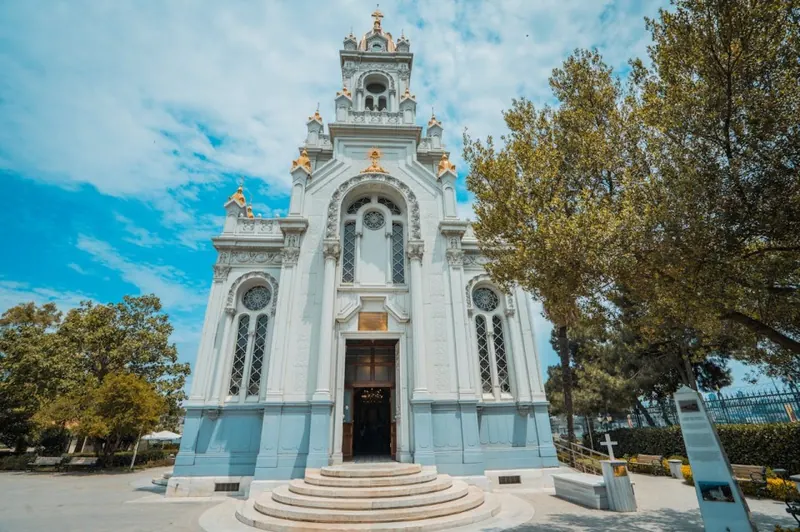
A five-minute walk north along the shore road brings you to the Bulgarian Church of St Stephen, often called the iron church. Its structure was made of prefabricated cast-iron sections in Vienna, shipped to Istanbul and assembled on site, and the church was consecrated in 1898. After a long restoration it reopened in 2018 and is free to enter. Inside, the iron walls are painted to look like marble, and the iconostasis and chandeliers are worth a slow look.
The hill: Phanar Greek College and St Mary of the Mongols
From the Patriarchate, climb the stepped lanes behind the shore. The huge red-brick building on the hilltop is the Phanar Greek Orthodox College, a 19th-century school building known locally as the Red Castle. It is still a school, so you see it from the outside, but the climb gives you a view over the Golden Horn.
Just below it is the Church of St Mary of the Mongols (Panagia Mouchliotissa), founded in the 13th century by a Byzantine princess who had been married to a Mongol ruler. It is the only Byzantine church in Istanbul that has stayed in Orthodox Christian use without ever becoming a mosque. Opening is irregular and depends on the caretaker, so treat it as a bonus if you find the door open.
The colourful streets of Fener and Balat
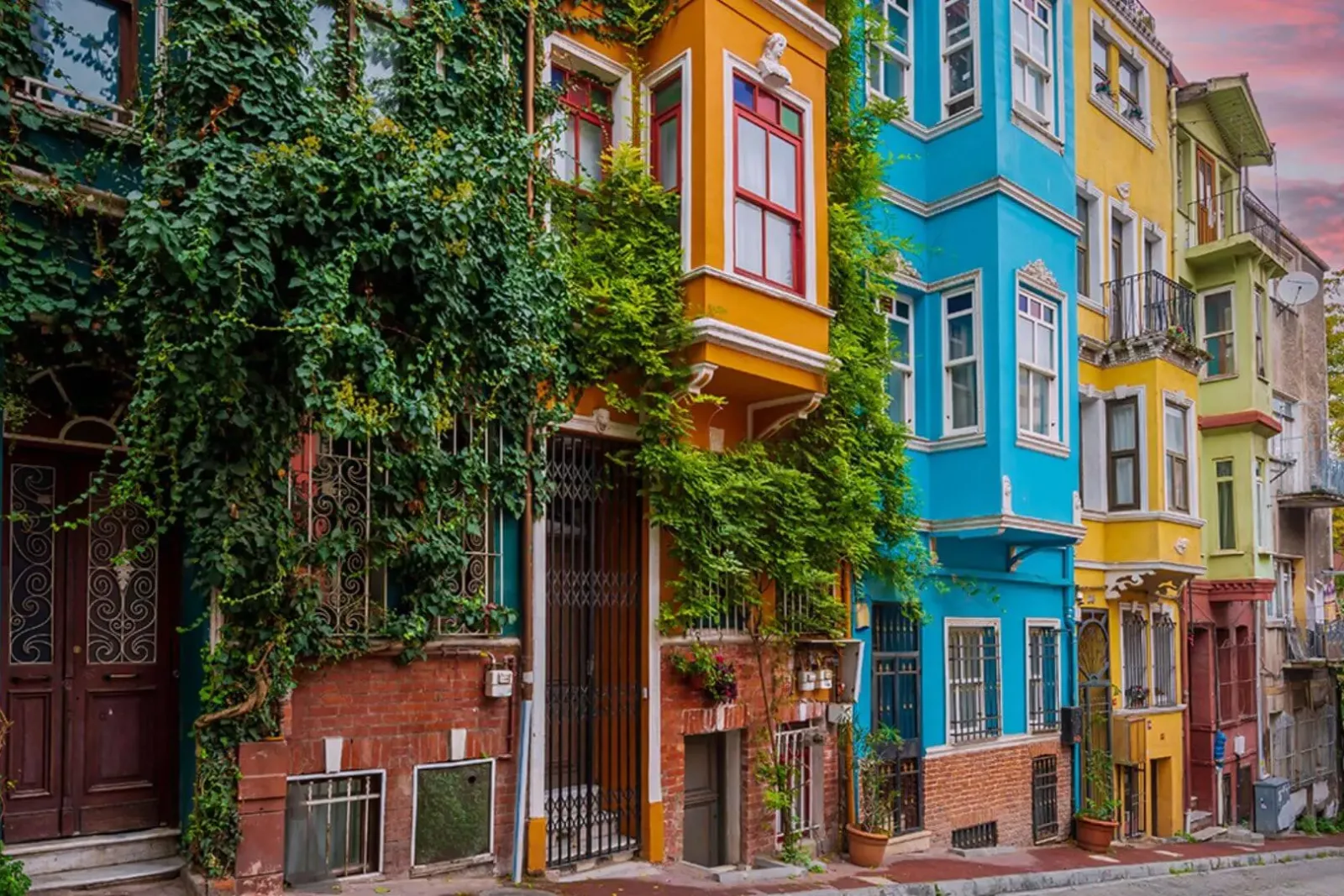
This is what most visitors come for: rows of narrow two- and three-storey houses with bay windows, painted orange, yellow, blue and green, on streets that climb sharply from the shore. The most photographed spots are the stepped Merdivenli Yokuş and the corners of Kiremit Street, where the houses lean over the lanes and ivy covers the facades.
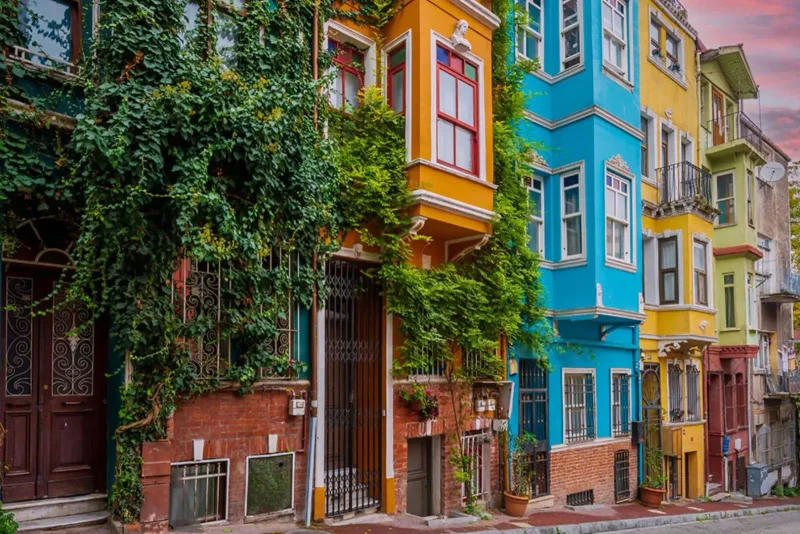
A few points of courtesy go a long way here. These are ordinary homes, so do not climb on steps or doorways for photos, keep voices down early in the morning, and ask before photographing residents. Weekday mornings are the quietest time; at weekends the streets fill with photographers and wedding shoots.
Balat's cafés, antique shops and the Ahrida Synagogue
Further north, the flatter streets of Balat around Vodina Street and Leblebiciler Street are lined with small cafés, bakeries, second-hand bookshops and antique and vintage shops selling everything from old radios to Ottoman-era tiles. It is a good place for a long Turkish breakfast or a slow coffee before heading uphill.
Balat was for centuries the main Jewish quarter of Istanbul. The Ahrida Synagogue, founded in the 15th century, is one of the oldest in the city and still in use, with a boat-shaped wooden reader's platform. Visits cannot be made on the spot; they must be arranged in advance through the Chief Rabbinate of Türkiye with passport details.
Chora, Eyüp and Pierre Loti: extending the day
With a full day, add one or two of these:
- The Chora (Kariye) Mosque. A 20-25 minute walk uphill from Balat, near the old land walls. Its 14th-century mosaics and frescoes, including the famous Anastasis fresco in the side chapel, are among the finest Byzantine art anywhere. Since August 2024 foreign visitors pay €20. Tourist entry runs 09:00-18:00 and stops 15 minutes before each prayer; the Museum Pass is not accepted.
- Eyüp and Pierre Loti Hill. Continue up the Golden Horn by ferry or taxi to Eyüp, where the Eyüp Sultan Mosque is one of the holiest sites in Istanbul. A short cable car, paid with an Istanbulkart, climbs to the Pierre Loti café at the top, with a long view down the Golden Horn.
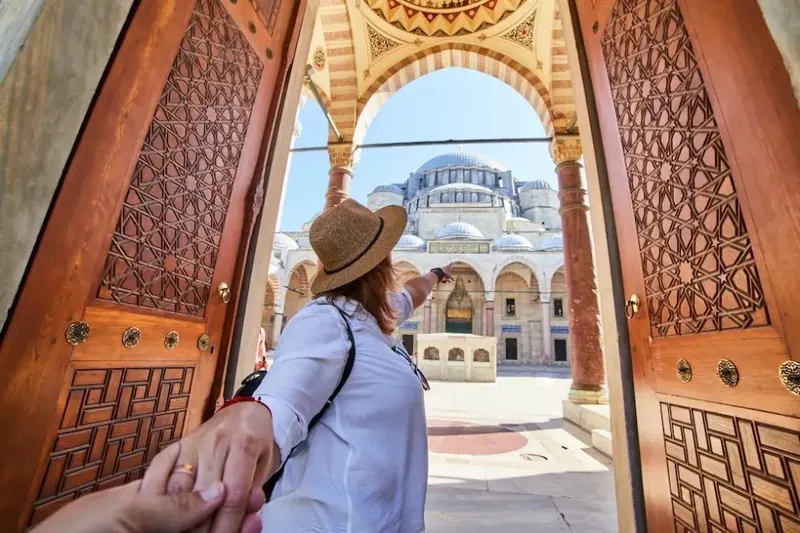
- The Süleymaniye Mosque on the way back. Built by the architect Sinan in the 1550s, it stands on the hill above Eminönü and is the best place to end the day, with a free terrace view over the Golden Horn.
Our Balat and Fener page has more on the history of the two quarters, and the Christian heritage tour of Istanbul covers the city's churches in more depth.
Tours that cover this
- Yedikule Fortress, Galata and Balat Half-Day Tour, from $45 per person.
- Istanbul Full-Day Tour with Bosphorus Cruise: Balat, Galata and Lunch, from $57 per person.
- Istanbul Churches Tour: Full-Day Private Guide and Van, from $180 per person. Istanbul's active churches with a licensed guide and a private vehicle.
Frequently Asked Questions
Is Balat worth visiting?
Yes. Balat and Fener show a side of Istanbul that the Old City tour skips: lived-in streets of colourful houses, small cafés and antique shops, and the churches and synagogue of the communities that built the area. It suits travellers who enjoy walking and photography. Combine it with the Chora Mosque mosaics for a full and varied day.
How do you get to Balat from Sultanahmet?
The simplest options are a taxi along the Golden Horn shore road, a short ride outside rush hour, or a city bus from Eminönü along the same road. For a scenic arrival, walk or take the tram to the Golden Horn and use the Haliç ferry line, which stops at Fener and Balat. Pay for buses and ferries with an Istanbulkart.
How much time do you need in Balat?
Two to three hours covers the Patriarchate, the Bulgarian iron church, the colourful streets and a coffee in Balat. Half a day lets you go at an easy pace and browse the antique shops. Add two more hours for the Chora Mosque, and another two to three for Eyüp and Pierre Loti Hill if you want a full day on the Golden Horn.
Is Balat safe for tourists?
Balat and Fener are residential neighbourhoods and generally safe to visit during the day, with plenty of other visitors at weekends. As anywhere in a big city, keep an eye on your bag and phone. Some side streets are quiet and poorly lit after dark, so evenings are better spent in the busier café streets around Vodina Street.
Can you go inside the Fener Patriarchate?
Yes. The Church of St George inside the Ecumenical Patriarchate compound is open to visitors and entry is free. Dress modestly, with covered shoulders and knees, and keep quiet if a service is under way. Photography of the interior may be restricted during services, so look for signs or ask the staff before taking pictures.
What is the best time to visit Balat?
Weekday mornings are the best time to visit Balat. The light is soft on the coloured houses, the streets are quiet and cafés are just opening. Weekends, especially afternoons, are busy with local visitors and photo shoots. Spring and autumn are the most comfortable months for walking the steep streets.
Sources: Ecumenical Patriarchate of Constantinople (ec-patr.org), Republic of Türkiye Ministry of Culture and Tourism and the Kariye Mosque visitor notice for foreign visitors, Bulgarian Orthodox Church restoration reports, Chief Rabbinate of Türkiye, Şehir Hatları Haliç ferry line — checked 6 November 2026.
Private tours in Istanbul
Yedikule Fortress, Galata & Balat Half-Day Tour in Istanbul
A half-day group tour from 08:30 to about 14:00 that visits Yedikule Fortress, the Galata district and the colourful heritage streets of Balat, with hotel pick-up included.
Istanbul Full-Day Tour with Bosphorus Cruise: Balat, Galata & Lunch
A full guided day from 08:30 that pairs Yedikule Fortress, Balat and Galata with an afternoon Bosphorus cruise and lunch on board.
More things to do in Istanbul
- Things to Do in Istanbul: Sights, Neighbourhoods and Local Tips
- Things to Do in Sultanahmet: Old City Sights in Walking Order
- Things to Do on the Bosphorus: Cruises, Villages, Palaces and Forts
- Things to Do in Istanbul at Night: An Area-by-Area Guide
- Things to Do in Galata, Karaköy and Beyoğlu: A Walking Route
- Things to Do in Kadıköy: Moda, Market Streets and the Asian Side
- Free Things to Do in Istanbul: What Costs Nothing in 2026
- Romantic Things to Do in Istanbul: Sunsets, Boats and Dinners
- Things to Do in Istanbul with Kids: Family Plans That Work
- Unusual Things to Do in Istanbul: Iron Church, Old Walls, 1875 Tünel
- Things to Do in Istanbul When It Rains: A Full Day Under Cover
- Things to Do in Istanbul in Winter: Weather, Indoor Sights, Tours
- Things to Do in Istanbul in Summer: Heat, Islands and Evenings
- Things to Do in Istanbul in December and on New Year's Eve
- Ramadan in Istanbul 2027: Dates, Iftar, Mosque Visits and Eid
Related guides
- Things to Do in Galata, Karaköy and Beyoğlu: A Walking Route
- Things to Do in Istanbul When It Rains: A Full Day Under Cover
- Things to Do in Istanbul at Night: An Area-by-Area Guide
- Things to Do in Istanbul in December and on New Year's Eve
- Things to Do in Istanbul in Summer: Heat, Islands and Evenings
- Things to Do in Istanbul in Winter: Weather, Indoor Sights, Tours
- Things to Do in Istanbul with Kids: Family Plans That Work
- Things to Do in Istanbul: Sights, Neighbourhoods and Local Tips
- Things to Do in Kadıköy: Moda, Market Streets and the Asian Side
- Things to Do in Sultanahmet: Old City Sights in Walking Order
- Things to Do on the Bosphorus: Cruises, Villages, Palaces and Forts
- Topkapı Palace Guided Tour: Harem, Treasury and 2026 Tickets