

 ترميم الشعر للنساء
زراعة الشعر للنساء في تركيا: مدى الملاءمة وتخطيط الرحلة
قد تنجح زراعة الشعر لدى بعض النساء، خاصةً من يعانين تساقطاً ثابتاً على نمط معين ويملكن شعراً مانحاً كافياً. ولا تصلح كثير من النساء لذلك، لذا ينبغي أن يسبق الحجز التشخيص.
A hair transplant can be an option for some women, but far fewer women than men are suitable, and the deciding factor is the type of hair loss, not the country or the price. The International Society of Hair Restoration Surgery (ISHRS) says the best candidates have a predictable pattern of loss and enough healthy donor hair, while widespread or rapidly progressing thinning usually rules surgery out. That makes a proper diagnosis the first step, ideally before you book any flight to Istanbul. This page explains who may be a candidate, why diagnosis comes first, how shaving and technique differ for women, what to check in Turkey and how to plan a comfortable trip. We are a licensed tour operator, not a clinic: we do not recommend clinics or doctors, but we can arrange the private airport transfer, a hotel near your clinic and a driver while you are here.
Which women may be candidates
Hair loss in women has many causes, and surgery suits only some of them. What reputable medical bodies say:
- Female pattern hair loss is the most common cause of hair loss in women, according to the American Academy of Dermatology (AAD). It usually shows as a widening part and thinning near the temples, and often begins in the 40s, 50s or 60s.
- A predictable pattern matters. The ISHRS says ideal candidates have stable, patterned thinning, not widespread, rapidly progressive loss.
- Donor hair is the limit. Grafts come from the back and sides of the scalp. The AAD warns that if hair is sparse all over, there may not be enough healthy hair to move.
- Alopecia areata is usually not suitable for a transplant, the NHS says. It causes patchy loss and has a different treatment path.
- Underlying problems first. The ISHRS says any medical condition behind the hair loss must be addressed and stabilised before surgery.
Many women who look into transplants are better served, at least at first, by medical treatment. Only a doctor who has examined you can say which group you are in.

Why diagnosis comes before booking
The AAD advises that a dermatologist should evaluate suspected female pattern hair loss, because other conditions can look similar and need different treatment. The ISHRS describes diagnosis as crucial and lists tools a doctor may use: a detailed medical history, blood tests, trichoscopy (magnified examination of the scalp) and sometimes a scalp biopsy.
That is hard to do well through photos sent to a sales team. A sensible order is to see a dermatologist or hair specialist at home first, get a diagnosis and, if a transplant is a reasonable option, take that diagnosis to clinics for assessment. The table below summarises what the sources say about common types of hair loss; it is general information, not a verdict on your case.
| Type of hair loss | Transplant generally considered? | What the sources say |
|---|---|---|
| Female pattern hair loss, stable, good donor area | Possibly | ISHRS: predictable pattern and enough donor hair are key |
| Female pattern hair loss, diffuse all over | Often not | AAD: may not be enough healthy hair to transplant |
| Rapidly progressing thinning | Usually not until stable | ISHRS: not "widespread, rapidly progressive loss" |
| Alopecia areata (patchy) | Usually not | NHS: usually not suitable |
| Loss linked to an untreated medical condition | Not until treated | ISHRS: underlying issues addressed and stabilised first |
Medication alongside, or instead of, surgery
Surgery moves existing hair; it does not stop pattern hair loss from continuing. The NHS notes that hair may keep thinning around a transplant. That is why doctors often discuss medical treatment as well.
The AAD describes minoxidil, applied to the scalp, as the most recommended treatment for female pattern hair loss, with results taking around 6 to 12 months of daily use and hair loss possibly returning if it is stopped. Prescription tablets are sometimes used off-label. The AAD also says women who are pregnant, planning a pregnancy or breastfeeding should avoid minoxidil and prescription hair-loss medicines.
None of this is advice for you. It is a reason to ask any clinic how it plans to protect your existing hair, and to discuss medication with your own doctor before and after the trip.
Shaved or unshaved: FUT and FUE for women
The NHS describes two main techniques:
- FUT (strip method): a strip of scalp is removed from the back of the head, divided into grafts of 1 to 4 hairs and the area stitched. It leaves a linear scar, usually hidden unless hair is worn very short.
- FUE: individual hairs are taken one at a time, usually after shaving the back of the head, leaving many tiny scars that are less noticeable.
For women the shaving question is often the deciding one. The ISHRS notes that FUT needs no shaving of the donor area, which many women prefer, while FUE is often done with the donor area shaved, though no-shave approaches exist. Ask the clinic exactly how much hair will be shaved, where, and how long it takes to grow back, and ask to see how the donor area will look the day after.
The ISHRS also says there is no such thing as "scarless" hair transplant surgery. Any clinic claiming otherwise is giving you a reason to look elsewhere.
Recovery and what it means for the trip
The NHS gives this general recovery pattern: bandages are usually removed between days 2 and 5; gentle hand washing can begin around day 6; non-dissolvable stitches, if used, come out at 10 to 14 days; and grafts are not secure for the first 2 weeks. You may be advised to reduce exercise for a month, and time off work may be 1 to 2 weeks.
Results take patience. The NHS says transplanted hair often falls out within weeks, new hair usually appears at around 4 months, and full results take 10 to 18 months. For the trip, that means:
- Book enough nights for the procedure and any check or first wash the clinic wants before you fly.
- Ask whether stitches need removing, and if so, who will do it at home.
- Plan the flight home with a hat or covering your clinic approves, and ask the clinic whether a travel pillow is safe to use on the flight.
Checks before you book in Turkey
Turkey regulates health tourism through the Ministry of Health. Under the Regulation on International Health Tourism and Tourist Health, published on 26 April 2025, facilities treating international patients need a Ministry of Health authorisation certificate, and intermediaries need one from USHAŞ. The UK government's travel advice says the Ministry lists approved providers on the HealthTürkiye portal (healthturkiye.gov.tr), which also runs a 24/7 support line on +90 850 288 38 38.
Questions from the ISHRS consumer guidance are especially useful for hair surgery:
- Who will evaluate my hair loss and recommend treatment?
- Will anyone who is not a licensed doctor make incisions or harvest grafts?
- Is everyone involved covered by malpractice insurance?
Add your own: how much hair will be shaved, how many grafts the clinic plans and why, how it will protect existing hair, and what follow-up it offers once you are home. The UK FCDO says it is aware of 7 British nationals who died in Turkey in 2025 following medical procedures, and advises discussing plans with your own doctor first and not relying only on companies with a financial interest in your booking.
Practical tips for women travelling for a transplant
Some details are specific to women, and worth sorting out before you land:
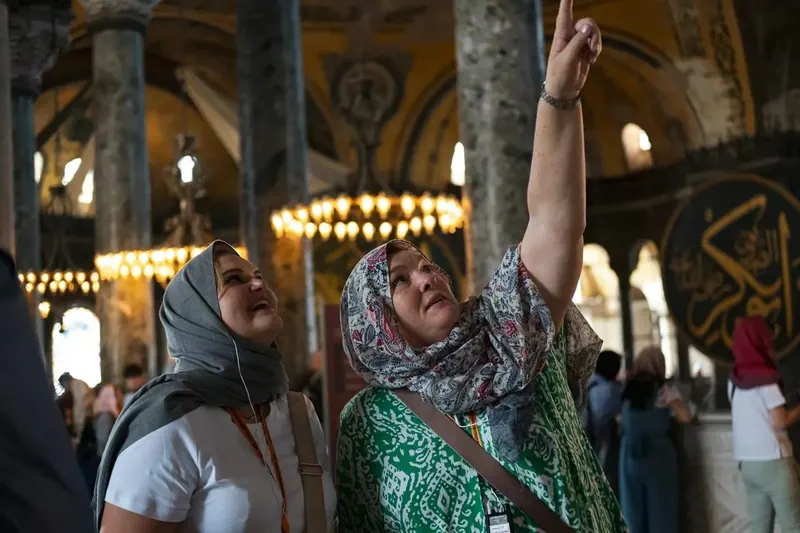
- Head coverings and mosques. Women cover their hair to enter mosques in Istanbul. Over fresh grafts, ask the clinic first what you may wear and when; until then, admire mosques from outside or leave them for a later trip. Our page on what to wear in Istanbul explains mosque dress codes.
- Hair washing. Ask whether the first wash is done at the clinic, and choose a hotel with a good handheld shower for the washes you do yourself.
- Hats. Ask the clinic which hat or scarf is allowed, and from which day. A loose, clean option protects from sun and dust.
- Travelling alone. If you come on your own, a private transfer and a driver on clinic days avoid taxis at night; see Istanbul airport private transfer and Istanbul private car with driver. General advice is in is Turkey safe to travel.
- Where to stay. Close to the clinic, quiet, with a lift. Our guide to where to stay in Istanbul compares the main areas.
- Entry rules. Check Turkey visa requirements for your passport.
Gentle days and companion ideas
Hair surgery is usually less tiring than body surgery, but the NHS still advises against holidaying straight after a procedure, and grafts need protecting from sun, sweat and knocks for the first weeks. If your clinic agrees, calm, seated options suit the days after:
- A short Bosphorus boat cruise with shade on deck.
- A slow drive along the shore with a private driver.
- A ferry to the Princes' Islands, where private cars are not allowed, for a later day.
If you arrive a day or two early, use that time for the busier sights: the Blue Mosque, the Süleymaniye Mosque and the Spice Bazaar are easiest before the procedure, when a headscarf is no issue. A friend travelling with you can explore Kadıköy or book a guide from our Istanbul tours by locals.
Get Turkey Tours (TÜRSAB A-15751) is a licensed travel agency, not a clinic or health-tourism intermediary. We do not book, sell or recommend treatment, clinics or doctors. We arrange transfers, hotels near your clinic, a private car with driver, gentle sightseeing on rest days and companion tours, and keep in touch by WhatsApp.

Tours that cover this
- VIP private Istanbul airport transfer by Mercedes Vito: from $60 per group. A private ride from arrivals to your hotel, useful when travelling alone.
- Bosphorus boat cruise tour: from $40 per person. A seated cruise along the strait for a calm afternoon.
- Private shopping tour of the Grand Bazaar and Spice Market: from $90 per person. Best before the procedure, or for a companion.
- Princes' Islands full-day tour with ferry and lunch: from $90 per person. A quiet day on the islands once your clinic is happy.
Frequently Asked Questions
Can women get a hair transplant in Turkey?
Some can. The ISHRS says women with a predictable pattern of hair loss and enough healthy donor hair may be candidates, while widespread or rapidly progressing thinning usually is not suitable. The NHS says transplants are usually not suitable for alopecia areata. Get a diagnosis from a dermatologist first, then ask clinics for an in-person assessment.
Do women have to shave their head for a hair transplant?
Not always. The ISHRS notes that FUT, the strip method, needs no shaving of the donor area, which many women prefer, while FUE is often done with the donor area shaved, though no-shave approaches exist. Ask the clinic exactly how much hair will be shaved, where, and how long it will take to grow back.
Am I a good candidate if my hair is thin all over?
Possibly not. The AAD says that if hair is sparse all over, there may not be enough healthy donor hair to transplant, and the ISHRS says candidates should not have widespread, rapidly progressive loss. A dermatologist can check the cause and the donor area. Medical treatment may be suggested first, so ask your doctor before planning a trip.
How long should I stay in Istanbul for a hair transplant?
Ask the clinic; most trips are a few nights. The NHS says bandages are usually removed between days 2 and 5 and gentle washing can begin around day 6, so ask whether the clinic wants a check or first wash before you fly. Book a flight with a spare day, and ask who removes any stitches at home.
When will I see results after a female hair transplant?
The NHS says transplanted hair often falls out within a few weeks, new hair usually appears at around 4 months, and full results take 10 to 18 months. The NHS also notes hair may keep thinning around the transplant, so ask the clinic how it plans to protect your existing hair over the following months.
Can I visit mosques in Istanbul after a hair transplant?
Women cover their hair to enter mosques, so ask your clinic first what you may wear over fresh grafts and from which day. A simple plan is to visit the Blue Mosque and Süleymaniye before the procedure, when a headscarf is no issue, and keep the days after for calm, seated outings such as a Bosphorus cruise.
How do I check a hair clinic in Turkey?
Look it up on HealthTürkiye at healthturkiye.gov.tr, which the UK government describes as the Ministry of Health's list of approved providers. Under 2025 Turkish rules, facilities treating international patients need Ministry of Health authorisation. Ask the ISHRS questions about who evaluates you and who makes incisions or harvests grafts, and talk to your own doctor first.
Is it safe to travel alone to Istanbul for a hair transplant?
It can be, with planning. Sort out the practical side: a pre-booked private transfer from the airport, a hotel close to the clinic, a driver on clinic days and a phone with local data. Share your plans with someone at home. For medical safety, follow the UK and US official advice, use an authorised facility and keep your clinic's emergency contact number with you.
Do you book hair transplants for women?
No. Get Turkey Tours is a licensed travel agency, not a clinic or health-tourism intermediary, and we do not book, sell or recommend treatment, clinics or doctors. We arrange airport transfers, hotels near your clinic, a private car with driver, gentle sightseeing on rest days and tours for companions, and we stay in touch by WhatsApp.
Sources: International Society of Hair Restoration Surgery (hair transplant for women; consumer advocacy), American Academy of Dermatology (female pattern hair loss), NHS (hair transplant; cosmetic surgery abroad), UK FCDO foreign travel advice for Turkey (health), Republic of Türkiye Ministry of Health and HealthTürkiye portal, Regulation on International Health Tourism and Tourist Health (Official Gazette 26 April 2025, No. 32882). ISHRS: hair transplant for women, AAD: female pattern hair loss, NHS: hair transplant — checked 6 November 2026.
جولات خاصة في إسطنبول
نقل VIP من مطار إسطنبول: مرسيدس فيتو خاصة إلى فندقك
سيارة مرسيدس فيتو خاصة تنقلك من باب إلى باب من مطار إسطنبول إلى فندقك أو العكس، مع استقبال يحمل اسمك وتتبع مباشر للرحلة الجوية.
جولة صباحية بالقارب في مضيق البوسفور في إسطنبول مع التوقف في سوق التوابل
جولة جماعية صباحية لنصف يوم من الساعة 08:30 حتى حوالي الساعة 12:00، تتضمن توقفاً في سوق التوابل ورحلة بحرية إرشادية على البوسفور بين أوروبا وآسيا.
مرشدات ذات صلة
- زراعة الشعر في تركيا من المملكة المتحدة: الرحلات الجوية ونصائح الخدمة الصحية الوطنية والرعاية بعد العملية
- زراعة الشعر في تركيا من الولايات المتحدة: الرحلات الجوية والفحوصات والرعاية بعد العملية
- نقل من الفندق إلى مطار إسطنبول: متى تغادر وكيف تصل
- مرشد يتحدث الإندونيسية في إسطنبول: جولات بلغة Bahasa عند الطلب
- خدمة الاستقبال في مطار إسطنبول: كيف يعمل استلامك بلوحة الاسم
- ميني باص من مطار إسطنبول للعائلات والمجموعات: المقاعد والحقائب والسعر
- النقل من مطار إسطنبول للمسافرين البرازيليين والبرتغاليين
- Istanbul Airport Transfer for Russian Travellers: IST, SAW and Cash
- النقل من مطار إسطنبول إلى الفندق: الأوقات حسب المنطقة ونصائح للإنزال
- رحلة غداء في البوسفور من إسطنبول مع الاستقبال من الفندق: كيف تقارن
- رحلة إلى مدينة إسطنبول مع جولات إرشادية: خطة لمدة 5 أيام للناطقين بالألمانية
- رحلات يومية من إسطنبول للعائلات العربية: بورصة وسابانجا والأسعار