

 Istanbul
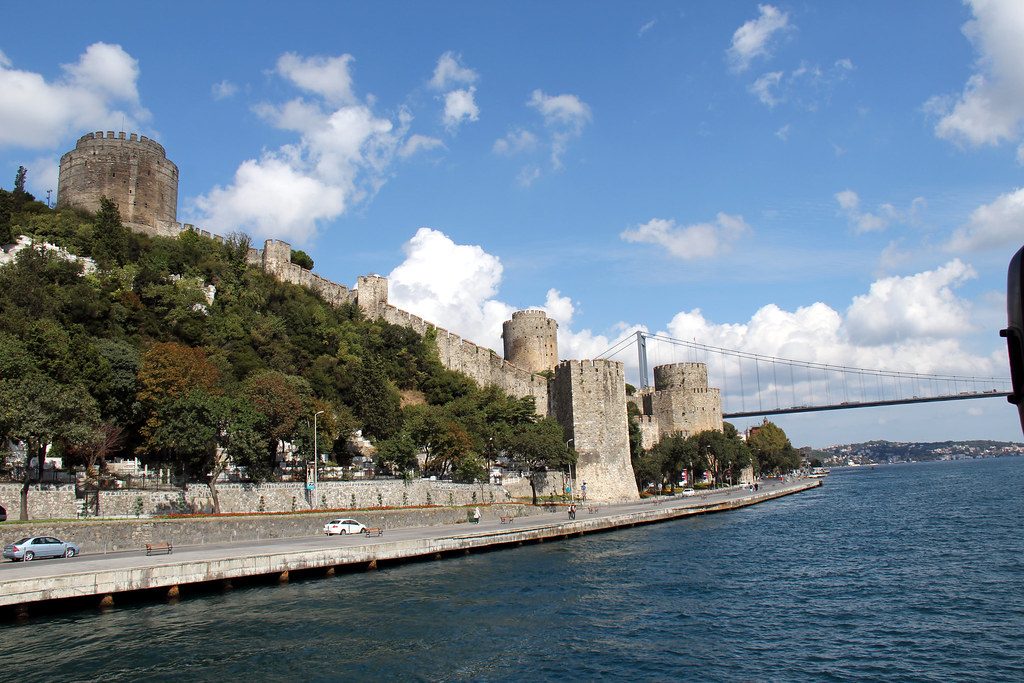
Rumeli Fortress (Rumelihisarı)
In 1452 Mehmed II raised Rumeli Fortress on the European bank of the Bosphorus, taking roughly four months, to isolate Constantinople ahead of the siege. Today the castle is a museum: you can climb its walls and towers and look across the strait at its narrowest point.
Tours that visit Rumeli Fortress
Private Yacht Tour Istanbul: Bosphorus Cruise for 1-12 People, Crew
Charter a luxury yacht for your group of up to 12 on the Bosphorus, with captain, crew, soft drinks, tea and water included, at $299 per hour with a 2-hour minimum.
Bosphorus Lunch Cruise in Istanbul with Hotel Pick-up & Drop-off
Lunch on board as you cruise the Bosphorus between Europe and Asia, with a guide and return transfers from your hotel.
In the spring of 1452 Mehmed II, then aged 20, gave the order for a castle on the European side of the Bosphorus. Builders started in April and had Rumeli Fortress finished by late August, roughly four months later. On the opposite bank stood an older castle, the Anatolian Fortress. Between them the pair held the tightest point of the strait, about 660 metres across, and stopped grain from the Black Sea reaching Constantinople a year before the city's fall.
Quick facts
| Item | Details |
|---|---|
| Hours | 09:00-18:00; the ticket desk shuts at 17:00 (muze.gov.tr, October 2026) |
| Closing day | Monday |
| Foreign visitor ticket | Roughly €6; free for under-12s; Museum Pass accepted (October 2026) |
| Visit length | 1 to 1.5 hours |
| Address and transport | Yahya Kemal Caddesi, Rumelihisari, Sariyer. Take a bus up the coast road from Kabatas or Besiktas, or a taxi; Bosphorus ferries call at piers close by |
| Clothing | No dress code; the paths are steep, so choose shoes that grip |
History in brief
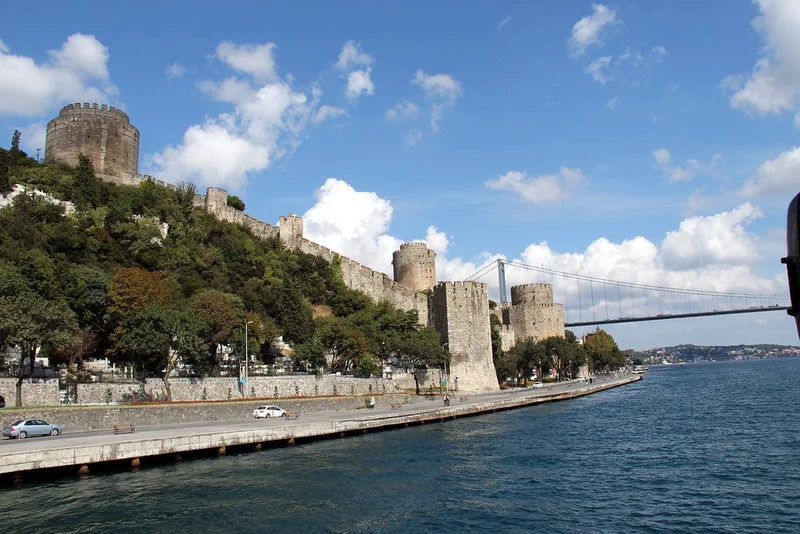
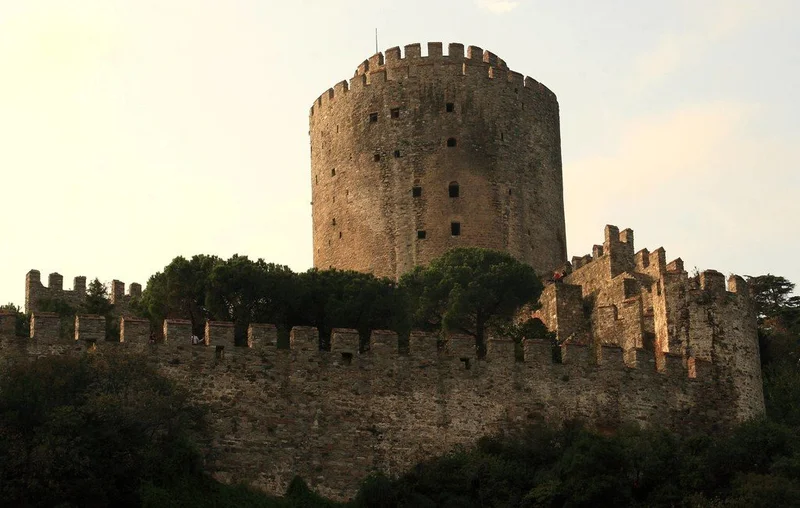
Ottoman sources called the castle Bogazkesen, meaning throat-cutter, which plays on the Turkish word for a strait. The sultan shared the building work between himself and three viziers. Each vizier was responsible for one of the large towers, and those towers are still named after them: Saruca Pasha, Halil Pasha and Zaganos Pasha. In November 1452 guns on the shore sank a Venetian ship that tried to sail past without paying. Once the city was conquered in 1453 the castle had no further military use, and it was put to work as a customs post and as a prison. Restoration by the Turkish Republic in the 1950s turned it into a museum.
Things to look at
- Three large towers, visible from the paths inside the walls. Whether you can go up to their higher floors depends on restoration work, so check at the entrance.
- Curtain walls and wall-top walkways, reached by steep stairs that are often uneven; some have no handrail.
- Inner grounds, shaded by trees, where an open-air theatre hosts concerts in summer.
- Cannon and cannonballs on display by the entrance, among them balls as large as those fired in the siege.
- Views across to the Anatolian Fortress on the facing shore and up to the Fatih Sultan Mehmet Bridge, built in 1988 almost exactly where the old crossing was.
When to go
Go on a weekday, either in the morning or late in the afternoon. Summer middays are best avoided, because the walls get hot and offer no shade. The finest season is spring, when Judas trees colour the Bosphorus hillsides pink. Read the museum's announcements before setting out, since sections of wall can be shut for restoration or events, and remember the Monday closure.
The fortress makes most sense seen from the water, where you can follow its walls down the slope to the shore. Our 2-Hour Private Bosphorus Yacht Cruise goes past both castles and turns around close to Rumeli Fortress; a guide is on board, and transfers from your hotel or Galataport are part of it. For three hours on the water with lunch served as the boat goes by Rumelihisari, choose the Istanbul Bosphorus Lunch Cruise Experience.
Practical advice
- Paths inside the walls are steep, so visitors who cannot manage climbs will only reach the lower grounds.
- Children enjoy the walls, yet parts of them lack railings, so hold small children's hands.
- Below the walls, Rumelihisari village has waterside breakfast cafés that Istanbul families fill at weekends.
- Bebek is about 20 minutes' walk south along the shore, with cafés and a promenade on the Bosphorus.
- The campus of Bosphorus University stands on the hill above, and traffic on the road can build up when the school day starts and ends.
Rumeli Fortress and Anatolian Fortress side by side
On the Asian shore, the Anatolian Fortress (Anadoluhisari) is both older and far smaller. Sultan Bayezid I put it up in the 1390s, and Mehmed II planned his own castle to close the pincer from Europe. Visitors mostly see Anadoluhisari from outside or from a boat, while Rumeli is the castle you can actually walk around. If you make it to the Asian side, the little Goksu stream next to Anadoluhisari and the neighbouring Kucuksu Pavilion are good for a calm hour away from crowds. Viewed together from the water, the two fortresses make it plain why holding this channel meant holding the city in 1452.
Our Istanbul destination page lists more sights along the Bosphorus.
Frequently Asked Questions
How long did Rumeli Fortress take to build?
Around four months. Building started in April 1452 and was complete by late August 1452, under a year before Constantinople was conquered.
Can I visit Rumeli Fortress on a Monday?
No. Monday is its closing day. On other days it is open 09:00-18:00, and tickets are sold until 17:00.
What is the entry fee for Rumeli Fortress?
Foreign visitors pay about €6 (October 2026). Under-12s go in free, and the Museum Pass Istanbul is valid.
What was Rumeli Fortress built for?
Mehmed II wanted to hold the narrowest point of the Bosphorus and block supply ships sailing from the Black Sea to Constantinople ahead of his 1453 siege.
What is the best way to reach Rumeli Fortress?
Buses from Kabatas and Besiktas follow the coast road on the European side. By taxi from Taksim it is about 25 minutes when the roads are clear. Bosphorus boat tours sail past it.
More places to see in Istanbul
- Balat and Fener (Fener and Balat)
- Basilica Cistern (Yerebatan)
- Beylerbeyi Palace
- Blue Mosque (Sultanahmet Mosque)
- Bosphorus Strait (Bosphorus Cruise)
- Camlica Hill and Camlica Mosque
- Chora Church (Kariye Mosque)
- Dolmabahce Palace
- Emirgan Park
- Fatih Mosque
- Fener Greek Orthodox Patriarchate (Aya Yorgi)
- Galata Bridge and Eminonu
- Galata Tower
- Grand Bazaar (Kapalıçarşı)
- Hagia Irene (Aya Irini)
- Hagia Sophia (Ayasofya)
- Hippodrome of Constantinople (Hippodrome Square)
- Istanbul Archaeology Museums
- Istanbul Modern
- Istiklal Avenue and Taksim (Istiklal Street)
- Kadikoy and Moda
- Little Hagia Sophia (Kucuk Ayasofya)
- Maiden's Tower (Kız Kulesi)
- Miniaturk
- Nuruosmaniye Mosque
- Ortakoy Mosque (Buyuk Mecidiye Mosque)
- Pera Museum
- Pierre Loti Hill and Eyup Sultan Mosque
- Princes' Islands (Adalar)
- Rustem Pasha Mosque
- Spice Bazaar (Egyptian Bazaar)
- Suleymaniye Mosque
- Sultanahmet Square
- Topkapi Palace
- Turkish-Islamic Arts Museum (Ibrahim Pasha Palace)
- Yildiz Palace and Yildiz Park