

 Istanbul
 Archaeology Museums
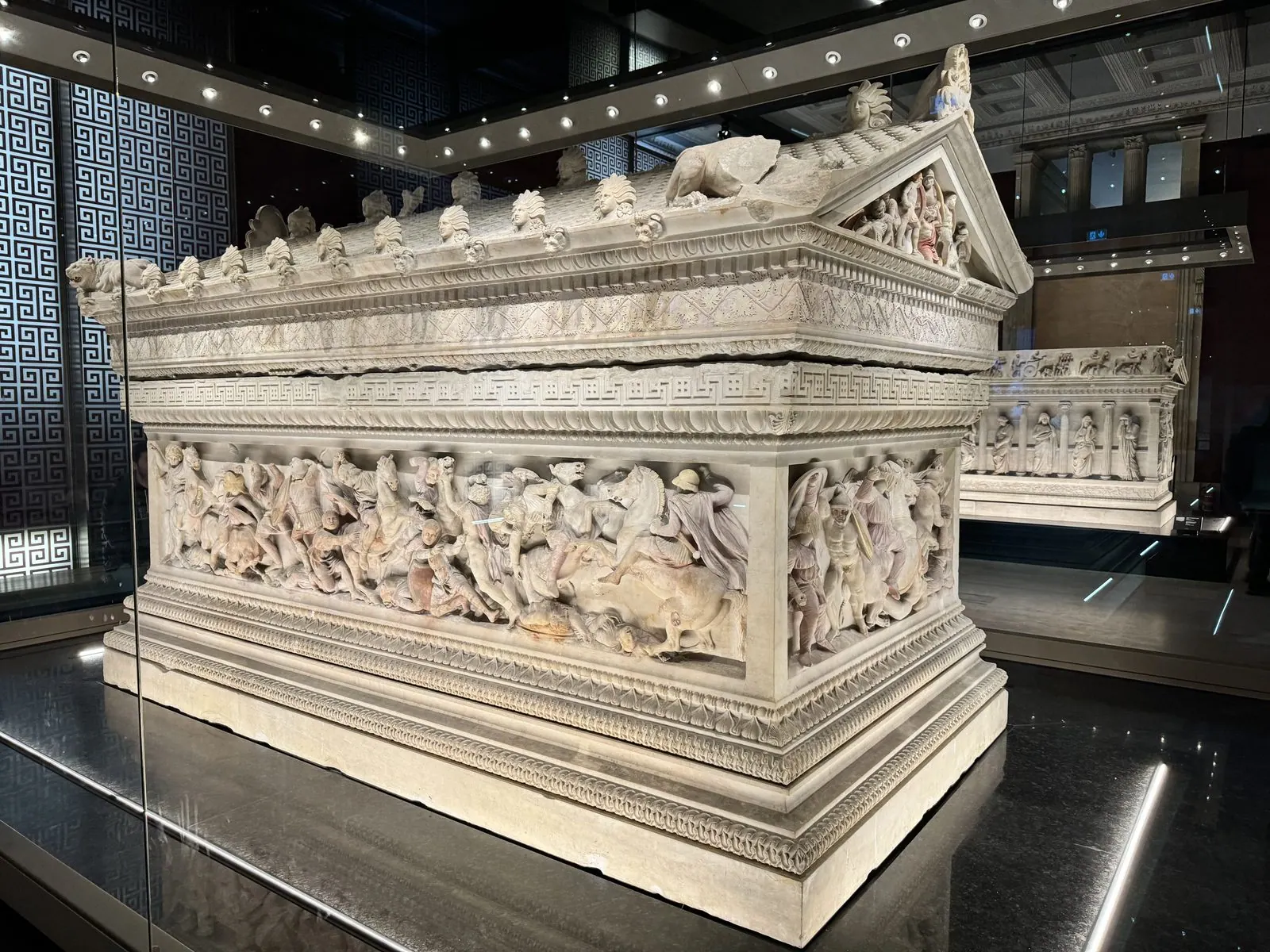
Founded in 1891, the Istanbul Archaeology Museums form the oldest museum complex in Turkey. Its collection of a million objects, drawn from the ancient Near East and the Mediterranean, includes the Alexander Sarcophagus. Two buildings are under restoration, but the main building is open, and tickets cost €15.
Every day, tour groups heading to Topkapi Palace walk right past the museum entrance, and hardly any step inside. That is exactly why you should: the collection ranks among the richest anywhere around the Mediterranean, and on weekdays the Alexander Sarcophagus can feel almost private. Foreign visitors pay €15, and the museum opens daily.
Key details at a glance
| Topic | Information |
|---|---|
| Hours | 09:00-18:30, last tickets at 17:30 (as of October 2026, muze.gov.tr) |
| Closing days | None, it opens daily |
| Price for foreign visitors | €15; free for children aged 12 and under (as of October 2026). Museum Pass Istanbul accepted |
| How long to stay | 1.5-2.5 hours |
| Where | Osman Hamdi Bey Yokusu, Gulhane, inside Topkapi Palace's outer gardens. Take tram T1 to Gulhane and walk uphill for 5 minutes |
| Clothing | No rules |
There are three buildings in the complex. In 2026 restoration work kept the Tiled Kiosk and the Museum of the Ancient Orient closed, while some galleries of the main building were being rearranged too. A single ticket gives access to everything that is open.
The museum's story in brief
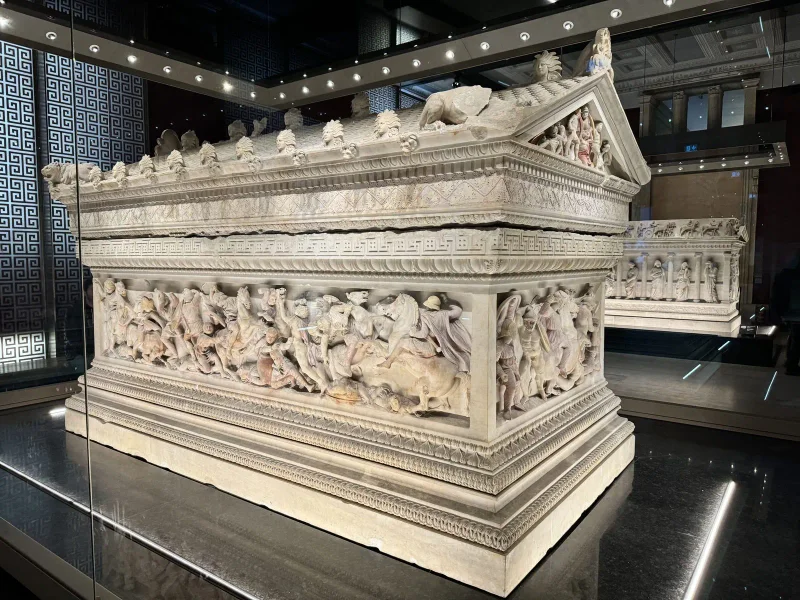
From 1881 the imperial Ottoman museum was directed by Osman Hamdi Bey, a painter and archaeologist. He secured a law that prevented foreign excavators from removing finds from the empire. In 1887 he dug at the royal necropolis of Sidon, now in Lebanon, and returned with a set of marble sarcophagi with painted decoration. The main building, in Neoclassical style and with a facade that imitates those sarcophagi, was designed to house them and opened in 1891, the first building in the Ottoman Empire made specifically as a museum.
Highlights
- The Alexander Sarcophagus. From the late 4th century BC, its carvings show Alexander the Great fighting the Persians and on the hunt. You can still make out remains of the original colour on the carved figures.
- The Sarcophagus of the Mourning Women. Eighteen women stand between columns, each grieving in a different pose.
- The Sidon sarcophagi hall. Among others, it holds the Satrap and Lycian sarcophagi.
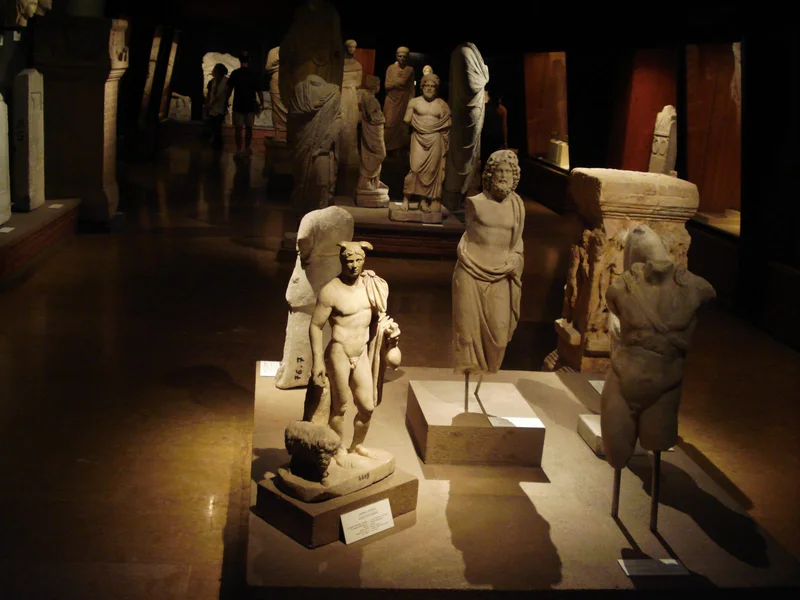
- Classical sculpture. Roman imperial portraits, a bust of Marcus Aurelius, and statues found at Ephesus, Aphrodisias and other sites in Anatolia.
- Istanbul through the ages. Finds from the Byzantine and earlier city, among them a bronze snake head from the Hippodrome's Serpent Column.
- The garden. Column capitals and sarcophagi among the trees, with a small café.
Once the Museum of the Ancient Orient opens again, look for the Treaty of Kadesh on a clay tablet, among the oldest peace treaties known, and glazed brick panels from Babylon's Ishtar Gate.
When to go
Any weekday works. The museum is usually calm, and it makes a good plan for a Tuesday, when Topkapi is shut, or for a wet afternoon. Give it no less than ninety minutes; plenty of visitors leave wishing they had stayed longer.
None of our tours makes the museum a main stop, but it stands within Topkapi's outer gardens, just downhill from the first courtyard of the palace. Our private Topkapi, Harem and Cistern tour walks by the museum entrance en route to the palace, and your private guide can end the tour, which runs four to five hours, at the museum so you can carry on alone. The Private Istanbul Heritage Tour spends six to eight hours in the same part of town and can add a brief visit if you ask.
Practical advice
- Labels come in Turkish and English but say little. Bringing an audio guide or a book on the Sidon finds helps a great deal.
- Most galleries allow photos as long as you do not use flash.
- The garden café is among the most peaceful spots in Sultanahmet.
- Next door, Gulhane Park costs nothing; it slopes down towards the Golden Horn and climbs up towards Topkapi.
See more museums and landmarks in our Istanbul travel guide.
Questions visitors ask
Can I visit the museum right now?
Yes. The main building opens every day between 09:00 and 18:30. In 2026 two buildings, the Tiled Kiosk and the Museum of the Ancient Orient, were under restoration.
What does a ticket cost?
As of October 2026, foreign visitors pay €15. Entry is free for children up to and including age 12, and Museum Pass Istanbul is accepted.
Was Alexander buried in the Alexander Sarcophagus?
No. Its owner was a king of Sidon, most likely Abdalonymus, who had Alexander to thank for his throne. The name comes from the scenes of Alexander carved on its sides.
How much time should I allow?
Plan 1.5 to 2.5 hours to cover the garden and the main building.
Is the museum worth a visit?
Yes, above all if ancient history or sculpture interests you. It is quieter than the major Sultanahmet sights and costs less than most.
More places to see in Istanbul
- Balat and Fener (Fener and Balat)
- Basilica Cistern (Yerebatan)
- Beylerbeyi Palace
- Blue Mosque (Sultanahmet Mosque)
- Bosphorus Strait (Bosphorus Cruise)
- Camlica Hill and Camlica Mosque
- Chora Church (Kariye Mosque)
- Dolmabahce Palace
- Emirgan Park
- Fatih Mosque
- Fener Greek Orthodox Patriarchate (Aya Yorgi)
- Galata Bridge and Eminonu
- Galata Tower
- Grand Bazaar (Kapalıçarşı)
- Hagia Irene (Aya Irini)
- Hagia Sophia (Ayasofya)
- Hippodrome of Constantinople (Hippodrome Square)
- Istanbul Modern
- Istiklal Avenue and Taksim (Istiklal Street)
- Kadikoy and Moda
- Little Hagia Sophia (Kucuk Ayasofya)
- Maiden's Tower (Kız Kulesi)
- Miniaturk
- Nuruosmaniye Mosque
- Ortakoy Mosque (Buyuk Mecidiye Mosque)
- Pera Museum
- Pierre Loti Hill and Eyup Sultan Mosque
- Princes' Islands (Adalar)
- Rumeli Fortress (Rumelihisarı)
- Rustem Pasha Mosque
- Spice Bazaar (Egyptian Bazaar)
- Suleymaniye Mosque
- Sultanahmet Square
- Topkapi Palace
- Turkish-Islamic Arts Museum (Ibrahim Pasha Palace)
- Yildiz Palace and Yildiz Park