

 Istanbul
Little Hagia Sophia (Kucuk Ayasofya)
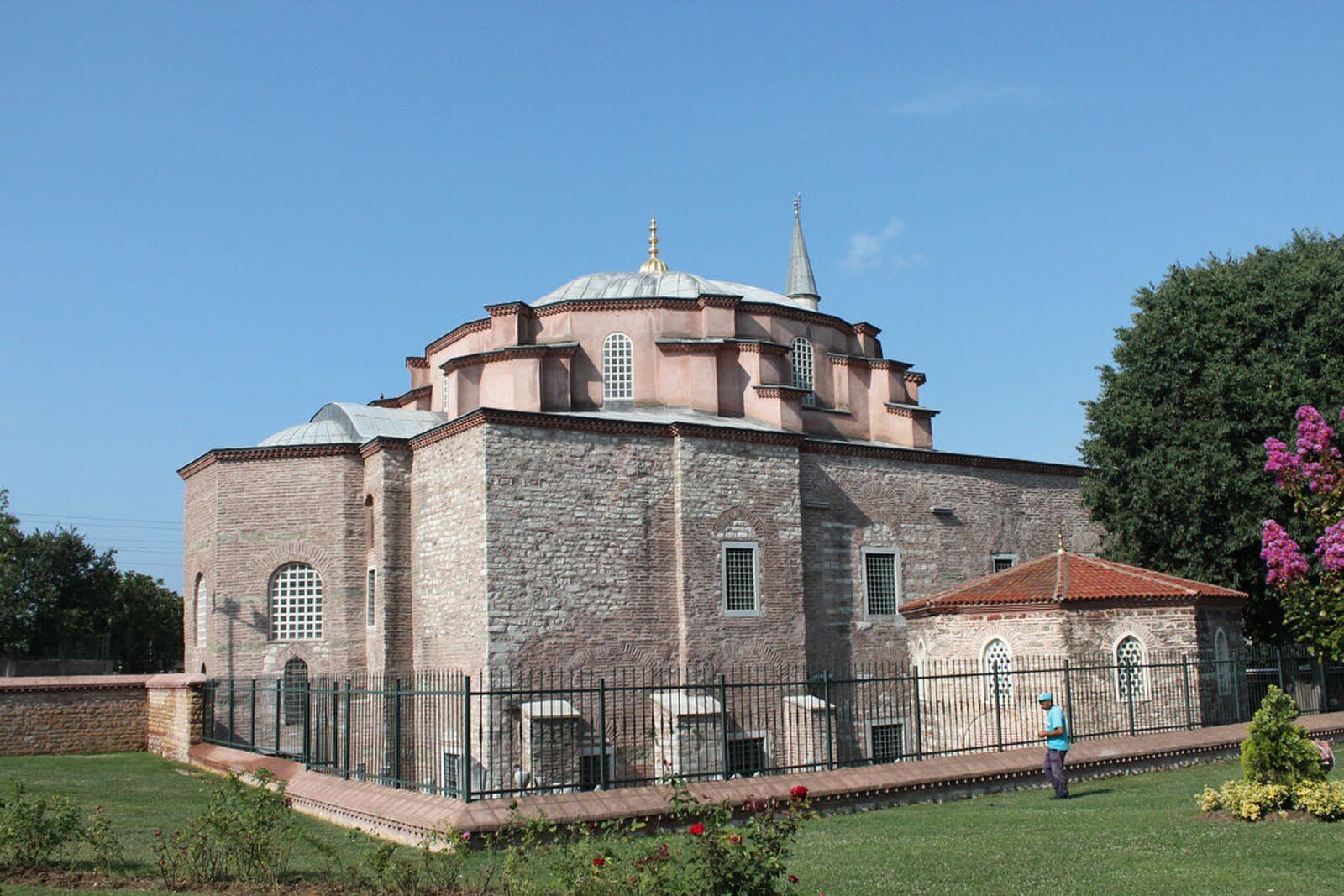
Built as a church dedicated to Saints Sergius and Bacchus, Little Hagia Sophia dates from the 520s, the reign of Justinian, and has been a mosque since about 1500. Entry is free outside prayer times. It stands in a calm corner south of the Hippodrome, a ten-minute walk from the Blue Mosque.
Ten minutes' walk down the hill from the Blue Mosque, beyond the far end of the Hippodrome, the crowds thin out. In a garden close to the old sea walls is a small domed building almost the same age as Hagia Sophia and, to architects, every bit as important. Its first life was as a church for Saints Sergius and Bacchus; for over five centuries since, it has been a mosque. Istanbul residents know it as Kucuk Ayasofya, Little Hagia Sophia. You can go in free of charge.
At a glance
| Item | Details |
|---|---|
| Opening hours | Every day, roughly from the morning prayer until the evening prayer, with pauses for each prayer |
| Closed | To tourists during each prayer, and on Fridays until around 14:30 |
| Ticket | None required |
| Time needed | 20-30 minutes |
| Location | Kadirga in the Fatih district, just below the Hippodrome to the south |
| Dress code | Cover shoulders and knees; women cover their hair |
History
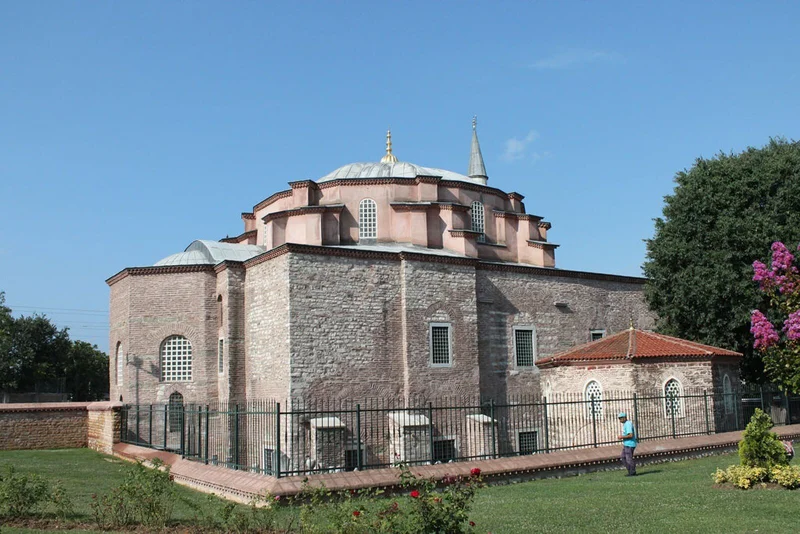
Justinian and Theodora, his wife, put up the church from about 527 to 536, shortly before the great Hagia Sophia. They dedicated it to Sergius and Bacchus, two Roman soldier saints, and it sat beside the Palace of Hormisdas, Justinian's home before he took the throne.
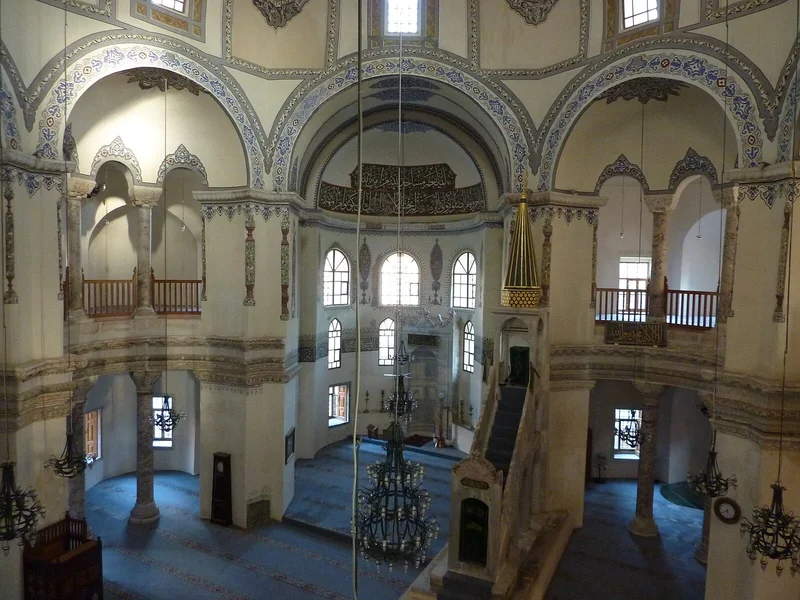
The plan places an octagon within an irregular square. Eight piers hold up the dome, and in the gaps between them two storeys of columns open onto the gallery and the side aisles. Historians often read it as a trial run for ideas that Hagia Sophia, a few years on, used on a far bigger scale.
Under Bayezid II, around 1500, Huseyin Aga, head of the palace eunuchs, converted the church into a mosque. He built a minaret, a portico, a madrasa and a tomb for himself. The building later suffered from earthquakes and from a railway line laid close to its walls in the 19th century. After a lengthy restoration it reopened fully in the 2010s.
Sights
- The octagon. Under the dome, see how eight piers, with columns set between, turn a square-walled interior into a space that feels round.
- The inscription. Carved Greek letters run in a band above the lower columns, praising St Sergius, Justinian and Theodora. Few inscriptions from Byzantine times surviving in Istanbul are longer.
- The capitals. Lace-like carving covers the column capitals, with deep-cut foliage and the monograms of the imperial couple.
- Madrasa courtyard. The old students' rooms around a little courtyard now hold a peaceful tea garden and craft shops.
A working mosque
Little Hagia Sophia is in daily use as a mosque. Visits halt for the five daily prayers, whose times follow the sun and shift over the year. On Fridays they stay suspended till the noon prayer ends. Remove your shoes at the door. Women can sometimes borrow a scarf, but bringing one is simpler.
When to go
Aim for mid-morning or mid-afternoon, between prayers. It is seldom crowded, so you do not need to be there at opening. On summer days the shaded courtyard offers relief from the Sultanahmet heat.
Little Hagia Sophia is not named on any of our tours, but it slots easily into a private Old City day. Our private heritage tour of Ottoman and Byzantine Istanbul runs six to eight hours with a guide just for you, covering the main sights of both empires, and costs from US$200. The tailor-made private Istanbul tour follows your own interests and is priced from US$199 a day; ask your guide to add this church and the Sokollu Mehmed Pasha Mosque close by.
How to get there
From Sultanahmet Square, head down past the south end of the Hippodrome toward the sea. It is about a ten-minute walk through residential streets. Cankurtaran station on the suburban rail line is nearby as well.
Tips
- Five minutes uphill is the Sokollu Mehmed Pasha Mosque, a small work by Sinan decorated with fine Iznik tilework; see both together.
- A little to the south, the outer walls of the Byzantine sea defences are worth a look.
- A small donation box by the door supports maintenance.
- Photography is fine without flash, but leave anyone at prayer out of your pictures.
Frequently Asked Questions
Is there an entrance fee for Little Hagia Sophia?
No. It is a working mosque with no ticket, and visits stop at prayer times.
How did Little Hagia Sophia get its name?
It looks like a scaled-down Hagia Sophia, and Justinian built it a few years ahead of the larger church.
When was Little Hagia Sophia built?
It dates from about 527 to 536, placing it among the oldest Byzantine buildings that survive in Istanbul.
How far is the walk from the Blue Mosque?
Roughly ten minutes, downhill past the south end of the Hippodrome.
Is a head covering required at Little Hagia Sophia?
Yes for women, who should cover their hair. Everyone should also keep shoulders and knees covered.
More places to see in Istanbul
- Balat and Fener (Fener and Balat)
- Basilica Cistern (Yerebatan)
- Beylerbeyi Palace
- Blue Mosque (Sultanahmet Mosque)
- Bosphorus Strait (Bosphorus Cruise)
- Camlica Hill and Camlica Mosque
- Chora Church (Kariye Mosque)
- Dolmabahce Palace
- Emirgan Park
- Fatih Mosque
- Fener Greek Orthodox Patriarchate (Aya Yorgi)
- Galata Bridge and Eminonu
- Galata Tower
- Grand Bazaar (Kapalıçarşı)
- Hagia Irene (Aya Irini)
- Hagia Sophia (Ayasofya)
- Hippodrome of Constantinople (Hippodrome Square)
- Istanbul Archaeology Museums
- Istanbul Modern
- Istiklal Avenue and Taksim (Istiklal Street)
- Kadikoy and Moda
- Maiden's Tower (Kız Kulesi)
- Miniaturk
- Nuruosmaniye Mosque
- Ortakoy Mosque (Buyuk Mecidiye Mosque)
- Pera Museum
- Pierre Loti Hill and Eyup Sultan Mosque
- Princes' Islands (Adalar)
- Rumeli Fortress (Rumelihisarı)
- Rustem Pasha Mosque
- Spice Bazaar (Egyptian Bazaar)
- Suleymaniye Mosque
- Sultanahmet Square
- Topkapi Palace
- Turkish-Islamic Arts Museum (Ibrahim Pasha Palace)
- Yildiz Palace and Yildiz Park